Emergency Response for Building Power Failure
When a building loses power, seconds matter. At Kord Electric, our emergency response for building power failure kicks in fast, because we know your business cannot simply “wait and see” like it is a lazy Sunday. Our trained technicians arrive with a plan, verify what actually failed, and work to restore safe power while protecting critical equipment. Meanwhile, our expert service staff explains each step in plain language, so the people inside your facility are not left guessing. In this article, we outline how we develop a rapid response plan for building power outages, what we do on site, and how we help facility teams reduce risk before the next outage hits. And yes, we take outages personally. Power failures can’t hurt our feelings, but they can hurt your operations.
How Kord Electric builds a rapid response plan for commercial outages
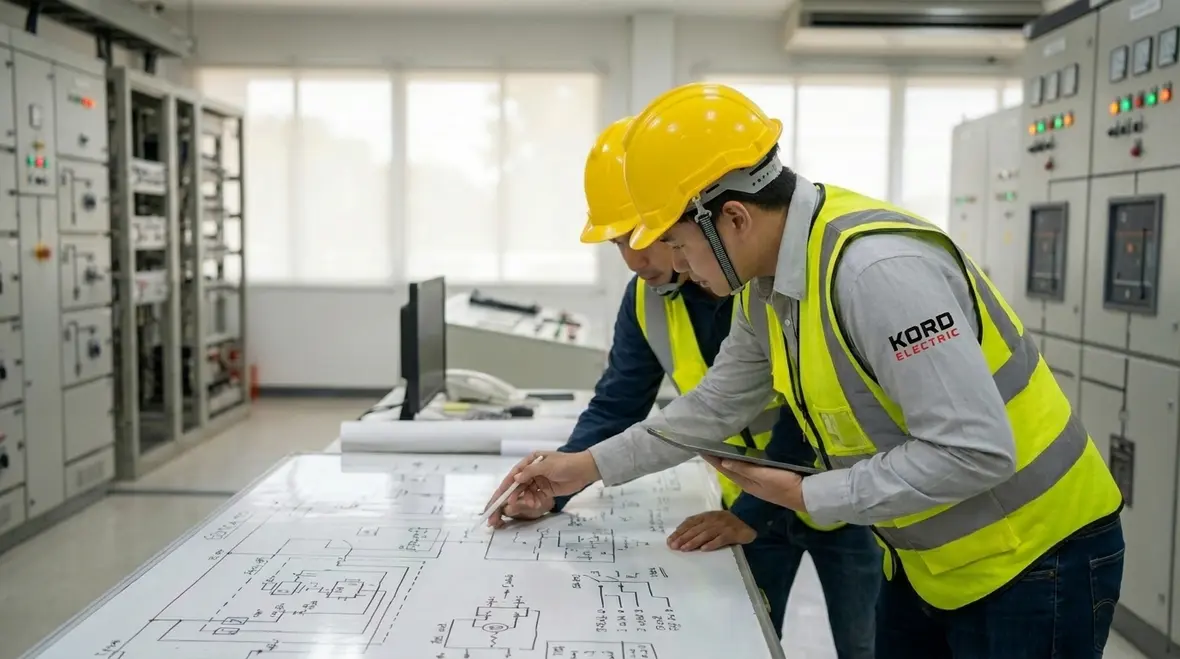
We start with one clear goal: restore power safely, quickly, and with clear communication. First, our team maps your electrical system, from utility intake to switchgear, transformers, panels, and emergency loads. Then we confirm who owns what inside your facility, because a rapid response works best when responsibilities are not blurry. After that, we create an outage playbook that matches your building size, critical loads, and operating schedules.
In addition, we develop a decision tree for common failure paths. For example, if a feeder trips, we follow a specific order of checks before anyone resets anything. If the utility supply drops, we shift focus to transfer equipment, onsite generation readiness, and the health of life safety circuits. As we document each scenario, we also record how long equipment can tolerate low voltage or interruption, so our actions fit your real operating risk.
What happens in the first 10 minutes of an outage call
When a facility experiences a power event, our emergency service team treats the first 10 minutes like a cockpit checklist. We gather details before we even walk the site. We ask for last known conditions, alarm messages, and which areas lost power first. Then we identify whether the issue affects general power, critical systems, or life safety loads.
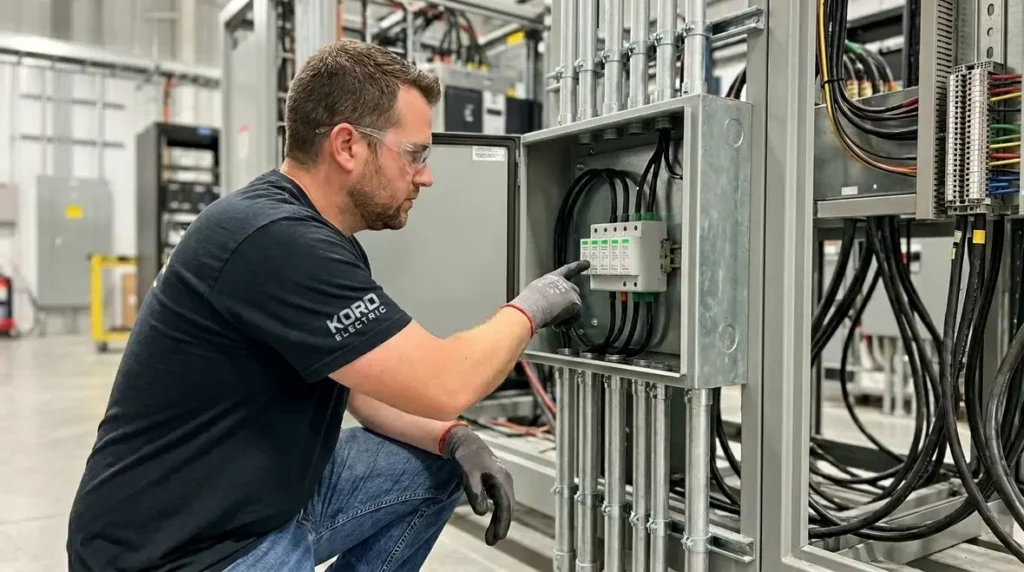
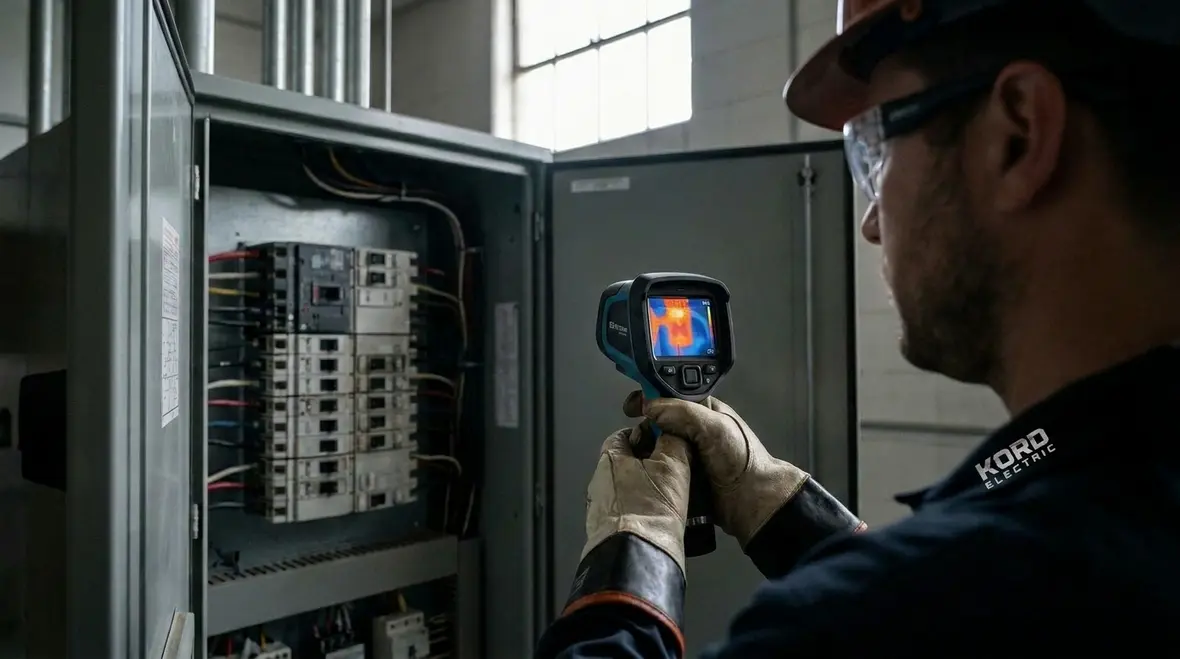
Once our technicians arrive, they perform a targeted assessment. First, they check for obvious hazards like overheating, damaged components, or water intrusion near electrical gear. Next, they verify incoming voltage quality and confirm whether protective devices operated as designed. Then they check transfer switch status and emergency power distribution, because “the lights are on” does not always mean emergency power is ready.
And because people need answers, our expert service staff explains what we see as we see it. That matters, since facility managers need next steps, not a mystery novel. If there is a quick win, we execute it. If the problem needs a deeper diagnosis, we communicate that path without wasting time.

Which building power risks the plan covers and how we address them
Not every outage acts the same. Therefore, our rapid response plan covers multiple risk types that show up in commercial and industrial environments. We account for utility disturbances, internal equipment failures, and issues caused by maintenance work or aging infrastructure.
We also plan for cascading failures. For example, a tripped breaker might protect a bus, but it could also isolate critical loads if the downstream distribution was altered. So we make sure our team checks system coordination, load transfer behavior, and the condition of critical feeders.
Then we include procedures for smoke control and elevator readiness when those systems depend on specific power paths. We handle HVAC sequence risks too, because sudden restart can stress equipment. In short, we build the plan around your building’s real operating needs, not a generic checklist that sounds good in a brochure.
Linking rapid response to preventive maintenance
Fast response is only half the story. Many of the failure risks we see during an outage trace back to issues that could have been detected earlier through structured maintenance. That is why many organizations pair their outage response strategy with ongoing electrical preventive maintenance programs that identify weak components, overloaded circuits, or aging switchgear before they fail under stress.
For facilities that want to go deeper on risk reduction between outages, Kord Electric shares additional insight in their guide to hidden electrical risks in commercial buildings, where they outline how unseen issues behind walls and panels can quietly build toward disruptive failures.
How we coordinate with facility teams and reduce downtime fast
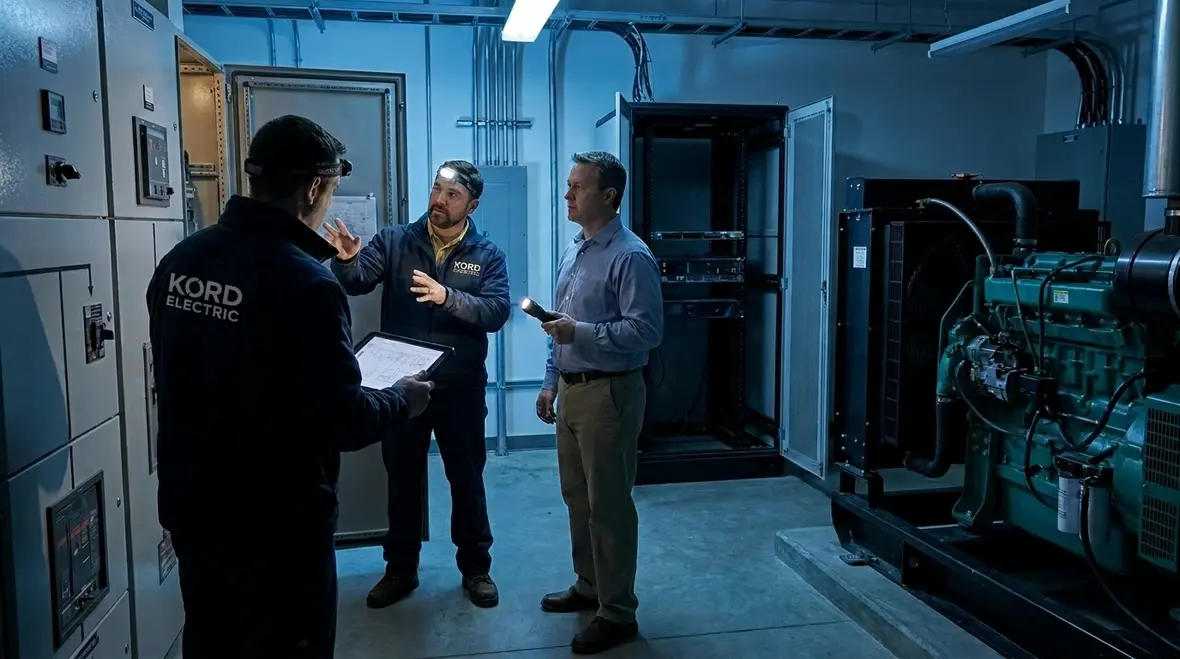
In a commercial facility, downtime does not only mean dark offices. It can mean frozen production lines, stopped refrigeration, delayed data access, and safety compliance concerns. For that reason, Kord Electric coordinates with building owners, operators, and security teams during an outage.
First, we confirm the point of contact and communication method. Then we align our technicians with your internal priorities, such as which floors or systems must remain active. Next, we help your team define operational actions while electrical checks occur. For instance, we may recommend a controlled load restoration sequence to prevent nuisance trips and reduce stress on the system.
As the response continues, we provide updates at set intervals. This matters because decision makers cannot run blindfolded. Our expert service staff also helps others understand what they can safely do while we diagnose the fault. We keep it practical, not lecture mode. If it helps, we even use simple analogies, like comparing electrical protection to a smoke alarm. Nobody likes the beeping, but we prefer beeping over fires.

Keeping operations and compliance aligned
During an outage, facility teams juggle production targets, tenant needs, and safety regulations at the same time. Our job is to translate electrical conditions into operational decisions that make sense. That coordination often ties directly into structured commercial and industrial electrical maintenance plans, which outline how systems should be restored, tested, and documented after an event so compliance does not get sidelined while everyone focuses on getting the lights back on.
What diagnostics we run before restoring power
We do not restore power by hope. We restore power by verification. Before we reset or re-energize, our technicians confirm cause and condition. That reduces repeat failures and protects equipment.
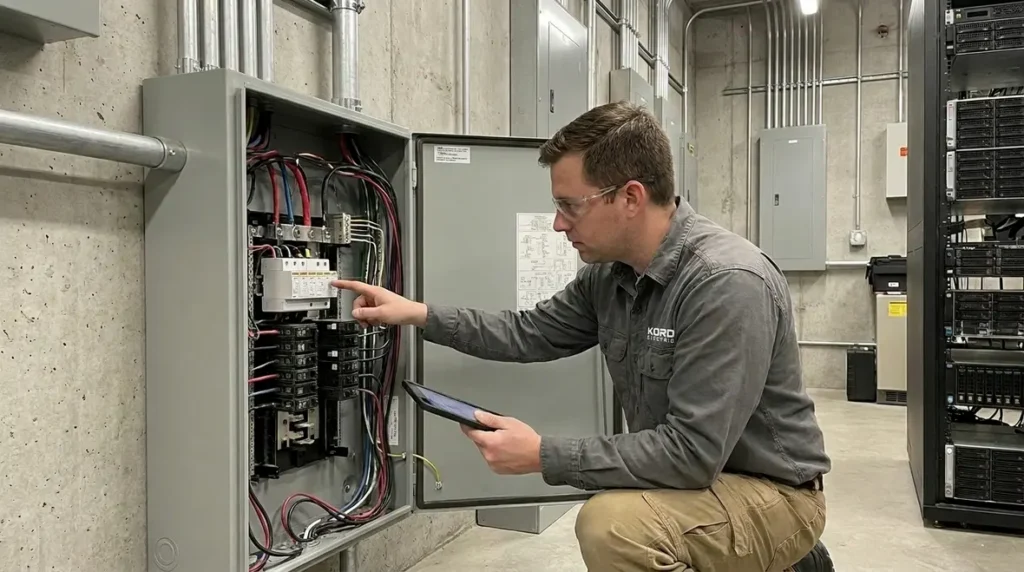
Common diagnostics include checking protective device operation, verifying insulation condition indicators when available, and inspecting switchgear and breaker mechanisms for signs of stress. We also evaluate voltage stability and phase balance where applicable. If the outage traces back to a feeder or bus issue, we use a methodical approach to isolate the affected section.
Moreover, we review the status of monitoring equipment and event logs, because those records often show what happened first. Then we verify that emergency systems respond correctly under the same conditions that triggered the outage. After that, we create a clear restoration path with stepwise re-energization, especially for critical loads that require stable power.
In other words, we treat restoration like surgery. It looks simple when done right, but it requires precision and calm hands.
Connecting diagnostics to long-term system upgrades
Every outage tells a story about the health of your electrical infrastructure. Sometimes diagnostics reveal deeper issues: overloaded panels, outdated breakers, or distribution that no longer fits how the building operates. In those situations, our team may recommend further evaluation using resources like the rewiring cost guide for commercial electrical systems or design-focused insights from commercial electrical systems for modern buildings, so leadership can connect short-term fixes with long-term reliability.
How we document, test, and improve the plan over time
A rapid response plan stays useful only if it evolves. Therefore, we document every outage response in a way that helps your team learn quickly. We record the initial symptoms, the suspected cause, diagnostics performed, equipment conditions, and the restoration sequence. Then we note what changed in the electrical system during the incident, including any temporary measures used to keep critical loads running.
Next, we schedule testing and reviews. We validate procedures, update contact lists, and ensure drawings reflect current system configuration. If your facility makes upgrades, we revise the plan so response actions match the new layout. This is especially important for commercial and industrial buildings where modifications happen quietly, like upgrades to a factory line that nobody mentions during lunch.
Finally, we use the lessons to refine response timing and decision criteria. Our expert service staff also trains your facility team on what to expect. That training reduces confusion during future events and keeps everyone aligned.
From outage log to maintenance roadmap
Post-incident documentation becomes even more powerful when it feeds directly into your preventive maintenance schedule. Patterns of nuisance trips, hot spots, or overloaded circuits guide where to focus infrared inspections, breaker testing, or panel upgrades. For many commercial and industrial properties, that means folding outage insights into a structured electrical preventive maintenance program so the next emergency response for building power failure is faster, more accurate, and less disruptive.
Featured snippet FAQ: rapid response for building power outages
Facility leaders, property managers, and operations teams often ask similar questions when they start building or refining an outage plan. Here are answers to some of the most common questions about rapid response for building power failures in commercial and industrial environments.
Ready to strengthen your outage plan with Kord Electric
If your commercial or industrial facility depends on reliable power, a strong plan is not optional. Contact Kord Electric to develop or upgrade your rapid response strategy for outages, emergency systems, and controlled restoration. Our technicians and expert service staff bring clear communication, methodical diagnostics, and restoration steps built for your actual loads. Then we document and improve your plan over time, so future events cost less time and fewer surprises. Call us today and we will help you stay operational when the grid gets unpredictable.
To keep that plan strong between emergencies, many facilities also invest in structured electrical preventive maintenance programs that protect panels, switchgear, and critical circuits long before an outage appears. Pairing emergency response with ongoing maintenance gives your team a complete strategy: calm, organized action when something fails, and disciplined care that makes failures less likely in the first place.