High Bay LED Retrofits for Industrial Facilities
Kord Electric helps commercial and industrial facilities boost productivity with modern high-bay LED retrofits. In many warehouses, factories, and large property buildings, outdated lighting wastes energy and steals usable work hours by making spaces look harsh, uneven, or simply tired. With a smarter retrofit, we improve visual comfort, raise effective light levels, and cut operating costs, so teams can spot issues faster and move with more confidence. And because our technicians explain the plan step by step, facility managers feel in control, not like they are signing up for a lighting “mystery box.”
What is a high-bay LED retrofit, and why do teams feel it right away?
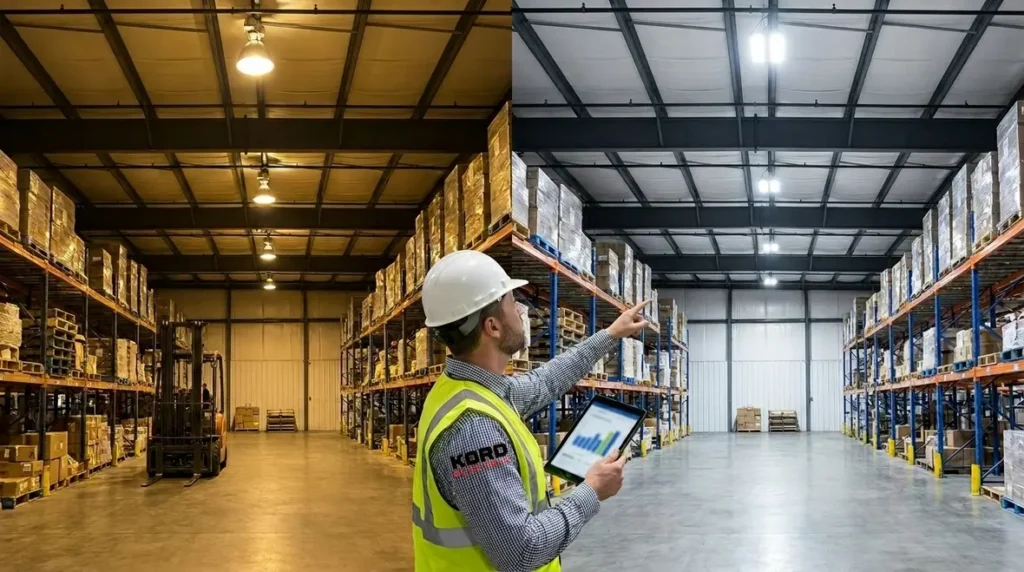
A high-bay LED retrofit replaces older high-mounted fixtures, often HID or legacy systems, with modern LED designs built for industrial ceilings and big interior volumes. Unlike simple lamp swaps, we focus on the full operating environment, including optical layout, mounting height, beam control, and dimming strategy. That matters because productivity is not just about brighter light. It is about the right light where people need to work, with less glare and fewer shadows.
When we install upgraded high-bay LED retrofits, teams notice quick wins: fewer visual distractions, better contrast on floors and equipment, and less strain during shift work. Then, as the days add up, energy savings and maintenance reduction show up on the budget side. Of course, there is also the unglamorous truth: the old fixtures often burn out at inconvenient times, and nobody wants surprise work stoppages. LED retrofit planning helps avoid those “lighting surprises,” the same way a good supervisor avoids surprises in scheduling.

How modern lighting helps production, safety, and quality
In commercial and industrial settings, productivity means measurable outputs. Lighting plays a practical role in that. First, improved uniformity helps workers read labels, inspect materials, and guide tasks with fewer mistakes. Next, good glare control supports safer movement around racks, lifts, and loading zones. Also, when lighting stays consistent, cameras and sensors used for inventory tracking and quality checks perform more reliably.
Meanwhile, maintenance teams benefit too. Because LEDs typically last longer, facilities spend less time changing lamps and more time handling the real work. In addition, our team evaluates how your site operates across seasons. We look at what happens during night shifts, early mornings, and high-dust conditions. If the space is dim only when it is busiest, that is not a lighting issue, it is a productivity tax. We remove that tax by upgrading the system in a way that matches actual use.

If you are already rethinking how lighting affects safety and productivity on your floor, pairing a retrofit discussion with ideas from Kord Electric’s insights on workplace lighting safety hazards that hurt productivity can give you more ways to protect uptime and reduce avoidable risks across shifts.
Planning the retrofit for maximum uptime at your facility
Successful high-bay led upgrades depend on planning, not luck. Kord Electric starts by mapping your lighting layout and usage patterns. Then, we confirm ceiling height, beam angles, fixture spacing, and mounting details. After that, we review your operating constraints, like when dock doors open, when production lines run, and when you can safely take areas offline.
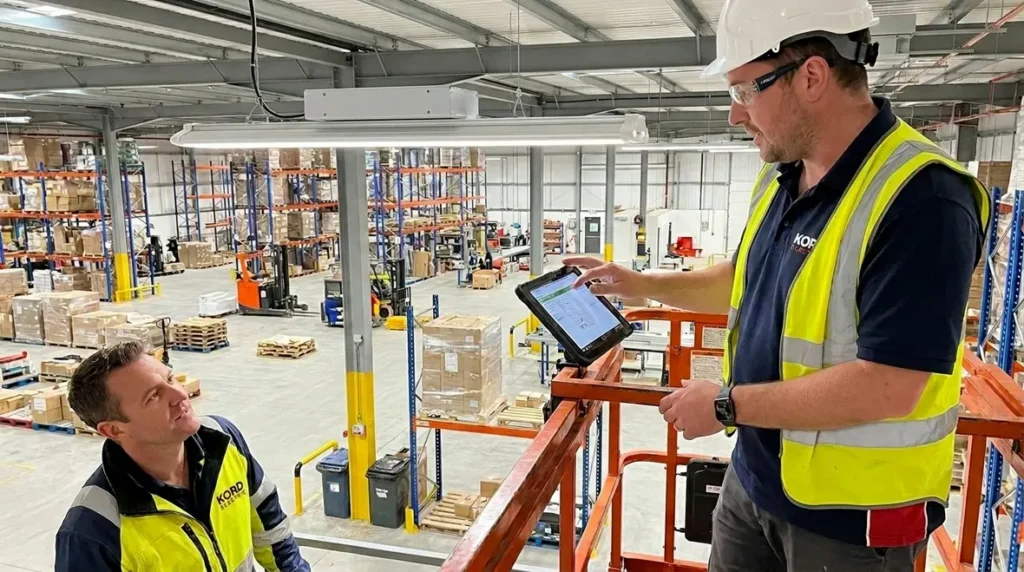
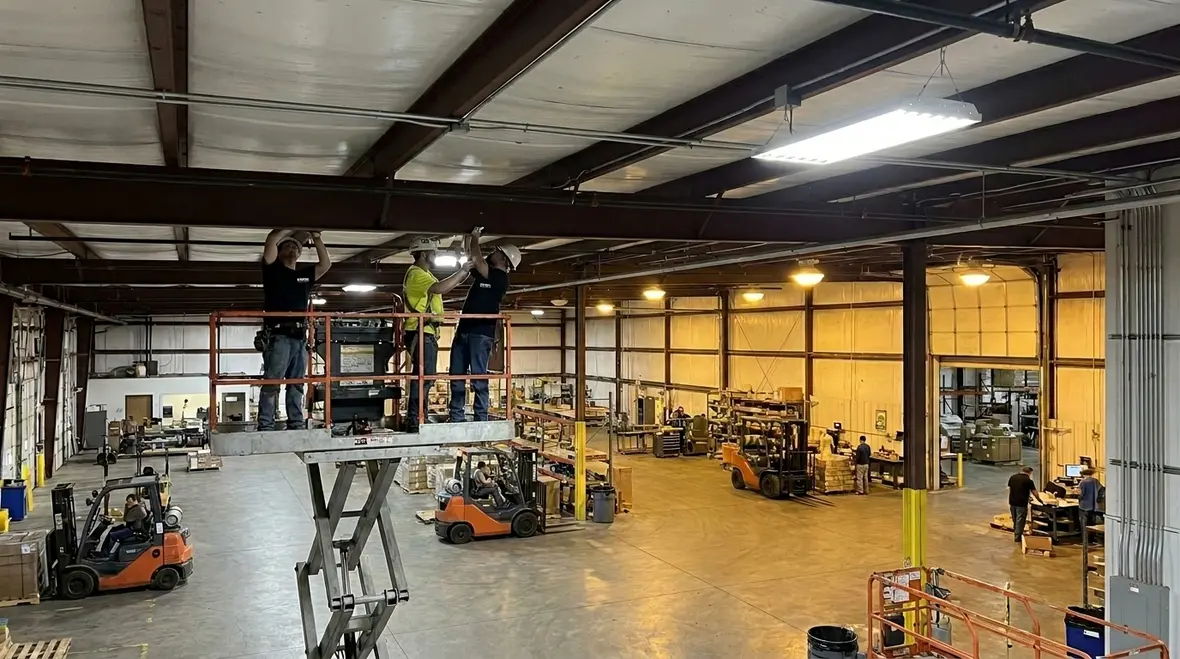
We also coordinate logistics. For example, we stage materials and schedule work so crews can complete sections quickly. If your building runs on strict production windows, our technicians work in a way that respects them. And yes, we talk through it clearly. Our expert service staff explains what we are doing, why we are doing it, and what changes you will see during and after installation. That is the difference between “trust us” and “here is the plan, and here is the evidence.”
For teams comparing retrofit paths or budgeting across multiple properties, it can help to connect this planning approach with cost context from Kord Electric’s commercial lighting upgrade cost guide, which breaks down how fixture types, ceiling heights, and controls influence both investment and long-term savings.
What we measure before we touch a single fixture
Our process treats lighting like a system, not a collection of parts. Therefore, we measure current light levels, document fixture types, and assess reflectance from walls and ceilings. We also check for uneven distribution, hotspot glare, and areas where shadows block sightlines. Then we model the new LED retrofit approach so you can maintain or improve illumination where tasks happen most.
Next, we confirm controls needs. Dimming and occupancy strategies often reduce energy use without sacrificing visibility. If your facility has zones that do not run at the same times, we help you avoid paying for light you do not need. Additionally, we consider color rendering quality, because accurate color helps with material handling, sorting, and inspection tasks. In short, we do the homework first so the final results show up in the real world, not just in a spec sheet.
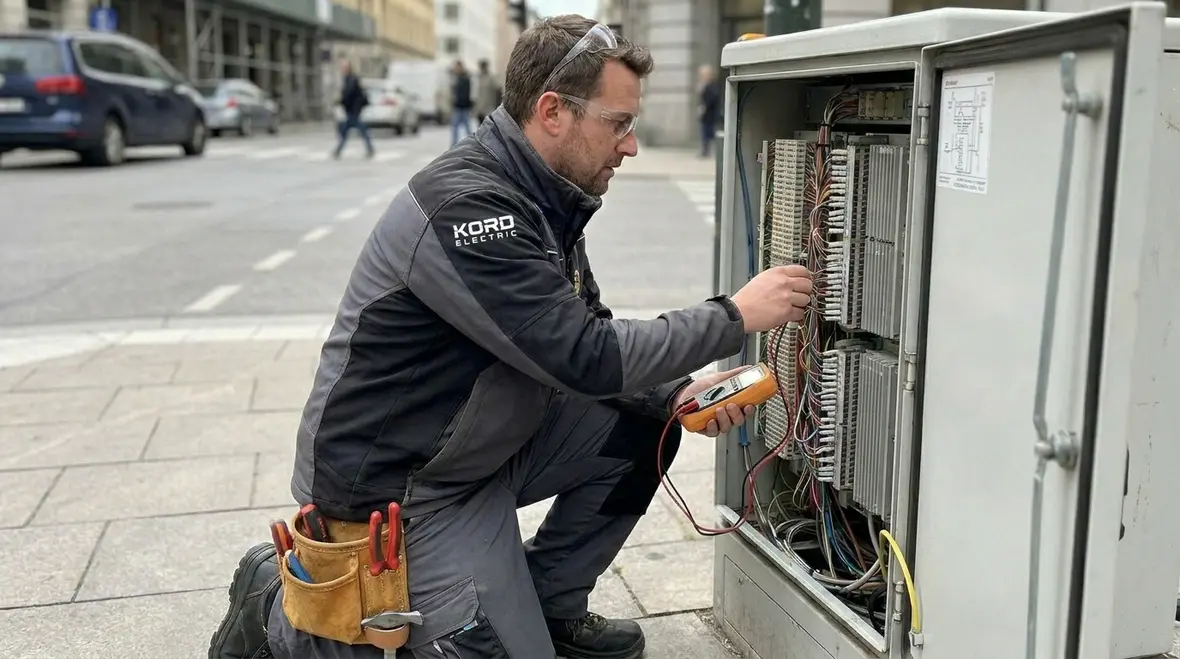
Because many industrial facilities in California must also track Title 24 requirements, property teams often align this measurement step with guidance from Kord Electric’s California Title 24 lighting retrofit ROI guide, which explains how controls, dimming, and commissioning affect both compliance and payback.
Choosing the right LED approach for tough industrial environments
Commercial and industrial spaces bring their own challenges. Dust loading, temperature swings, vibration, and humidity can all reduce performance if the retrofit is not designed correctly. Kord Electric selects LED components and optics that hold up to these conditions. We also focus on lens and housing integrity where impacts are likely, and we consider how the system will stay serviceable over time.
Now, let us be honest for a second: not all retrofits are equal. Some companies swap fixtures like they are changing socks. We treat it like building a reliable lighting platform. That means we plan spacing, alignment, and optical control so the light reaches target areas without creating glare. We also evaluate how the new system supports both visibility and camera performance for facilities that use digital monitoring.

Our technicians and expert service staff then walk through maintenance expectations. You should know how to handle cleaning, what to watch for, and how to troubleshoot minor issues quickly. Because nobody wants to call for help when the solution is a simple adjustment, and nobody wants to gamble on “it probably works.”
If your facility team also worries about inspection outcomes, you can align retrofit decisions with the practical checklist in our lighting installation code compliance guide, which explains how inspectors look at support, wiring, and controls for high bay lights and other industrial fixtures.
Energy savings without sacrificing light quality
Most facility leaders want energy savings, but they also want workers to feel comfortable and safe. We balance both. High-bay led retrofits can cut energy use significantly by replacing less efficient sources with LED technology designed for long runtimes and stable output. However, the real value shows up when energy reduction happens alongside consistent illumination.
To support that, we help you choose wattage levels and optics that match your space. We also use controls where they make sense, like dimming during low-activity periods. Then, we confirm results after installation with field verification. This step matters, because a retrofit can look good on paper and still miss the mark in a real warehouse full of racks and moving shadows.
And here is a small joke, because we are all human: lighting upgrades should not be a “try it and hope” situation. If you run a major property building or an industrial site, you do not hope your way through production schedules. You measure, you plan, and you deliver.
When energy savings, code requirements, and ROI all need to line up, many property managers also look to Kord Electric’s commercial lighting compliance in California overview, which clarifies how LED retrofits, controls, and documentation work together under Title 24 and related standards.
FAQ
Where do we start, and what happens next?
First, we schedule a site review with your team at your commercial or industrial facility. Next, our technicians gather lighting data, layout details, and operational constraints. Then we recommend a retrofit approach that improves productivity, supports safety, and controls energy costs. After approval, we plan the installation window, stage materials, and work in phases to protect uptime. Finally, we verify performance in the field and explain maintenance basics so you can rely on the upgraded system.
Ready to increase output and reduce wasted energy? Contact Kord Electric for a retrofit plan built for your commercial and industrial site. Our expert service staff will walk you through the numbers, the schedule, and the expected lighting results, so you can move forward with confidence. If your high-bay lighting has become a productivity bottleneck, we help you fix it with a modern LED retrofit that supports safer work, better visibility, and smarter costs. Let us set the lights up for success.
If you are planning broader upgrades beyond high bays, you can also explore Kord Electric’s dedicated lighting installation services for commercial and industrial properties, which cover new installations, LED retrofit upgrades, and code-compliant solutions across entire campuses and portfolios.
From there, high-bay LED retrofits become one coordinated piece of a larger strategy: safer operations, cleaner code compliance, and lighting that finally works as hard as your production schedule.