
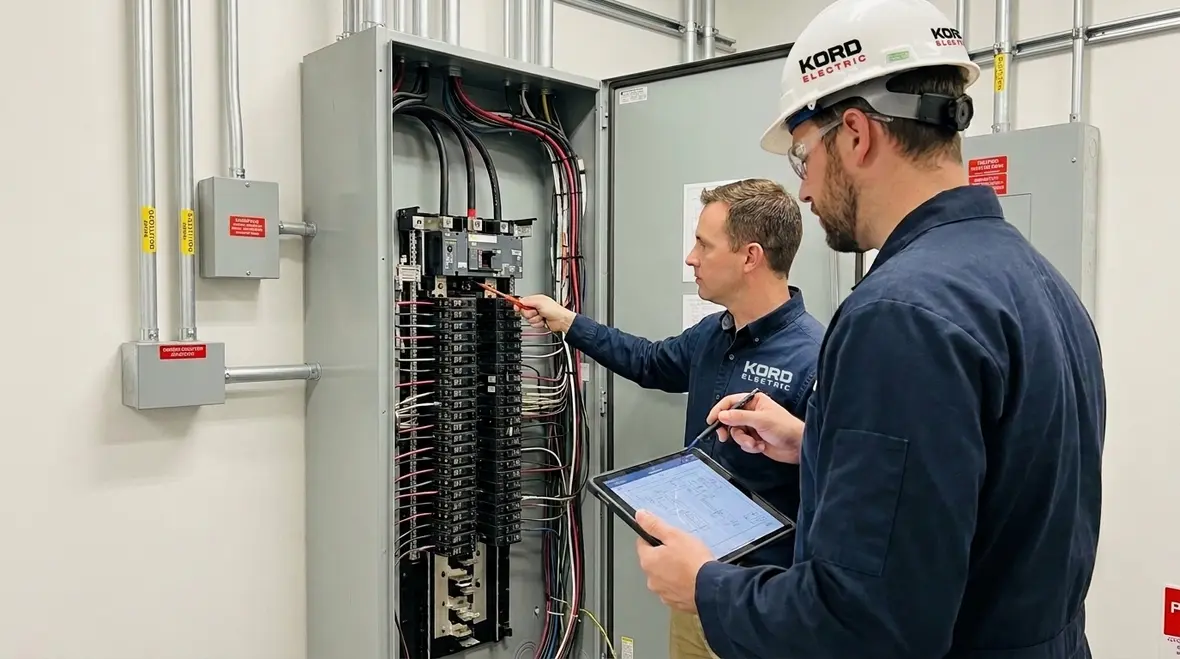
Commercial Electrical Upgrades: Planning, Capacity & Code Requirements
Kord Electric supports major property buildings and commercial and industrial facilities through careful Commercial Electrical Upgrades: Planning, Capacity & Code Requirements. In our work, we plan the job first, then confirm capacity, and finally verify that everything meets code and inspection expectations. That matters because electrical service upgrades rarely fail from lack of effort. Instead, they fail when the site plan, load growth, and wiring capacity do not line up. In other words, the building “looks fine” until the day it does not, and we all know how that feels, like ordering pizza and getting a salad with it.
For clarity, this article stays focused on commercial electrical service and panel upgrades for businesses, warehouses, multi-tenant buildings, and similar structures. We explain how our technicians and expert service staff guide each step so owners and facility managers feel in control, not in the dark.
Commercial electrical upgrades for growing businesses: why timing matters
When a facility adds equipment, expands operations, or upgrades HVAC, the electrical system must keep pace. Yet many teams only notice the problem after a visible symptom appears: nuisance breaker trips, voltage drops during peak usage, flickering lighting, or panels that run hotter than they should. By then, a small fix can turn into a bigger one, and that is usually more costly than a planned upgrade.
At Kord Electric, we help others time upgrades based on real demand, not guesses. First, our expert service staff review the building’s usage patterns. Next, we match those patterns with the planned changes. Then we identify where the system will likely feel strain: service entrance, main switchgear, distribution panels, grounding, and sometimes the transformer relationship.
We also help explain the “why” in plain terms. Our technicians will talk through load growth the way a good coach breaks down film. The details are not scary, but we do not gloss over them either. And if you hear a joke about a breaker acting like a drama queen, just know it is our way of making technical stress feel lighter.
Mapping capacity and load in the real world
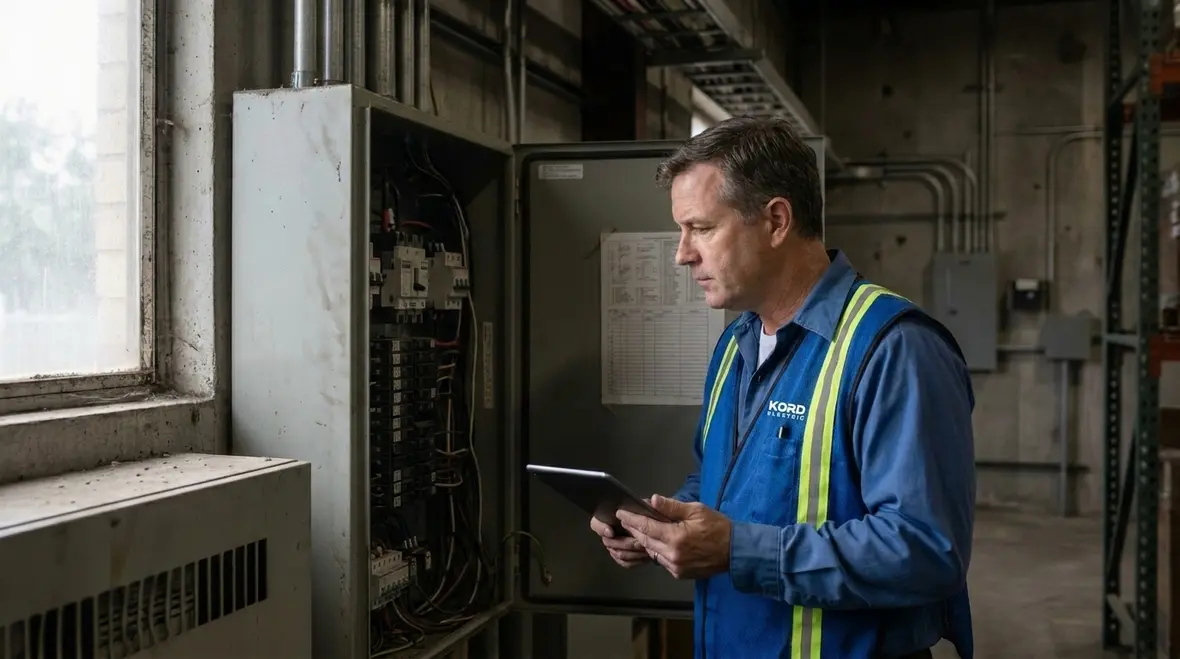
Capacity planning starts with numbers, but it also requires site context. A building can have a nameplate rating on paper and still struggle in practice due to wiring length, panel configuration, harmonics, poor connections, or outdated components. Therefore we treat capacity like a system, not a single device.
To build the right plan, we look at typical loads and future loads. We also ask about operating schedules, seasonality, and equipment types. For example, a facility with electric motors and variable frequency drives may behave differently than one with steady resistive loads. Similarly, a data heavy property can face different issues than a warehouse with motorized doors and dock equipment.
After we gather data, we estimate demand and compare it to what the service can support. Then we identify what must change to keep the building stable during peak moments. This is where Commercial Electrical Upgrades: Planning, Capacity & Code Requirements becomes a working tool. Planning defines scope. Capacity defines performance. Code requirements define compliance. Together, they keep the upgrade from becoming a “patch and pray” mission.
And yes, if someone tells you the easiest path is to “just replace the breaker,” we politely explain that a breaker does not fix a system that lacks the ability to deliver power safely and consistently. A breaker is the guard dog, not the whole neighborhood.
If you want a deeper dive into how service size, distribution, and real-world load behavior connect, it pairs well with Kord Electric’s related guide on upgrading commercial electrical service capacity, which walks through how capacity decisions affect safety, reliability, and future growth.
Code requirements we coordinate before anyone cuts wire
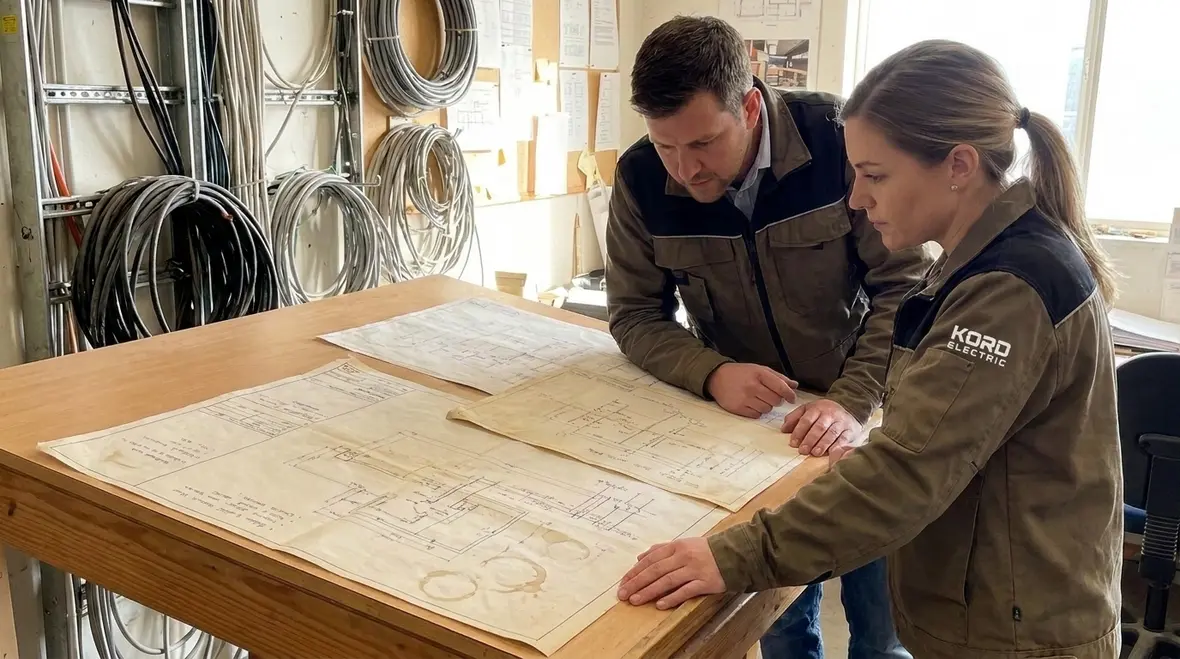
Commercial upgrades require more than replacing parts. They require careful coordination with code and inspection expectations. For major property buildings, code compliance also protects occupants, reduces risk, and supports smoother permitting.
Our team focuses on the elements that inspectors expect to see addressed clearly. That often includes service equipment ratings, conductor sizing, overcurrent protection coordination, grounding and bonding methods, and circuit labeling. In addition, we review working clearances around service and switchgear so staff can operate safely and maintain equipment without fighting access restrictions.
We also plan for how the upgraded system will integrate with existing distribution. Sometimes, the best approach is to upgrade the service entrance and main distribution first, while leaving downstream circuits staged for a later phase. Other times, we recommend targeted panel upgrades to support known high-demand zones.
Throughout this process, our expert service staff walk clients through what will change and what will not. We explain what the code demands in plain language, and we show how our plan supports those requirements. That way, when an inspector asks a question, our documentation and field work already match.
For projects that involve renovations or multi-phase improvements, this work connects directly with the thinking in Kord Electric’s dedicated resource on electrical code upgrade consulting for renovations, which explains how to align new and existing work to current standards without turning compliance into a late-stage scramble.
Step by step: how we handle a commercial electrical service upgrade
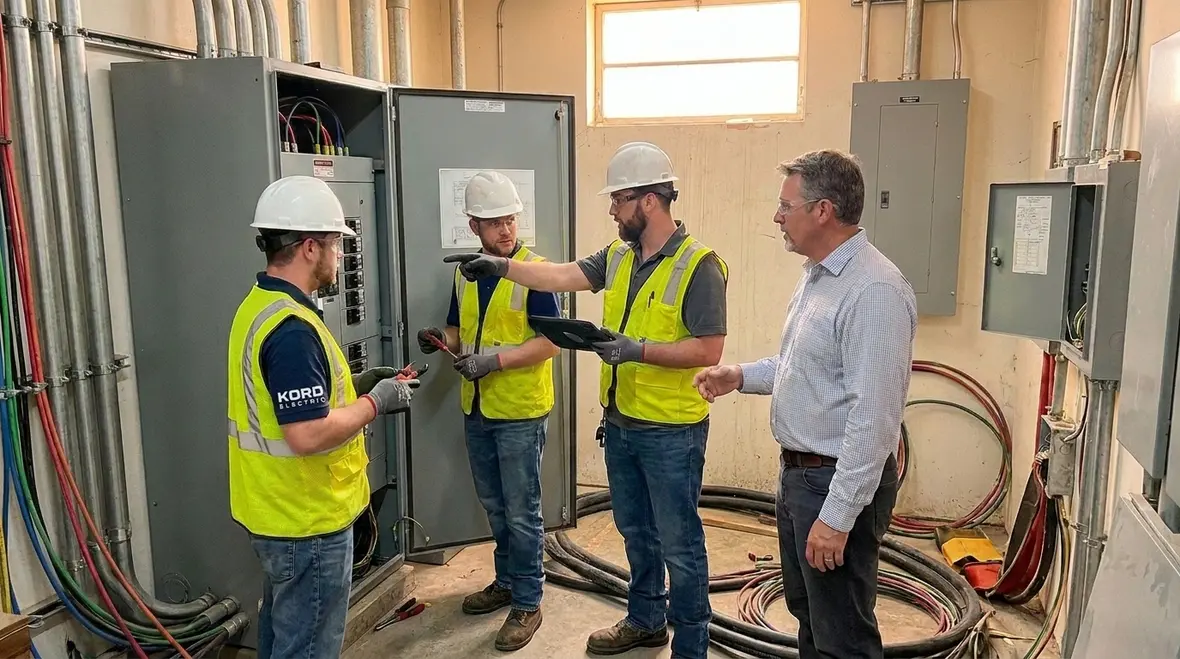
Upgrading a commercial system often involves sequencing, downtime planning, and careful testing. We approach it like a controlled event, because for many facilities, even short disruptions can impact production or business operations.
First, we do a site review and confirm existing equipment condition. We check connections, observe heat risk points, and verify available space for the new service gear or panel equipment.
Next, we confirm the load plan and finalize conductor and equipment sizes. Then we prepare a schedule that fits the building’s needs. If the facility can only handle limited downtime, we plan accordingly, and we communicate clearly with the onsite team.
Then, our technicians perform the installation and wiring work while following safe work practices. We also coordinate with facility staff so there are no surprises around access, parking, or operational areas.
Afterward, we test the system and verify safe operation. That typically includes checks for proper terminations, correct phase balance, and continuity where required. We also ensure labeling and documentation match the real field conditions.
Finally, we support the closeout process with clear records so the building team has what they need for ongoing maintenance and future work. If you have ever watched a superhero movie where everything works until the final scene, that is not our style. We keep the story consistent from start to finish.
What changes inside the system: service, panels, switchgear, and grounding

For commercial and industrial buildings, upgrades may involve one or multiple layers of the electrical system. A service upgrade often starts at the service entrance, but it can move beyond that.
Here is how we typically think about the work:
- Service entrance and service equipment: We confirm the service size and ensure the equipment supports the building’s real demand.
- Main switchgear or main panels: We select the right configuration for distribution, maintenance access, and safe protection coordination.
- Branch circuits and panel feeders: We size feeders correctly so new loads do not overload older components.
- Grounding and bonding: We verify grounding continuity and bonding methods to keep fault paths safe.
- Load distribution strategy: We plan circuit allocation to reduce hotspots and prevent recurring nuisance trips.
We also pay attention to system behavior, not just static ratings. Voltage drop matters, especially for long runs and high starting currents from motors. Temperature matters too, because a loose connection can turn into a big problem long before anyone notices. Therefore, we use careful workmanship and testing to keep the upgraded system stable.
And when people ask whether grounding work is “really necessary,” we explain it like this: grounding is the quiet seatbelt. You do not feel it until the moment you need it, and then you will be glad it is there.
For industrial environments and heavier production, these same building blocks connect directly with the approach outlined in the industrial facility electrical upgrades plan, where Kord Electric shows how service, switchgear, feeders, and grounding all step up together to meet modern standards.
Planning for downtime, safety, and future expansions
Commercial electrical upgrades require coordination beyond the electrical room. Safety and downtime planning often decide whether the upgrade feels smooth or stressful.
Our approach includes a clear work plan and communication. We help the building team understand where access needs to be controlled, when power interruptions might occur, and what staff can expect during the installation windows. For many major property buildings, we schedule work in phases so critical functions stay online as much as possible.
We also design the upgrade to support future needs when it makes sense. That can mean leaving room for additional circuits or planning feeder capacity for later additions. However, we avoid forcing oversized systems that do not match the building’s actual timeline. In short, we plan for growth, but we keep it practical.
Most importantly, we ensure safe operation during and after the upgrade. Our technicians follow the site rules and work practices needed for commercial and industrial environments. That includes proper labeling, safe access to equipment, and verification steps that reduce the chance of surprises after turnover.
So yes, we take the “what if later?” seriously. Because if the building grows, the electrical system should grow with it, not lag behind like an app update that never finishes loading.
If your property is planning multiple improvements across a campus or portfolio, this mindset lines up well with Kord Electric’s broader Los Angeles County commercial electrical services, which support ongoing upgrades, maintenance, and emergency work so capacity, safety, and uptime stay aligned.
FAQ: Commercial electrical upgrades
Frequently asked questions (quick recap)
What parts are usually upgraded in commercial electrical upgrades?
Often the service entrance equipment, main panels or switchgear, select feeders, grounding, and related distribution components.
Do you handle upgrades for industrial facilities and major property buildings?
Yes. We focus on commercial and industrial facilities and large property buildings, with service upgrades designed for real operational needs.
Can you explain code requirements to our facility team?
We do. Our expert service staff explain what matters, why it matters, and how the plan supports compliance and inspection readiness.
What should we prepare before your technicians arrive?
We recommend sharing equipment plans, any load changes you expect, site access details, and where electrical rooms and shutoff points are located.
Ready for a clean, compliant upgrade from Kord Electric
If your facility is adding equipment, expanding production, or just tired of electrical issues that show up at the worst possible time, Kord Electric is ready to help. We plan Commercial Electrical Upgrades: Planning, Capacity & Code Requirements with the care major property buildings deserve. Our technicians and expert service staff explain each step, coordinate downtime, and verify performance through proper testing. Contact us to schedule a capacity review and get a clear upgrade path that keeps your business running steady.
When you are ready to move from planning to action, our team can align this work with related commercial services across the region so your electrical system stays ready for the next phase of growth, not just today’s workload.


