
Commercial Emergency Power System Testing Plan
Essential Testing Procedures for Commercial Emergency Power Systems: A Clear Plan
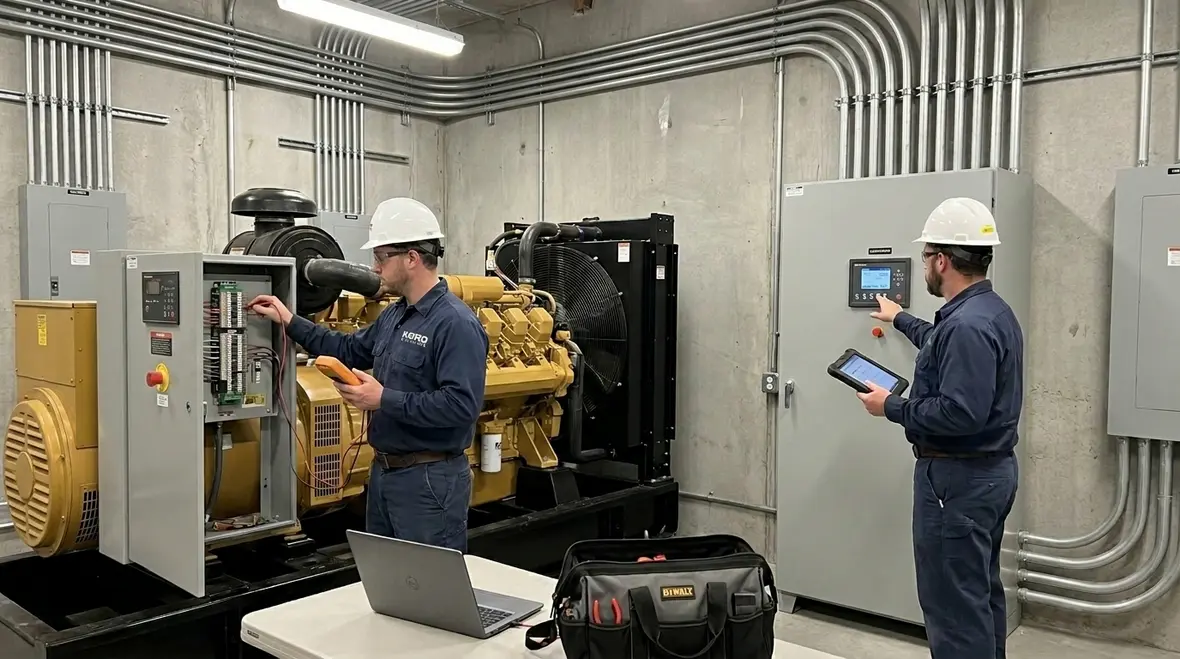
At Kord Electric, we focus on commercial and industrial facilities, as well as major property buildings, because downtime is expensive and safety failures are not funny. That is why our emergency power system testing procedures start with a tight, step by step approach within the first few minutes of every site visit. First, our technicians confirm the system is ready to run and that all control settings match the building’s documented sequence. Next, we test transfer and start behavior under controlled loads, then we verify alarms, readings, and protective functions. Finally, we document results clearly, so others can act fast when something does not behave like it should. Think of it like a fire drill for power, except we do it before the building tries to freestyle in the dark.
Emergency systems deserve the same disciplined attention as any other critical asset in the building. Instead of treating testing as a one-time task, Kord Electric builds a repeatable field plan that facility managers can rely on year after year. Each visit follows a consistent pattern, so commercial teams know what to expect, what data they will receive, and how that data connects to real decision making about capital projects, maintenance windows, and risk reduction.
How Kord Electric Prepares the Site Before Any Load Test
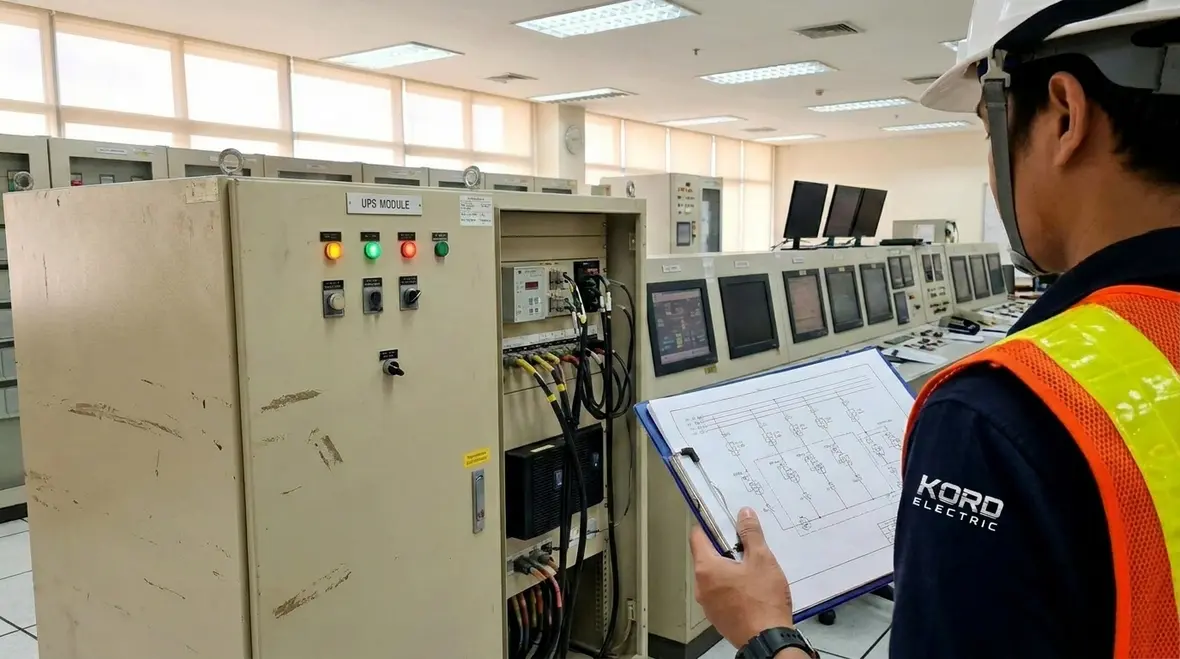
Even before we touch a switch, our expert service staff walks the site with a calm checklist. That pace matters, because a test done in the wrong order can create false alarms, confuse operators, and waste time. First, we review the one line diagram, the generator or UPS design, and the transfer scheme. Then we confirm the test boundaries for the building team, so critical areas do not lose power unexpectedly.
After that, we verify that sensing devices and controls are in the expected state. We check that annunciators are configured, that the monitoring system can capture events, and that any load banks or simulated loads are matched to the facility’s risk level. If a system includes paralleled sources or multiple feeders, we verify the configuration carefully. In other words, we do not assume. We confirm.
Our technicians also coordinate with the facility manager, especially when we test life safety circuits or power paths that support elevators, pumps, and critical HVAC controls. To keep it simple, we treat every test like a controlled performance, not a reality show. The building team gets clear updates, and we keep the work clean and predictable.
That preparation work also gives the facility team a chance to align emergency power system testing procedures with existing electrical maintenance plans. When a building already follows a structured commercial and industrial electrical maintenance program, Kord Electric can synchronize testing windows, documentation formats, and reporting metrics so results feed directly into long term planning instead of sitting in a separate folder.
Verify the Transfer Path and ATS Behavior in Real Conditions
For commercial systems, transfer reliability sits at the center of safe operation. Therefore, we test the transfer path under conditions that show real behavior, not just ideal bench readings. Our process includes verifying the ATS or control logic response, then checking timing, signal integrity, and any interlocks that prevent unsafe states. We also confirm that the transfer sequence follows the design intent for the building load profile.
During testing, our expert service staff records the start command behavior and observes whether the system stabilizes before critical loads are released. Next, we watch for any abnormal chatter at the contactors and we check that the control logic does not misinterpret sensor inputs. If the facility uses a preferred source, we verify that the system selects the correct path when utility power drops.
Sometimes, a problem looks small at first. A delay that seems minor can cause a nuisance trip. A sensor offset can cause the logic to wait longer than it should. We catch those issues before they become the kind of surprise that makes people say “I guess it’s fine” and then later blame the universe. We prefer facts over guesses.
Because transfer switches sit between utility power and standby sources, they also tie directly into many of the hidden electrical risks that commercial properties face. When Kord Electric evaluates ATS performance, we look at mechanical wear, control wiring condition, and environmental factors like dust, moisture, or vibration that can quietly erode reliability over time.
Emergency Power System Testing Procedures for Generators and UPS Units
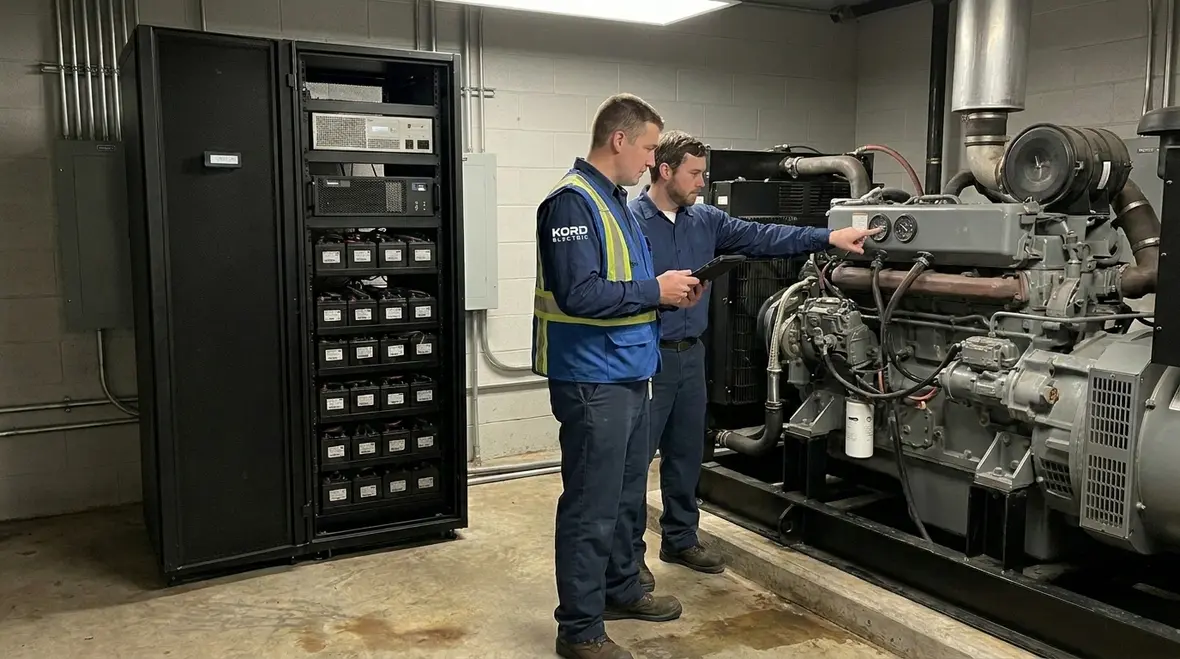
When a building uses a generator, we follow a sequence that tests starting reliability, voltage and frequency stability, and protective operation. When it uses a UPS, we focus on battery condition, inverter output stability, and the transfer behavior from utility to battery mode and back. In both cases, our emergency power system testing procedures are built for commercial and industrial reliability, because these facilities serve real people, not just spreadsheets.
For generator systems, we test in a way that mirrors operational risk. We verify fuel availability and test control responses for shutdown and alarm events. We confirm the engine run state, check excitation behavior, and ensure voltage regulation returns the system to steady output. Then we move through loading steps that match the facility requirements, so we do not just start the unit, we verify it can carry the work.
For UPS systems, we measure how the unit responds under load and how long it maintains output within the design runtime. We validate alarms and verify that communications links report status and events. When a system includes bypass paths, we test transitions carefully to confirm that the building stays protected through changes.
To support modern building systems, our technicians also review coordination with electrical panels, feeders, and life safety circuits. We understand that a generator or UPS is only one part of the larger commercial electrical system, and we treat the full path like one team.
For properties planning broader upgrades, emergency power testing can also reveal when it is time to rethink aging switchgear, overloaded panels, or outdated distribution layouts. When test results start to show recurring issues across multiple components, Kord Electric can help facility leaders evaluate whether a targeted repair, a preventive maintenance adjustment, or a more comprehensive electrical upgrade will deliver the best long term value.
Essential Measurements and Diagnostics That Catch Hidden Failures
Many building teams think testing means “start it and see if it powers something.” That is not enough for major property buildings. Therefore, our expert service staff uses targeted measurements that reveal issues before they create a real emergency. We verify voltage regulation, frequency stability, and load behavior during transfers. We also inspect and record protective device operation, including settings and trip timing, so a failure mode does not get masked by a lucky outcome.
We check engine or inverter signals that can drift over time, and we confirm that controls interpret sensors correctly. For larger sites, we validate phase balance and we monitor harmonics where the design requires it. We also check that instruments report accurately, because bad data creates bad decisions. It is like trying to navigate with a compass that points at the snack drawer.
In addition, we look for signs of wear in key components. We review battery test results where applicable, and we verify that connections and terminations show no abnormal heat or looseness. We inspect for water intrusion risk in control cabinets and verify that ventilation and cooling functions operate normally. These details matter because emergency power systems live in real environments, not ideal labs.
When diagnostics uncover recurring anomalies—like nuisance trips, intermittent voltage dips, or unexplained alarms—we connect those findings back to the broader facility story. Sometimes the fix is as simple as tightening terminations and updating settings. Other times, testing reveals patterns that point toward deeper issues in the commercial electrical system, such as overloaded feeders, aging transformers, or equipment that never fully matched the current load profile.
Document Results in a Way Facility Teams Can Use
Testing should end with clarity, not confusion. So we produce documentation that helps the building team act quickly and plan future work. Our technicians summarize what we tested, what values we recorded, and how the system behaved during each step. Then we flag any items that fall outside acceptance limits, and we include next steps that align with commercial and industrial operations.
We also coordinate with others on the building staff, because the best report is one that gets used. Facility managers need to know whether the unit transferred smoothly, whether critical loads received stable power, and whether alarms fired as expected. Maintenance leads need specifics, like measurements, timing notes, and any equipment condition concerns.
If something requires follow up, we explain it in plain language. Others might call it “technical jargon,” but we call it “keeping the lights on.” And yes, we can explain it without turning the room into a classroom. We just handle the facts, and we keep the plan moving.
Because Kord Electric works across emergency power testing, commercial electrical maintenance, and broader system upgrades, our documentation can easily connect to other strategic initiatives. Whether a facility is planning a rewiring project, considering new standby equipment, or building a long term preventive maintenance plan, the results of each emergency power test slot directly into that roadmap.
For facility leaders who want a deeper dive into long term strategies that support reliability, it can be helpful to review related guidance such as Kord Electric’s insights on commercial and industrial electrical maintenance plans and how structured maintenance supports power system longevity across campuses, industrial plants, and multi tenant properties.
FAQ: Emergency Power Testing for Commercial Buildings
Conclusion: Call Kord Electric Before the Next Unplanned Outage
If a commercial building relies on emergency power, it deserves more than a quick start test and a hope. Kord Electric brings a deliberate process, careful diagnostics, and clear documentation to commercial and industrial facilities. Our technicians verify transfer behavior, stable output, protective operation, and alarm performance, then they hand the building team a usable report. If you want emergency power system testing procedures that reduce risk and protect your operations, contact Kord Electric today. We will schedule the work and keep your power ready when it really counts.
Related note for modern buildings: Kord Electric supports the full commercial electrical system approach for modern property designs, connecting emergency power system testing to preventive maintenance, voltage stability work, and strategic upgrades that keep facilities ready for growth instead of reacting to surprises.
For organizations that want testing to fold into a broader reliability strategy, Kord Electric’s commercial and industrial electrical maintenance plans and dedicated emergency electrical services give facility leaders a clear path from today’s inspection list to tomorrow’s long term capital planning. When those plans include significant upgrades or new construction, Kord Electric’s commercial electrical services help align distribution, lighting, and standby power so the whole system works together instead of in isolated pieces.
If you are evaluating future improvements for your building’s electrical infrastructure and want to see how emergency power testing fits into a larger strategy, consider reviewing related resources like their guides on voltage fluctuations, hidden electrical risks, and commercial rewiring—each designed to help commercial and industrial facilities understand where their systems stand today and how to build a more resilient tomorrow.
When you are ready to move from planning to action, Kord Electric’s dedicated Electrical Preventive Maintenance service supports ongoing inspection, testing, and optimization for commercial and industrial properties. That way, every emergency power system test is not just a standalone event, but part of a consistent program that keeps systems ready for real world conditions instead of just the next monthly button press.
To take the next step, explore how their Electrical Preventive Maintenance services connect with emergency power testing, generator and ATS inspections, and other critical commercial electrical services built for modern buildings and high demand facilities.


