Commercial EV Charging Infrastructure Planning
Commercial EV Charging Plans That Scale for Tomorrow’s Load
Strategic commercial electric vehicle charging infrastructure planning starts with one plain truth. Your site will grow, your demand will spike, and your old assumptions will age faster than last year’s tech. At Kord Electric, we build charging systems for commercial and industrial facilities and major property buildings, so teams can roll out EV use without turning their electrical room into a mystery box.
We also take the calm, methodical route. Our technicians and expert service staff explain each step in plain language, then we coordinate the electrical work so it stays safe and ready. And yes, we plan for future demand, not just today’s hopeful “we might get a few chargers” optimism.
Start With Load, Not Guesswork
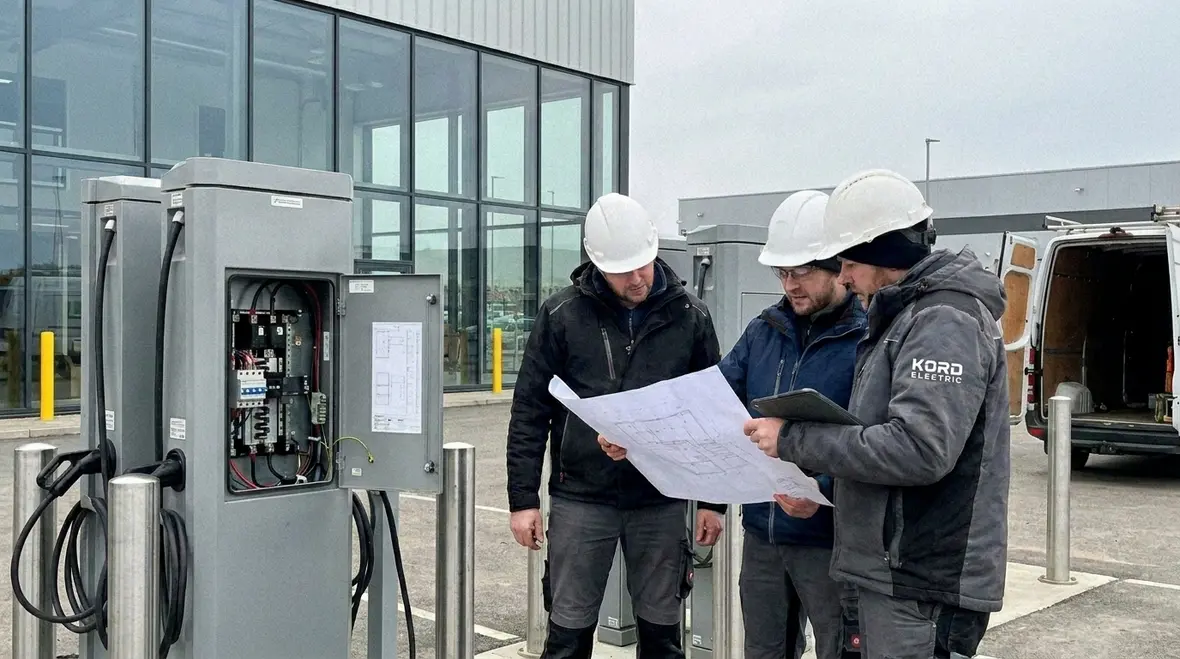
Before anyone buys equipment, we map the real electrical picture. First, we confirm service capacity, main ratings, demand factors, and panel schedules. Next, we review existing loads like HVAC, lighting controls, kitchens, lifts, and anything that spikes when the building wakes up in the morning.
Then we model charging load behavior. We do not treat chargers like simple on or off devices. Charging draws power based on vehicle type, charging curves, and how long vehicles stay connected. As a result, one site can look stable in the afternoon and then surge after shift change. So we plan for peak demand periods and time based charging where it makes sense.
At this stage, our expert service staff explains why a “bigger breaker” is not always the best fix. Sometimes the right answer is smarter distribution, load management, or selective upgrades. In other words, we build systems that make power behave, not systems that simply throw more amps at the problem.
Plan the Physical Layout for Real Operations
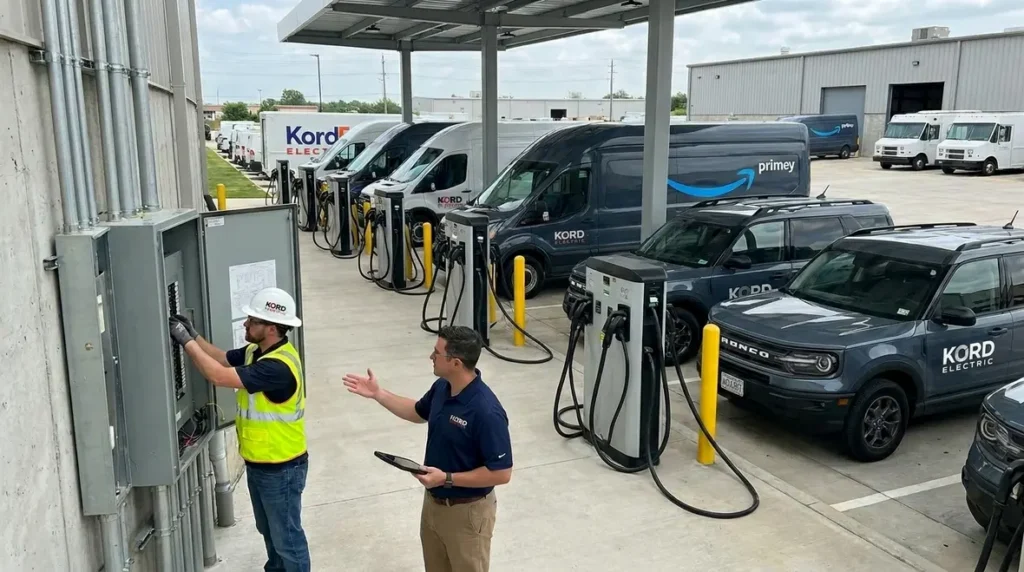
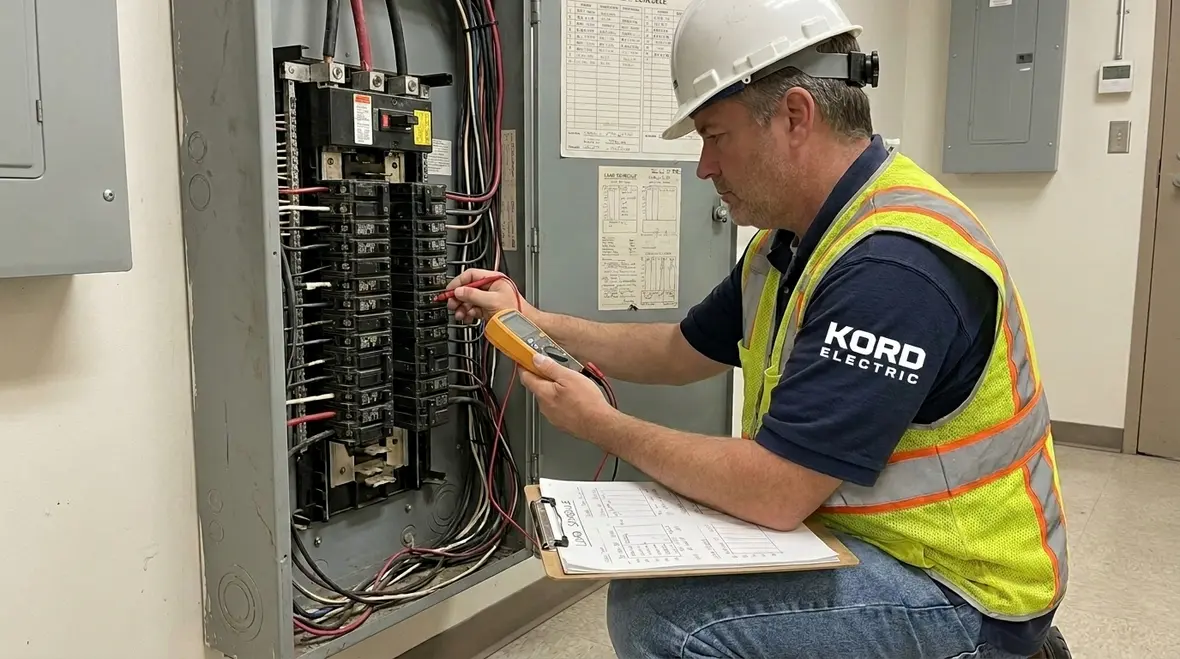
Electrical capacity matters, but so does where the chargers live and how people use them. We lay out charging in a way that supports daily routes, access control, cable routing, and safe traffic flow for employees, tenants, and fleet operators.
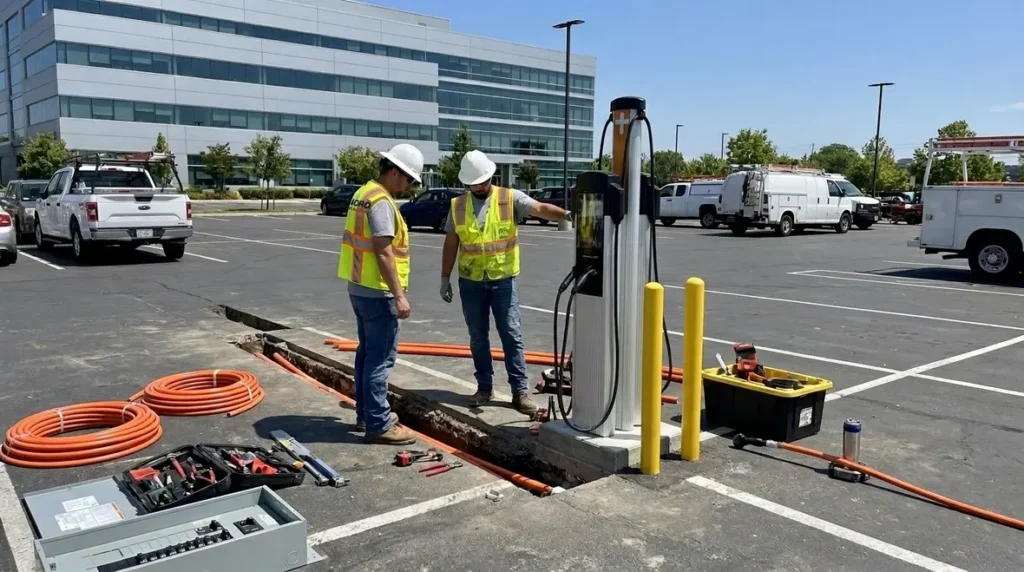
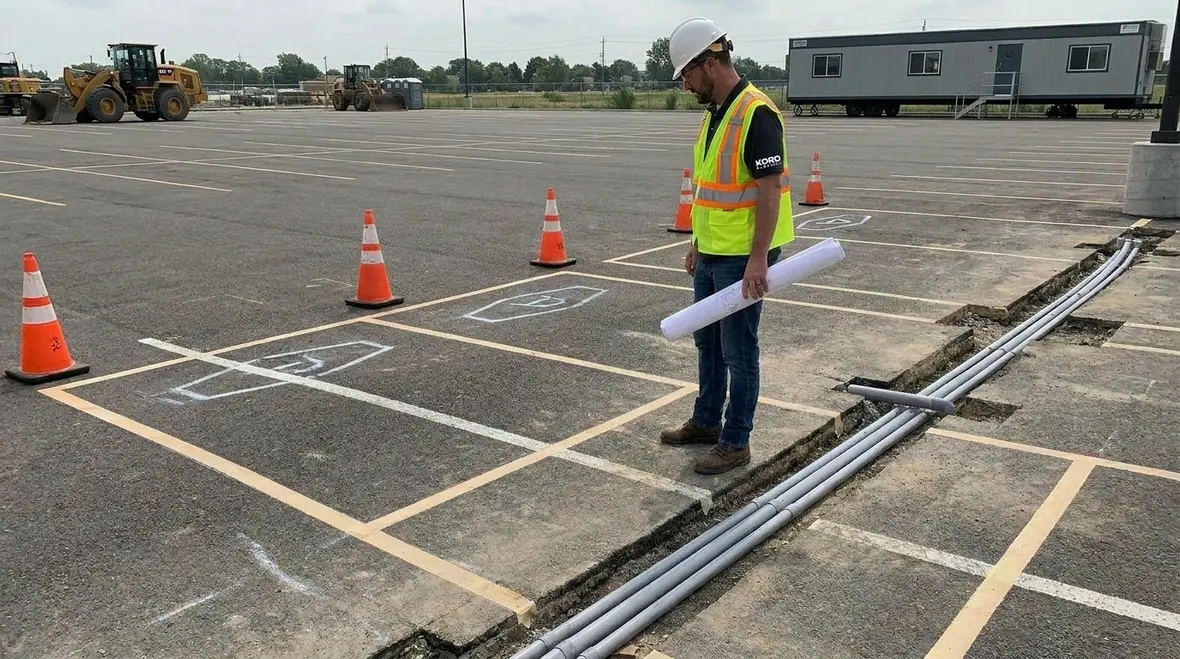
We evaluate conduit routes, trenching, grounding, and weather protection. We also account for future expansions, meaning we prepare pathways and spare capacity where practical. That way, adding ports later does not require ripping up the same pavement twice. Nobody wants that. Not the property manager, not the facilities team, and definitely not the installer who has done it before.
And because this is a commercial and industrial focus, we align charging placement with operational needs. Loading docks, secure yards, garage ramps, and parking structures each behave differently. Therefore, we treat the design like a system, not a sticker on a wall.
Staged Expansion So Demand Growth Does Not Break the Plan
Scaling works best when it is staged. So we design a phased approach that matches how fleets grow and how tenants adopt EV use. For example, a facility may start with a pilot for a subset of vehicles, then expand during later procurement cycles.
In this model, we protect the electrical base layer first. We confirm upstream gear and distribution paths, then we size conductors and switchgear to support the next phase. After that, we define clear expansion points, so future work stays predictable.
Our technicians also plan for the practical “what if” moments. What if one circuit fails? What if a charger gets replaced? What if a contractor needs access for other upgrades? In response, we build in separation, labeling, and service access paths. That is how commercial electric vehicle charging infrastructure planning stays reliable when the calendar gets busy.

Use Preventive Maintenance to Protect Uptime and Revenue
Charging is not a one time install. It is an operating system. So we pair installation planning with maintenance discipline. Our team references the same preventive mindset we apply to electrical preventive maintenance across commercial setups. You can see the approach and focus areas in our preventive maintenance resources at https://kordelectric.com/electrical-preventive-maintenance/.
Now here is the soothing part. Preventive work reduces surprises. It lowers the odds of downtime that hits revenue, tenant trust, or fleet readiness. Also, small issues like loose connections or abnormal heat do not always announce themselves with drama. They show up as subtle changes, and maintenance helps catch those changes early.
We schedule inspections around real usage patterns and site operations. Then, we review thermal performance, verify connections, test protective devices, and inspect wiring pathways. Afterward, we document findings in a way that helps facility teams plan budgets and next steps.
Think of it like servicing a company car. If you ignore it, you pay more later. If you stay ahead, you keep it running. The only difference is the “company car” here is a charging station, and it does not care if you are busy. It cares about current, heat, and safety.
Smart Load Management and Safety Practices
To scale without buying more power than you need, we lean into smart load management. This can include controlling charging schedules, limiting simultaneous draw, and balancing power across circuits. In practical terms, that means the chargers do not compete for capacity at the same time.
For facilities with multiple drivers or tenants, we also support policy control. Teams can set priorities for fleets, visitor access, or overtime operations. Meanwhile, we keep the electrical side safe with proper protective device selection, correct conductor sizing, and safe installation practices.
Our technicians review grounding, surge protection needs, and equipment ratings for the actual environment. Then they verify labeling and traceability so the next service call does not turn into a scavenger hunt. In the end, safety and smooth operations go together, and we refuse to treat them as separate tasks.
What Our Technicians Teach During Commissioning and Handover
When a system goes live, learning should start right then. So our expert service staff walks facility teams through use, basic monitoring, and what to watch. We explain how charging schedules may affect times, how usage reporting works, and why certain settings matter for load control.
Then we cover the “don’t panic” checklist. If a charger pauses or fails to start, what checks come first. If a site manager needs a response, what details help our service team respond faster. This lowers downtime and helps avoid the common “we reboot it and hope” routine.
Also, we help set expectations for timelines and maintenance cycles. That way, commercial leaders can plan budgets and prevent performance drift. And yes, people remember guidance that makes sense, not guidance that reads like a manual written by a committee.
FAQ for Commercial Property Teams
Conclusion and Call to Action
When a site grows, EV charging should grow with it. Kord Electric delivers strategic planning for commercial electric vehicle charging infrastructure planning that considers load, layout, staged expansion, and preventive maintenance. We also keep the process calm and clear because our technicians and expert service staff explain what we do and why it matters. If your commercial or industrial facility needs a charging plan built for future demand, contact Kord Electric today for an assessment and a path forward you can trust.
If you are evaluating a larger upgrade strategy across your property, pairing your EV planning with a structured electrical preventive maintenance program helps protect the rest of your infrastructure as charging demand ramps up.
For commercial and industrial properties that are ready to move from planning into execution, Kord Electric’s dedicated EV charger installation services turn designs into safe, fully commissioned systems. From first load study to final handoff, our team builds charging infrastructure that is ready for tomorrow’s vehicles and tomorrow’s load.