Commercial EV Charging Station Planning Guide
At Kord Electric, we help facilities with commercial electric vehicle charging station planning that grows with real demand, not just with a guess and a prayer. We start by mapping the site, the electrical capacity, and the future load so the first installation does not become the last one. Then our team works with owners, property managers, and facility leaders to build a system that can scale as more drivers arrive and new fleets get added.
Some people plan charging like they plan a beach trip: pack everything and hope the weather behaves. Others plan like professionals: they check the power, set smart controls, and make room for what comes next. We do the second one. And yes, our technicians explain the process in plain language, because nobody should need a decoder ring just to understand their own electrical upgrade.
1) Start with load forecasting, not wishful thinking
Commercial and industrial buildings see power demand move around the day, the week, and the season. Therefore, scalable charging begins with load forecasting that uses actual site behavior. We look at utility bills, known equipment loads, and operating schedules such as HVAC cycles, dock activity, and nighttime charging patterns. Next, we review tenant or fleet plans, because ride share and delivery routes do not stay still.
After that, our expert service staff helps you choose charging levels that match your real needs. For example, a mixed property may need different charging speeds for employee use versus public or contractor vehicles. So instead of installing chargers that either underperform or overreach, we align the power plan with expected usage.
And when someone says, “We will add more later,” we reply, “Great. We will plan for later now, while it is still manageable.”
2) How to design a system that scales without tearing up the site
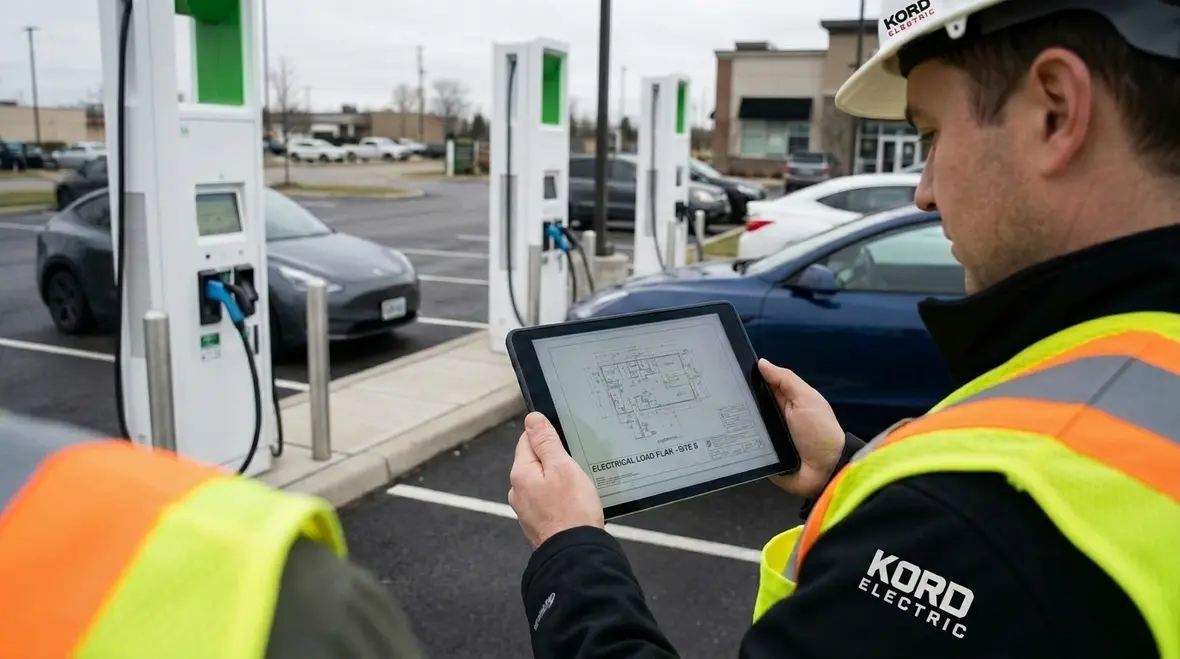
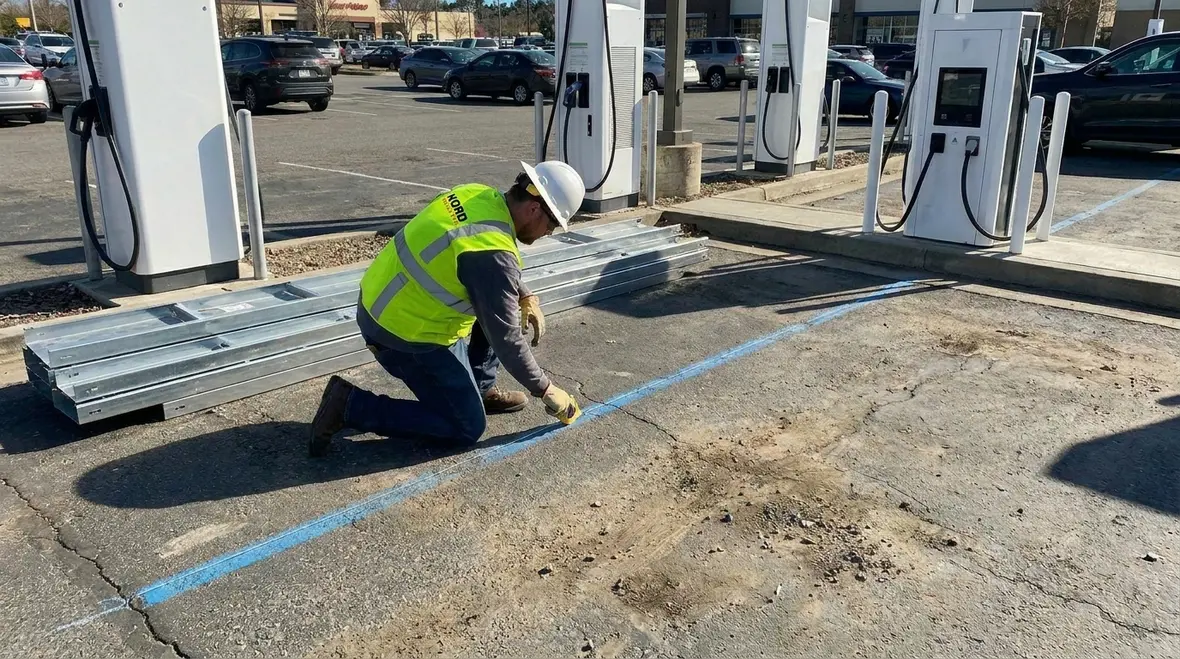
Once the forecasting is set, we design for growth in the physical layout and the electrical path. That matters because commercial sites often have fixed constraints: parking circulation, landscaping, fire lanes, and existing underground conduits. If a company later doubles the charger count without a scalable backbone, the site gets disrupted, costs rise, and timelines stretch.
We plan the raceways, trenching routes, and cable sizes with future expansion in mind. Moreover, we aim to keep later additions simple by providing spare capacity in key areas, such as distribution panels and conduit routes where practical. Even better, we coordinate placement with how vehicles will park, access, and share space.
In many cases, thoughtful design allows the facility to add stations in phases. First, you meet near term demand. Then, when traffic patterns shift, you expand without rewriting the whole plan. That is how commercial electrical systems stay reliable under pressure, even when change shows up uninvited.
3) What electrical upgrades are usually required
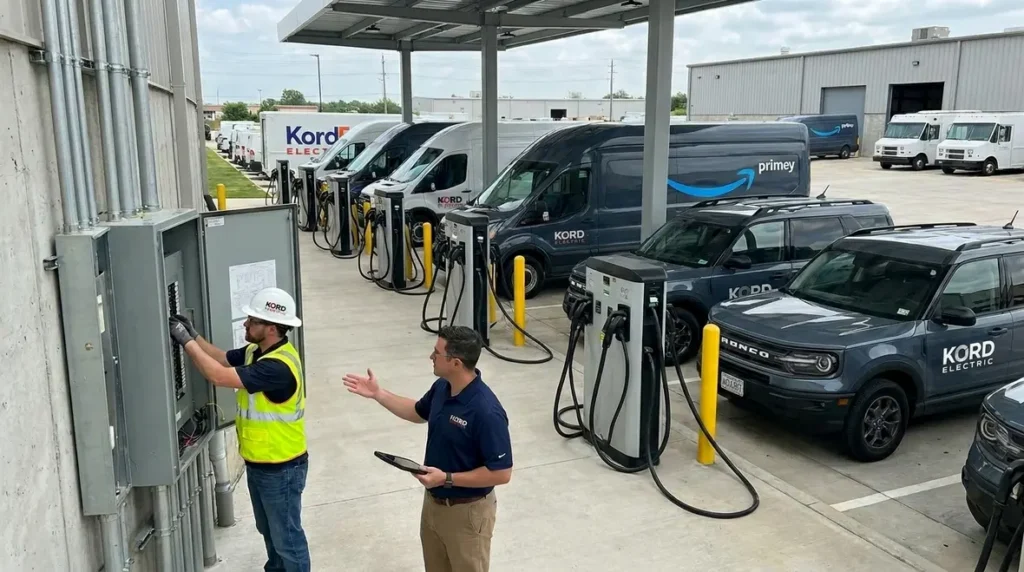
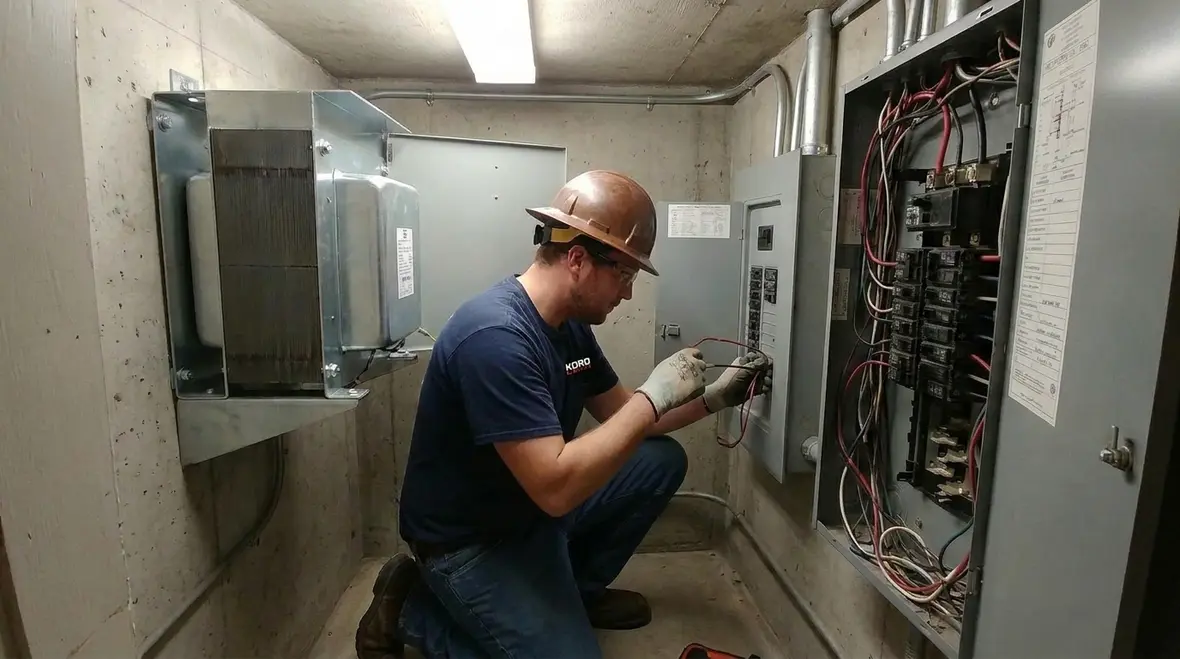
Every scalable plan must face one reality: the site has a finite electrical capacity. Therefore, we evaluate where power comes in, what panels already carry, and how load can move through the building safely. We then identify upgrade paths such as panel capacity expansions, transformer additions, main service adjustments, or dedicated EV circuits.
To keep decisions clear, our technicians explain options in a steady, practical way. They outline what upgrades prevent bottlenecks and what upgrades can wait until expansion triggers. In addition, we consider the demand profile for charging so the electrical system can handle it without creating voltage issues or nuisance trips.
We also handle code requirements and coordination with utility rules. So your project stays compliant, and your team can keep operations running instead of pausing for surprise corrections.
If you have ever watched a movie where the hero ignores the warning sign and hits the trap door, you already understand what happens when an electrical plan ignores reality. We do not build trap doors.
4) Use smart charging to manage load and reduce peak stress
Smart charging helps a commercial site control how charging power gets distributed across multiple ports. Instead of every vehicle charging at maximum draw at the same time, we set controls that manage demand based on available capacity. As a result, the facility can support more chargers with less strain on the electrical system.
In practice, we configure charging behavior around your operating needs. For instance, a property might allow higher charging during off peak hours, while limiting output during high demand periods. This approach can lower peak demand and protect service equipment.
Our expert service staff also helps you think through user experience. Drivers want charging that works when they arrive, not a system that feels like a slot machine. So we balance control logic with predictable performance. Then we document the setup so your facility team can manage changes over time without stress.
5) Placement strategy for commercial sites and major property buildings
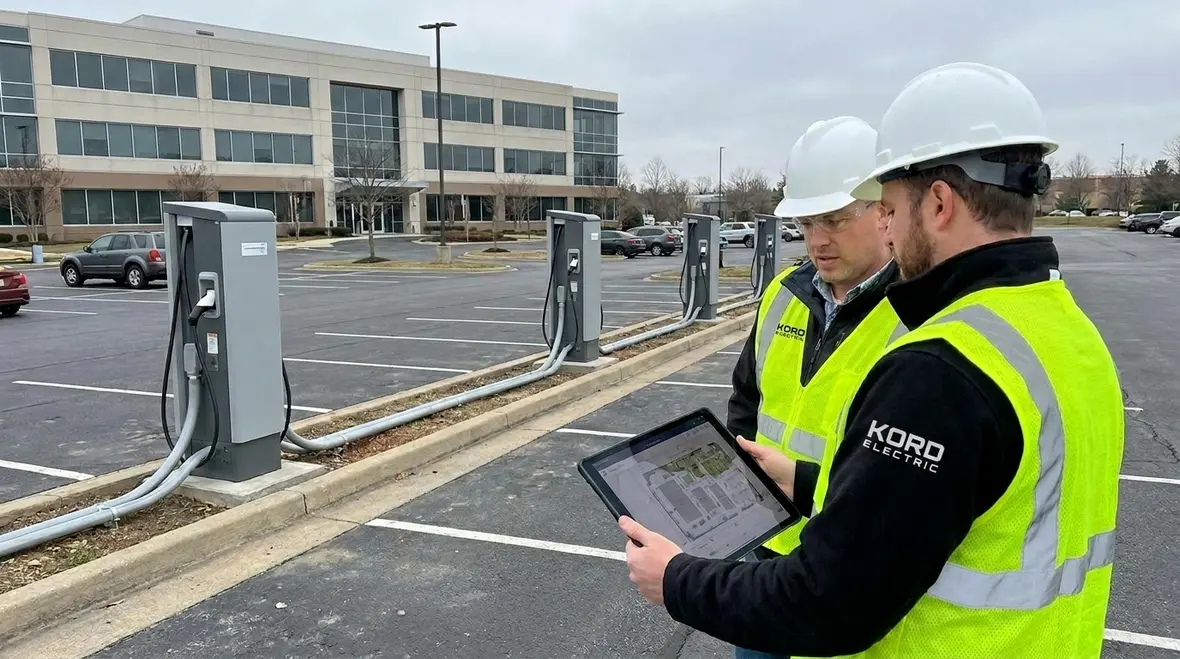
Charger placement is not just about where parking exists. For major property buildings, it includes flow, safety, and how spaces serve different groups. We review the parking layout, vehicle types, and likely routing patterns. Then we plan for ADA access where required, safe cable paths, and protective mounting in high traffic zones.
In addition, placement supports operational goals. For example, employee chargers often benefit from secure areas with consistent availability. Fleet or contractor charging may need predictable time windows aligned with loading schedules. Meanwhile, shared or visitor charging requires signage and clear wayfinding so drivers find the right station without causing parking chaos.
And if a property manager worries that chargers will “ruin the look,” we get it. Nobody wants a charging project that feels like an afterthought. Therefore, we select and place equipment with site aesthetics and maintenance in mind, so the installation looks intentional, not temporary.

6) Phased installation: scale step by step, keep the building running
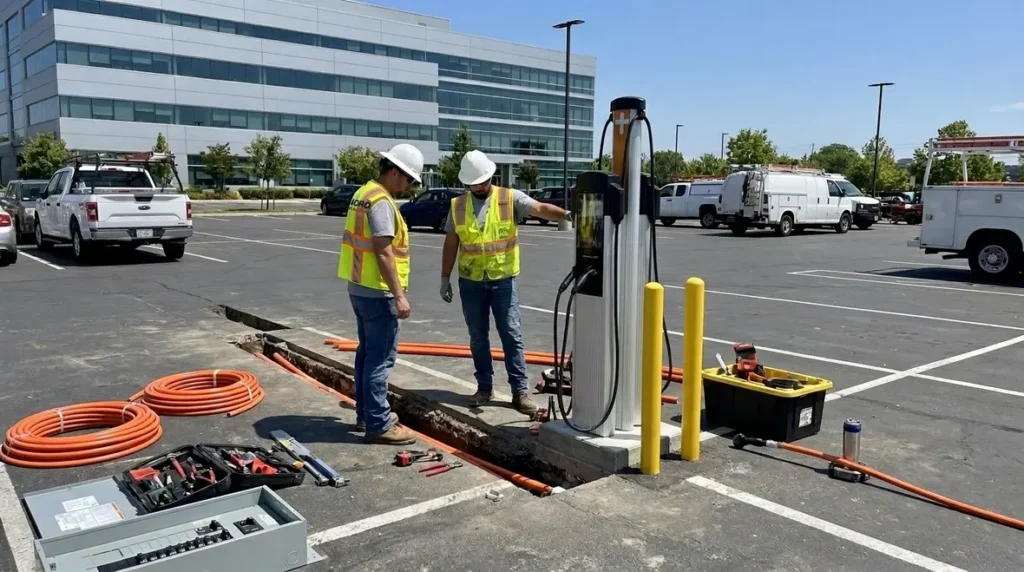
Scalable infrastructure often works best in phases, especially on occupied commercial and industrial sites. We plan each phase based on capacity readiness, construction scheduling, and the timing of fleet or tenant needs. This method keeps downtime low and helps facilities meet deadlines without rushing electrical work.
To manage phasing, we coordinate trenching and electrical work during windows that reduce disruptions. Next, we verify performance after each stage, so the system operates safely and meets charging expectations. Then, when the next expansion happens, the facility uses the already prepared backbone instead of starting over.
Our approach also reduces risk. When leadership can see results early, decisions get easier. And when our technicians handle commissioning and testing in each phase, your team can trust that the system performs, not just that it exists.
7) Maintenance planning and reliability for long term use
Charging is not a one time install. It is a long term service asset. Reliability matters because commercial sites depend on uptime for employee access, fleet operations, and customer confidence. Therefore, we include maintenance considerations in the planning stage.
We help you plan for inspection schedules, cable and connector wear, and software updates when smart charging systems require configuration changes. In addition, we guide your team on reporting and response workflows so small issues do not grow into major downtime events.
Just like a well run warehouse or a well maintained generator, a charging system must stay ready. Our technicians focus on safe operation, and our expert service staff explains what to monitor so your facility team knows what “normal” looks like.
How EV charging planning connects to broader electrical strategy
Electrical infrastructure does not live in isolation. The same panels, feeders, and transformers that support your EV chargers also carry lighting, HVAC, production equipment, and critical systems. That is why commercial electric vehicle charging station planning works best when it ties into a bigger, long term electrical roadmap instead of a one off project.
For many facilities, this roadmap starts with structured preventive maintenance and power quality checks that keep voltage stable and equipment protected. When you combine disciplined maintenance with careful EV charger design, you reduce surprises, protect sensitive loads, and keep critical operations online even as electrical demand grows.
If your facility already has a preventive maintenance program in place, integrating EV charging into that plan is straightforward. If it does not, building both at the same time gives you a stronger foundation for expansion, upgrades, and future electrification projects across the property.
Coordinating with EV charger installation services
Well planned infrastructure still needs precise execution in the field. When you move from commercial electric vehicle charging station planning into full installation, you want a team that handles everything from utility coordination and trenching to commissioning and documentation.
Kord Electric’s dedicated EV charger installation services are built for that exact handoff. The same focus on scalability and code compliance that shapes your plan also guides installation details like conduit routing, labeling, and smart charger network configuration. That continuity keeps your project aligned from the first load calculation to the first successful charge session.
For complex campuses or multi building properties, the installation phase also becomes a chance to verify planning assumptions in real conditions. Our technicians track how chargers perform under real world use, share findings with your team, and adjust settings or phasing recommendations so that each new round of stations lands on even stronger ground.
FAQ
Conclusion
Kord Electric builds scalable EV charging for commercial and industrial facilities with a plan that holds up under real demand. We forecast load, design for future expansion, and coordinate electrical upgrades with smart charging controls that protect capacity. Then our technicians and expert service staff explain each step so your team can make decisions with confidence. If you want a charging network that grows without chaos, contact Kord Electric to schedule a site evaluation and get a roadmap you can trust.
If your facility is ready to move from planning into active deployment, our specialized commercial & industrial EV charger installation services provide the on site expertise to implement that roadmap safely and efficiently. And when you need support beyond charging infrastructure, from lighting installations to voltage stability projects, our broader commercial and industrial services help keep every part of your electrical system aligned with your long term strategy.