Industrial Lighting Retrofit ROI Guide
Industrial lighting retrofit energy savings: the ROI facility managers can explain to leadership
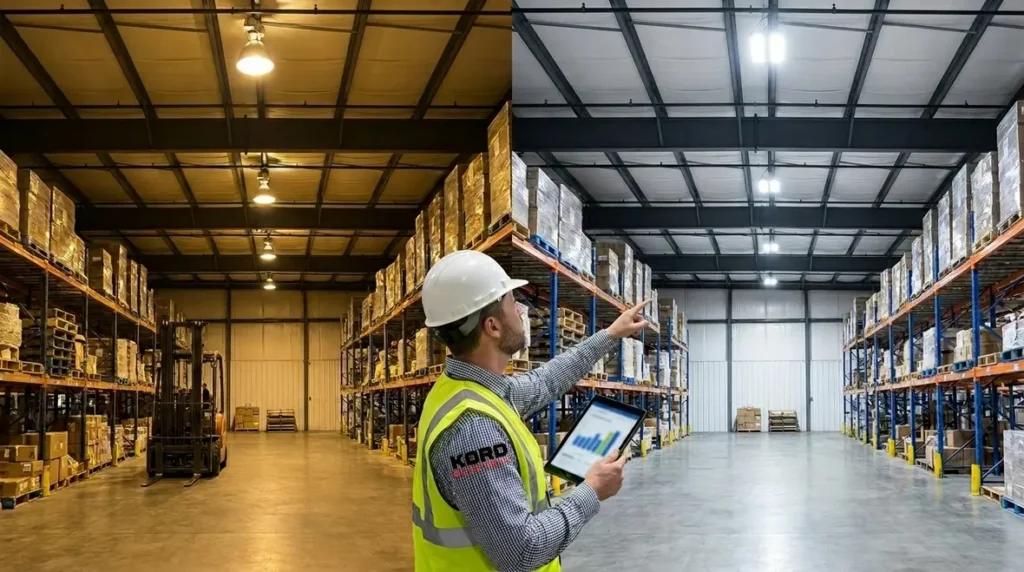
When Kord Electric talks about industrial lighting retrofit energy savings, we do not mean vague promises or neat slogans. We mean real reductions you can track in utility bills, maintenance logs, and downtime schedules. Facility managers often inherit lighting systems like an old building inherits dust, and it multiplies over time. However, a smart retrofit can cut energy costs, lower lamp replacement work, and stabilize lighting performance. Even better, our service technicians explain the steps in plain language, so teams stop guessing and start planning. In short, this guide helps facility managers calculate ROI with confidence, so leadership gets answers and operations keeps running. And yes, the payback math usually beats the “we will deal with it later” plan. That plan always loses.
Step 1: Build the retrofit ROI model that actually holds up in a meeting
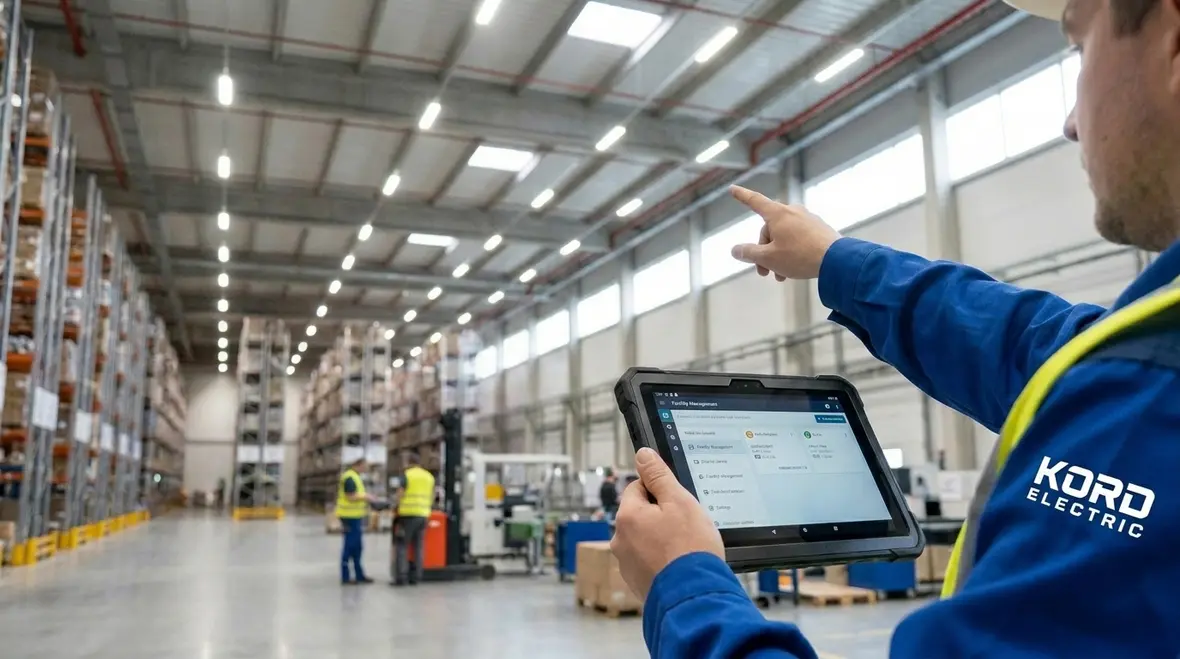
To estimate ROI, we recommend a simple model that leadership can follow and auditors can respect. First, identify your current lighting energy use by pulling utility data and fixture details. Then estimate the baseline cost for electricity and the baseline cost for maintenance. Next, project the savings from new LED systems and smart controls, and add those savings into a timeline. Finally, account for project costs like labor, materials, controls, and any electrical upgrades needed for safe installation.
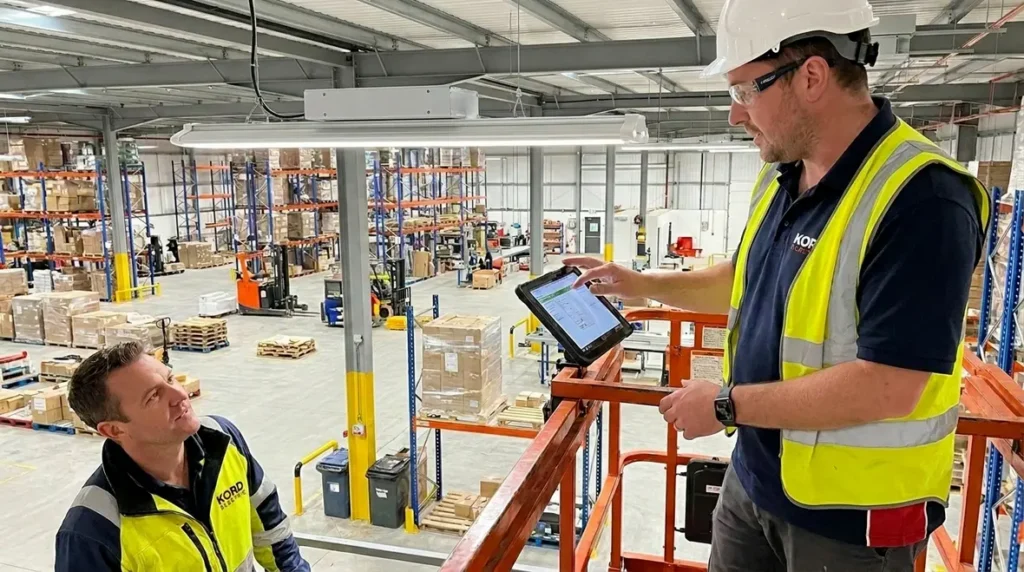
At Kord Electric, we help facility managers build the model around how the building truly operates. For example, a warehouse that runs shifts from 6 a.m. to 10 p.m. does not behave like an office tower with weekend downtime. Therefore, the most useful ROI model uses occupancy schedules, dimming strategy, and lighting zones. Moreover, it includes the time cost of maintenance. Replacing failed lamps and ballasts does not just cost money. It also costs labor hours, work order time, and sometimes production disruption.
Our expert service staff also stress one thing: you cannot calculate ROI from fixture wattage alone. You have to calculate ROI from actual operating hours and dimming or switching behavior. Otherwise, the numbers look great on paper and fall apart when the first night shift turns on everything at once.
Model inputs leadership actually understands
When you walk into a meeting with leadership, they do not want a stack of disconnected assumptions. They want a clear, defensible model. That usually includes:
- Baseline kWh usage tied to specific areas such as warehouses, production floors, and offices
- Current demand charges and how peak loads are influenced by lighting operation
- Fixture counts by type, wattage, and mounting height
- Documented maintenance time spent on lamps, ballasts, and emergency lighting issues
- Projected LED wattage, control strategy, and realistic operating schedules
- Installation, material, and any electrical upgrade costs rolled into a total project figure
Tie each assumption back to a data point: work orders, utility bills, fixture schedules, or a recent electrical maintenance assessment. That data trail builds trust and makes your industrial lighting retrofit energy savings story much easier to defend.
Step 2: Estimate energy savings using actual operating hours and control strategy
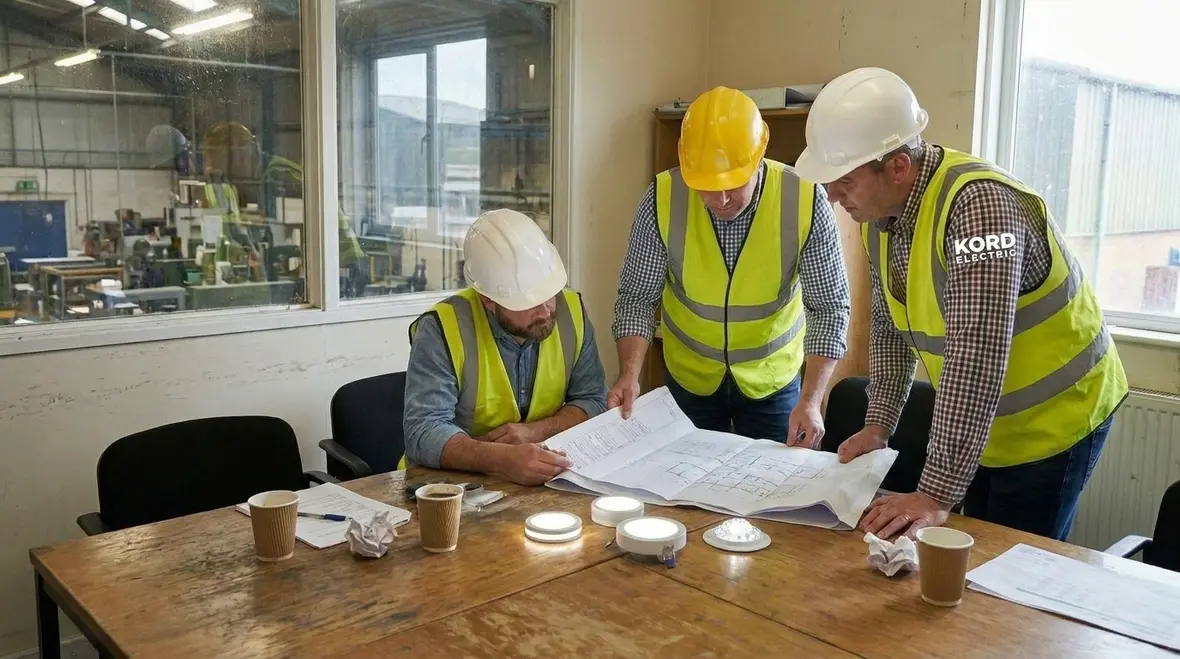
Many people estimate savings using nameplate wattage. That is a start, but facility managers need precision. Instead, we help you quantify how lighting runs throughout the day. For instance, areas like loading docks, corridors, and production floors can use different control settings based on activity levels. Then, you apply those schedules to the expected LED wattage after the retrofit. If the facility supports controls like occupancy sensors or daylight harvesting, savings can improve further.
To make this practical, we suggest breaking the building into lighting zones. Each zone gets its own schedule, dimming level, and control type. Then the ROI model multiplies each zone’s load by the hours it runs. This approach catches real-world behavior, like partial lighting during setup or reduced output near skylights. Additionally, it reveals where the retrofit creates the fastest payback.
We also remind facility teams that LED performance stays stable. Traditional lighting can drift as components age. Meanwhile, new LED systems usually deliver more consistent output, which reduces complaints and rework. In other words, the ROI does not only come from kWh. It also comes from fewer “fix it again” calls.
Zone-by-zone analysis that reveals hidden savings
- Warehouse aisles: High hours, often good candidates for occupancy sensors with time delays.
- Loading docks: Irregular patterns, strong opportunity for motion sensing and daylight controls.
- Offices and support spaces: Scheduled usage with potential for scheduling and task lighting strategies.
- Outdoor and security lighting: Long runtimes where LED and photocell controls dramatically trim waste.
By pairing each zone with an appropriate control strategy, industrial lighting retrofit energy savings move from “finger in the wind” to a structured forecast. That is the difference between a slide deck full of guesses and a plan that finance teams can plug into their models.
Step 3: Include maintenance and lifecycle costs, not just electricity
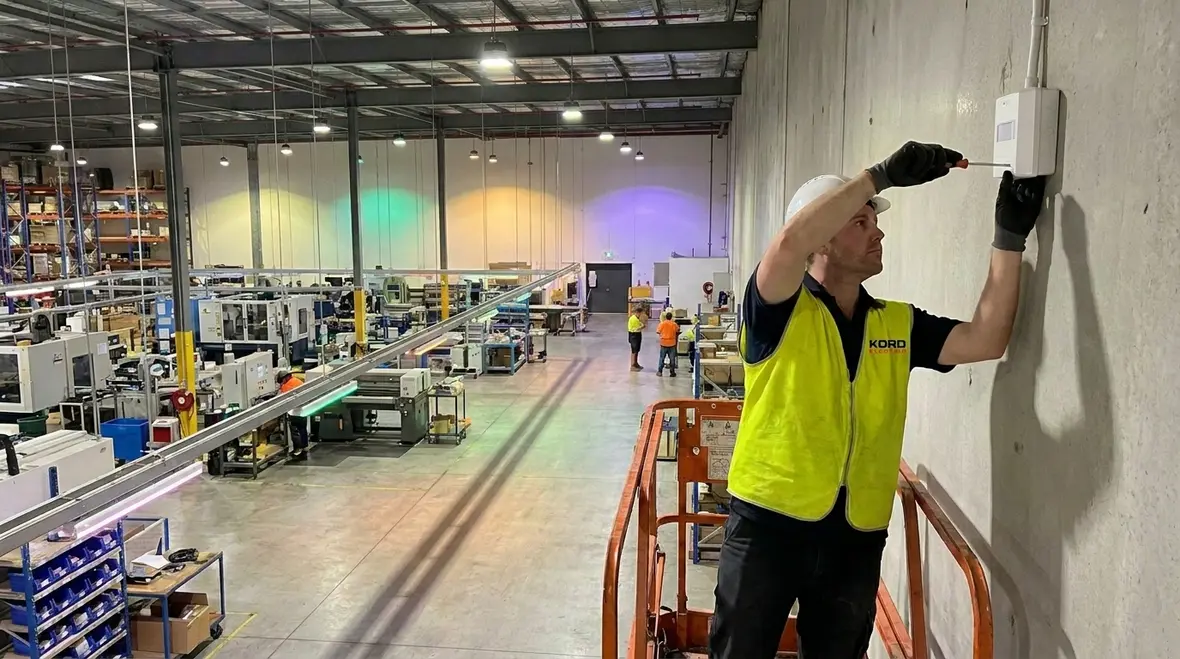
Energy savings get attention, but maintenance savings often decide the ROI outcome. Facility managers can measure this by reviewing work orders for lighting replacements, ballasts, starters, and emergency repairs. Then, they compare those costs to what the LED system reduces. Because LEDs typically last much longer than many traditional sources, the frequency of replacements drops. As a result, facilities schedule fewer outages and reduce the labor required for ladder work, ceiling access, and lamp disposal.
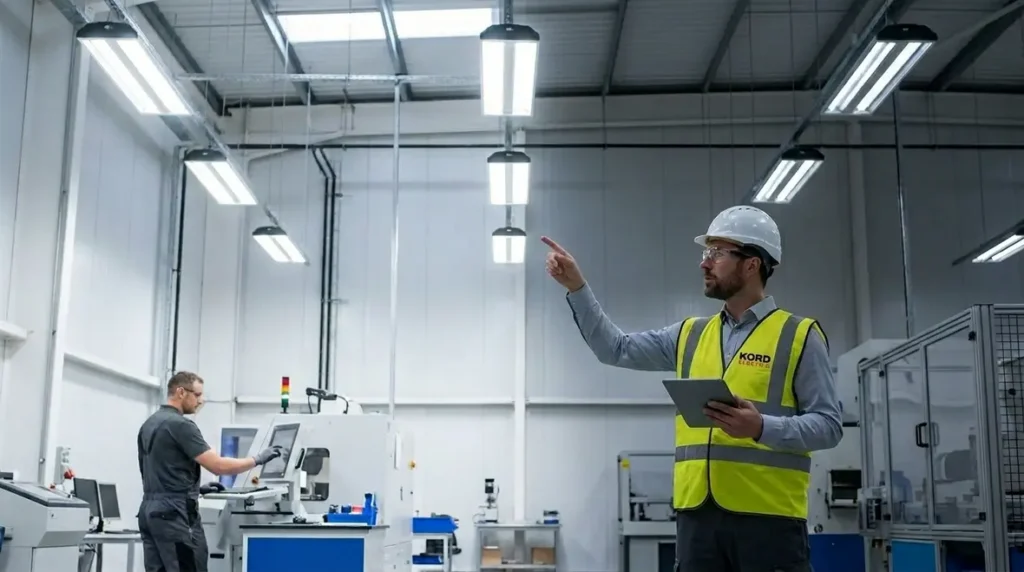
However, the ROI must include installation and potential panel or driver upgrades. If an existing system uses outdated wiring practices, retrofit work may require electrical adjustments for safe operation. Kord Electric manages this with field verification and code-compliant design. That way, the retrofit does not create new headaches for maintenance teams. Instead, it creates a cleaner long-term plan.
Our technicians also factor in operational risk. When lighting fails during a shift, the cost extends beyond the part replacement. It can cause downtime, safety concerns, and production slowdowns. Therefore, a retrofit ROI should weigh reliability benefits. Leadership tends to listen more when you connect maintenance improvements to safety, continuity, and fewer unplanned disruptions.
Translating maintenance wins into financial language
- Fewer lift rentals and after-hours emergency calls for failed fixtures
- Reduced inventory of lamps and ballasts that will never match future systems
- Less time spent troubleshooting nuisance outages or flickering circuits
- Stronger alignment with long-term electrical preventive maintenance plans
When you present industrial lighting retrofit energy savings as a combined energy, maintenance, and risk reduction story, the project stops looking like a one-time expense and starts looking like a multi-layered performance upgrade.
Step 4: Account for rebates, incentives, and project timing in industrial settings
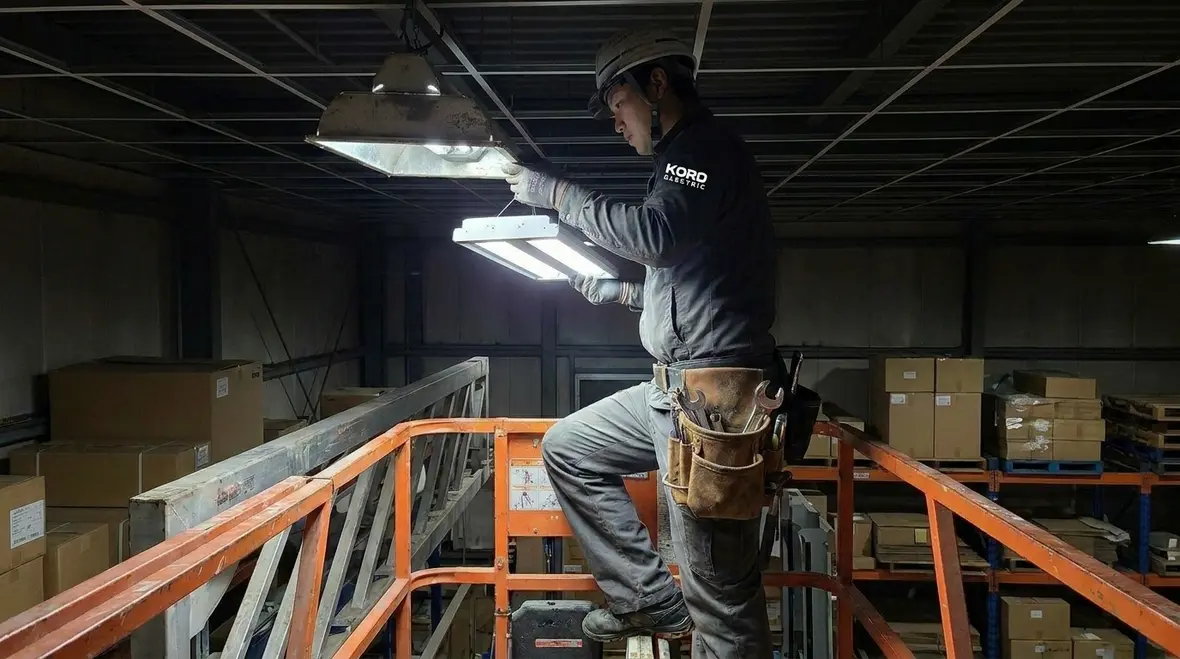
ROI often improves when facilities capture rebates and incentives. Many utility programs reward high-efficiency lighting and control upgrades. Yet incentives depend on documentation, fixture specifications, and timelines. So we suggest treating incentives like a project phase, not an afterthought. First, collect your lighting and electrical data. Next, confirm that the retrofit design meets program requirements. Then, track paperwork and submission dates.
Timing matters, especially for commercial and industrial operations. If a production line cannot shut down, the retrofit must fit the facility schedule. Kord Electric coordinates work to reduce impact, and our service staff communicates clearly about areas to be serviced, what to expect, and when the lights will be unavailable if any portion requires downtime. That communication may sound like a small thing, but it saves time in the long run. It prevents the “surprise, we are working in your space” situation that nobody enjoys, unless they enjoy chaos, which most people do not.
When incentives and scheduling line up, ROI can improve quickly. At that point, the retrofit stops feeling like a cost and starts feeling like risk reduction with bright benefits.
Industrial timing and phased installation
- Schedule high impact areas during planned downtime, holidays, or shift transitions.
- Phase work to keep egress, safety, and production lighting available where required.
- Coordinate with other projects, such as rewiring or panel upgrades, to reduce repeat disruption.
- Document every phase so the retrofit dovetails with broader facility electrical plans and future projects.
Industrial lighting retrofit energy savings land better with leadership when they see that project timing will not turn their busiest months into a construction circus.
Step 5: Avoid common retrofit mistakes that cut ROI or create new costs
Even solid retrofit projects can underperform when teams skip verification. The most common mistakes include overestimating operating hours, ignoring control limitations, and selecting equipment that does not match the application. For example, a dimming control plan that works in one zone may not work in a different space with different occupancy patterns. Similarly, installing LEDs without verifying drivers, voltage compatibility, and existing fixture conditions can create callbacks.
Another costly error involves poor lumen and distribution planning. Facility managers sometimes assume “LED equals bright enough.” Yet industrial lighting depends on correct spacing, mounting height, beam angle, and surface reflectance. If the retrofit reduces usable light or fails to meet the required levels, teams may adjust work areas or add additional fixtures. That can reduce the expected ROI.
Our expert technicians prevent these pitfalls by reviewing the site, confirming fixture types, and recommending a design that fits the facility’s needs. Additionally, we help teams document the retrofit for maintenance records and possible incentive audits. This makes the ROI calculation easier to defend later. And it keeps the project from turning into a comedy of errors. Nobody wants to be the facility manager who buys a retrofit and then wonders why the warehouse looks like a dimly lit TV set from the wrong decade.
Retrofit red flags facility managers should watch for
- Assumptions that ignore shift schedules and real operating patterns
- Controls that look impressive on paper but confuse actual users
- Fixtures selected without photometric review for critical task areas
- Vendors who cannot explain how their numbers tie back to your bills and work orders
- No plan for post-installation verification, commissioning, or adjustments
Avoiding these traps keeps your industrial lighting retrofit energy savings aligned with the story you promised leadership at the beginning of the project.
Step 6: How facility managers measure ROI after installation
Once the retrofit completes, ROI measurement should not wait until the end of the year. Instead, teams can confirm performance and savings early. First, verify that lighting levels match the design intent. Then, confirm control operation, including timers, sensors, and dimming behavior. Next, track electricity consumption after installation compared to baseline periods with similar production and weather conditions. If the facility uses submetering, ROI measurement becomes clearer and faster.
Kord Electric encourages a documentation routine. We help facility teams maintain service records that include fixture counts, control settings, and any electrical modifications performed. Those records matter during troubleshooting and during future upgrade phases. Over time, a facility that tracks performance can plan future improvements with less guesswork, which keeps costs stable.
Also, measure intangible benefits. Reduced maintenance call volume, fewer emergency lighting issues, and improved lighting consistency often improve staff satisfaction. That may not hit the utility invoice, but it impacts productivity and safety. Therefore, ROI measurement should include both financial metrics and operational stability.
Simple tracking methods that make ROI visible
- Compare kWh usage for representative months before and after the retrofit.
- Log lighting-related work orders and track the drop in service calls.
- Note any improvements in inspection findings or safety observations tied to visibility.
- Align results with your commercial and industrial electrical maintenance plan to show long-term performance.
By translating those observations into simple charts, facility managers can walk into executive meetings with proof that industrial lighting retrofit energy savings did exactly what the project charter promised.
FAQ
Final thoughts for facility leadership: move from estimate to action
ROI gets easier when a facility team stops guessing and starts measuring. Kord Electric helps commercial and industrial properties calculate industrial lighting retrofit energy savings with real operating schedules, maintenance history, and a retrofit plan that fits the site. Our technicians and expert service staff explain each step, document the work, and support follow-up measurement so leadership sees proof, not wishful thinking. If your lighting system feels like a never ending maintenance project, let us review your site and map a payback plan. Contact Kord Electric today for a facility focused retrofit assessment, and connect those improvements with broader reliability strategies like electrical preventive maintenance services that keep your entire system running strong.
If your facility is also planning broader upgrades—rewiring, new production lines, or modernized lighting layouts—tying your retrofit into structured service offerings such as recessed and industrial lighting installation can help lock in savings and simplify long-term maintenance. A well-planned lighting retrofit is often the first visible step in a complete electrical reliability strategy that protects equipment, stabilizes operations, and improves safety across the property.
When you are ready to align lighting performance with your operational goals, Kord Electric is prepared to help—from ROI modeling and design through installation and ongoing support.
Explore how our dedicated industrial and commercial lighting services can support your next retrofit, or connect with our team to integrate lighting upgrades into a wider preventive maintenance and reliability roadmap.