Commercial EV Charging Station Scalability Guide
Kord Electric helps commercial and industrial facilities plan for growth when they add EV charging. We focus on commercial ev charging station scalability early, so property owners can expand capacity without ripping out good work later. That matters because scaling is not just about adding new chargers, it also involves smarter electrical design, cleaner load management, and safer upgrades across the whole site. In other words, we help fleets and building teams avoid the “we’ll deal with it later” plan that always shows up like a plot twist, except the twist costs real money. And yes, our technicians explain the process in plain language, so decision makers understand what changes, why it changes, and when it impacts operations.
How commercial EV infrastructure scaling prevents costly rework
Commercial EV infrastructure does not grow in a straight line. First, fleets add vehicles, then employees request chargers, then tenants ask for access, and suddenly the electrical system that looked “big enough” starts acting like a gas tank with a pinhole. As demand rises, the risk grows too: voltage drop, tripped breakers, overloaded panels, and downtime that no one schedules during business hours.
That is why we plan for commercial EV infrastructure scaling from day one. Our approach starts with the site’s real electrical capacity, not a hopeful guess. Then we connect that capacity to charger placement, cable routing, and expected utilization. As a result, the property can add ports later with less disruption because the backbone already supports expansion. Our expert service staff also walks clients through the tradeoffs, so they do not have to guess whether a future upgrade will require new switchgear, new conductors, or a revised load plan.
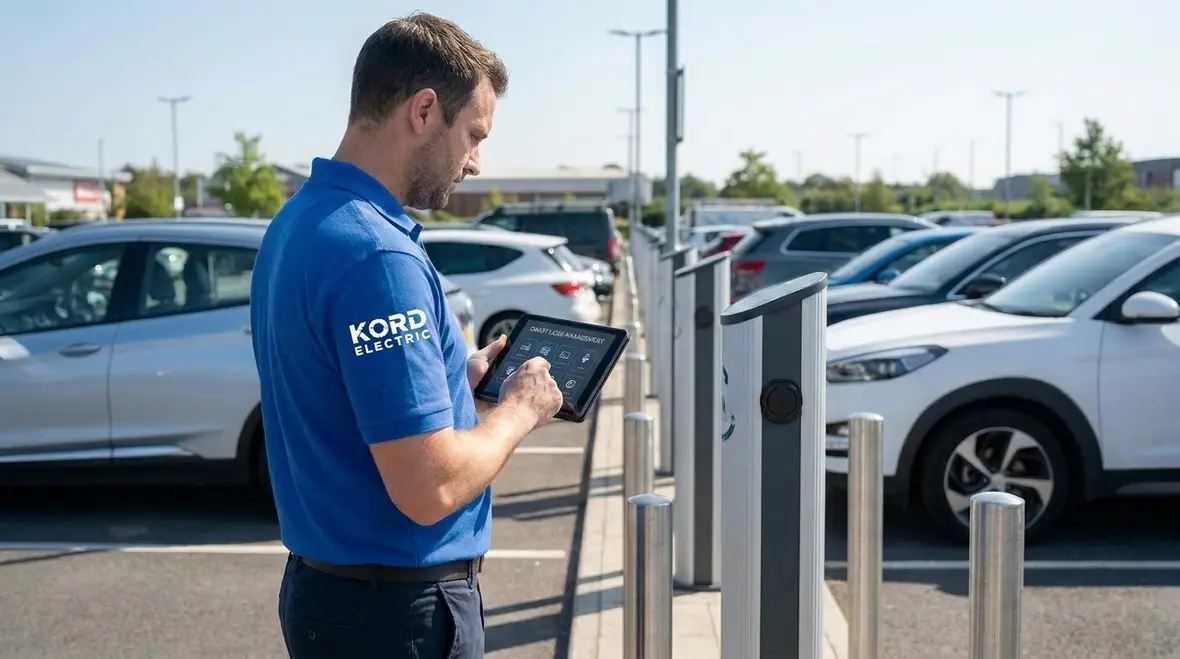
And if you have ever seen a “future proof” installation that still needed a full rebuild a year later, you already know why we take this seriously. We treat scaling like a business decision, not a wish.
Step by step: what we evaluate before we install
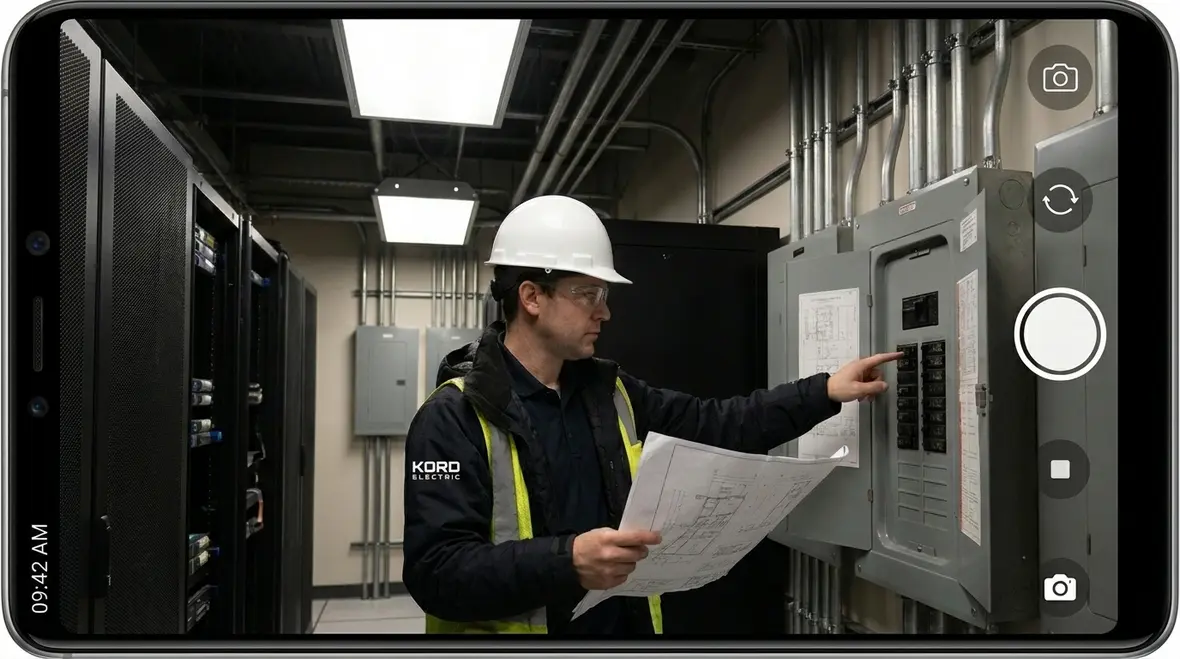
To scale charging for commercial and industrial properties, we evaluate the whole electrical system as one connected setup. First, we review service size and available capacity at the main distribution level. Next, we map how loads behave across the day, including HVAC, lighting, dock equipment, pumps, and any process loads that follow their own schedules. Then we look at how much headroom exists, since headroom determines what future expansion can safely use.
After that, our technicians examine distribution paths. We identify where feeders run, what panels can support, and where conduit space exists for future cables. If the site has aged wiring, we flag it early because “cheap now” often turns into “expensive later.” As we do this, we coordinate with property teams on operational constraints, like access for trenching, dock traffic windows, and permit timing.
Finally, we connect charger strategy to system limits. Rather than installing chargers blindly, we match the plan to load management options and to the patterns of vehicle charging. Consequently, the system can grow without forcing abrupt redesign.
If you want a deeper look at how commercial electrical systems can affect budget and risk, we also maintain a guide on rewiring cost factors and what typically drives cost and downtime. You can see more in our Kord Electric blog post: Rewiring Cost Guide for Commercial Electrical Systems.
Power design choices that support growth
Commercial EV charging scalability hinges on power design decisions that affect the site for years. We focus on three areas. First, we choose distribution that can expand. That might mean installing appropriately sized feeders and reserving circuit space, so future ports do not require a whole new backbone. Second, we plan for safe and compliant protection. Breakers, disconnects, and surge protection have to match the real load and the expected operating conditions. Third, we account for voltage regulation and heat management, because cable performance and panel loading define how stable the system stays under higher demand.
We also think about redundancy where it matters. Some properties need charging to stay available even when one circuit or component requires service. So, we may design in a way that limits single point failures for critical operations. That keeps operations running and prevents charging downtime from becoming a workplace drama.
And yes, there is a moment in every project where someone asks, “Can we just add more chargers later?” We smile, take a slow breath, and answer: you can, but only if the system has the capacity and the pathways. Our team explains it clearly so owners can make the best long term decision.

Load management and smart controls for commercial fleets
For commercial and industrial properties, load management often makes the biggest difference between “we can scale” and “we are stuck.” We use control strategies that balance charging demand across available power. Instead of forcing every charger to operate at full output at the same time, smart management shifts power based on site constraints and charging needs.
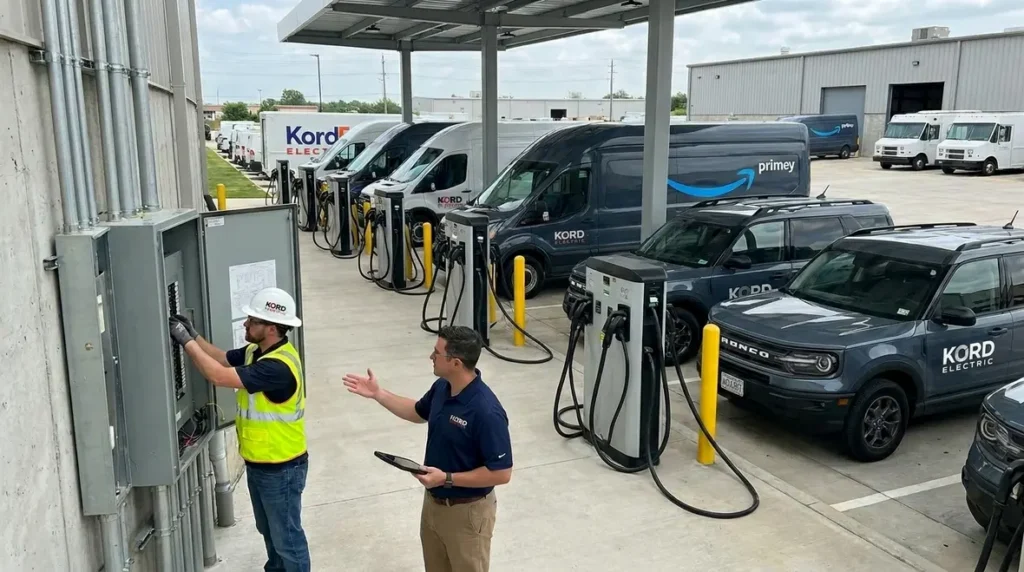
In practice, that means we can add more charging points while still protecting the electrical system. It also helps fleets reduce bottlenecks. When a fleet returns to the site, not every vehicle needs maximum power instantly. So, smart controls allocate power where it matters most, while still keeping charging timelines on track.
Our expert service staff supports clients with the operational side too. They explain how different charging schedules affect utilization, how management settings influence energy cost, and how building teams can coordinate charging windows with other peak loads. Therefore, scaling becomes a controlled process rather than a scramble.
One more thing: controls need tuning. We do not treat load management as a set it and forget it situation. We verify performance, adjust settings if the property’s load profile changes, and keep the system stable as utilization grows.
Designing for future ports: layout, wiring paths, and space planning
Real scalability depends on physical planning, not just electrical capacity. When a site adds chargers later, cable routing and conduit space become the bottlenecks. If conduit is packed, if pathways do not exist, or if the installation location blocks future access, expansion turns into a costly redesign. So, we design the first phase with the later phases in mind.
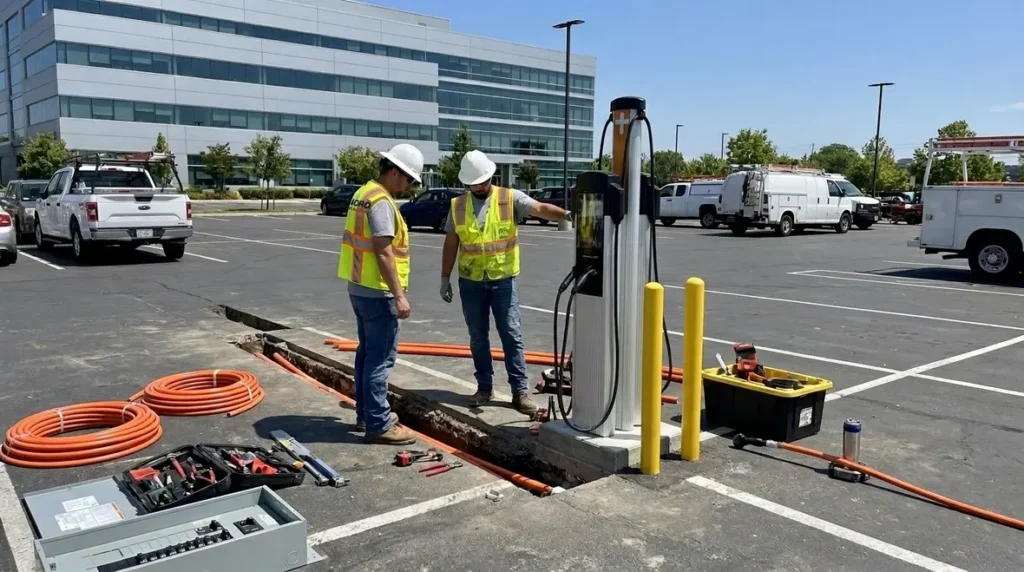
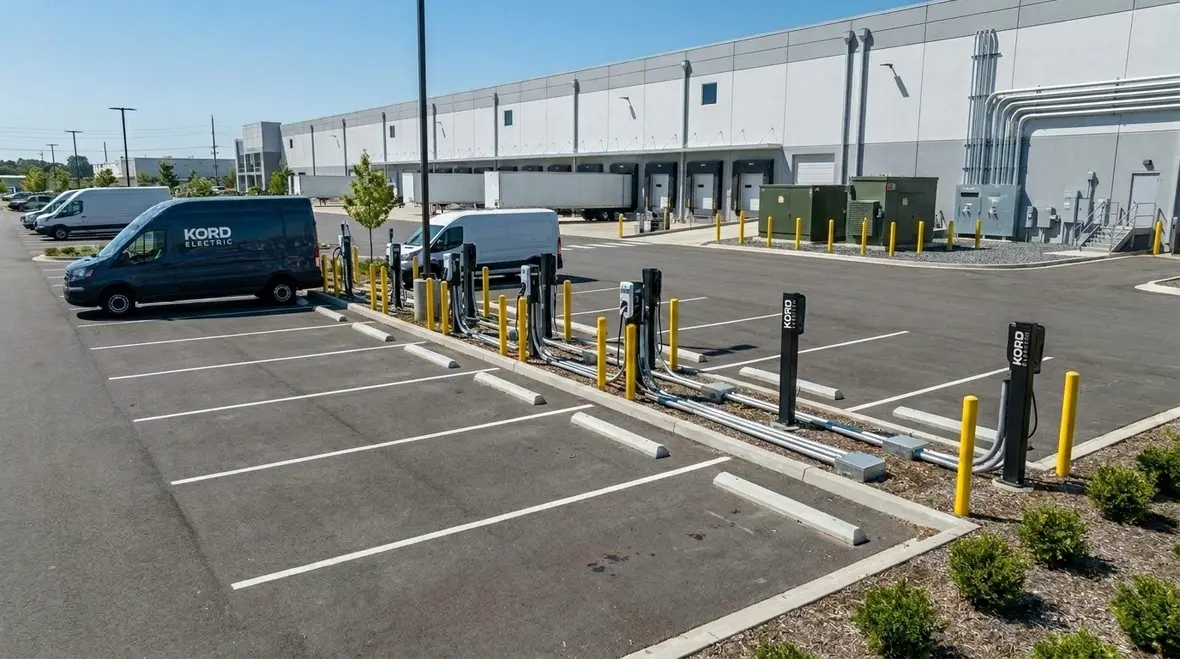
Our technicians map charging locations around traffic flow, maintenance access, and vehicle types. We also plan cable routes with expansion in mind. Conduit sizing, trench routes, and pull points matter because they affect how easily we can add circuits without damaging existing infrastructure. In addition, we consider how chargers connect into distribution equipment so future upgrades stay clean and safe.
Where buildings have limited utility rooms, we plan around that constraint too. We may locate future-ready equipment in a way that supports orderly expansion and reduces future downtime. Then, when the time comes, the property can add ports without tearing up the parking lot like it is the opening scene of a disaster movie.
Budget reality: what drives EV charging scale costs in commercial systems
Owners often ask about cost, and we understand why. Budget matters, especially when a project must fit into capital planning. Yet costs vary widely because commercial electrical systems vary just as widely. In most cases, the main drivers are electrical capacity upgrades, distribution equipment replacement, rewiring or new conduit runs, permitting, and downtime management.
There is also a big difference between adding a few chargers and building a scaling path. When we design for commercial EV charging scalability from the start, we reduce the chance of expensive rework. That can lower total cost of ownership even if the initial spend is a bit higher.
As part of our process, we help clients understand where costs usually appear and how to reduce them. We do not just estimate. We explain the system constraints that shape the price. Then our team outlines options that meet compliance and performance while keeping the project practical.
In many cases, planning also helps with scheduling. If we know what future phases require, we can coordinate timelines and reduce repeat mobilizations. Consequently, the project stays smoother and less disruptive to ongoing operations.
FAQ
Ready to scale charging without the headache
When a commercial property adds EV charging, the real goal is growth without chaos. Kord Electric helps you build a plan that supports phased expansion, protects electrical performance, and keeps operations moving. Our technicians and expert service staff explain each step in plain language, so your team can make confident decisions. If you want commercial EV infrastructure that scales with your fleet and your tenants, contact Kord Electric today for a site assessment and a practical roadmap forward. Let’s build charging that stays ready, not just installed.
To learn more about how we approach EV work across complex facilities, explore our dedicated service page on commercial and industrial EV charger installation. It outlines how we align site evaluation, system design, and installation with long term scalability so your investment keeps paying off as demand grows.
If your facility is also planning broader electrical upgrades or lifecycle work, pair your EV strategy with resources like our Rewiring Cost Guide for Commercial Electrical Systems to see how panel capacity, distribution equipment, and rewiring decisions affect commercial ev charging station scalability and long term operating costs.