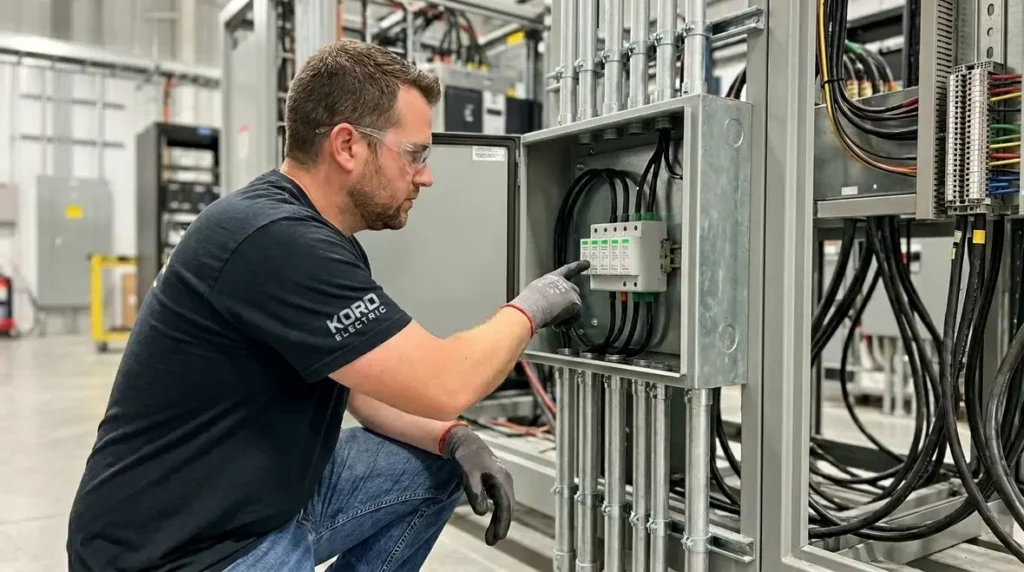
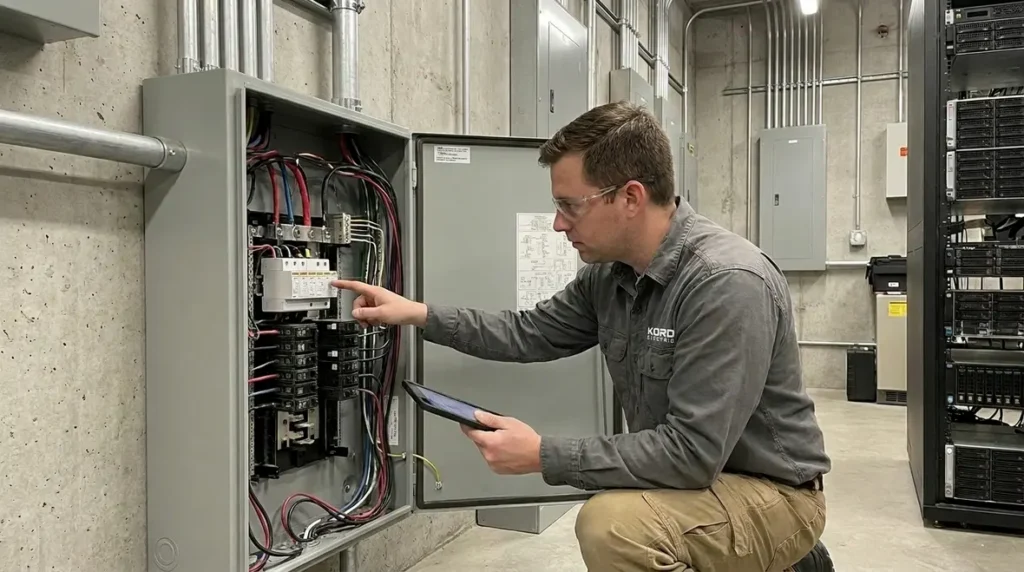
Industrial Surge Protection for Critical Facilities
At Kord Electric, we treat power like a lifeline, not a convenience. When a storm rolls in or the grid stutters, industrial surge protection solutions help shield mission-critical equipment that cannot afford downtime. We build protection strategies that fit commercial and industrial facilities and major property buildings, and our team explains each step in plain language. That means the people responsible for data, control systems, and high-value electrical loads understand what is at stake and why our surge protection approach matters. And yes, we do tell jokes during walkthroughs. Not because we enjoy paperwork, but because calm teams make better decisions.
What is surge risk for mission-critical facilities?
In commercial and industrial buildings, electrical systems run like a busy kitchen. Equipment needs steady power, and it expects clean behavior. However, surges do not ask permission. They can come from lightning strikes, utility switching, motor starts, transfer operations, or even arc events inside a facility. Industrial surge protection solutions reduce damage by giving surge energy a safe path, instead of letting it punch through sensitive components.
Because the building depends on layered systems, the risk builds quietly. One surge might not shut everything down, but it can degrade insulation, stress power supplies, or create hidden defects that fail later. Therefore, the real cost shows up as recurring repairs, random crashes, or shortened equipment life. Our experienced service staff helps leadership connect symptoms to root causes, and we do it without hiding behind buzzwords. Think of it as preventative care for your electrical backbone, not a late-night emergency dash with a flashlight and a prayer.

Which equipment needs protective attention first?
Not all loads deserve the same level of priority. We help facilities focus protection where failures cost the most, start with the systems that support operations, and then expand outward. Typically, our technicians place special emphasis on electronics and controls that cannot ride through sudden voltage events.
Mission-critical equipment often includes:
- Data center racks and network gear
- Servers, storage arrays, and management systems
- Building automation and HVAC controls
- PLC and industrial control panels
- UPS outputs, switchgear controls, and relay systems
- Motor drives and variable frequency drives
- Critical lighting and emergency power interfaces where applicable
In many major property buildings, these systems sit behind switchgear and distribution panels, yet they still feel the surge. Consequently, protecting the feed alone may not be enough. Industrial surge protection solutions often work best when they cover equipment at the right points, with coordination that prevents energy from overwhelming downstream devices.

How do industrial surge protection solutions work in real life?
When a surge event occurs, voltage can spike faster than protective devices can react. So the design must anticipate the event, not just respond after the fact. Our approach uses surge protective components that redirect energy and limit the voltage stress seen by equipment. Then, we coordinate devices so the protection stages work together.
Our expert service staff typically explains the process using a simple mental model. First, a surge comes in along the incoming service or feeder. Next, protection devices clamp or divert the surge energy at designated locations. Finally, properly selected downstream protection limits residual voltage so sensitive equipment sees a lower, safer level. That flow matters because one poorly matched component can turn a protective system into a very expensive bottleneck.
To keep this grounded, we also pay attention to system details such as grounding quality, bonding practices, and panel layout. While surge protectors help, the best results require the entire electrical infrastructure to behave correctly. If the grounding system cannot control transient energy, the surge path gets messy, and the equipment pays the price.

What does coordination and layering look like?
Surge events move like water under pressure. If protection appears only at one point, energy finds alternate routes through other paths. That is why industrial surge protection solutions in modern facilities often use a layered method across incoming power and branch panels, with coordination among devices and ratings.
During design and retrofits, we map key loads and determine where protective devices should sit. Then we set them up to coordinate with upstream and downstream protection, so the surge energy does not shift from one stage to the next in a harmful way. Additionally, we consider the electrical environment. A facility with heavy motor operation and frequent switching needs different attention than one with mostly steady loads.
Our technicians also check for compatibility with the building’s distribution scheme. We want protection that matches voltage systems, integrates with switchgear, and supports future expansions. As a bonus, coordinated designs can reduce nuisance alarms and prevent premature component stress. Nobody wants to replace surge devices every time a tenant plugs in a fancy new coffee machine that sounds like a helicopter.
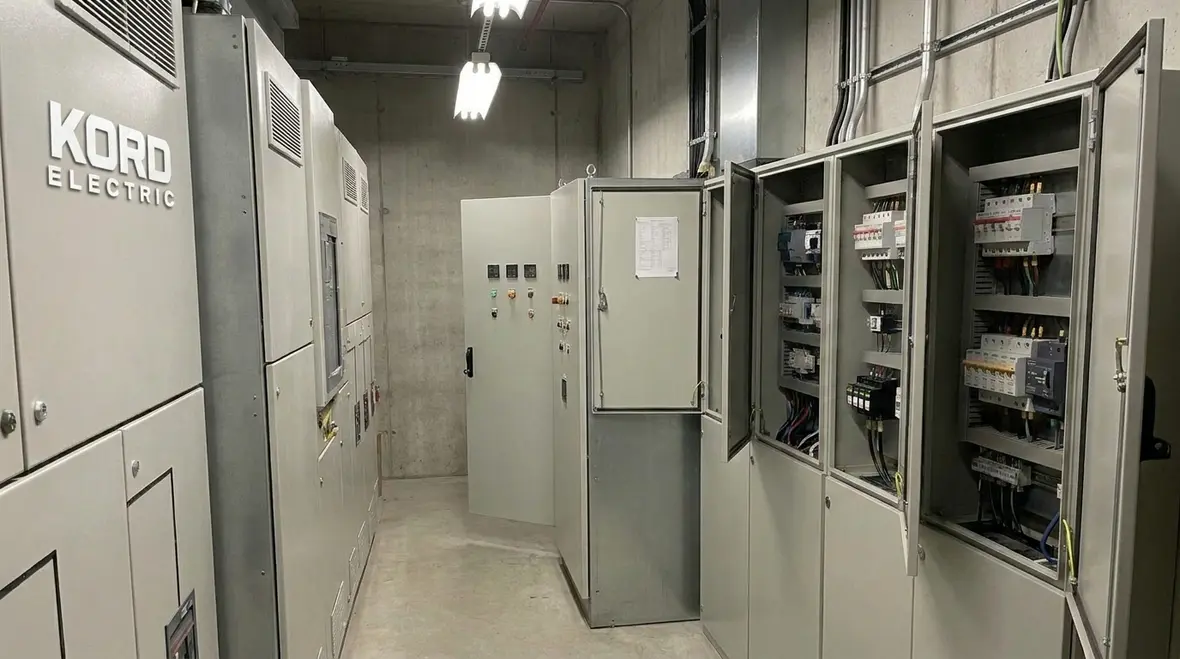
How we handle installation for commercial and industrial facilities
A strong design fails if installation shortcuts show up. We bring a site-first mindset and we treat field conditions as part of the engineering. Our team reviews electrical one-lines, equipment schedules, and panel labeling so the final system aligns with the intended surge path. We also verify the grounding and bonding environment because it ties directly to safe energy diversion.
In the field, our technicians focus on neat, correct connections and proper device selection. Therefore, we pay attention to wire routing, termination quality, and any constraints inside switchgear rooms and electrical closets. If a building has tight spaces or complex bus configurations, we still plan for clean install practices rather than forcing compromises. That approach helps ensure performance stays consistent.
We also educate building stakeholders after work completes. We explain what was installed, where it sits, and how it supports the electrical infrastructure, so the facility team can operate with confidence. And if a question comes up later, our service staff does not act like the help desk is a mythical creature. We actually show up, explain clearly, and handle what needs handling.
Data center electrical infrastructure essentials for surge protection
When a facility supports data and compute, the electrical chain must stay steady under stress. Our team aligns surge protection with the broader electrical infrastructure needs that keep these spaces stable. We look at how power enters, how it distributes, and how critical rooms connect to distribution panels. This matches the practical guidance found in our blog resource on data center electrical infrastructure essentials, where we emphasize structure, coordination, and reliability throughout the system.
In those environments, surge protectors alone do not solve everything. They work alongside UPS systems, distribution panels, and proper grounding practices. Additionally, data center designs often require careful attention to separation and routing so surges do not couple into sensitive pathways. As workloads grow, we help facilities plan for upgrades so protection remains effective and properly rated.
Finally, we remind teams of a simple truth. If the equipment is mission-critical, then electrical protection should not be treated like a last-minute accessory. It should be part of the foundation from day one, and it should evolve as the facility evolves.
FAQ: industrial surge protection solutions
Service team clarity that keeps projects moving
Many facilities delay upgrades because they feel unsure about the scope. We solve that issue with clear explanations and step-by-step planning. Our technicians talk through what is installed, why it fits the facility type, and how it supports mission-critical operations in commercial and industrial settings and major property buildings only. Then we document the solution so stakeholders can manage it like a system, not a mystery.
Sometimes, clients ask for a quick fix. We understand the urgency, but we also prioritize the long view. A well-coordinated protection strategy tends to perform better over time, and it reduces the need for repeated troubleshooting. In other words, we trade short-term speed for long-term stability. It is the kind of decision that feels slower at first, but pays off like choosing the right UPS the first time instead of replacing it after the third brownout.
If your facility is already tracking power quality issues or unexplained equipment failures, structured maintenance and monitoring can work alongside surge protection to stabilize performance. Our team frequently integrates protection upgrades with broader electrical preventive maintenance programs so facilities can address root causes, not just symptoms.
Ready to protect your critical electrical systems?
At Kord Electric, we help commercial and industrial facilities and major property buildings protect the equipment that keeps operations alive. We design and install industrial surge protection solutions with coordination, correct grounding considerations, and clear communication from our technicians and expert service staff. If you want fewer interruptions and more reliable performance, contact us for a focused assessment and a plan that fits your electrical infrastructure. Let us help you turn surge risk into controlled protection, before the next unexpected event tries to write your outage schedule for you.
For facilities experiencing broader power quality issues such as flickering lights, voltage swings, or unexplained equipment resets, our surge strategies pair naturally with services like voltage fluctuation diagnostics and correction. Together, these solutions create a more stable, resilient electrical environment for your most critical operations.
Whether you are planning upgrades for a data center, a major property building, or a high-load industrial facility, our commercial and industrial electrical team can design a protection strategy that supports both current and future needs. From incoming service to downstream distribution, we help you build industrial surge protection solutions into the same foundation as your lighting, distribution, and power quality strategies so everything works as one system.
If your next project also includes lighting or infrastructure upgrades, our surge protection planning can coordinate with services like commercial and industrial lighting installation to keep electrical work aligned, efficient, and ready for future expansion.