Commercial EV Fleet Infrastructure Planning Guide
Commercial EV growth starts with EV fleet infrastructure planning
Kord Electric helps commercial and industrial facilities plan for EV charging in a way that grows without chaos. In EV fleet infrastructure planning, we map today’s routes to tomorrow’s fleet size, and we design electrical capacity so expansions do not feel like adding new riders to a packed bus at rush hour. We guide property teams through load studies, panel upgrades, trenching, network options, and safety reviews, then our technicians explain every step in plain language. Because when the future arrives, it should not arrive with burned circuits and surprise bills. Like a good action movie, the plan gets built before the big scene.
And yes, sometimes someone asks if “plugging in” magically handles the power. It does not. Power always has a plan. We do too.
Right sizing the electrical system for real fleet duty
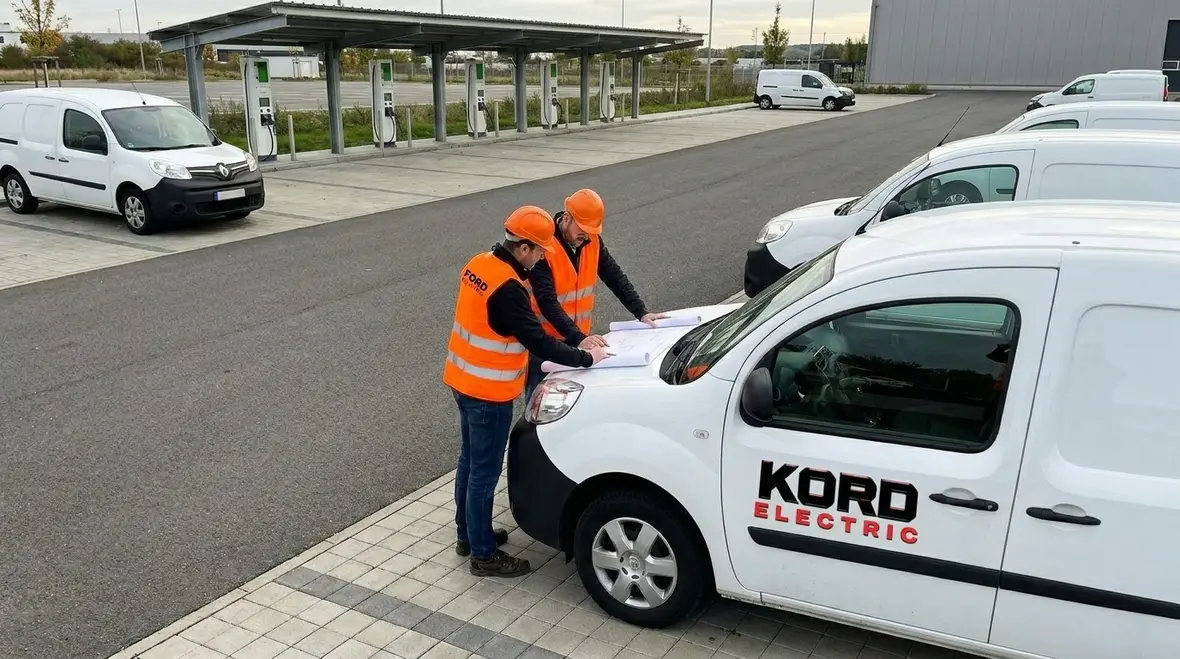
To build scalable infrastructure, we start with actual site use, not generic assumptions. First, our team reviews utility bills, transformer limits, demand factors, and charging schedules. Then we align that information with the vehicles in the fleet, including duty cycle and typical dwell time.
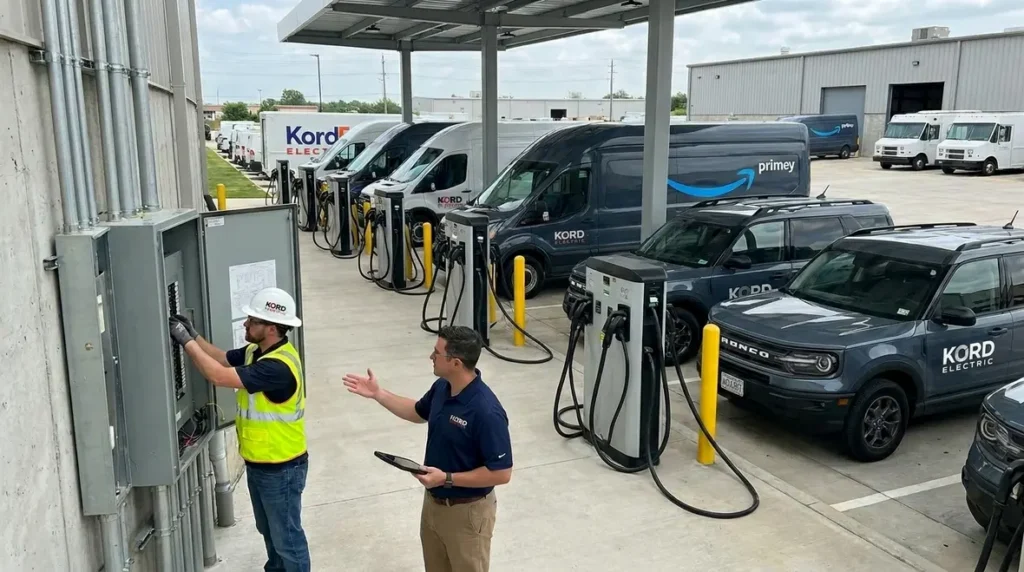
At this stage, we focus on how power flows across the whole building, not just at the charger. Therefore, we consider feeder capacity, switchgear conditions, available breaker space, and the ability to add load later. In other words, we protect the rest of the facility from being pushed into a corner when charging demand rises.
Our expert service staff also talks through the “what if” scenarios. For example, if the fleet adds vehicles in twelve months, we show how capacity increases without forcing full site rewiring. We use practical options like managed charging, load balancing, and staged circuit expansion. And while it may sound boring, it prevents the electrical system from acting like a stressed-out barista during a holiday rush.
Designing for expansion without tearing up the site
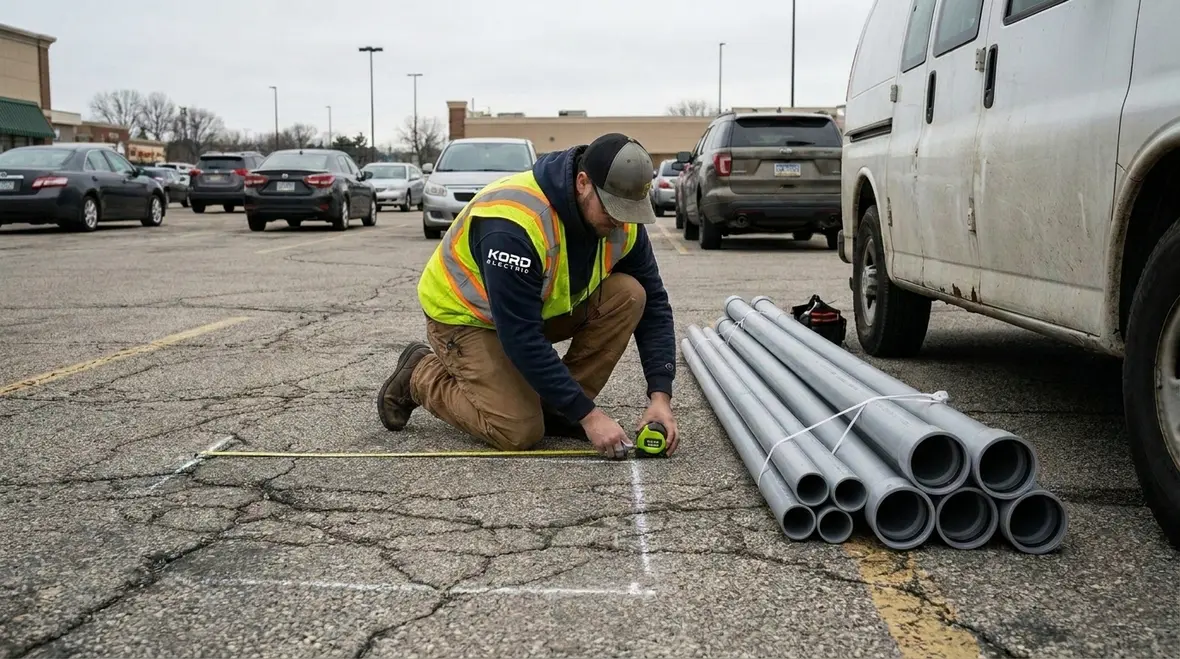
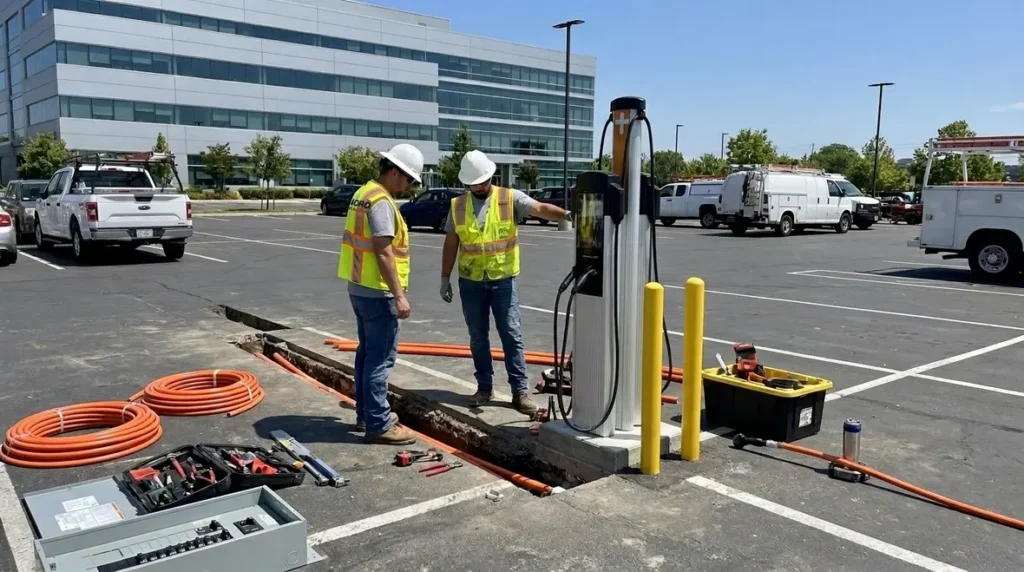
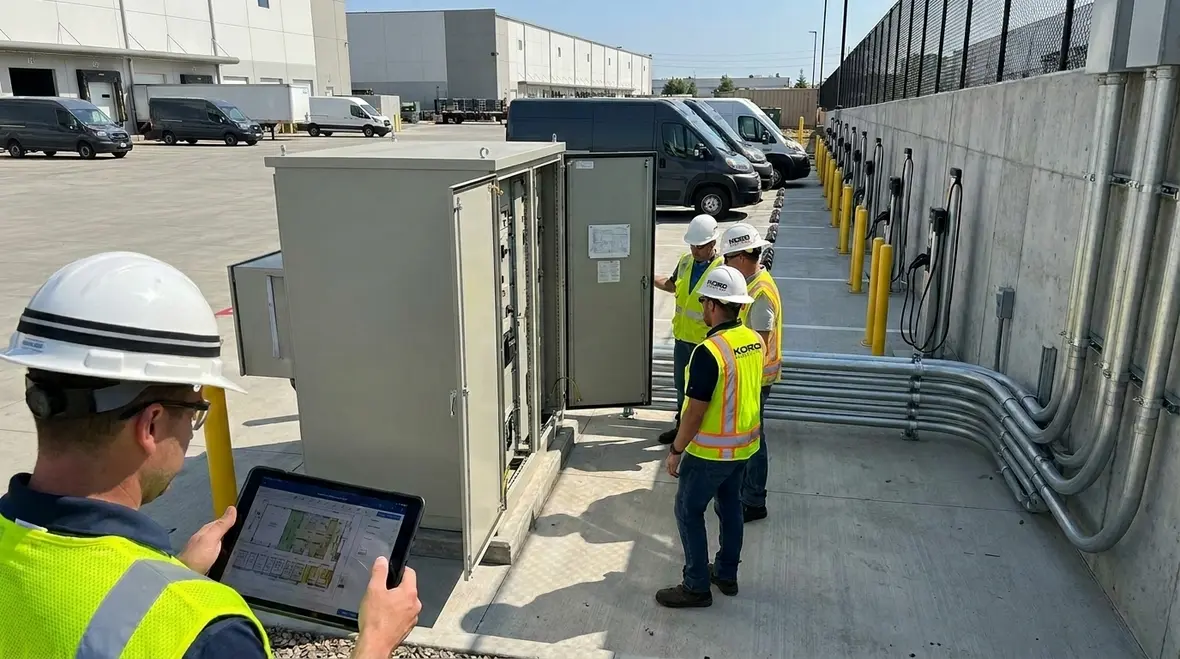
Scalability is not only about watts. It is about how the physical site grows. So we plan conduit paths, cabinet locations, and routing access with future charger clusters in mind. As a result, we avoid repeated pavement cuts and costly downtime that commercial property teams cannot afford.
During design, we think like the person who will maintain the system two years from now. We place equipment where technicians can access it safely, and we include space for additional components. Also, we coordinate with civil teams on trench depth, surface restoration, and traffic flow so the work fits business operations.
Then we model the charger layout against vehicle movement and safety zones. In the real world, chargers that look perfect on paper still need good sight lines, clear parking geometry, and safe cable management. We account for all of that, so fleet charging stays convenient and professional.
Managed charging strategies that keep everyone running
Once the electrical capacity is understood, we help facilities use charging intelligently. Managed charging works by distributing available power across chargers based on priorities, time windows, and actual demand. Therefore, we reduce peak loads and keep the site within utility limits.
For fleets, managed charging aligns with operational needs. Night charging supports overnight schedules, while daytime top offs support shift changes. We also consider how charging should behave when multiple vehicles plug in at once. Instead of letting every charger compete like kids grabbing candy at the same time, managed charging allocates power like a calm dispatcher.
Our technicians explain the logic behind these settings. They walk property stakeholders through priority rules, escalation behavior, and how the system responds during abnormal conditions. Because when people understand the system, they use it better, and we support it faster.
Dual columns for your rollout plan and electrical roadmap
Below is a practical way we structure commercial EV fleet infrastructure planning so teams can execute in phases. We build the electrical roadmap and the rollout plan as one story, not two separate documents. For commercial teams exploring broader EV charging infrastructure scalability concepts, this approach pairs well with our detailed breakdowns of how scalable EV charging supports long term capacity and budget control across major properties.

| Phase focus | What we deliver at each step |
Discovery and site limits |
We collect utility data, review electrical one line diagrams, and confirm current loads and constraints so your EV fleet infrastructure planning starts from real capacity, not guesses. |
Capacity and architecture |
We design the charging system architecture, specify equipment, and set a baseline for future growth across the fleet, including EV charging infrastructure scalability for additional vehicles and shifts. |
Infrastructure build readiness |
We plan conduit routing, cabinet placement, cable sizing, and protection requirements for safe installs, coordinating with site operations so trenching and construction line up with your schedule. |
Staged installation |
We install power components and chargers in a way that preserves capacity and access for the next expansion, tying each phase back to your EV fleet infrastructure planning roadmap. |
Commissioning and training |
We test performance, verify safety, and have our expert service staff walk through operation and maintenance so fleet operators and facility managers know exactly how the system behaves. |
Ongoing optimization |
We support monitoring and adjustments as fleet size and charging patterns evolve, reviewing data to tune schedules, refine managed charging rules, and prepare the next round of expansion. |
Safety, permitting, and code compliance that do not drag on
Commercial property teams need speed, but they also need safety. So we treat code compliance as a core part of scalable deployment, not a final hurdle. We plan for required disconnects, grounding, labeling, weather protection, and conductor sizing based on duty and site conditions.
Then we help coordinate documentation for permitting and inspection. Because if the paperwork trails behind the hardware, the schedule suffers. We keep communication clear so your stakeholders know what is happening and what is next.
Our technicians also emphasize field realities during install. They confirm conditions on site, verify equipment placement, and test circuits properly. After all, a charging system is not only about energy delivery; it is also about reliable, safe operation for drivers and facility staff.
And look, even if someone insists they can “just wire it real quick,” we do not build EV infrastructure that way. The electrical code does not accept pop-up shortcuts. It is more like a strict coach: patient, but firm.
Selecting chargers and networks for long term control
Choosing the right charging equipment influences both performance and future expandability. We help commercial and industrial facilities select chargers that match the fleet’s needs and the site’s electrical plan. Then we consider future vehicle types, power levels, and whether the site should support faster charging later.
Network and software options matter too. When we design for scalable infrastructure, we plan for how the facility will manage usage and report data. Therefore, we consider access control, billing logic if needed, and monitoring for uptime and energy trends.
Our expert service staff explains how the user experience works for fleet operators. They also explain what facility managers can see and how alerts trigger maintenance actions. So if a station needs attention, your team does not find out by guessing. We built the system to provide visibility.
For property teams comparing equipment, it often helps to connect this EV fleet infrastructure planning work with our dedicated EV charger installation services, which detail charger types, installation steps, and long term maintenance expectations for commercial and industrial sites.
EV fleet infrastructure planning checklist for major property buildings
If a property team wants a simple way to avoid common misses, we recommend a checklist that hits the essentials. Start with the electrical foundation, then move outward to the site and operations layer. This is where EV charging infrastructure scalability and EV fleet infrastructure planning meet the day-to-day reality of keeping a building reliable.
Review utility capacity, demand limits, and transformer constraints
Model charging schedules based on real vehicle dwell time
Plan conduit routes and equipment placement for future growth
Use managed charging to prevent peak overload
Confirm safety protection, grounding, and labeling requirements
Align installation sequencing with facility uptime needs
Plan commissioning, training, and monitoring for ongoing performance
When teams follow a structured approach, EV adoption feels less like a gamble and more like a controlled investment. For facilities already mapping long term upgrades, integrating EV fleet infrastructure planning into broader programs like electrical maintenance and panel upgrades helps connect budgets, reliability, and future-ready capacity into one roadmap.
FAQ
Call Kord Electric and build your rollout with confidence
If you are planning EV charging for a commercial or industrial site, do not build it like a one time event. Call Kord Electric and we will help you map a scalable rollout that protects electrical capacity, supports expansion, and keeps operations smooth. Our technicians and expert service staff explain the plan step by step, so stakeholders understand what is happening and why. Reach out today for a site assessment and a practical infrastructure roadmap you can use immediately.
When you are ready to connect EV fleet infrastructure planning with on-the-ground installation, explore our dedicated commercial and industrial EV charger installation services. Aligning planning, design, and installation under one team keeps your rollout coordinated, your schedules realistic, and your electrical system prepared for the next wave of vehicles.
From EV charging infrastructure scalability to preventive maintenance and future capacity upgrades, Kord Electric helps commercial property owners treat electrification as a controlled, repeatable investment instead of a guessing game.