Commercial Exterior Lighting Design for Security
Kord Electric builds a safer, smarter perimeter with a practical commercial exterior lighting design that fits real business needs. When a facility needs security and compliance, we do not just swap fixtures and call it a day. Instead, we plan, modernize, and document lighting so it supports people, protects property, and helps meet code expectations. Our approach blends strong product selection with careful layouts, and our technicians explain each step in clear terms, without making your team feel like they walked into a mystery novel. And yes, we keep the job moving, because waiting weeks for light is like waiting for a sequel that never arrives.
Why security lighting fails in real life
Most commercial sites do not suffer from a total lack of lighting. They suffer from lighting that looks fine from across the parking lot but performs poorly where it matters. For example, glare hides details, shadows swallow entrances, and outdated controls fail during peak hours. Consequently, security teams still patrol manually, and property managers still get late night complaints.
In addition, many facilities inherit lighting from earlier upgrades that did not consider today’s requirements. Over time, pole heights change, landscaping grows, and occupancy patterns shift. Then the light distribution becomes uneven. As a result, the same area can feel bright from one angle and dark from another, which is exactly what an intruder wants, and exactly what your insurance carrier does not want to hear.
At Kord Electric, our technicians review the site like a system, not like a collection of bulbs. We look at sight lines, mounting conditions, aiming practices, and how the light lands on doors, loading docks, fences, and the routes people actually walk.
What compliance expects from modern exterior lighting
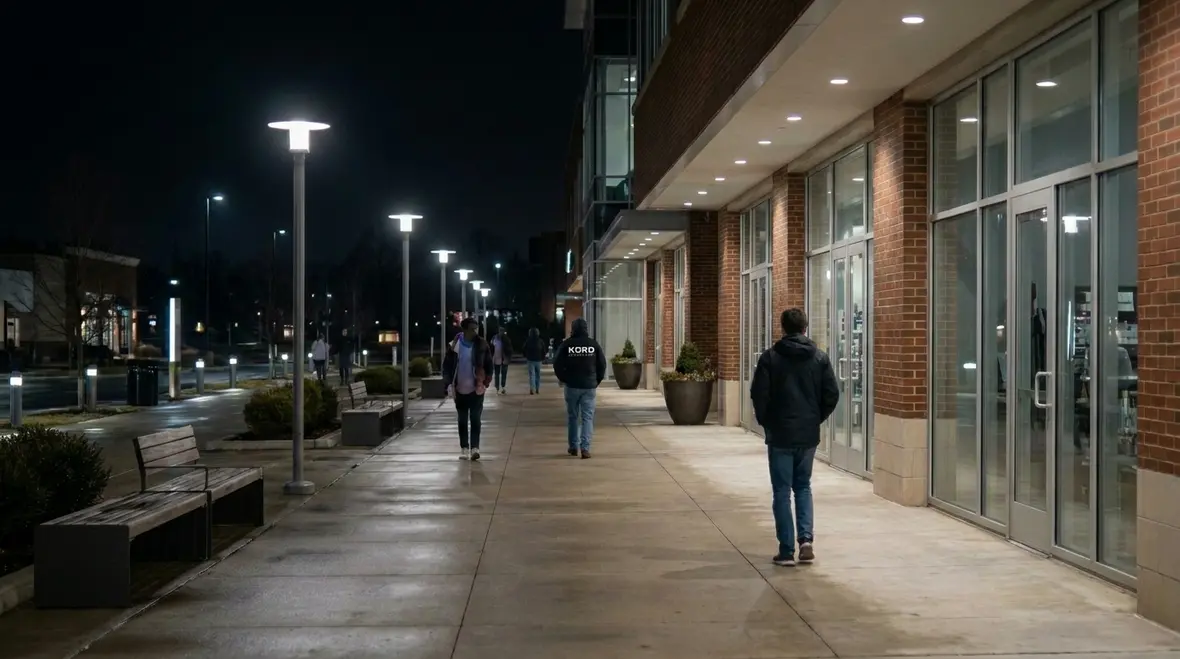
Compliance does not usually mean one magic fixture brand or a single “code number” that solves everything. Instead, it means meeting the expectations around safety, visibility, glare control, and appropriate illumination for the spaces people use. Moreover, many jurisdictions and standards emphasize how light affects pedestrians and motorists, especially near rights of way.
Therefore, we help facilities align design choices with common compliance goals. This includes reducing excessive glare, limiting spill beyond property lines, and maintaining consistent illumination where access points sit. We also plan for maintenance, because a lighting system that fails in year three may meet paperwork today and disappoint tomorrow.
Our expert service staff then explains what we find and what we recommend. We do not drown property teams in theory. We translate the requirements into field decisions, so the modernization work makes sense long before the first screwdriver turns.
At the same time, security-focused lighting should play nicely with other life safety systems. For example, egress lighting and exterior paths of travel must work together so people can move safely from interior corridors to outdoor routes without sudden dark gaps. Thoughtful planning here supports broader fire and life safety compliance and reduces those “why is this corner so dark?” questions during inspections.
We also pay close attention to how exterior lighting interacts with neighboring properties and public ways. Overly aggressive floodlighting might feel “secure” from the loading dock, but it can cause glare for drivers, pedestrians, and adjacent buildings. A balanced design respects those boundaries while still giving your security cameras and teams the visibility they need.
How we plan a commercial exterior lighting design upgrade
To modernize lighting properly, we start with a site-first plan and then we build the system from the ground up. First, our team surveys the property and maps problem zones such as entrances, gate controls, employee walkways, and vehicle routes. Next, we evaluate how existing poles, arm lengths, and mounting heights affect light spread. Then we consider how controls will behave across seasons and schedules.
After that, we refine the commercial exterior lighting design approach using targeted goals. We aim for visibility where people need it and control glare where it does not. We also account for weather exposure, corrosion risk, and power quality. Finally, we document the decisions so facility managers can track what changed, why it changed, and how it supports ongoing compliance.
In the field, our technicians often see the same pattern: someone installed brighter fixtures but placed them poorly. So the result feels louder, not safer. We avoid that mistake by focusing on distribution and aiming accuracy, not just lumens.
We also look beyond the obvious hotspots. It is easy to stare at front entrances and main drive lanes and forget about the side doors employees actually use, the back corner gate where deliveries sneak in at dawn, or the walkway between the office and the farthest parking stalls. Our team walks those paths, checks sight lines, and adjusts the design so the experience of moving through the site matches the intent on paper.
Finally, we align our design with your operational patterns. A distribution center that runs three shifts has different needs from an office complex that empties at 6 p.m. and a healthcare campus that never really sleeps. By tuning optics, zoning, and schedules around real-world use, we produce lighting that feels “on your side” instead of just “on.”

Common security gaps we close for industrial and major properties
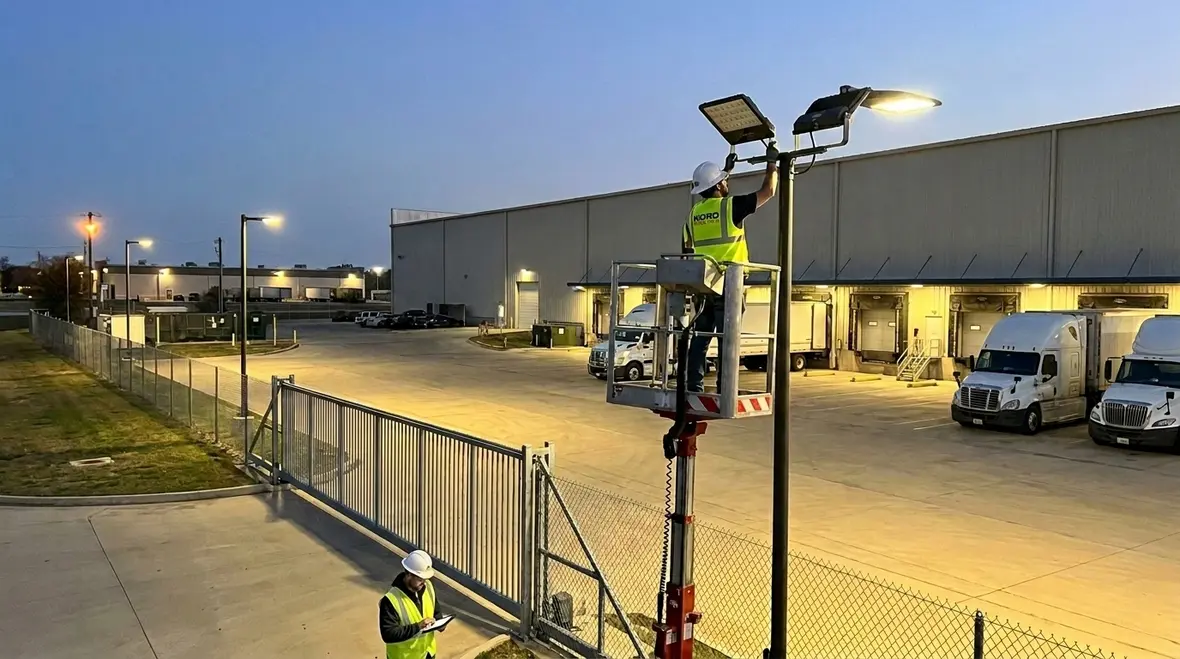
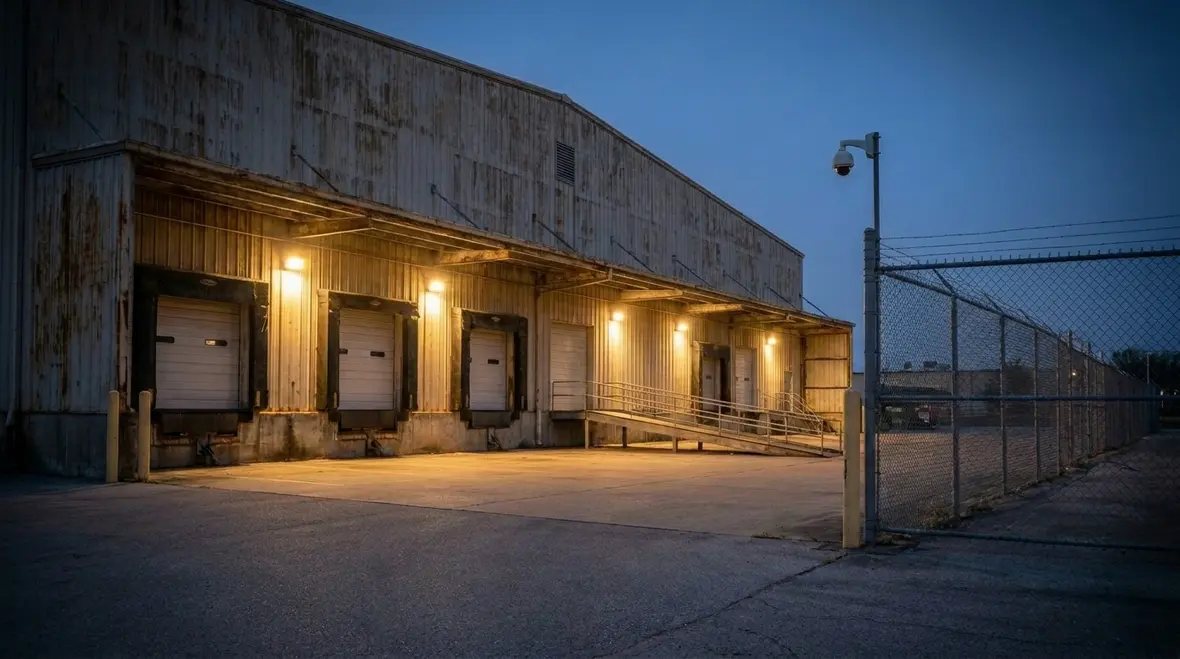
Commercial and industrial facilities face security needs that differ from retail shopping lots or small properties. Loading areas, dock doors, utility yards, and fencing lines require consistent illumination and smart zoning. If lighting only covers the obvious spots, you get blind corridors and weak perimeter points.
Here are frequent gaps we address:
Dock and loading visibility: We improve sight for approaching vehicles and workers, and we reduce harsh glare that washes out labels and signage.
Perimeter fence and gate lines: We balance illumination so gates look controlled from multiple angles, not just from one direction.
Stairways, ramps, and walkway transitions: We correct uneven lighting where people actually step, pause, and turn.
Parking edge conditions: We prevent dark pockets near curbs, posts, and landscaping that blocks light over time.
Control failures: We modernize switching and scheduling so lighting performs reliably, not randomly.
And yes, sometimes a “mystery dark zone” turns out to be a simple aiming issue that got overlooked during a quick past replacement. Our technicians catch those details because they work with the layout, not against it.
For properties with cameras, we also coordinate lighting with the field of view and mounting height of each device. A poorly aimed floodlight can blind a lens just as easily as it can blind a driver. By tuning levels, positioning, and color temperature, we support clearer video evidence without inviting glare, banding, or deep contrast shadows.
In industrial yards and warehouses, we pay close attention to how trucks maneuver, where pedestrians might cut across routes, and how seasonal conditions change risk. Rain, fog, and dust all interact with light differently. A thoughtful commercial exterior lighting design accounts for those factors so visibility holds up in less-than-perfect weather instead of only on brochure-worthy evenings.
Upgrades that improve both performance and energy use
Security lighting should not punish the facility budget. At the same time, it should not drop below safe visibility levels just to chase energy savings. That is why we modernize with a system mindset: correct placement, proper optics, and control strategies that match how the property operates.
For many major buildings, the best results come from combining lighting improvements with better control. For example, we use scheduling to align brightness with occupancy, and we design zones to keep exterior areas visible without lighting every inch 24 hours a day. Consequently, facilities can reduce waste while still supporting security needs.
In addition, modern light sources tend to offer steadier output over time. Therefore, the site maintains performance longer between maintenance visits. When maintenance becomes easier and predictable, your operations team spends less time “hunting” failed lamps and more time running the facility.
Our expert service staff explains the plan clearly, and they outline what changes your team will notice day one versus what will improve gradually. That way, leadership understands the “why” instead of just signing off on a scope.
We also look for ways to tie exterior lighting strategies into your broader energy and safety goals. Smart controls can coordinate with interior schedules, signage, and even emergency systems so that when conditions change, the light behaves like part of one coordinated plan instead of a scattered set of switches.
And if you are rethinking both outdoor and life safety illumination, resources like Kord Fire’s emergency lighting and egress guides can help your team understand how exit paths, emergency fixtures, and site lighting all support one another. Coordinated planning here avoids duplication, closes gaps, and gives everyone a clearer picture of how the property performs when it matters most.
Installation details that protect safety and keep projects smooth
Even a strong design can fail if installation quality slips. We treat the install like a controlled process. First, we confirm mounting locations and verify existing conditions around poles, brackets, and electrical pathways. Next, our technicians follow safe work practices and ensure wiring and connections meet job requirements. Then we verify aiming and performance after installation.
To keep compliance and operations aligned, we also plan for minimal disruption. That matters for facilities with active staff, ongoing deliveries, and strict access schedules. So, we coordinate work windows and communicate clearly with facility contacts. As a result, the modernization work stays predictable and avoids turning into a surprise outage party.
Once the system is live, we test operation and control behavior. We also check lighting distribution against the goals for visibility and glare control. If something needs adjustment, we handle it quickly rather than waiting for the “after someone complains” phase.
Our crews also document key installation details, such as pole locations, circuiting, and control zones. That documentation pays off later when your team needs to add cameras, change access control devices, or integrate additional safety systems. Instead of guessing which pole feeds which area, your staff has a clear map.
In higher risk environments, we coordinate closely with safety managers to sequence work around hot spots like chemical loading, rail access, or high-traffic dock lanes. Thoughtful staging and communication here mean you get a modern, secure exterior without turning daily operations into a juggling act.
FAQ about commercial exterior lighting modernization
Next steps with Kord Electric
If your commercial or industrial facility needs modernizing exterior lighting for security and compliance, we are ready to help. Kord Electric surveys the site, designs the right system, and installs it with careful aiming, reliable controls, and clear documentation. Our technicians and expert service staff explain each step so your team knows what you are getting and why it matters. Call us to schedule a review and get a practical plan for safer visibility, steadier performance, and fewer late night lighting surprises.
As you look ahead, consider how your exterior security lighting connects to the rest of your life safety strategy. Coordinating site lighting with emergency illumination, exit paths, and signage can make the whole property easier to manage and easier to keep compliant. When you are ready to explore that broader picture, our team and our sister company Kord Fire can help you pair strong commercial exterior lighting design with reliable egress and emergency lighting support across the site.
Whether you are dealing with repeated complaints about dark corners, planning a major expansion, or simply ready for lighting that works as hard as your security program, Kord Electric is prepared to step in with a clear plan, a practical timeline, and field-proven installation practices.