Commercial Landscape Lighting Safety Guide
Commercial landscape lighting safety is not optional for the businesses we serve. When lights sit near walkways, loading areas, and landscaped beds, a small wiring fault can turn into a big liability. At Kord Electric, we treat outdoor lighting like we treat indoor power: with care, testing, and clear placement rules. Our technicians and experienced service staff walk the site, review how people move, then verify the system is built to reduce risk. And yes, we still check the basics, because “it worked last week” is not a safety plan. In this article, we cover smart placement, safe wiring habits, weather protection, and a preventive approach that keeps commercial properties looking sharp and running safely.
Where commercial lighting belongs for safe, usable access
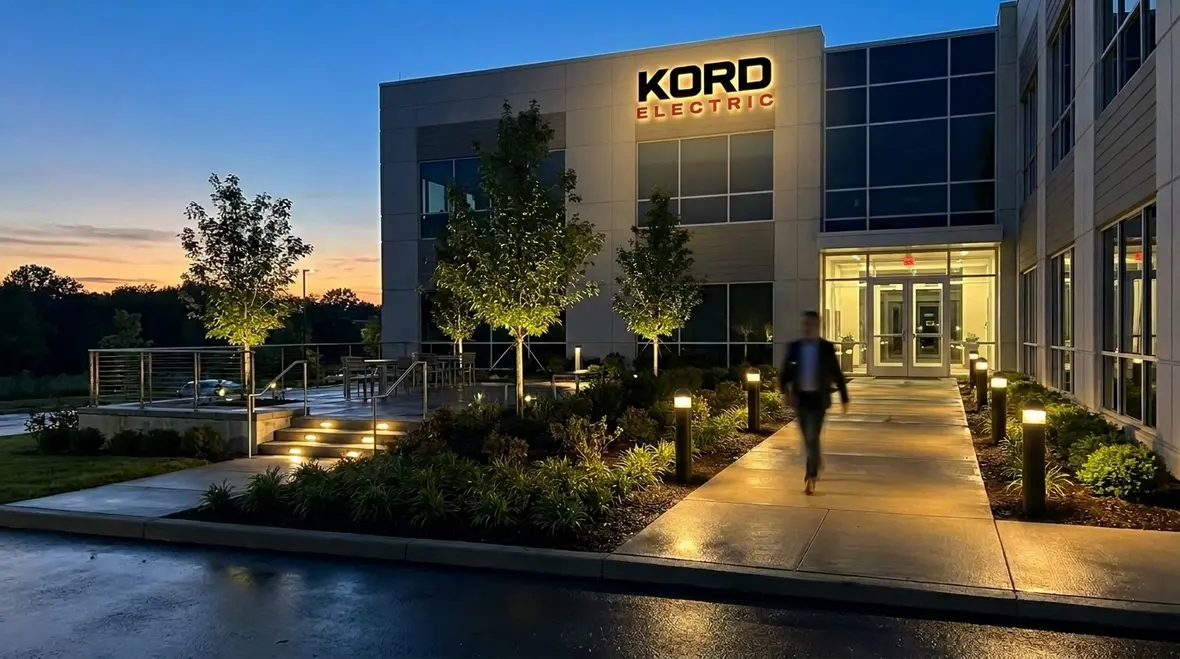
When we plan commercial landscape lighting, we start with the human path, not the pretty picture. First, we identify where employees, contractors, and visitors actually walk. Then we place light so it helps navigation without creating glare that hides hazards. In practice, that means focusing on building entrances, sidewalks, stair edges, ramp runs, and areas around service docks. Additionally, we treat parking lot edges and turning zones with special care because moving vehicles do not care if the light is “a little dim.”
We also consider height and aiming. If a fixture points into an eye line, it can reduce visibility and increase slip risk. Therefore, we aim fixtures to illuminate surfaces at a practical angle and we keep glare under control. Our team will often adjust placement after a site walk at dusk, because lighting behaves differently once the background goes dark.
Finally, we coordinate with property managers and facilities teams. For example, if a landscape crew maintains beds every month, we place fixtures and wiring routes so equipment access does not crush conduits. Otherwise, the first season turns into a repair season, and nobody wants that bill to arrive like an unexpected plot twist from a season finale.
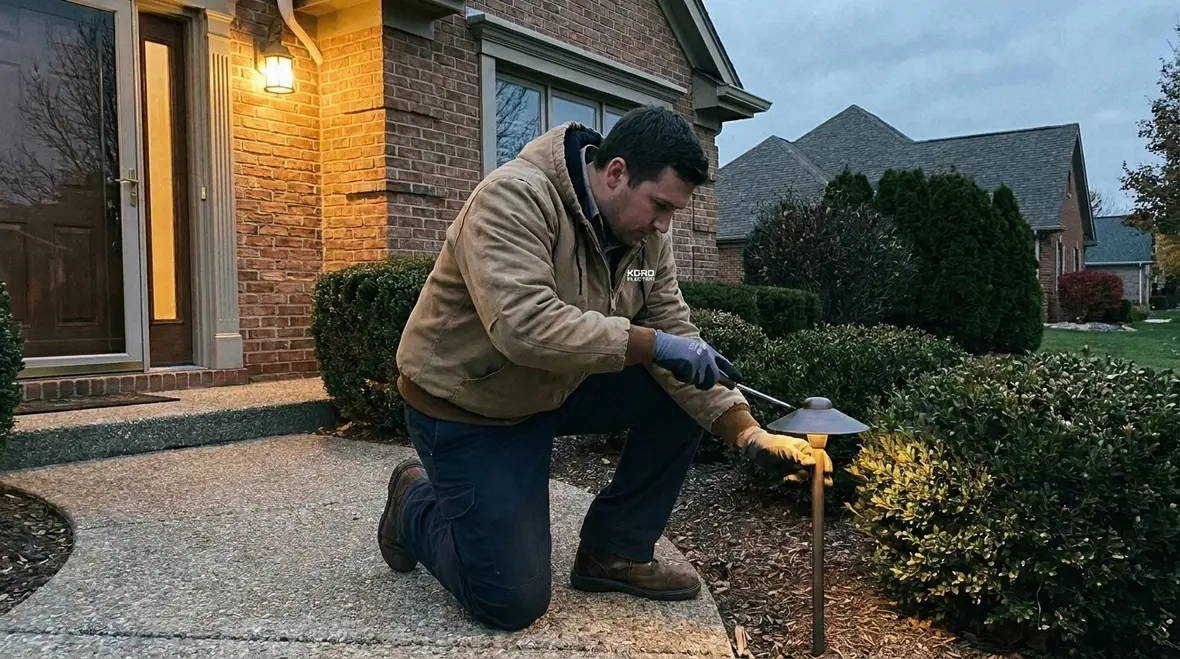
For property teams planning new projects or upgrades, it can be helpful to pair placement decisions with broader system design guidance. Resources like Kord Electric’s California Commercial Lighting Code Guide for 2026 and their Commercial Lighting Compliance in California overview explain how exterior lighting, code requirements, and safety expectations all intersect on real facilities. Those same principles apply when we plan outdoor pathways, loading zones, and access routes at commercial properties across California.
Weatherproofing and moisture control for long term reliability
Outdoor fixtures live in a harsh world: rain, fog, washing operations, sprinklers, and condensation. To support commercial landscape lighting safety, we verify that every component is rated for wet locations and that installation follows the intended weather barrier. We pay attention to seals, junction boxes, and cable entries so water does not travel along wiring paths like it has a contract.
Next, we review conduit routing and termination. If conduit ends are left improperly sealed, moisture can enter during temperature swings and creep inward. That is why we confirm fittings, gaskets, and proper strain relief. Furthermore, we check that fixtures do not trap standing water on housings, especially in low spots where runoff collects.
We also address irrigation overlap. If sprinkler patterns strike fixtures, they can degrade seals over time and create intermittent faults. Therefore, during planning and after seasonal adjustments, we coordinate with the landscape side of the operation. Our service staff will explain what changes to irrigation heads matter, and what not to change, because guesswork outside the electrical room usually costs more than the correct adjustment.
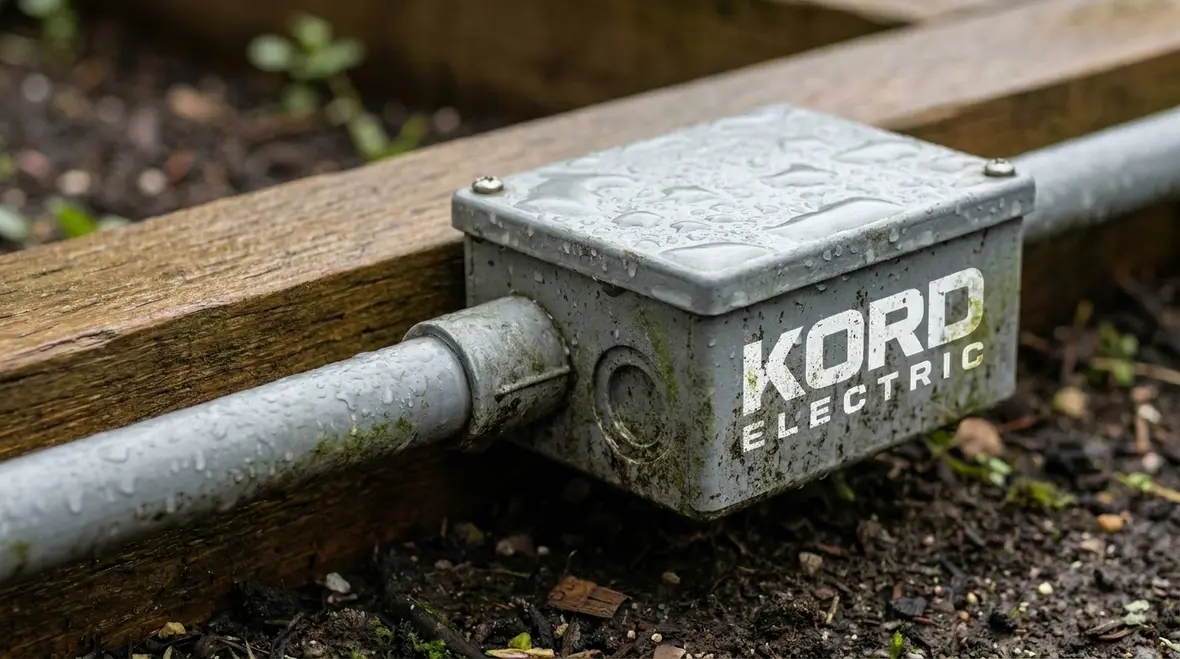
In many commercial and industrial settings, these moisture control checks fold naturally into a broader electrical preventive strategy. When technicians already review panels, feeders, and critical equipment, they can add exterior lighting junctions and weather-exposed terminations to the same preventive checklist. That way, leaks, corrosion, and small seal failures get caught long before they create outages along walkways or loading docks.
Electrical preventive maintenance that keeps outdoor systems steady
We follow a preventive rhythm for commercial and industrial sites, because consistent checks catch failures before they show up as outages or safety incidents. If you already have an outdoor lighting system, our technicians can verify performance and inspect common problem areas using a plan similar to the preventive approach outlined in our electrical preventive maintenance services. We look for early signs of wear, loose connections, damaged components, and abnormal conditions that can lead to electrical hazards.
In addition, we confirm grounding and bonding where applicable. Grounding issues can create shock risks and can also cause nuisance tripping that facilities staff end up treating like a mystery. Instead, we trace the cause, correct the connection, and document what we found. That matters because, on a commercial property, someone else will inherit the system next year.
Moreover, we check the system’s control devices when they exist, such as timers, photocells, or low voltage control modules. Controls that drift can cause frequent on off cycling. That cycling creates heat and stress, and it shortens component life. Therefore, our team monitors operation and tunes settings to match actual seasonal light levels.
At Kord Electric, we explain each step in plain terms. We do not talk at your staff. We talk with them. And if someone asks, “Why do you need to test this again?” we respond with the honest truth: because safety does not get a day off just because the calendar says so.
Preventive work on commercial landscape lighting also connects directly to energy and code performance. When exterior fixtures, controls, and circuits are tested on a regular schedule, it becomes much easier to document compliance with California lighting requirements and Title 24 standards. That can simplify future inspections and make planned exterior upgrades smoother for property managers who are already juggling multiple capital projects.
Placement near stairs, ramps, and vehicle paths
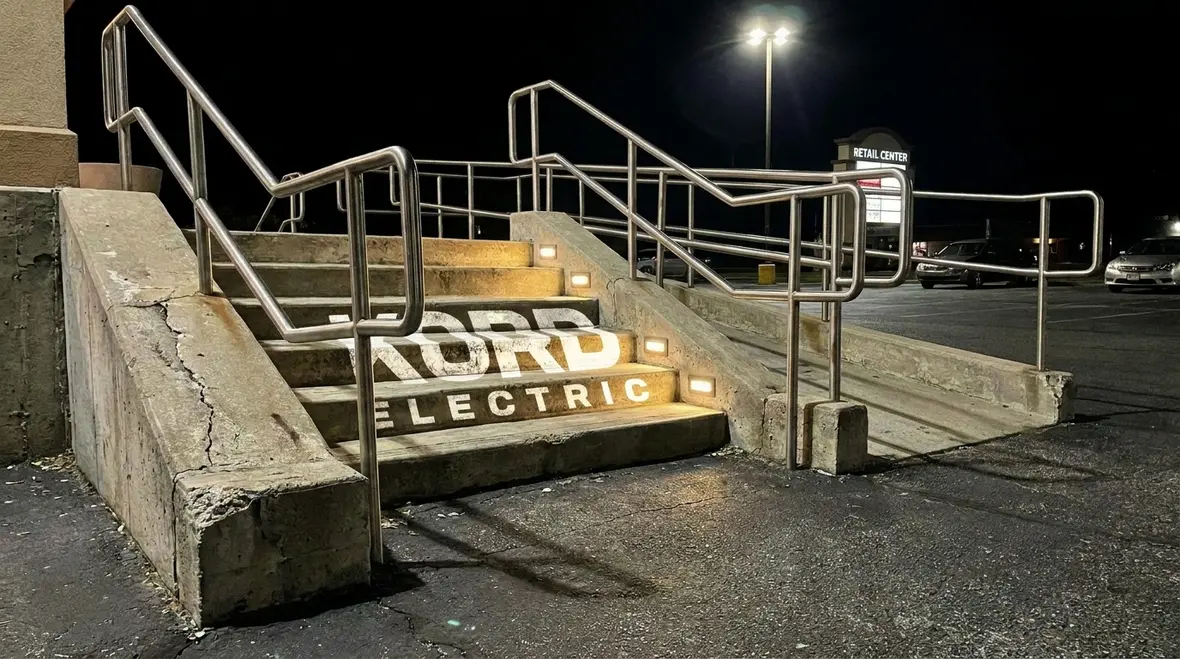
Outdoor lighting often fails where the stakes are highest: vertical transitions and traffic zones. For stairs and ramps, we aim to reduce missteps. We place lighting so it highlights step edges and ramp surfaces. As a result, people can judge footing without leaning forward like they are reading a stop sign from across the lot.
For vehicle paths, we focus on visibility at decision points, not random brightness. We consider driveway entrances, pedestrian crossings, and loading areas where drivers and walkers share space. Importantly, we manage contrast. Overly bright spots can cause drivers to lose sight in surrounding areas, especially at night. Therefore, we balance illumination across the route.
We also coordinate with fencing, signage, and bollards. If lighting sits behind reflective surfaces, it can create intense glare. If lighting misses a crossing, it can make it feel like a dark joke. Our technicians will adjust angles and spacing to keep the lighting helpful, not distracting.
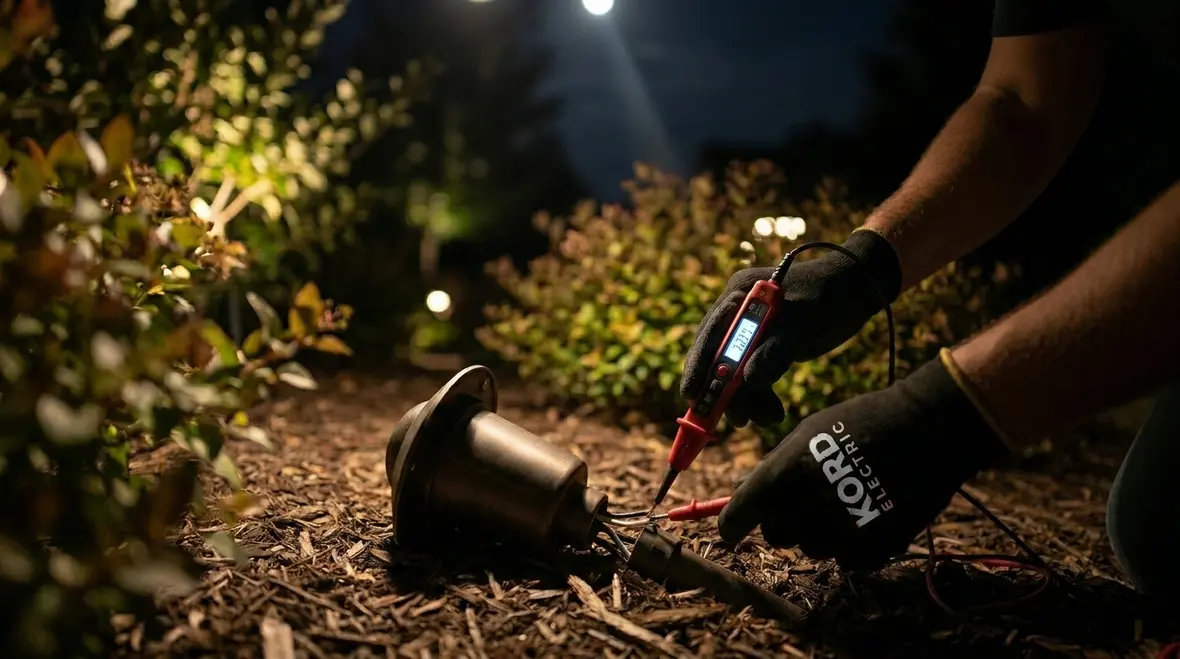
On properties with more complex access, including mixed use campuses or large industrial yards, commercial landscape lighting safety near traffic routes often overlaps with broader lighting design and installation decisions. Aligning this work with a structured lighting installation plan, rather than isolated fixture swaps, helps ensure that every ramp, stair run, and drive lane gets the coverage it needs.
Safe wiring practices: routing, labeling, and damage prevention
Even great fixtures cannot fix a weak wiring approach. To strengthen commercial landscape lighting safety, we verify routing and protection so cables remain intact under normal site conditions. We protect wiring from physical damage, using proper conduit where required and selecting installation paths that avoid repeated digging, landscaping work, and foot traffic strain.
In addition, we confirm labeling and documentation. When technicians return months later, accurate labeling cuts downtime and prevents guesswork. Moreover, we ensure access to junction points where needed. If a connection hides under layers of mulch and roots, repairs become slower and riskier.
We also address cable separation and support. Cables that sag can become stress points. Likewise, wiring that sits too close to sources of heat or that lacks proper support may degrade faster. Therefore, our team installs with long term service in mind, not just the first night the lights look fantastic.
And yes, we hear the jokes: “It’s low voltage, so it is basically harmless.” That line sounds comforting, but we treat all electrical work seriously. If low voltage wiring is damaged, it can still create faults, unexpected shutdowns, and unsafe conditions for the people on the site.
These wiring practices echo the same disciplined approach Kord Electric applies inside electrical rooms and panelboards. In fact, many of the best practices described in their electrical panel labeling and commercial maintenance resources apply directly to outdoor systems: clear documentation, logical routing, and access that makes future troubleshooting safer and faster.
Balancing aesthetics, glare control, and code minded decisions
Commercial landscapes need to look intentional, yet safe. We help facilities balance curb appeal with glare control and visibility. Therefore, we select fixture types and diffusion options that reduce harsh hotspots. We also consider color temperature and how it affects night perception on sidewalks and near doors.
Next, we evaluate operating modes. Some sites use decorative lighting that stays on all night. Others use motion or timed schedules. Each approach affects safety, because dimming too aggressively can reduce visibility in key areas. We recommend settings based on how your property operates, including security coverage and staffing patterns.
Our technicians also advise on safe placement around vegetation. Shrubs and trees can grow into fixture beams and create shadow pockets. So we plan for future growth and we recommend routine landscape coordination. In other words, the lights are not done when they turn on; they are done when the system keeps doing the right job year after year.
Finally, we emphasize clear design choices that support easy troubleshooting. If a fixture fails, your team should not need a scavenger hunt. We design for service access and we explain the layout so others can understand what we installed and why.
Those design choices line up with the same thinking Kord Electric applies on broader lighting projects and compliance work. When you coordinate commercial landscape lighting safety with interior lighting design, code reviews, and Title 24 strategies, you get a site that looks consistent, respects regulations, and remains easier to maintain over the long term.
FAQ about outdoor lighting safety for commercial and industrial sites
Final steps to make your site safer and easier to maintain
If you manage a commercial or industrial property, we can help you tighten commercial landscape lighting safety with correct placement, weather resistant installation, and a preventive plan that catches issues early. Our technicians explain what we find and what we fix, so your team stays informed and operations stay steady.
For many facilities, it also makes sense to coordinate exterior work with broader lighting installation or upgrade projects. When commercial landscape lighting ties into a modern, code aware lighting design, you gain safer walkways, better curb appeal, and a clearer path to long term compliance. Whether you are planning a targeted exterior improvement or a full commercial lighting installation, aligning safety, performance, and maintenance from the start keeps your nights predictable in the best possible way.
Reach out to Kord Electric to review your outdoor lighting layout, verify system reliability, and schedule maintenance for the long haul. Call us today and let’s make your nights safer, brighter, and boring in the best way.
If your property is also preparing for new fixtures, control upgrades, or a broader commercial lighting project, explore Kord Electric’s Lighting Installation Services for commercial and industrial facilities. Coordinating your exterior lighting safety plan with a structured installation strategy can reduce downtime, improve visibility, and keep your site ready for inspections, tenants, and day to day operations.