Commercial LED Retrofit Costs and ROI Guide
ROI of Commercial LED Lighting Retrofits: What Facility Managers Should Know
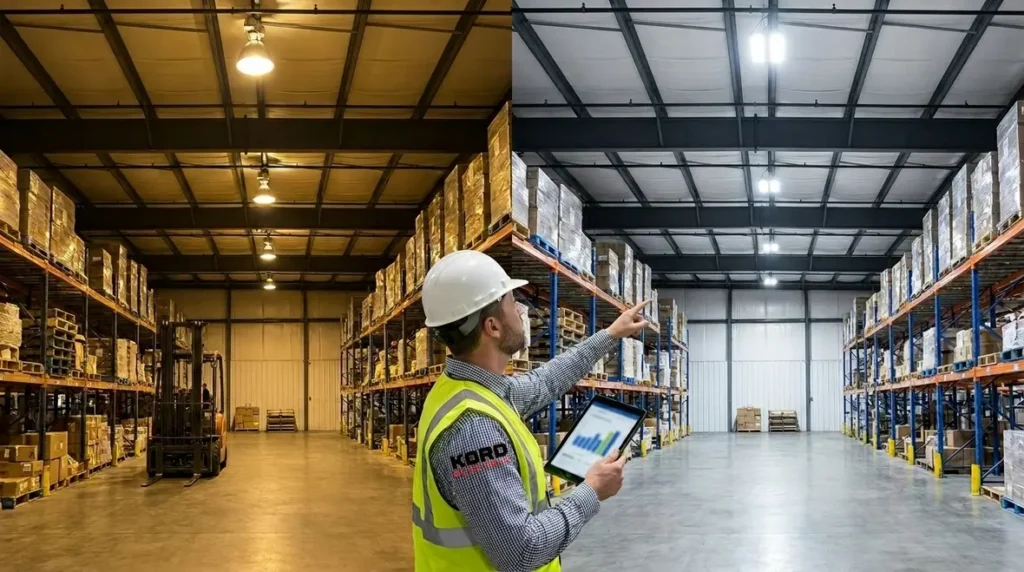
When Kord Electric puts together plans for Commercial LED Retrofit Costs, we do it with one goal in mind: help facility managers see real payback, not just pretty lighting. In many commercial and industrial buildings, the math starts fast. You cut energy use, you reduce maintenance calls, and you extend the life of the lighting system. And then, once tenants and staff notice better light, the project stops feeling like a cost center and starts feeling like an upgrade.
In this article, we guide facility managers through the ROI basics, the hidden factors that change payback, and the steps we use with our expert service staff and technicians to make sure the numbers hold up in the real world. Because if the ROI looks good on paper but breaks in the field, everyone has a bad day. Usually the one who pays the bill. And we prefer fewer bad days.
Set the ROI baseline before anyone buys a single fixture

Before Kord Electric talks about product options, our team starts with a baseline. That is the part many others rush. You cannot calculate ROI if you do not know where the building is today. Therefore, we help others gather clear data on current fixtures, wattage, operating hours, and control settings.
Next, we account for how the facility actually runs. For example, a distribution warehouse may run longer hours than office space, even if it feels “similar” in square footage. Also, an older building might have ballasts that fail early, which pushes maintenance costs up. Likewise, after-hours use, partial occupancy, and seasonal schedules can change the results.
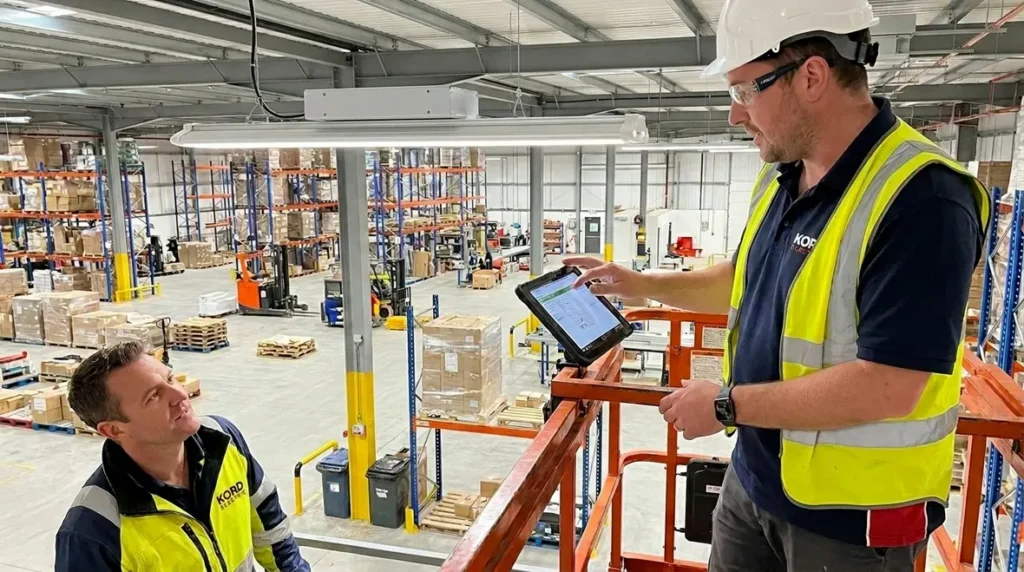
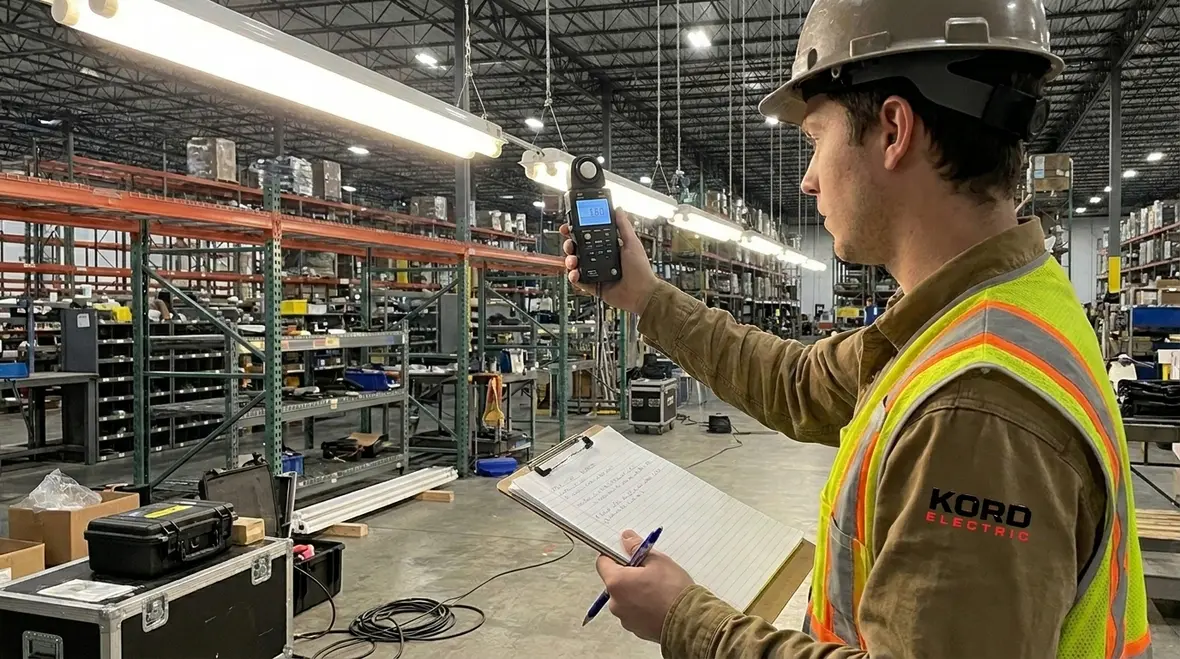
Our technicians also look at the existing condition of the lighting system. If reflectance is low, the space may look dim even with high output. So while ROI might look strong on energy savings alone, the facility may still need a plan for visual comfort to avoid complaints and rework. In other words, we do not just chase kWh. We chase outcomes.
Know what Commercial LED Retrofit Costs include, and what they do not
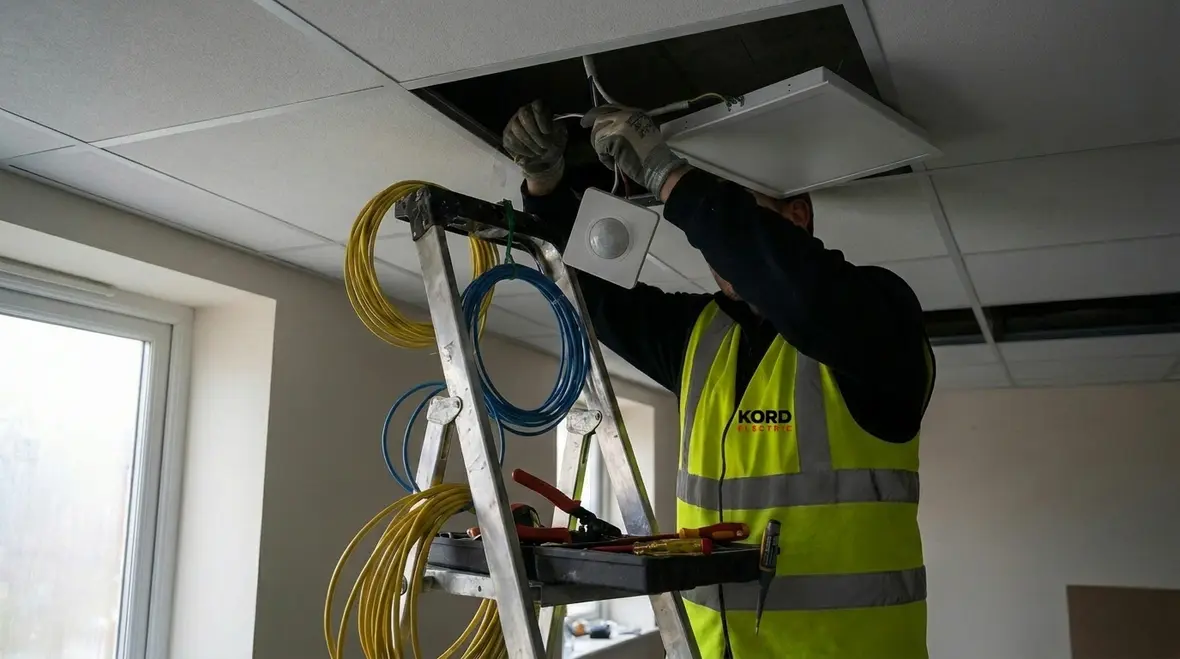
Let’s get practical. Commercial LED Retrofit Costs typically cover materials, labor, and electrical work needed to swap or retrofit lighting. However, not every cost shows up at first glance. For instance, controls like occupancy sensors, daylight sensors, or dimming systems often add value, but they can also shift project timing. Similarly, surface repair, ceiling access, or wiring changes can affect total spending.
In our cost guide, we walk through the components facility managers should consider, because ROI often hinges on scope. If a project includes only bulb changes, payback may look faster at first. Yet if the building needs new optics, proper drivers, or updated controls, savings become stronger and longer lasting. Then again, if the existing wiring or panel capacity requires upgrades, the budget grows, but the building becomes safer and more reliable.
And yes, paperwork matters too. Some projects need code updates, site scheduling, or inspections. Those steps do not feel “flashy,” but they protect you when the building is running and people depend on it. We make sure the plan matches the site reality, so ROI stays grounded.
If you are comparing options or building a budget, it helps to look at a broader Commercial Lighting Upgrade Cost Guide as well. That big-picture view shows how fixture choices, ceiling heights, and controls all roll up into the total investment for large properties.
Calculate payback with real operating hours, not guesses
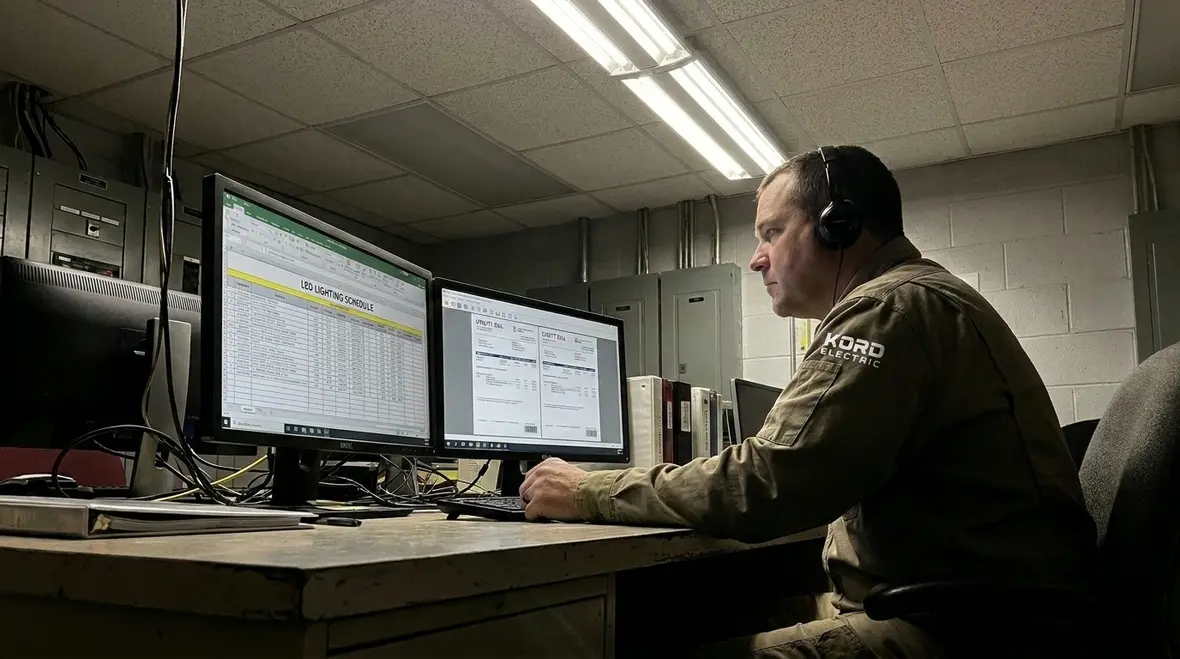
ROI becomes clear when you model usage accurately. To do this, Kord Electric helps facility managers estimate operating hours by zone. For example, a hallway may run at full power during business hours, while a loading dock may run longer or operate differently by season. Therefore, we encourage teams to break the building into lighting zones and schedules.
Then we connect savings to the cost of electricity. If rates rise, ROI accelerates. If rates stay stable, ROI still holds when you keep maintenance and lamp replacement low. Either way, we recommend using actual utility data when possible. A guess is like a light switch in daylight. It feels helpful, but it tells you nothing.
We also factor in power quality and system efficiency. Older systems might draw extra power due to inefficiencies in drivers, ballasts, or wiring runs. When we upgrade, the building often reduces not only energy but also heat output. As a result, HVAC loads can drop in some spaces, especially where lighting heat used to add stress to cooling systems.
Maintenance ROI: the quiet win facility managers often miss
Energy savings get the spotlight, but maintenance savings quietly build ROI. In commercial and industrial spaces, relamping trips, ladder work, and downtime add up. If you run strict safety rules, even “small” service calls require scheduling time and compliance steps. So when we help others plan retrofits, we treat maintenance as a first-class savings category.
LED systems generally reduce failures and extend life. However, the real win comes from pairing LED upgrades with smart decisions about drivers and fixtures. Our technicians review the building’s environment too. Dust, vibration, moisture, cold temperatures, and frequent switching can affect performance. Therefore, we help facilities match products to conditions, which reduces premature failures.
We also help teams reduce emergency lamp replacement. When crews stop chasing outages, they spend time on planned maintenance, not firefighting. And if you have ever tried to manage an outage during peak operations, you know why that matters. It is like finding out your shipping schedule depends on one coffee machine. Everyone survives, but nobody is happy.
Controls, dimming, and scheduling: where ROI sharpens
If a building already has timers or basic occupancy sensors, the retrofit can still boost ROI. Yet many facilities can unlock more savings by upgrading controls and setting them correctly. Dimming strategies, for instance, help keep light levels appropriate while cutting wasted power.
We work with facility managers to match controls to how spaces get used. For example, offices often need stable brightness during tasks, but they can dim in low-traffic zones. Warehouses can benefit from zoned control, with sensors that respond to actual movement patterns. Additionally, daylight harvesting in areas near windows can lower energy use without hurting comfort.
Here is the key: controls work best when they get tuned. If settings are wrong, staff may override systems, which reduces savings. That is why our expert service staff takes time with programming and commissioning. We want the system to feel natural to the people using the space, not like a sci-fi experiment. Because if the lights fight the schedule, ROI takes a hit.
How we protect ROI during installation and commissioning
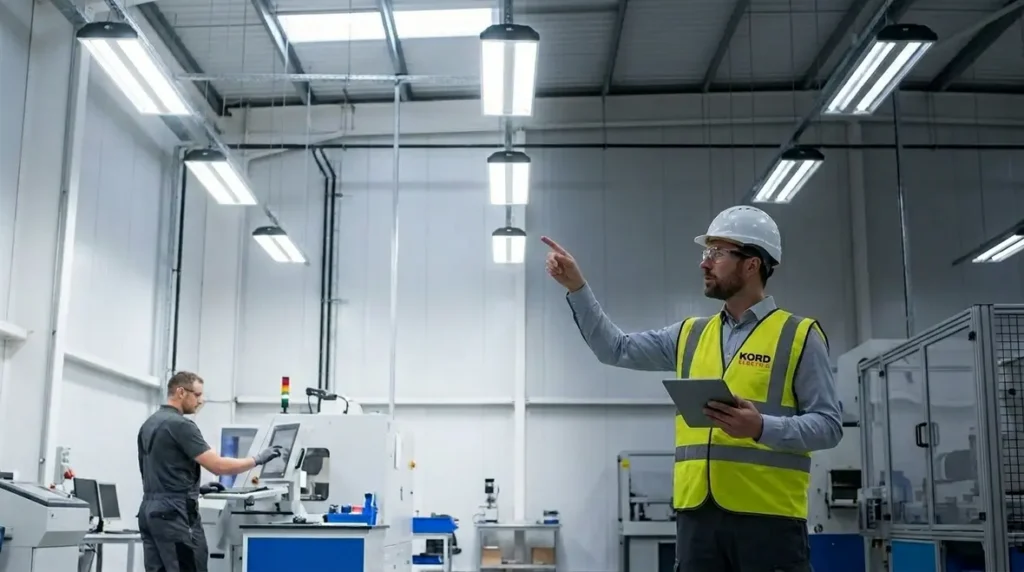
Even a great design can stumble during installation. Therefore, Kord Electric focuses on process. Our technicians follow site checks, verify compatibility, and confirm that electrical systems can support the new fixtures. We also pay attention to heat management, mounting details, and correct driver selection.
Next comes commissioning. We test performance, verify output levels, and confirm control response. As a result, facility managers get confidence that savings will show up consistently after the project wraps. And if anything needs adjustment, our team handles it before the building goes back to full daily rhythm.
We also document the work so others can maintain it later. That documentation helps with warranty claims and future upgrades. In commercial and industrial buildings, clarity saves money down the road. Nobody wants an “ongoing mystery” about why one zone runs differently than the rest. We would rather explain it once, calmly, and move on.
Commercial LED Retrofit Costs: common barriers to strong ROI
Facility managers often hit roadblocks that reduce payback. One barrier is underestimating scope. If the project needs more wiring work, panel updates, or ceiling access time, the budget shifts. Another barrier is choosing the wrong product for the space. For instance, a fixture meant for dry offices might struggle in wet or dusty areas.
A third barrier is not planning around operations. When upgrades disrupt workflow, teams may accept short cuts that hurt long-term results. Therefore, Kord Electric helps schedule work to reduce downtime, and our field crew coordinates access to keep the facility running safely.
Finally, some projects treat ROI as a one-time calculation instead of an ongoing system. If controls get ignored or settings drift, savings drop. We help others set and maintain control logic so the retrofit continues to deliver value. Because ROI is not a poster on the wall. It is a result you earn every day.
FAQ
Final word: protect your ROI and keep your facility shining
Facility managers do not need guesswork. With Kord Electric, we map your site conditions, define what your Commercial LED Retrofit Costs really cover, and build a retrofit plan that delivers measurable energy and maintenance savings. Then our technicians and expert service staff commission the system so it performs as designed, not as hoped. If you run a commercial or industrial facility and you want ROI you can trust, contact Kord Electric today to start a lighting upgrade that pays back, calmly and on schedule.
To turn those savings into a full-facility strategy, many properties also connect their lighting plans with structured commercial lighting installation services and broader electrical maintenance programs. That way, the retrofit is not just a one-time project; it becomes part of a long-term reliability plan for your building.