Commercial LED Retrofit Requirements California
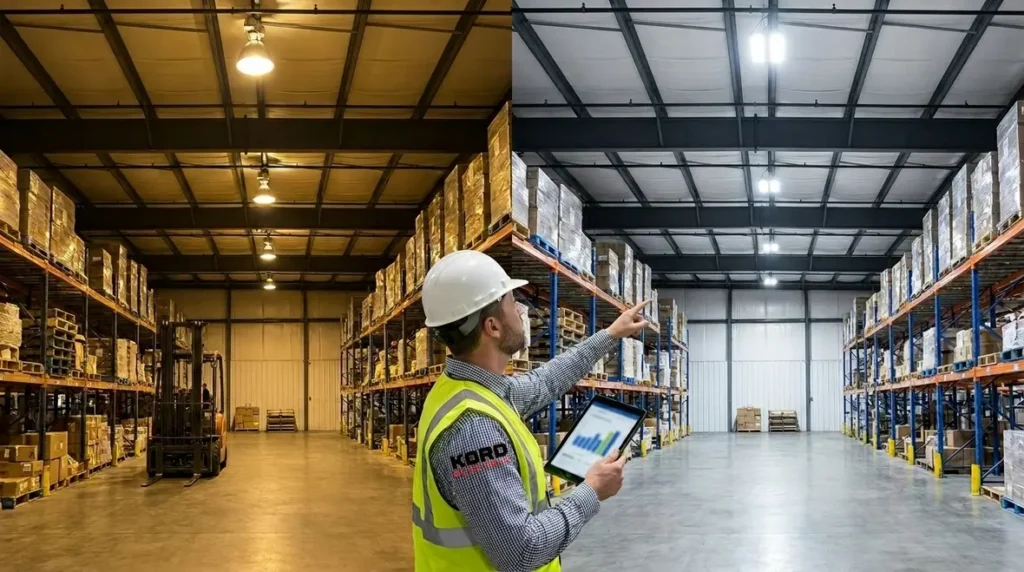
California keeps an eye on lighting the way a good manager keeps an eye on a clock. In this article, we explain the commercial led retrofit requirements California businesses and property owners must follow, and how our team at Kord Electric helps you meet them without turning the job into a never ending renovation. We focus on commercial and industrial facilities and major property buildings, because that is where the stakes, the schedules, and the energy bills really show up. We also lean on our own experienced service staff and technicians, who walk through details in plain language, so no one feels like they signed up for a homework assignment.
And yes, lighting rules can feel like they were written by someone who hates dimmer switches. Still, when the work gets done the right way, you get safer, brighter spaces and cleaner compliance. Let us show you the path.
What California typically demands for commercial LED retrofits
In California, the commercial led retrofit requirements California revolves around energy savings, code alignment, and proper product selection. First, your retrofit plan needs to match your facility type and lighting layout, because offices behave differently than warehouses. Next, the work must follow applicable electrical and building code rules, especially where fixtures connect to wiring, controls, and panels.

After that, many projects connect to utility programs and compliance pathways. Therefore, our technicians often start with a lighting baseline, then evaluate what can change, what must stay, and what upgrades will actually reduce energy. We treat this like a checklist, not a guess.
For large property buildings, the “easy swap” approach sometimes fails. For example, if a fixture needs new drivers, new wiring tweaks, or updated controls, the savings story changes. We help property owners avoid that surprise by planning the retrofit as a system, not as a part hunt.
LED retrofit requirements and safety checks that matter
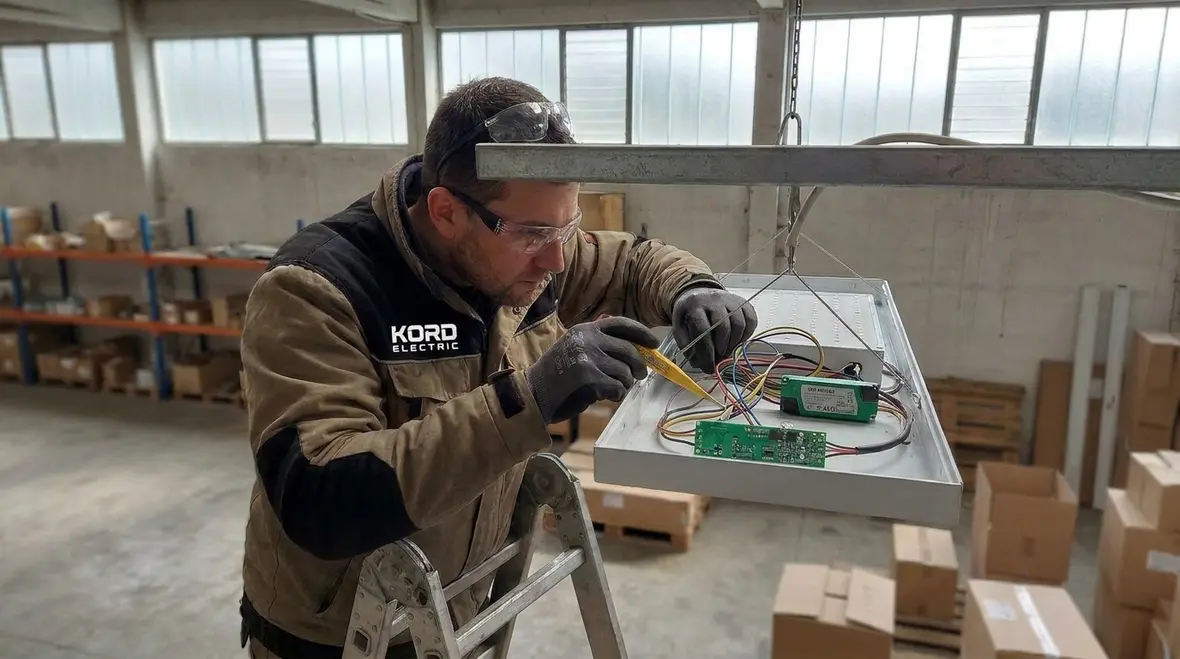
Even when a lamp or fixture looks similar, safety details drive the outcome. Our service staff explains that retrofit work must protect people, equipment, and the electrical system. That includes verifying compatibility with existing sockets, ballasts, drivers, and dimming or occupancy controls when they exist.
Next, we review heat management and fixture ratings. LEDs can run cool compared with older lights, but poor installation can still create problems. Likewise, drivers and wiring need proper load handling. If someone tries to cut corners, the building pays later, and usually on a day when you cannot spare downtime.
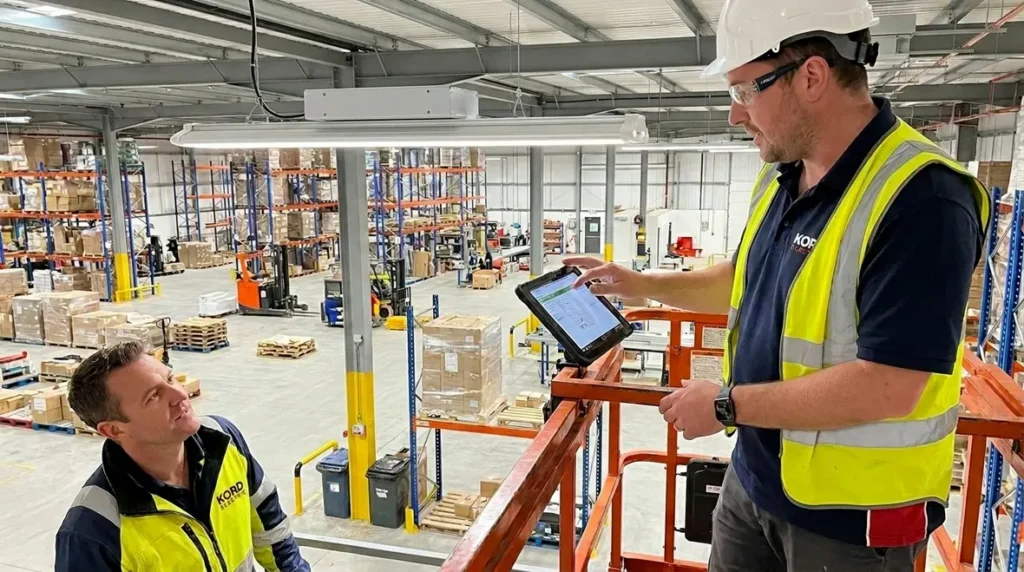
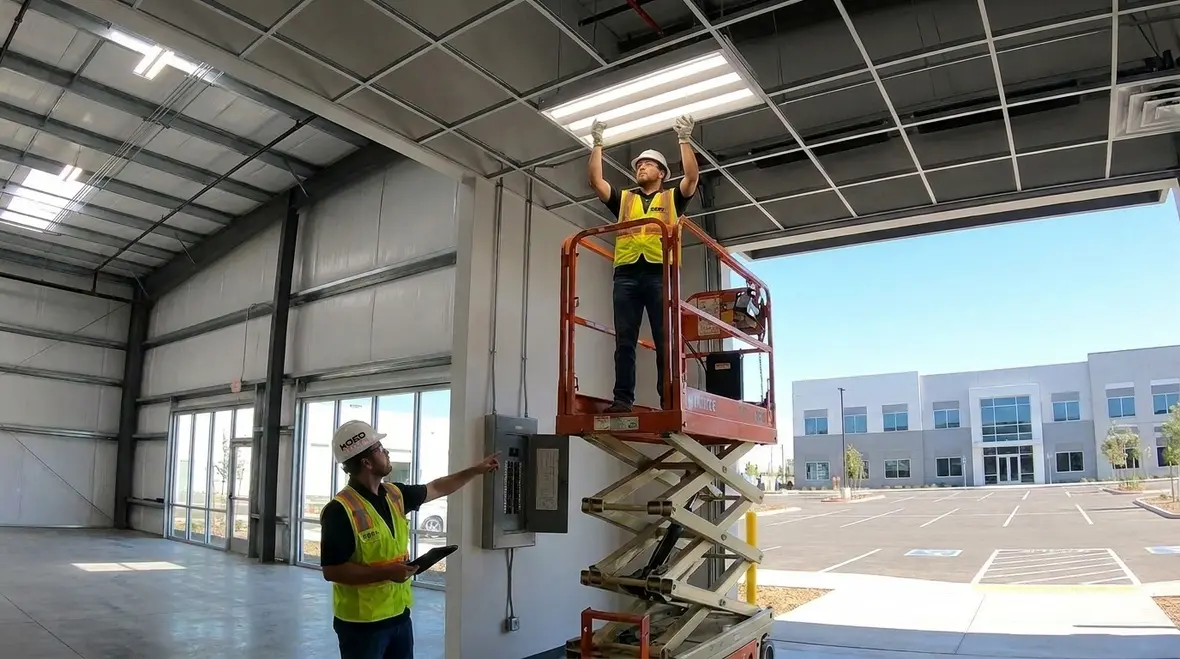
We also help teams plan safe access routes for ladders, lifts, and ceiling work. That matters for commercial and industrial environments where ceilings may hide ductwork, sprinklers, and cable trays. We do not rush the site walk. Instead, we plan so the installation stays organized and the work stays compliant.
How lighting controls influence compliance and savings
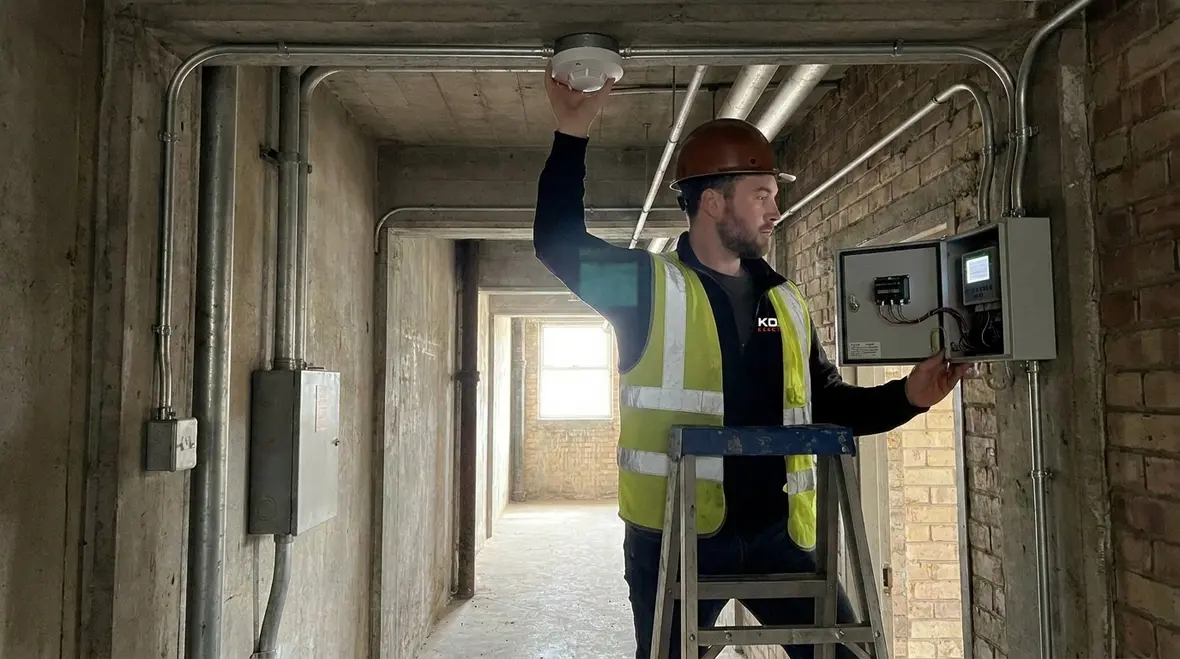
Controls often make the difference between “we installed LED” and “we improved performance.” In many commercial led retrofit situations, California expects lighting upgrades to include strategies like scheduling, dimming, or occupancy sensing where appropriate. While the exact path depends on the project, controls usually help reduce hours of operation and avoid lighting empty rooms at full output.
Therefore, our technicians guide clients through a controls review before the retrofit begins. They look at zoning, time schedules, sensor placement, and how fixtures communicate with controls. If the building already has a control system, we assess whether LED retrofits will integrate smoothly or create flicker, delayed start, or dimming issues.
Here is a practical truth: sensors installed like afterthoughts can lead to angry tenants and emergency maintenance calls. We help avoid that by coordinating control settings with how spaces are used, not how they were labeled on a floor plan from 1998.
Choosing fixtures and products the right way
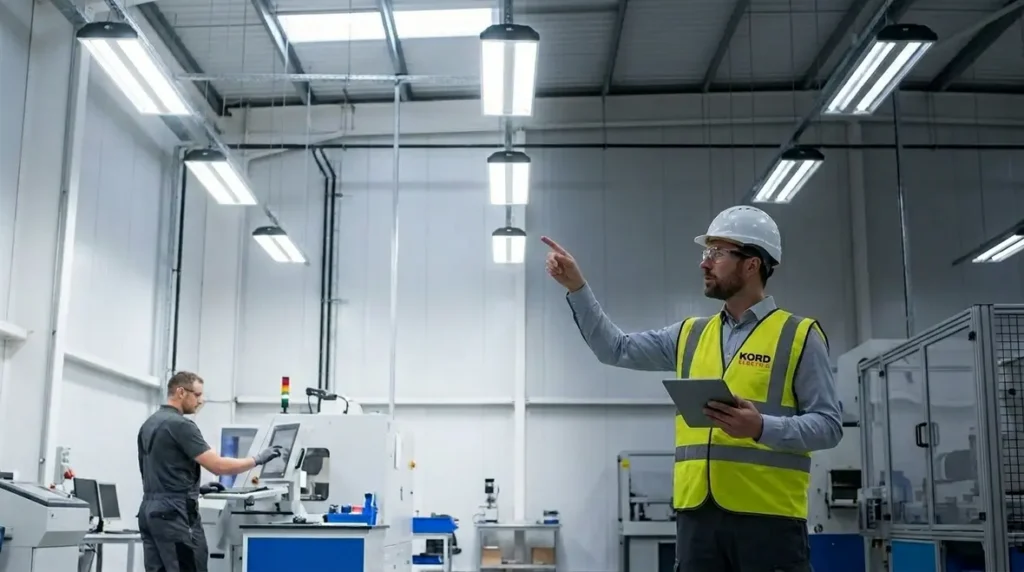
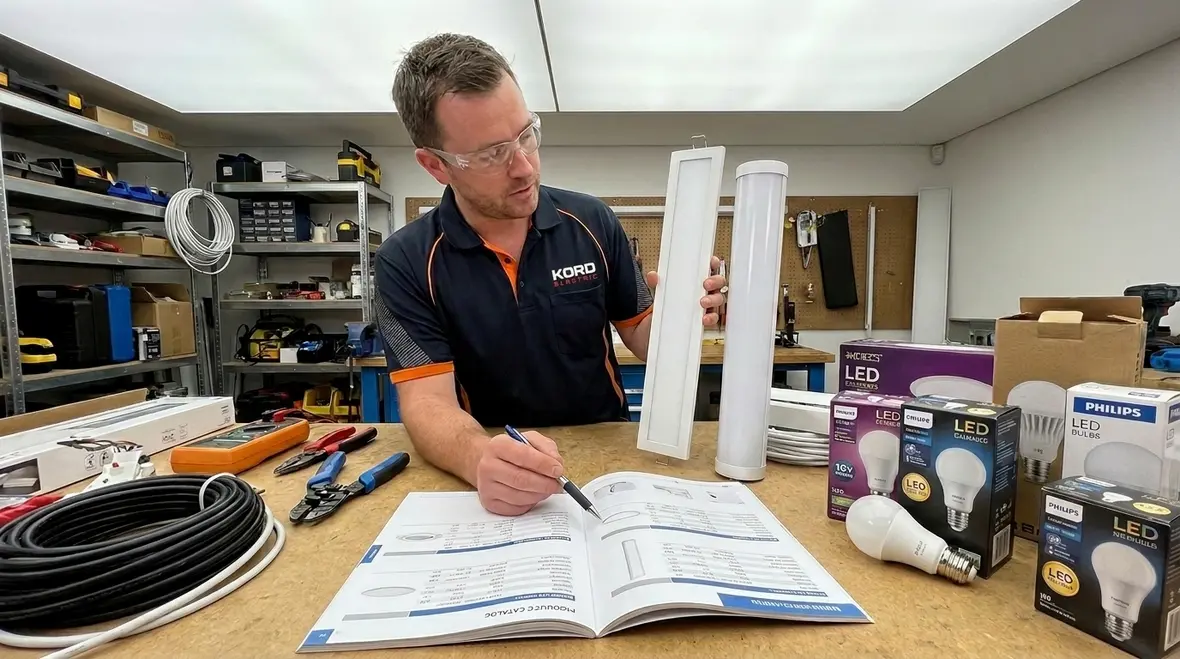
Product selection plays a big role in commercial led retrofit requirements California because not every LED option performs the same. We focus on correct lumen output, color quality, and beam control for the task. Brightness alone does not guarantee good results. It also needs to meet visual needs and workplace standards for safety and productivity.
Next, we check efficacy, power draw, and driver specifications. When a retrofit uses a mismatch driver or wrong operating current, the performance drops, and the savings story weakens. We also consider impacts on emergency lighting circuits where required. For facilities with exit and emergency requirements, changes need careful review.
Finally, we help teams confirm that the retrofit approach matches the compliance route they choose. Some projects connect to utility incentives and programs, and those often require specific documentation. Our service staff helps gather and organize details so you do not scramble when the deadline moves closer like a villain in a sitcom. For property teams also comparing pricing and payback, resources such as Kord Electric’s commercial lighting upgrade cost guide can help frame budgets alongside compliance steps.
Documentation and planning for major property building projects
Large facilities require more than good workmanship. They require clear records. If you own or manage a major property building, your compliance package often depends on the retrofit plan, the selected products, and the installation results.
Because this is a commercial and industrial focus, we typically start with what the site can support: ceiling height, access limitations, wiring paths, and control infrastructure. Then we build a plan that reduces disruption to operations. For example, we coordinate work schedules for manufacturing lines, medical adjacent spaces, or office areas with tenant activity.
After installation, we help finalize the records needed for compliance verification and incentive participation. This can include fixture details, wattage comparisons, control settings, and as built notes. Our goal stays simple: the facility should pass review and keep working reliably, with fewer surprises and fewer “where is that document” moments.
Utility incentives, compliance pathways, and what our team does next
Many owners and facilities pursue lighting upgrades through utility incentives or approved compliance pathways. While the specific steps vary, the common thread is proof of performance and correct installation. Therefore, Kord Electric coordinates the technical side with the business side.
Our technicians explain options clearly, and we help you choose an approach that matches the building plan, budget, and timeline. If the project needs staged work, we plan stages so you maintain lighting levels where safety matters most. If your facility runs on strict hours, we schedule the work to respect operations.
We also manage the human side. When staff members ask questions, our experienced service team answers them in the way that reduces confusion, not the way that creates more paperwork. We have seen too many lighting projects stall because people did not understand what changed and why.
Implementation steps that reduce risk and speed up the retrofit
A clean retrofit project does not happen by accident. It happens because the team follows a sequence. Here is a practical flow that we use for commercial and industrial environments:
- We survey the space and document the current fixtures, controls, and wiring constraints.
- We model performance changes and confirm what energy reduction you can realistically achieve.
- We verify product compatibility for existing sockets, dimming systems, and driver needs.
- We plan the installation method to protect ceilings, sprinklers, and adjacent systems.
- We install, test controls, and confirm proper light output and stable operation.
- We collect project details and support documentation for compliance review and incentives when applicable.
During this process, our technicians keep communication steady. They explain what happens next, and they address concerns before work starts. That is how you reduce downtime and avoid the classic “surprise, we need more time” plot twist.
To visualize it, here is a quick two column look at how work aligns with outcomes. One side handles the field. The other side handles the paperwork.
| Field focus | Compliance focus |
| Fixture compatibility, wiring checks, control testing | Documentation, product details, installation verification |
| Lighting zones, safety access, installation quality | Performance targets and incentive or review requirements |
For larger campuses and portfolios around the region, it can also help to think about lighting retrofits as part of a broader electrical roadmap. Kord Electric’s Los Angeles County electrical services tie together panels, lighting, and troubleshooting so retrofits support long term reliability instead of becoming one off projects.
FAQ
Conclusion: take the next step with Kord Electric
California’s commercial led retrofit requirements California can feel complex, but they do not have to slow your project. Kord Electric brings experienced technicians, a steady process, and clear explanations for commercial and industrial facilities and major property buildings. We survey your site, plan the retrofit as a system, test controls, and help organize the documentation you need. If you want a lighting upgrade that stays compliant and reliable, contact us today. We will map the route, then drive it to the finish line.
If your retrofit is part of a broader modernization plan, you can also look at how Kord Electric approaches adjacent projects like EV charging and smarter energy management on the Kord Electric Blog, including resources such as the Commercial LED Lighting Retrofit Guide for additional planning context.
When you are ready to connect code requirements, real world schedules, and long term electrical reliability under one roof, Kord Electric’s regional team is built for it. For facilities across Southern California, especially those operating in and around Los Angeles County, our technicians align retrofit work with ongoing service so your project feels like a smooth upgrade rather than a disruptive reset.