California Title 24 Lighting Compliance Guide
California Title 24 lighting compliance requirements for commercial buildings can feel like a maze built by someone who hates joy. Still, it matters, because it helps cut waste and keeps facilities meeting strict energy rules. In this guide, we explain how Kord Electric approaches california title 24 lighting requirements commercial buildings for commercial and industrial facilities and major property buildings. We focus on the parts that affect real design and real field work, from fixture and control choices to documentation that does not turn into a late night problem. And yes, our technicians and expert service staff will walk you through the process in plain language, because nobody should need a decoder ring to understand lighting compliance.
What the California Title 24 lighting rules change for commercial projects
In plain terms, california title 24 lighting requirements commercial buildings set performance and control expectations that go beyond “turn on the lights.” When a project enters scope, the energy model and the design must meet limits for lighting power and how lighting responds to occupied and unoccupied periods. As a result, a building can no longer rely on outdated fixture selection or “we’ll figure controls later.”
We often see teams treat Title 24 like a paper exercise. However, the code impacts product levels, placement, and controls at the same time. Therefore, early decisions matter. We help others prevent last minute revisions by starting with the layout, the intended use of spaces, and the control plan that matches how people actually work. If you manage offices, warehouses, manufacturing areas, or other commercial and industrial spaces, you already know the truth: lighting that ignores the workflow turns into complaints, callbacks, and avoidable cost.

Our service staff also explains how updates in Title 24 can shift requirements between design cycles. So, the goal becomes stable compliance, not rushed compliance. And if you hear someone say, “It’s probably fine,” we respectfully disagree. Lighting compliance does not run on vibes.
If you are comparing code expectations across different project types, it can help to connect this guide with the broader perspective in Kord Electric’s California Commercial Lighting Code Guide for 2026, which walks through how state rules translate into everyday lighting decisions across offices, warehouses, and mixed use facilities.

Key compliance paths we plan around during design and updates
Different projects follow different compliance methods, and the paperwork follows those methods too. So, we structure our process to match how your project team submits. In many commercial builds and major property buildings, the lighting scope involves the lighting power density limits and control functions for specific spaces. In addition, the design must include the right control logic and verification steps.
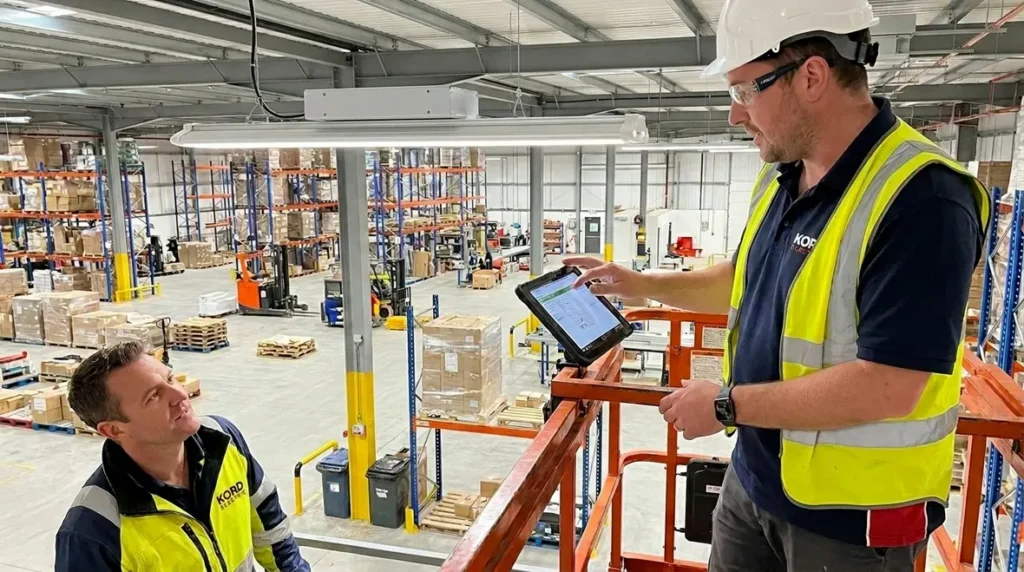
We coordinate with your architect, electrical engineer, and the design team so the plan reflects the real system. Then we support field work with details that keep installers aligned. For example, the difference between a control that senses occupancy and one that uses scheduling can be significant in outcomes. Moreover, switching types, dimming behavior, and time delays can all affect compliance.
Here is where our technicians earn their keep. They review what is specified and then they ask the hard, practical questions during planning. Does the control cover the actual occupancy pattern? Will sensors see obstructions? Are stairwells and corridors treated like the code expects? We do not just care that the lights exist. We care that the lighting system behaves the way the energy model assumes.

Fixture selection and placement that support Title 24 performance
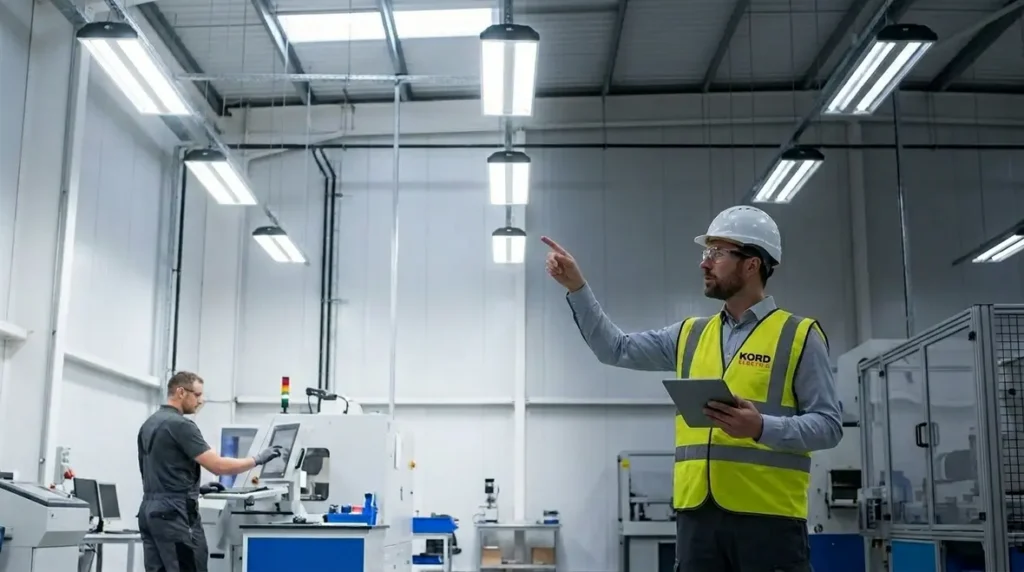
Fixture choice is where most teams feel the code’s weight first. However, the right fixture alone does not solve everything. Placement affects how well light levels land in work areas, and controls affect how long lights stay at higher output. As a result, we treat fixture selection and layout as a combined system.
When we help others meet california title 24 lighting requirements commercial buildings, we consider these practical factors.
- Lighting power and efficacy: We verify that selected fixtures and driver performance align with the required limits for the space type.
- Controls compatibility: Not every fixture dims smoothly with every control device, and that can create problems in both comfort and compliance outcomes.
- Uniformity and zonal design: We support zoning where it makes sense so the system can reduce output in unoccupied or lower demand periods.
- Maintenance planning: We think ahead about access, relamping or servicing needs, and real-world dimming or photometric variation.
Also, we pay attention to less glamorous areas that still matter, like service corridors, restrooms, back-of-house spaces, and parking support zones. Those spaces can look simple, but they carry their own control expectations. If you treat them like afterthoughts, the building code does not. It just keeps score.
If you are planning broader lighting changes across a portfolio, pairing this work with Kord Electric’s electrical preventive maintenance services can help keep Title 24 strategies aligned with panel health, emergency systems, and long term reliability.
Controls: occupancy, scheduling, daylighting, and how we verify behavior
Controls often separate a compliant lighting design from a design that technically exists but fails in operation. So, we focus on how controls work, not just what the drawings say.
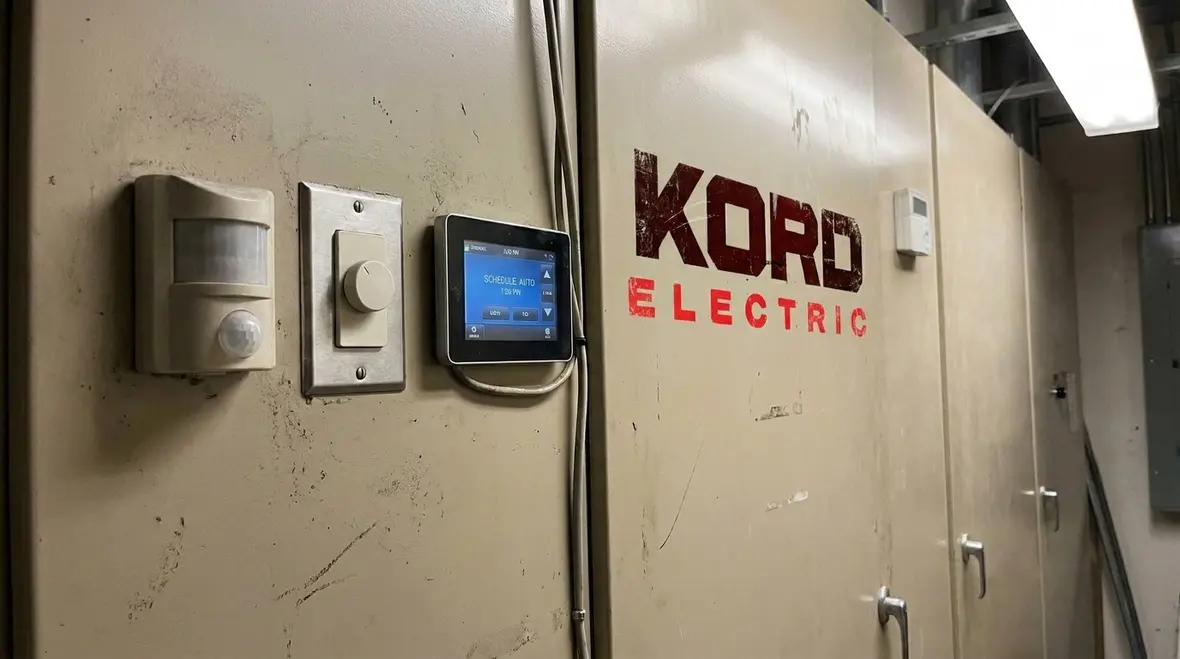
Our technicians and expert service staff explain the control strategy in a clear, business friendly way. Then we help ensure the devices match the application. For example, occupancy sensors must cover the correct zones with proper mounting height and coverage patterns. Likewise, daylighting controls need correct placement and sensible logic so the system reduces output without causing flicker or distracting changes.
For many commercial and industrial facilities, scheduling becomes a big lever. However, scheduling must align with actual hours of operation and after hours use. Transitioning from a manual workaround to a structured schedule can feel like “adulting,” but it usually reduces energy use and keeps the lighting stable. And stability is what you want when people are trying to work, not do interpretive dance with lighting levels.
We also think about commissioning and verification. Controls must do what the energy model expects. Therefore, we support tests and adjustments so motion detection timing, dimming levels, and override behaviors align with the project plan. That reduces the chance of surprises during inspections or performance checks.
Documentation, submittals, and field readiness to avoid late surprises
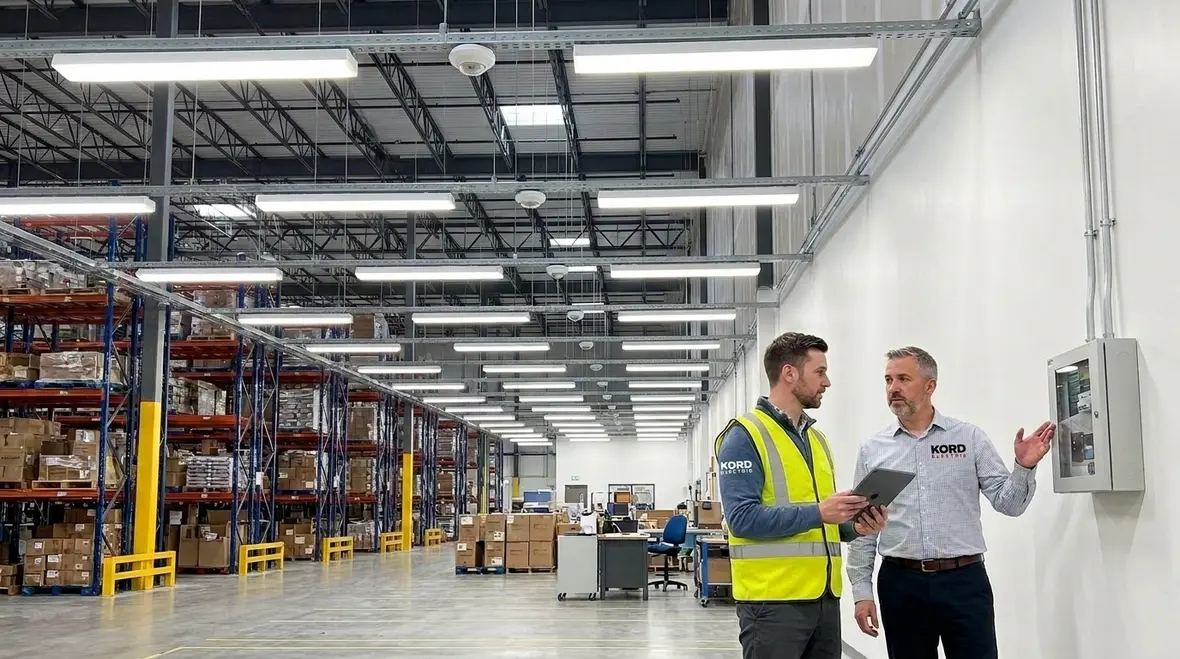
Code compliance includes more than equipment. It includes the records that prove what you installed and how it functions. When we support commercial and industrial facilities and major property buildings, we treat documentation like a core deliverable, not a last minute add-on.
So we help organize the information that typically gets required through the design and permitting workflow. We review labels, control settings, product cut sheets, and any commissioning items that the project needs to show. Additionally, we help field teams understand where details matter, such as sensor programming or setpoint behavior.
Here is the calm truth. Even a strong design can fail during installation if the field team does not follow the plan. And even correct field work can face delays if submittals do not match what was installed. Our technicians reduce those gaps by clarifying expectations before the work starts, and then by checking critical items as the job progresses.
If you have ever watched a project stall because someone needs one missing document, you already know the feeling. We aim to prevent that, because our job is to keep your facility moving and your lighting system aligned with california title 24 lighting requirements commercial buildings.
When your project scope includes broader upgrades beyond lighting, it can help to loop in Kord Electric’s dedicated Los Angeles County electrical services so that panel work, feeders, and distribution improvements stay synchronized with Title 24 lighting documentation and inspections.
Common compliance mistakes in warehouses, offices, and mixed use sites
Commercial and industrial facilities do not share the same layout, but the mistakes repeat. Most failures come from leaving key decisions to the end, or from treating controls as optional.
We often see these issues.
- Inconsistent zoning: The drawing shows one approach, but the installed layout creates different light and control coverage.
- Sensor mismatch: A sensor covers less than expected because of ceiling height, partitions, or equipment placement.
- Unplanned overrides: Facilities install controls but forget to set and document override behaviors for real operations.
- Fixture dimming conflicts: Some fixtures do not perform as expected with certain dimming control types.
- Neglecting service spaces: People focus on offices and ignore corridors, utility rooms, and other areas that still need correct treatment.
We also notice that teams sometimes rely on “typical details” that were fine years ago. Yet today’s california title 24 lighting compliance requirements for commercial buildings often expect more deliberate control strategies, especially for occupied and unoccupied transitions. Therefore, we recommend reviewing the entire scope, not only the most visible spaces.
And if someone tries to sell you lighting as if it is a one size fits all product, we politely ask, “What is the occupancy behavior, and where are the control zones?” Because code compliance, like good coffee, depends on the right inputs.
If you want a deeper comparison of how different commercial environments handle this, Kord Electric’s Commercial Lighting Compliance in California article walks through examples across multiple building types and shows how evolving codes shift expectations over time.
FAQ
Conclusion and next step with Kord Electric
If you are planning a commercial or industrial lighting upgrade, or you need to bring a major property building in line with california title 24 lighting compliance requirements, start with a clear plan. We at Kord Electric review your scope, align fixture and control choices, and support field verification so compliance does not become a stressful detour. Contact us for an expert walkthrough with our technicians and service staff. We will explain the path in plain language and help you move forward with confidence.
For teams who want to connect this work with other electrical needs, you can also explore Kord Electric’s Title 24 Lighting Compliance Guide for Commercial, which ties together code expectations, real world operations, and the broader electrical strategies that keep buildings running smoothly.