Commercial Lighting Control Integration Guide
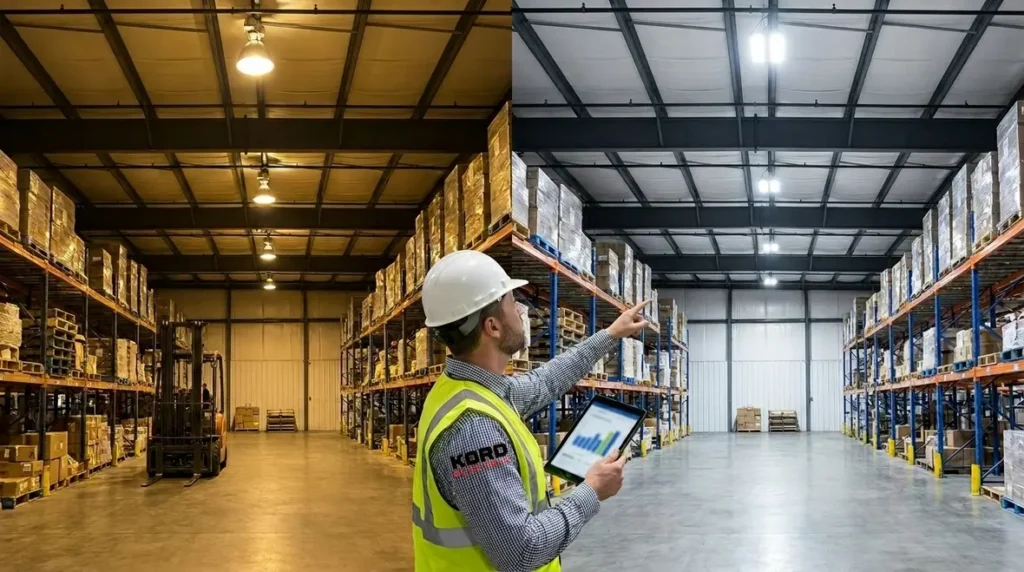
At Kord Electric, we install commercial lighting control integration that helps businesses run smarter, not louder. Instead of relying on manual switches and outdated timers, our technicians set up systems that dim, schedule, and respond to real use. As a result, lights become part of how your building thinks, not just something it turns on. And yes, the lights can behave better than most people in a Monday morning meeting.
Third person, sure. But here’s the truth: when others modernize their facility the right way, they cut waste, improve comfort, and protect capital. In the sections below, our expert service staff breaks down what an integrated lighting upgrade really changes, what it costs, and how it supports daily operations across commercial and industrial facilities and major property buildings.
How integrated lighting control helps a facility run smoother
Integrated lighting control systems do one simple thing very well: they coordinate lighting with the way the space gets used. Instead of separate devices that each run on their own logic, the building gains one system that can manage zones, schedules, dimming levels, and occupancy behavior. Then the facility gets control without chaos.
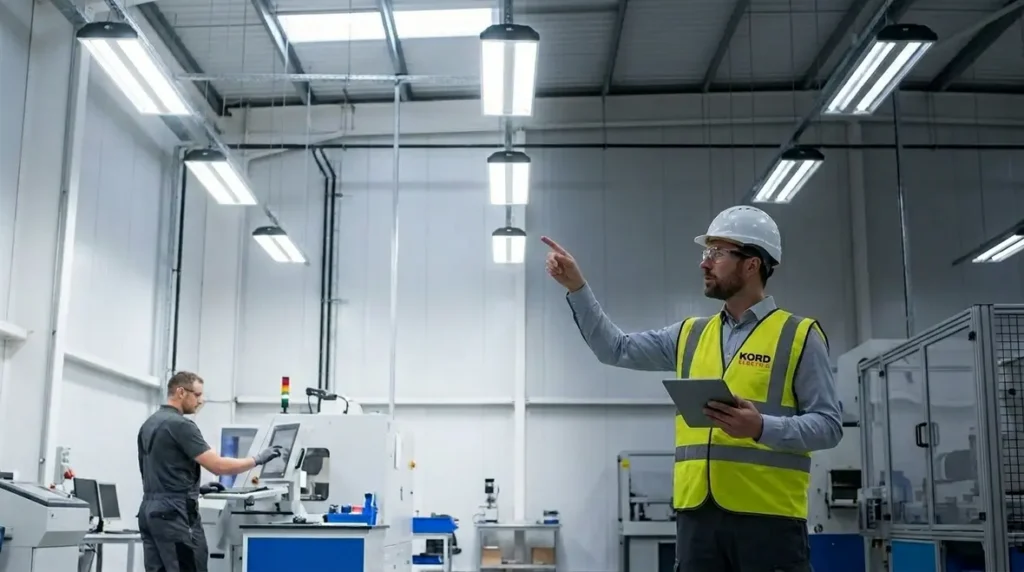
When our team designs the setup, we consider your workflow. For example, warehouses often need steady task lighting, while offices may need daylight balancing. Additionally, retail areas may require scene lighting that supports different operations throughout the day. Therefore, the benefit is not just “better lighting.” It is consistent lighting that matches real life.
And if you have ever watched a cleaning crew hunt for the correct switch like it is a hidden boss level, you already know why coordination matters. With proper controls, the building manages it.
Energy and comfort gains that you can feel, not just measure

Most facility teams start with energy. Yet the best upgrades deliver comfort at the same time. When lighting controls include dimming and automatic scheduling, the system avoids full output when it is not needed. Then, even if people do not think about energy, they feel better lighting levels across the day.
Daylight harvesting is one example. As natural light enters, the system reduces artificial output in a controlled way. So, instead of bright glare near windows and darker corners on the other side, the space stays balanced. Likewise, occupancy sensing prevents lights from staying on in empty areas.
At the same time, we help teams improve visual comfort. Lower glare and stable lighting can reduce eye strain during long shifts. And when employees feel supported, productivity tends to follow, which is the kind of magic that does not require a wand.
What controls actually include in a commercial lighting upgrade

When others hear the phrase “lighting control,” they might picture a fancy switch. In reality, a full system can include several parts that work together.
Typically, the project includes:
- Controls and sensors that detect occupancy, motion, or vacancy
- Dimming drivers that reduce light output without flicker
- Scheduling that adapts to business hours and after-hours needs
- Scene controls for different activities in one space
- Daylight response for zones near windows
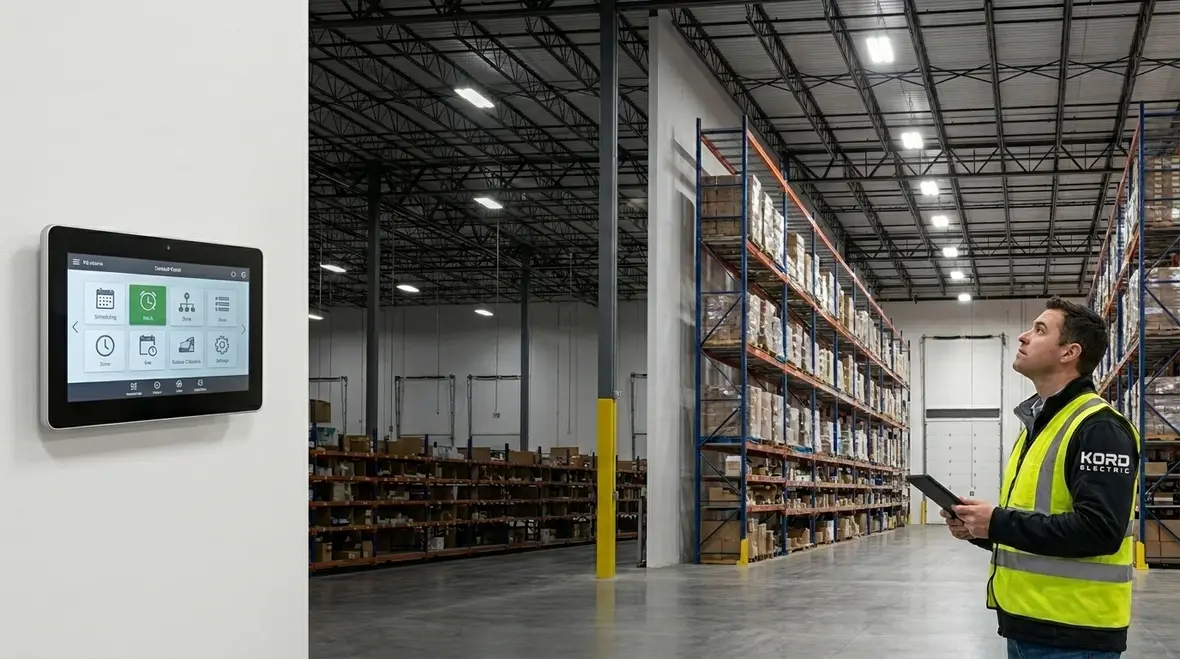
- Central monitoring so others can manage settings from one place
Our technicians also plan for how the system will live in your building. For example, if you need adjustments during a tenant change or after a layout remodel, the controls should support that without ripping everything apart. Therefore, the upgrade becomes a long-term asset, not a one-time expense.
If you want a system that lasts, you need an approach that respects your electrical and operational reality. That is the difference between a lights retrofit and an actual facility modernization.
Lighting control integration cost factors and realistic payback

Costs vary because commercial buildings do. Square footage, existing fixtures, wiring conditions, and control strategy all impact the project scope. That said, Kord Electric uses a practical method to estimate and explain costs so decision makers understand what they pay for and why.
Our referenced guide, Commercial Lighting Upgrade Cost Guide, breaks down key cost drivers that facility teams often overlook at first. It covers the range of variables that affect upgrade pricing, including fixture types, labor complexity, and whether the project replaces only the lighting or also adds control layers. You can read the full details here: Commercial Lighting Upgrade Cost Guide.
In plain terms, payback often depends on how the building uses light. If a facility runs long hours, has many lightly used zones, or suffers from manual mistakes, controls can deliver faster returns. In contrast, a building that already operates efficiently will still benefit, but the savings profile may be more gradual.
And yes, sometimes people treat lighting projects like they are just “new bulbs.” But modern control strategies change how the building behaves, which is why payback should not be estimated with guesswork. Our expert service staff explains options clearly, then builds a plan that matches the facility’s actual operating rhythm.
Steps we follow to modernize without disrupting operations

When we install an integrated system, we do not show up with a wrecking ball and optimism. We plan. Then we coordinate. And finally, we execute with care.
Below is how our team typically moves from assessment to commissioning:
- Site walkthrough to map zones, usage patterns, and lighting problems
- Controls strategy to decide where sensors, dimming, and scenes fit best
- Engineering review so everything stays safe, code-aligned, and maintainable
- Phased scheduling to keep work areas open where possible
- Programming and testing to confirm behavior matches expectations
- Training and documentation so the facility team knows how to use the system
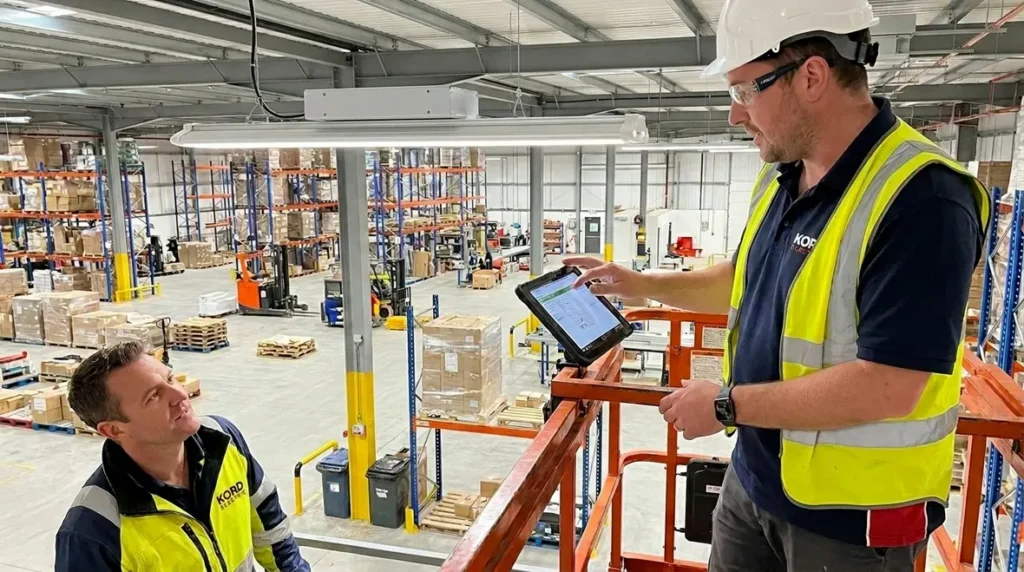
Importantly, we prioritize minimizing downtime for commercial and industrial facilities and major property buildings. Therefore, we schedule work around traffic, production needs, and after-hours requirements. Additionally, our technicians explain what they are doing during the process, so people do not feel left in the dark like it is a tech support horror story.
At times, a facility might also need coordination with other building systems. When that happens, we support a clean integration approach so lighting controls work as intended instead of fighting with unrelated equipment.
How others maintain and expand the system over time
Modern lighting systems should not become obsolete the moment a tenant changes layout or a department changes hours. For that reason, we plan for growth and maintenance from the start. Then the facility can keep benefits without constant reinvention.
Our expert service staff advises owners on simple next steps that protect performance. For instance, when a team updates the scheduling or adjusts zones, the system should respond predictably. Likewise, replacing sensors or updating scenes should be a routine service task, not a crisis.
We also stress documentation. Facilities that track setpoints, zones, and device locations avoid the “mystery box” problem later. And if anyone ever asks, “Who programmed this?” our records make it less of a guessing game.
Moreover, ongoing maintenance helps ensure sensors do not drift out of alignment and controls remain configured correctly. Therefore, the building keeps energy savings and comfort improvements instead of sliding back to older habits.
FAQ for commercial facilities considering integrated controls
When facility teams start planning a commercial lighting control integration, a few core questions come up over and over again. Below, we address some of the most common ones so you can compare options with a little more confidence and a lot less guesswork.
For more detail on how lighting controls intersect with California requirements, many teams also review Kord Electric’s resources on lighting code and compliance. Articles such as the California commercial lighting code guide and our commercial lighting compliance overview help connect the dots between smart controls, energy savings, and passing inspection without the drama.
Make the smart move now with Kord Electric
Modernizing lighting does not have to mean chaos, guesswork, or wasted energy. With Kord Electric, our technicians plan a clean commercial lighting control integration upgrade that fits how your facility actually works. We map zones, set schedules, confirm sensor performance, and teach your team how to use the system. Then you keep comfort and control, not just brighter lights. If others are ready to upgrade, contact Kord Electric today for a site assessment and a clear plan you can act on.
If you want to see how full lighting projects come together across large facilities, explore Kord Electric’s dedicated commercial and industrial lighting installation services. This is where design, controls, and hands-on electrical work align to support the way your property runs every day.
And if you are still weighing budgets and options, pair this guide with the in-depth Commercial Lighting Upgrade Cost Guide. Together, they give decision makers a clearer picture of what a smart lighting control strategy looks like in practice—and how it can support comfort, compliance, and long-term savings across your portfolio.