Commercial Lighting Control Upgrades Boost ROI
How Commercial Lighting Control Upgrades Cut Costs and Boost Performance
In commercial and industrial buildings, lights can quietly drain budgets while also underperforming for safety, comfort, and productivity. At Kord Electric, we see it every day: commercial lighting control benefits start with real energy savings, then expand into better operations, smarter scheduling, and fewer service calls. Instead of treating lighting like a one size fits all system, we help building teams fine tune how spaces respond to occupancy and time of day. That means fewer lights stuck on all night and fewer “mystery bills” that show up like a plot twist in a dull TV drama. Then our technicians walk facilities through upgrades with clear explanations, because nobody deserves to feel like they need a technical decoder ring just to manage a building.

When ROI Shows Up Faster Than Expected
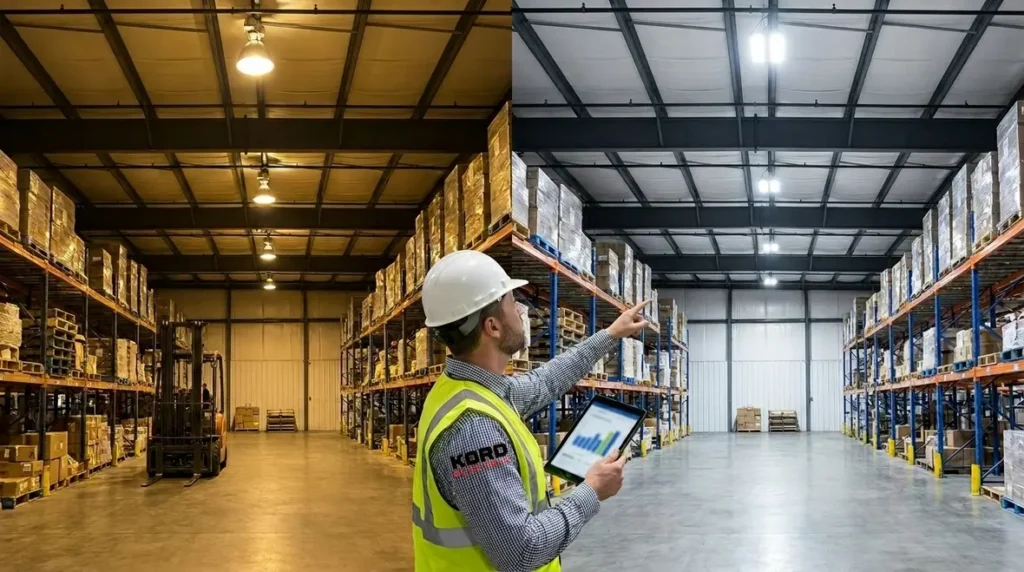
Most people expect a lighting control upgrade to be a slow burn. However, the financial return often appears sooner than building owners think, especially when energy use is high or controls are outdated. Why does this happen? First, modern controls reduce waste by turning off or dimming lights when spaces do not need full output. Next, they support schedules that match real building patterns instead of generic defaults. Then, they help maintenance teams by reducing lamp burn time and limiting unnecessary wear. As a result, operational costs drop in parallel with energy costs.
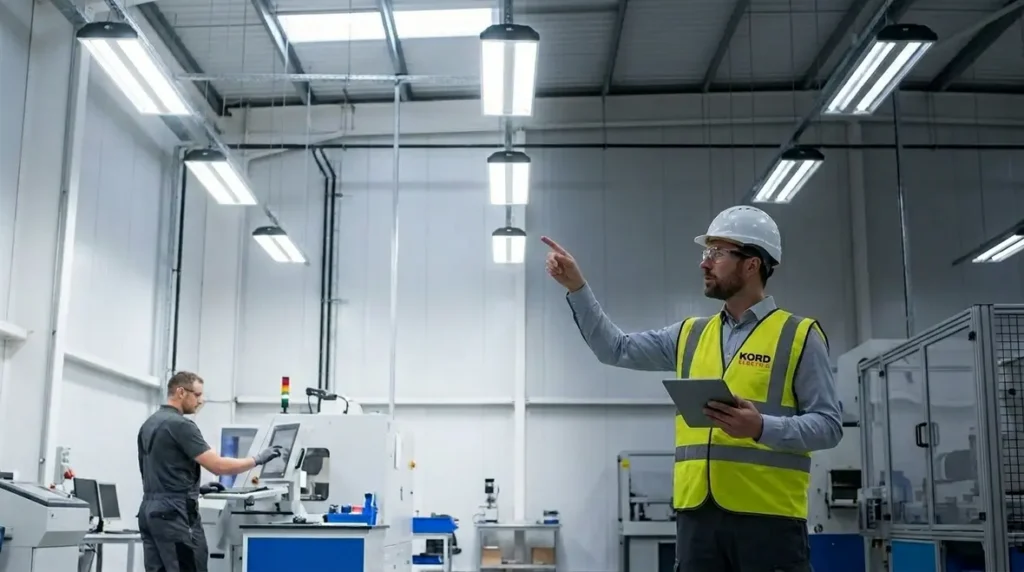
Additionally, Kord Electric considers where savings actually live. We work with commercial and industrial facilities, and we focus on driving ROI through practical changes, not wishful thinking. For example, a facility with long operating hours may see strong reductions from occupancy based control zones. Meanwhile, a major property building with many shared spaces may benefit from daylight aware dimming so the sun does some of the work. And yes, it still counts as performance, not magic. The numbers do the talking. For teams budgeting a broader upgrade path, this pairs well with structured planning similar to what we outline in our California Commercial Lighting Code Guide for 2026 and other compliance‑focused resources on the Kord Electric blog, so savings and code goals stay aligned from the start.
What Impacts ROI the Most, and What We Measure First
ROI does not come from one single feature. Instead, it forms from several connected pieces that work together. We typically review these drivers before we recommend a commercial lighting control plan for a facility.
- Lighting baseline and operating pattern: We identify when lights run, where they run, and how often areas stay occupied.
- Control coverage: We look at how many fixtures can actually be controlled as zones, not just treated as one big “on or off” blob.
- Dimmer capability and device compatibility: We confirm that the fixtures, drivers, and controls can dim smoothly without causing flicker complaints that sound like “lighting is haunted.”
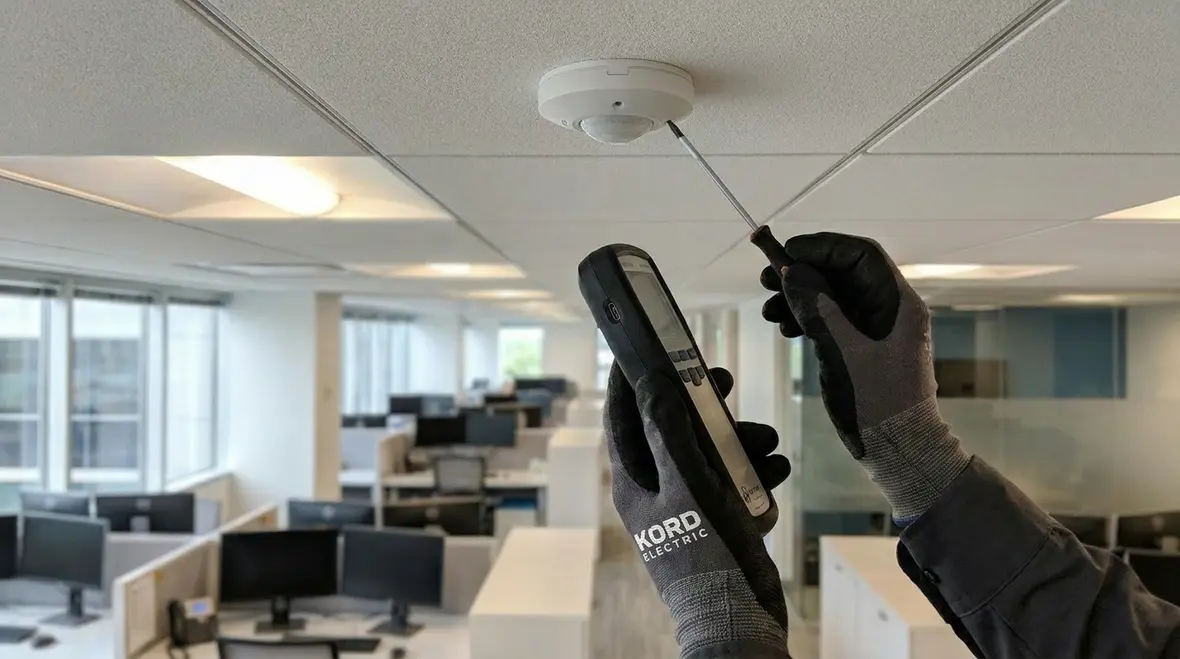
- Daylight and occupancy sensing: We measure whether sensors are placed and configured to match real foot traffic and sun exposure.
- Commissioning quality: We test settings so the system responds correctly during real usage, not only during a quick walkthrough.
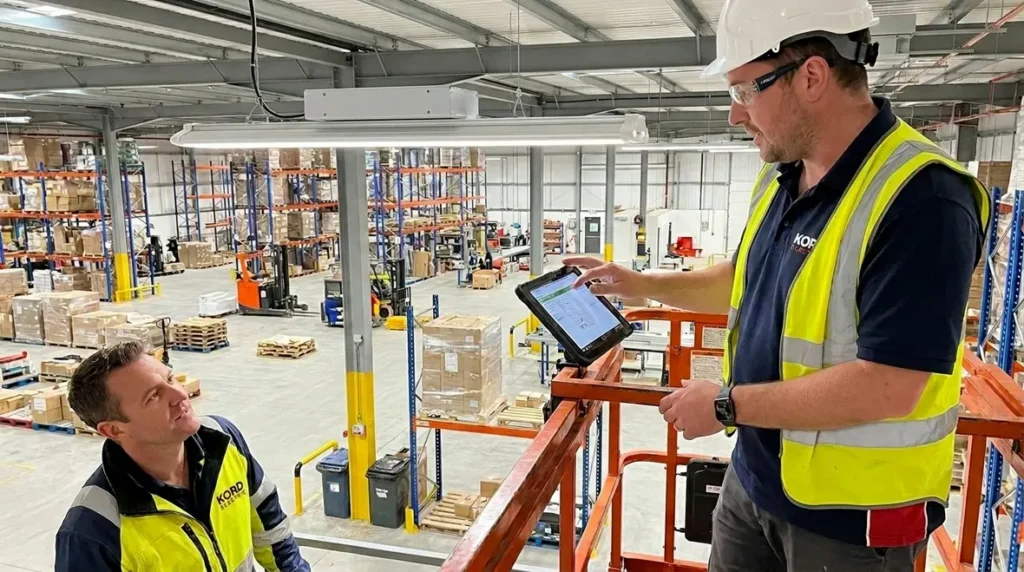
At Kord Electric, our experienced service staff helps clients understand these details in plain language. We do not just install equipment and disappear. We explain what we changed, why it matters, and how each setting supports your ROI. This reduces the risk of “we upgraded, but nothing feels different,” which is the ROI equivalent of paying for a gym membership and never taking off your coat.
Energy Savings You Can Model, Not Guess
We build ROI cases around controllable load reduction. In other words, we estimate how much lighting energy drops when controls dim, turn off, or delay operation. Then we align that estimate with how the building actually behaves. Commercial facilities often have multiple patterns: early morning warm up, lunch time occupancy shifts, late afternoon daylight changes, and evening vacancy. When controls handle those patterns, the savings stop being theoretical.
To keep the math grounded, we commonly account for:
- Reduced run hours: Controls shut off areas during vacancy instead of relying on manual overrides.
- Lower light levels during partial occupancy: Dimming schedules and occupancy feedback reduce output while preserving visibility needs.
- Daylight contribution: When daylight is strong, controls lower electric light output without harming comfort.
- Fewer re-lamp and service events: Longer effective life and fewer unnecessary operating cycles can reduce downtime.
Additionally, we help stakeholders understand that savings can come from both “obvious” and “quiet” changes. For example, a warehouse may not look like a candidate for complex controls, but motion and zone control can still cut wasted lighting during low traffic periods. Meanwhile, an office or lobby in a major property building can see benefits from daylight responsive dimming that reduces energy while keeping spaces consistent. So yes, energy savings can be modeled, and we work to make them understandable. If you want to compare these modeled savings with a broader upgrade or retrofit, you can layer them alongside project planning insights from resources like Kord Electric’s Commercial Lighting Upgrade Cost Guide or Automated Lighting Control Benefits for Facilities, so controls and fixture choices support the same financial story.
Operational Benefits That Protect the ROI Over Time
Even after installation, ROI depends on how well the system operates day to day. This is where service quality matters. If controls drift out of alignment, schedules become inaccurate, or sensors fail quietly, returns can weaken. That is why we emphasize commissioning and ongoing support for commercial and industrial facilities and major propertie buildings.
Our technicians also help teams avoid common “silent cost” traps:
- Manual overrides that never reset: We configure timeouts and logic so the lights return to the intended mode.
- Oversensitive occupancy settings: We tune detection so lights respond to real use and do not bounce on and off like a strobe at a concert.
- Daylight sensors placed without context: We confirm placement and adjust for glare or seasonal changes.
- Zone boundaries that do not match the building: We align control zones with how people and equipment actually move.
Then there is the human side. When our expert service staff explains how the system responds, building operators make better decisions. They also feel confident when occupants ask, “Why did the lights dim?” because we can show that the behavior matches a planned comfort and energy strategy. That kind of transparency reduces friction and protects the upgrade investment.
How to Choose the Right Upgrade Path Without Overpaying
Not every building needs the same level of controls. Some facilities start with simple scheduling and switching improvements. Others need full zoning, occupancy sensing, and daylight integration. In practice, we help clients choose the right step because it impacts ROI and risk.
First, we evaluate the facility footprint, operating schedules, and the areas where lighting waste is most visible. Then we prioritize zones with the highest hours and the least consistent occupancy patterns. After that, we consider how much of the existing infrastructure can be reused. Reuse can lower upfront cost while still achieving strong savings.
Next, we guide clients on what “good” looks like during commissioning. We test response times, verify sensor coverage, and confirm dimming levels support visual needs. Finally, we document the system settings so operators can manage it confidently. That is how you avoid paying for features that never get used, like buying a fancy espresso machine and only running it twice a year.
Dual Column Snapshot: ROI Inputs We Commonly Use
What Drives ROI
- Run hours and occupancy variability
- Fixture types and dimming potential
- Zone design and sensor coverage
- Daylight exposure and window layout
- Commissioning and configuration quality
How We Support Results
- Site measurement and system review
- Clear operator training from technicians
- Commissioning with real usage checks
- Service guidance for seasonal tuning
- Performance verification after install
FAQ About Commercial Lighting Control Upgrades
ROI Focused Conclusion and Call to Action
If you manage a commercial or industrial facility or a major propertie building, you deserve lighting controls that pay you back with real savings and steady performance. At Kord Electric, our technicians and expert service staff explain every step, from ROI drivers to commissioning details, so your team can trust the results. Next, we will review your lighting schedule, zoning needs, and control opportunities. Reach out today for an upgrade conversation, and let’s turn wasted light into measured value.
When you are ready to align controls with a full lighting strategy, explore how our dedicated lighting installation services for commercial and industrial facilities connect system design, code compliance, and long-term maintenance into one plan. For properties across Southern California, including those that need support county wide, our team also delivers coordinated Los Angeles County electrical services so lighting controls, panels, and power distribution all work together instead of in separate silos.