
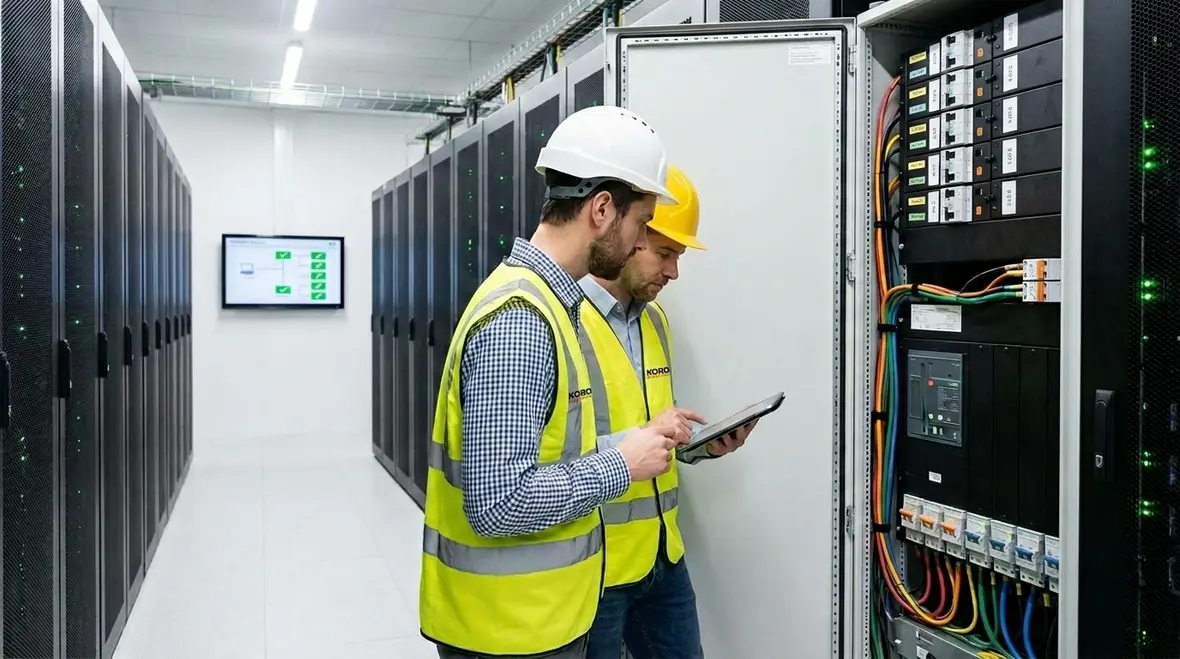
Data Center Power Redundancy Done Right
At Kord Electric, we treat data center power redundancy like a mission, not a checkbox. In commercial and industrial facilities, and especially in major property buildings, a power failure does not politely wait for a restart cycle. It shows up uninvited, steals uptime, and sends costs marching. Therefore, we plan for backup power, reliable distribution, and clean switching so the lights stay on and the servers keep doing their job. And yes, we also design systems that do not behave like a coffee machine with trust issues. In this guide, our technicians and expert service staff explain the practical strategies that help redundancy succeed in real life, not just on paper.
Why redundancy fails when people forget the boring details
Third party audits often find the same pattern. The electrical design looks strong, then day two reality hits: a control wiring mistake, a mis-set breaker logic, poor labeling, or a load that never moved during a test. Then the standby system does start, but it starts late, wrong, or in a state that causes a nuisance trip.
In other words, the risk does not live only in generation or in transformers. It lives in the seams between systems. For example, the transition between utility and generator, or between one distribution path and another, depends on timing, protection settings, and coordination. If those pieces do not align, the system can lose supply even though the hardware exists.
Our technicians, with the calm confidence of people who have actually chased down the “mystery alarm,” help teams prevent that. We ask what happens during each step: detection, isolation, switching, ramp up, and restoration. Then we confirm the system can do it safely under load, not just under ideal test conditions.
Design the distribution paths so failure stays local
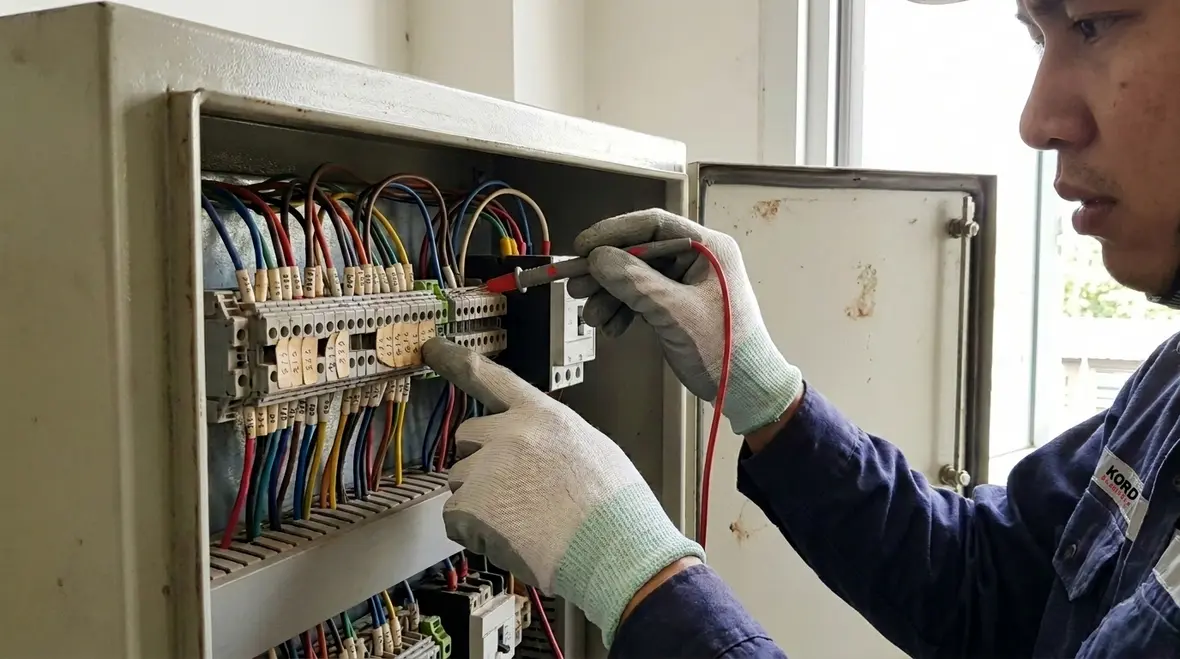
The best approach spreads risk. Instead of one nervous pathway serving everything, a solid plan divides the load across separate feeders and distribution routes, using multiple stages of protection. This is where the design described in our Data Center Electrical Distribution Design for Reliability article becomes practical: a reliable design uses smart segmentation, correct switching philosophy, and protection coordination to keep one fault from turning into a whole facility event.
To keep failure local, teams typically implement separate electrical rooms or separated sections within the same room. They also design for different physical routes so a single cable fault does not take out multiple critical loads. Next, they size and coordinate protective devices so the system clears only the faulty segment.
As a result, data center power redundancy becomes more than “two of everything.” It becomes a controlled network where faults behave like localized rumors instead of a full-blown rumor mill.
Engineer protection and switching for clean transitions
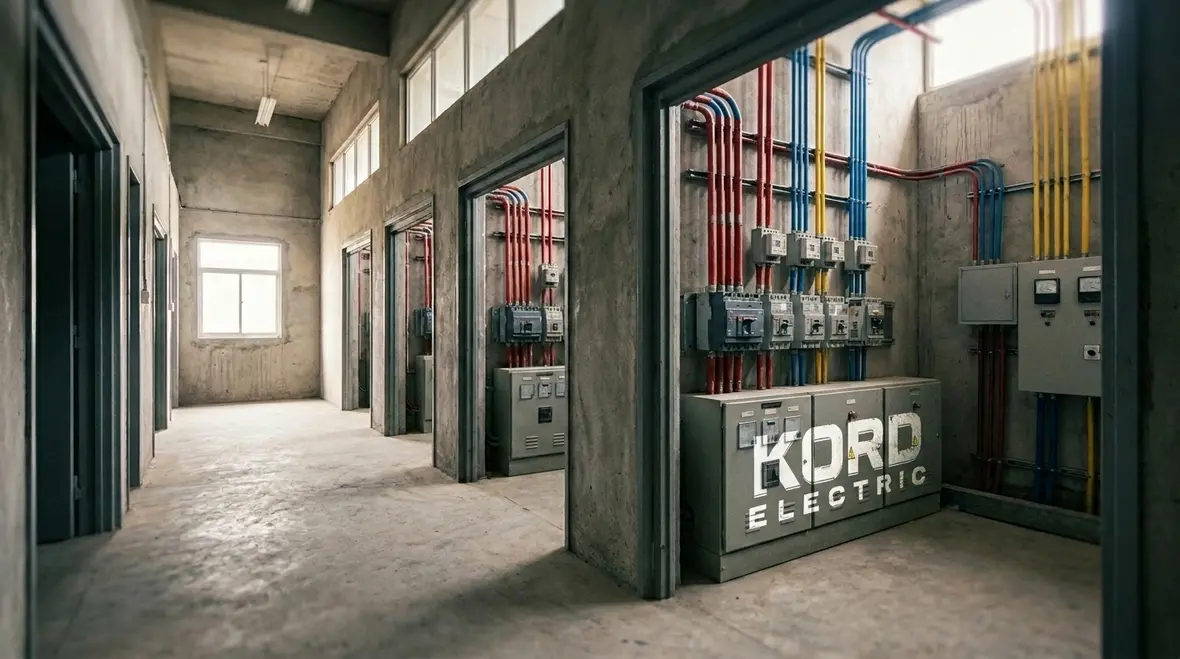
When redundancy works, switching feels invisible. When it fails, it feels like a storm. So we focus on protection and controls as first class citizens.
First, we coordinate relays and breakers so each device clears the correct fault and does not overreact. Then we validate the transfer scheme, including detection times and interlocks. If controls transfer too slowly, upstream protection may trip before the alternate path takes over. If controls transfer too fast, it can cause a brief overlap or a short interruption that triggers sensitive equipment.
Additionally, we verify the sequence for maintenance modes. That includes what happens when a transfer switch undergoes service, or when a feeder requires isolation. A well engineered redundant system should still behave predictably while humans do their human things, like swapping components, checking breakers, and reading labels.
Our expert service staff walks teams through these scenarios because the best time to understand switching is before the facility experiences it at 2 a.m. Like any good plan, redundancy should not rely on heroics. We prefer checklists, tests, and clear operational steps.
Use N+ and multi path planning instead of guesswork
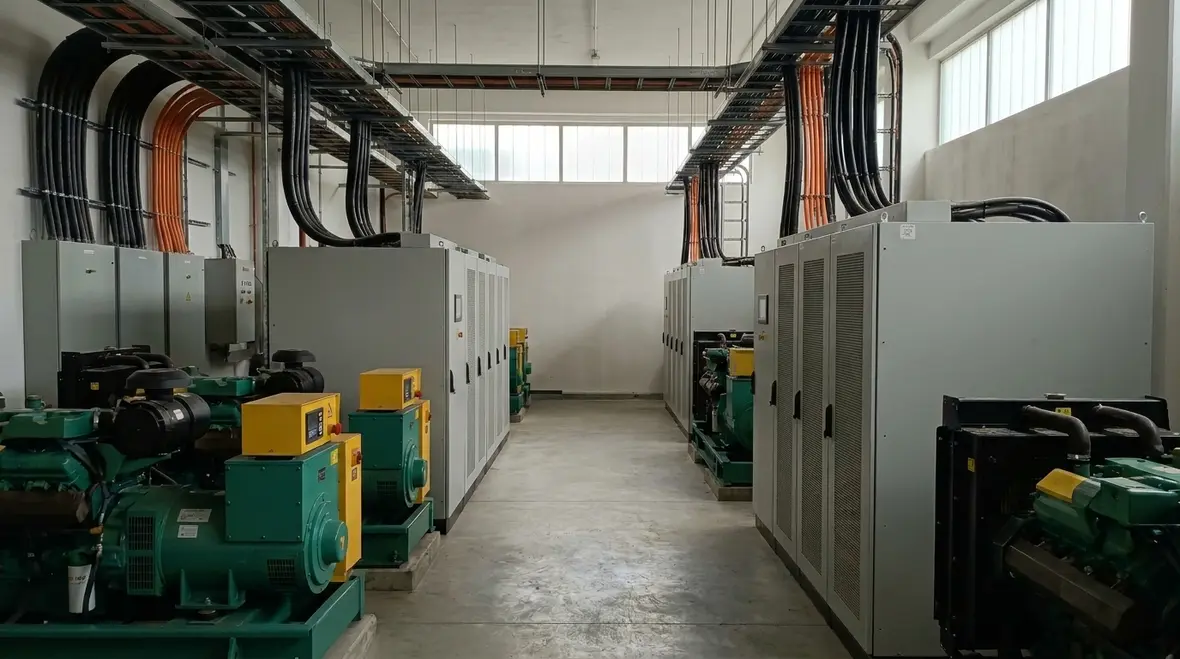
Some teams choose redundancy the way people pick restaurants for lunch: by vibes. In power systems, vibes cost money. So we recommend a structured method based on load criticality and operating targets.
For many mission critical loads, N+ planning helps. In simple terms, the design includes enough extra capacity so that one component can fail without losing service. When the facility needs even higher confidence, multi path designs can reduce the chance that a single transfer or distribution segment affects the full load.
Then we align that planning with actual load growth. If the facility adds racks every quarter, we do not design for yesterday’s peak and call it done. We model likely expansion and we confirm that generators, UPS modules, and distribution components can carry the future load within safe operating margins.
Our approach stays grounded in commercial and industrial realities. We consider utility behavior, generator fuel logistics, and the operational schedule for major property buildings. We also coordinate the redundancy level with the building’s maintenance strategy, since planned downtime and emergency response both matter.
Test it like it will be needed, because it will
Equipment redundancy fails most often in one place: testing. People run a formal test once, then stop. Or they test a system with light loads, then assume performance under full critical load will match. Yet the transition behavior, voltage regulation, and protective device behavior can shift when the load matters most.
Therefore, we push for tests that cover the full process. That includes load bank tests for generators where applicable, UPS runtime verification, transfer switch operations, and end to end checks from upstream distribution through the critical bus. Next, we document the results, track deviations, and correct them with the same urgency you would give to a blinking alert.
We also help teams create a test cadence that fits the site. For example, a major property building might follow a maintenance window strategy that reduces disruptions. Meanwhile, a commercial data environment might run more frequent checks because uptime expectations run high. Either way, testing should be scheduled, not improvised.
And if someone says, “We tested it last year,” we gently remind them that electricity does not care about anniversaries. It cares about conditions.
Manage coordination across UPS, generators, ATS, and critical panels
Redundancy succeeds when the entire system behaves as one machine. That means coordination across UPS units, generators, automatic transfer switches, critical panels, and the upstream utility interface.
We start with load criticality. Some loads must ride through the shortest interruption. Others can accept a brief transition. Then we configure the power chain so each segment supports its role. For instance, the UPS can cover the handoff time while the generator and distribution transition takes place. After that, the system stabilizes without overloading any one path.
Next, we verify communication and alarms. If controls send a signal but the maintenance team never sees the meaning, the system becomes loud with no insight. Our technicians help teams set up operational clarity, so staff can take action quickly and safely.
Finally, we review how the facility returns to normal operation. Restoration sequences can create stress if they reconnect paths too aggressively or in the wrong order. Coordinated restoration protects both the electrical assets and the critical equipment connected downstream.
Plan for real operations, not just one-time installation
Even the best engineered system can drift over time. Breaker settings change, labels get replaced poorly, firmware updates alter behavior, and contractors adjust wiring without fully matching documentation. This is why we emphasize operational discipline for commercial and industrial facilities.
We help teams build a maintenance playbook that includes inspection intervals, torque checks, thermography where appropriate, battery and UPS health tracking, and review of protective device settings. We also recommend keeping as built drawings current, including one line diagrams and control logic notes.
Just as important, we train the right people for the system they will maintain. Our expert service staff explains the “why” behind the architecture so technicians do not treat the plan like a black box. When people understand how paths protect each other, they make better decisions during troubleshooting.
That combination of engineering and operations is what truly supports data center power redundancy in the long run. Not the glossy spec sheet. Not the promise. The actual performance day after day.
Align redundancy decisions with broader electrical strategy
Data center power redundancy does not live in isolation. It depends on the same disciplined distribution design, protection coordination, and maintenance strategy that support the rest of the property. When teams coordinate redundancy planning with distribution reliability, they avoid building parallel systems that fight each other or create hidden single points of failure.
Many facilities benefit from pairing a redundancy review with a broader look at maintenance practices. For example, Kord Electric’s data center electrical maintenance checklist approach helps teams align testing, inspection, and documentation habits with the redundancy targets they set on day one. When those worlds match, backup paths and primary paths age together instead of drifting apart.
We also encourage property managers and owners to connect their redundancy plans to fire and life safety coordination. When electrical, protection, and fire systems understand each other, the facility avoids confusing alarms, conflicting signals, or restoration steps that unintentionally bypass critical safeguards.
Connect redundancy planning to commercial service needs
Redundancy work rarely stops at the data hall door. Commercial and industrial facilities often combine tenant loads, central plant equipment, and data environments on the same property. Kord Electric helps teams design and maintain redundant systems that respect how the whole building operates, not just a single room.
For sites across the region, especially those looking for Los Angeles County electrical services, we focus on practical deployment: clear phasing of upgrades, safe cutover plans, and protection settings that match both utility behavior and onsite generation. That way, a redundancy project becomes a stability upgrade for the entire property, not just an isolated technical exercise.
By treating data center power redundancy as part of a broader electrical strategy, facility teams gain more than backup capacity. They gain a calmer operating environment, clearer maintenance decisions, and a power system that behaves the same way at 2 p.m. as it does at 2 a.m.
FAQ about data center power redundancy
Closing: bring the right plan to the right site with Kord Electric
Redundancy is only as strong as the transitions, protection coordination, and testing that support it. If a commercial or industrial facility needs calm, dependable power for critical loads, Kord Electric helps teams design, verify, and maintain reliable electrical distribution. Our technicians and expert service staff explain every step so operations stays confident, not confused. Contact us to review your current architecture, transfer schemes, and test plan. Then we help you strengthen data center power redundancy before the next inconvenient outage arrives.
Whether you are tuning an existing system or planning a new one, we align redundancy choices with your utility behavior, on site equipment, and maintenance realities. From distribution design to commissioning and long term support, our goal is simple: make sure your power system is ready for the moment it matters, not just the day it is installed.
If you are reviewing your power architecture today, you can also explore how our reliability focused design work supports uptime in more detail in our guide on data center electrical distribution design for reliability. Together, those perspectives give your team a practical roadmap from concept to live, resilient operation.


