Commercial EV Infrastructure Planning Guide
Commercial EV Growth Needs Strategic Planning, Not Wishful Thinking
At Kord Electric, we focus on commercial ev infrastructure planning that scales with real-world demand. For large sites and major property buildings, the question is not whether electric vehicles will arrive. They will. The real challenge is building charging and power systems that expand smoothly, protect operations, and fit the site’s electrical limits. In the first steps, we plan like a team that expects growth, not like someone planning a barbecue and hoping the weather cooperates.
To keep things calm and clear, we explain the path from assessment to phased deployment. Then, we connect that plan to utility power, voltage behavior, and load management. You will see how our technicians and expert service staff walk clients through the details, using practical language and real jobsite experience. After all, a well-designed plan beats guesswork every time, even when the internet insists you can “just add more chargers.”
Start With Site Truth and Load Reality
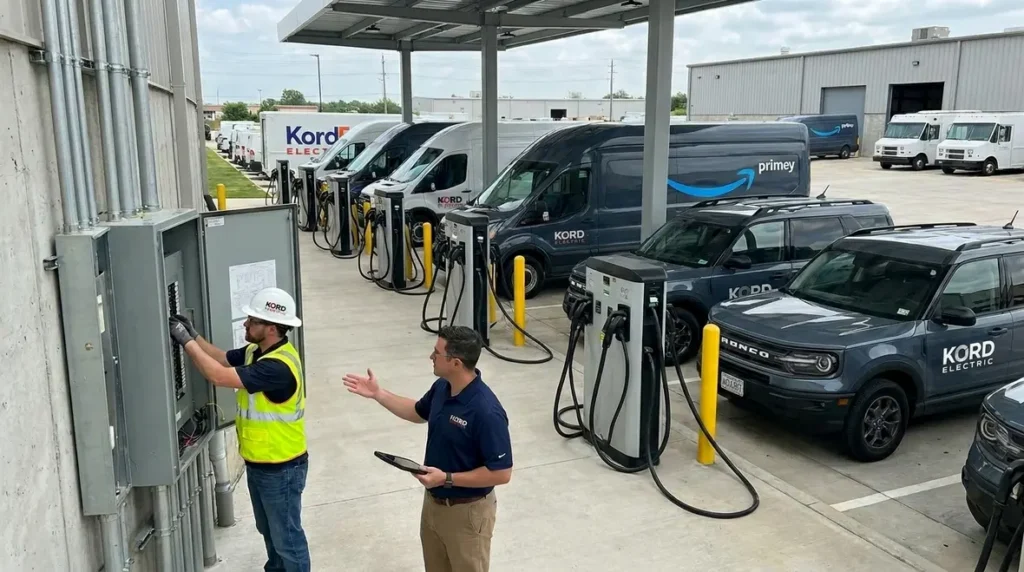
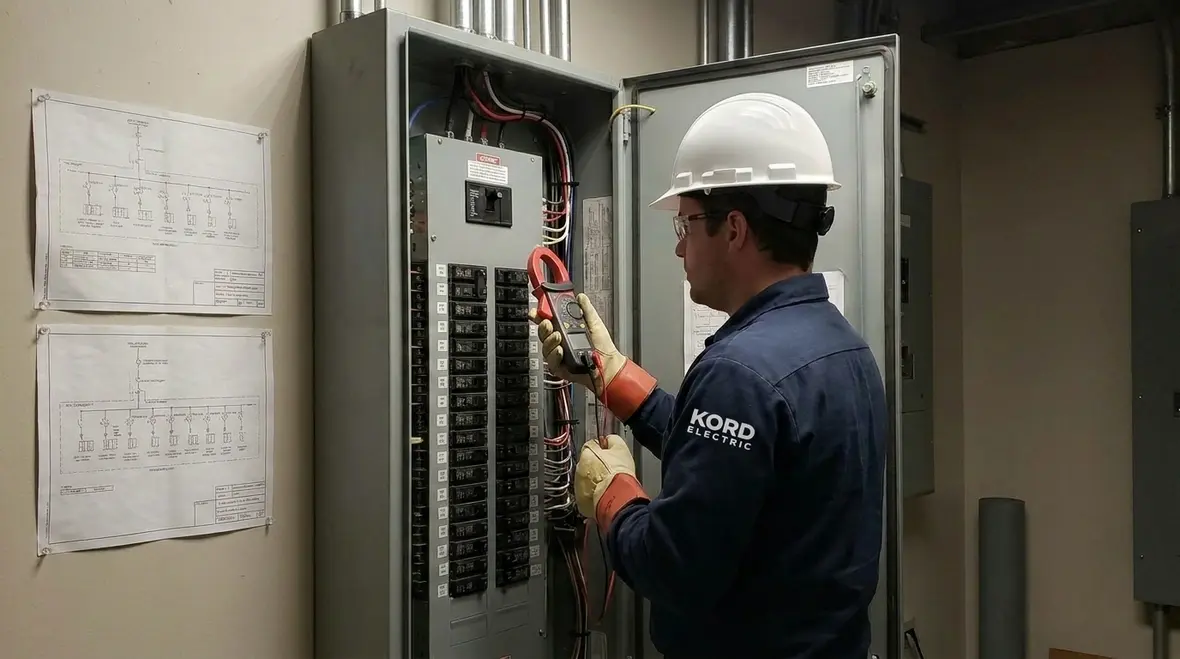
We begin commercial and industrial projects by treating the electrical system like it is a living thing. It has habits, limits, and weak spots. First, our team reviews existing service capacity, transformer size, panel layout, and metering setup. Next, we map how the site uses power across the day, week, and season. Then, we identify critical loads such as production equipment, HVAC, refrigeration, elevators, and life safety systems.
Because charging impacts demand, we model EV load as an additional duty cycle rather than a one time change. Therefore, commercial ev infrastructure planning starts with questions like: When do vehicles arrive? How long do they stay? Which fleets charge daily, and which charge occasionally? After that, we estimate future growth based on leasing patterns, route planning, and fleet replacement schedules.
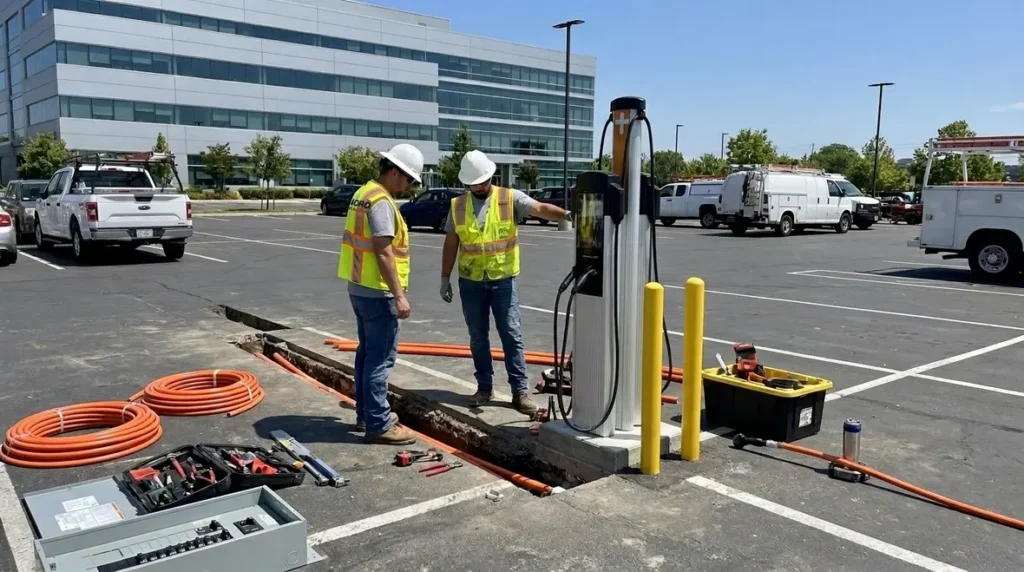
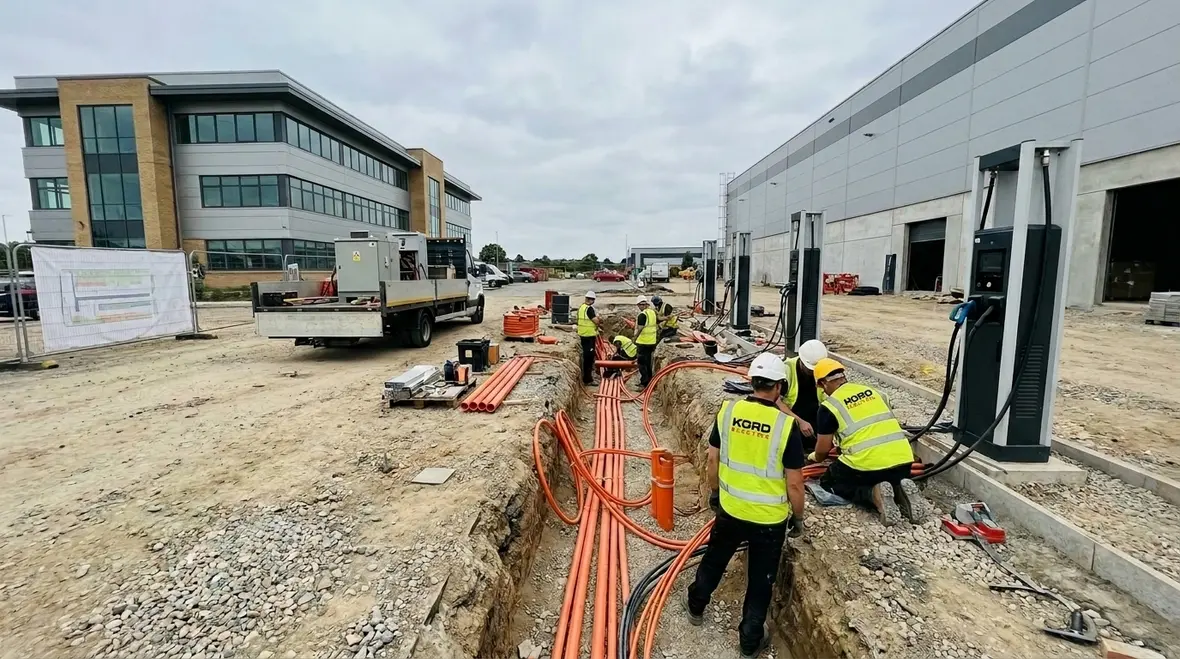
Our technicians also look at physical constraints. Conduit paths, trenching, parking layout, and cable routing all influence final cost and timelines. Additionally, we consider uptime needs. A major property building cannot pause operations for “a quick install” while everyone waits in the lobby like it is a movie premiere.
Build a Scalable Design That Grows in Phases
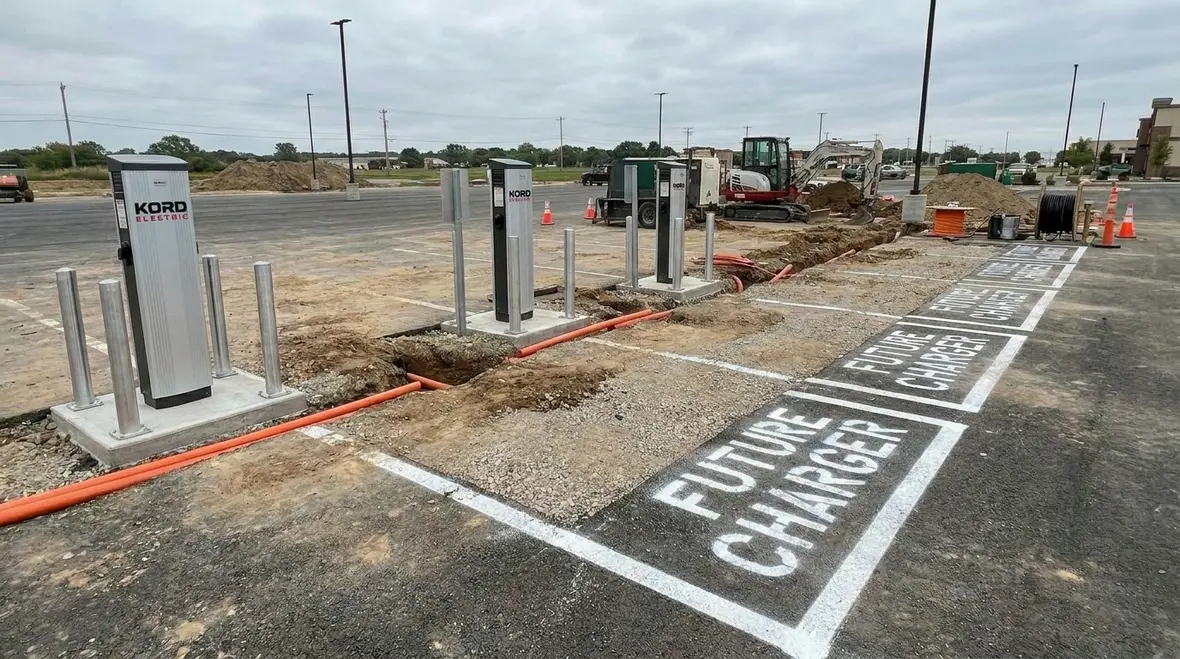
Once we understand the electrical baseline, we design for expansion. Many sites fail when they install chargers like islands in a sea of fixed capacity. Instead, we plan a foundation that allows more ports and higher power models later without tearing up the whole site.
So we create phased deployment plans. For example, we may start with a manageable number of charging points, then add more when the next fleet contract begins. Meanwhile, we size feeder capacity and plan switchgear upgrades only when data confirms the need. As a result, each phase fits current demand while keeping the door open for what comes next.
Moreover, we coordinate equipment placement to support future wiring. That means selecting locations with room for additional cabinets, using cable routing that can handle expansion, and planning for balanced distribution. In addition, we consider smart charging controls that adapt power draw based on site load and grid conditions.
And yes, smart controls matter. Without them, charging can turn into a demand spike party. Utilities do not enjoy parties they did not RSVP to.
For facilities that want to go deeper into how EV capacity scales across a portfolio, Kord Electric also shares insights in their dedicated discussion on EV charging infrastructure scalability for commercial sites, where phased growth, real-world load behavior, and expansion-ready layouts all work together.
Manage Voltage and Power Quality From Day One
Any serious commercial build runs into one simple fact: power quality affects performance and equipment longevity. Even when your charger count looks reasonable on paper, real voltage behavior can change with load. That is why we connect EV plans to the kinds of issues we address in our voltage fluctuation guidance for commercial and industrial environments. When planners understand how EV charging interacts with power quality, they can protect both chargers and everything else that depends on steady voltage.
When voltage drops or fluctuates, chargers may reduce output, protective devices may trip, and connected equipment can behave unpredictably. Therefore, our approach includes reviewing service levels, checking load balance, and understanding how harmonics and switching events impact the electrical system. Then, we plan mitigation measures that fit the site instead of using generic fixes.
In practical terms, our team evaluates transformers, conductor sizing, panel distribution, and the way loads interact during peak periods. Additionally, we consider how charging should ramp up rather than hit full demand instantly. As a result, the site protects both the charging network and sensitive loads like HVAC controls and process equipment.
If you have ever seen a charger blink like it is sending a distress signal, you know this is not a “feature.” Our technicians help prevent that scenario through careful planning, proper controls, and targeted electrical work.
Coordinate Permits, Utility Rules, and Construction Realities
Scaling EV infrastructure involves more than wires and chargers. We align with utility requirements, permitting steps, and construction timelines that protect operations. First, we review interconnection and service upgrade pathways early. Then, we schedule work so the site can keep running, especially in warehouses, manufacturing areas, and large office complexes.
Because commercial and industrial facilities often operate on tight schedules, we plan installation sequencing. We coordinate with site leadership, facility managers, and electrical contractors where needed. Meanwhile, our technicians prepare the electrical scope so it matches the design intent.
Additionally, we ensure documentation and labeling meet site standards. That includes clear circuit identification, as-built updates, and component verification. Then, we plan commissioning and testing so chargers operate correctly under real load conditions.
Now, about those “surprise delays” that show up like villains in a superhero movie. We cannot stop every external timeline, but we can reduce surprises by building a clear process and communicating early. And we do mean early.
Design for Reliability, Safety, and Fleet Experience
EV infrastructure must work every day, not just on commissioning day. Therefore, we design for reliability through proper protection, safe routing, and equipment selection suited for commercial conditions. Our expert service staff stays involved beyond installation so that maintenance and performance stay predictable.
Reliability also includes user experience. If drivers wait longer than expected or power output is inconsistent, your fleet operations suffer. So we match charging power levels and port counts to actual vehicle needs. Then, we implement load management that keeps charging stable while respecting site limits.
Additionally, we consider safety features like proper grounding, fault protection, and weather-rated installations where needed. For many major property buildings, this also includes accessibility and clear signage. When drivers find charging easily, they spend less time circling the lot like it is a game show.
Finally, we plan ongoing support. We help set up maintenance schedules, review performance trends, and address issues early. Because in commercial and industrial environments, downtime is expensive, and quick responses matter.
How Our Technicians Explain the Plan in Plain Language
We do not hide behind confusing jargon. Our technicians and expert service staff explain the plan step by step, and we confirm choices with the client before we move forward. First, they walk the team through the site assessment results. Then, they explain the design logic, including why we chose certain equipment and how we expect it to scale.
Next, they discuss how we will manage power draw and protect sensitive loads. If voltage behavior matters, we connect it directly to the chargers and site electrical system so clients understand the “why,” not just the “what.” Then, they outline the phased schedule and what changes each phase brings.
And when someone asks, “Can we just add more later?” we answer like adults. Yes, we plan for later. However, we also want to avoid last minute upgrades that disrupt operations and cost more than they should. Therefore, we build room to grow now, so the future does not become a frantic scavenger hunt.
For organizations that operate across Los Angeles and surrounding regions, we often connect EV plans with broader regional support such as Los Angeles County electrical services, so that fleet growth, building upgrades, and power reliability all move in the same direction instead of competing for capacity.
FAQ
Conclusion: Let’s Build EV Capacity That Keeps Up
When a facility plans EV charging with commercial ev infrastructure planning, it avoids costly stop and start upgrades and protects day-to-day operations. Kord Electric designs scalable charging systems for commercial and industrial sites and major property buildings, with our technicians and expert service staff guiding each step. If you want a practical rollout that fits your electrical limits and future growth, reach out to us. We will assess your site, map a phased plan, and move forward with confidence. The grid can be demanding, but we are ready.
As your facility looks beyond immediate projects and toward long-term reliability, you can also explore related service support that ties EV readiness, power quality, and uptime together through Kord Electric’s commercial-grade solutions for growing electrical demand.