Commercial Lighting Controls Retrofits Cut Costs
Commercial Lighting Retrofits That Cut Costs Without Cutting Comfort
At Kord Electric, we often start with a simple truth: commercial spaces deserve savings and steadiness, not flicker and frustration. That is why we install our commercial lighting controls retrofit solutions for commercial and industrial facilities and major property buildings. In the first weeks, most teams notice fewer energy bills and more consistent lighting across floors, bays, and common areas. Meanwhile, comfort stays intact because the system responds to real conditions, not guesswork.
In this article, we explain how smart lighting retrofits reduce energy use while keeping the workplace feeling welcoming. We also outline what our technicians and expert service staff check on site, what decisions matter, and how the process stays practical. And yes, we promise not to talk like a manual. We use real examples, because electricity does not care about jargon.
Why Smart Lighting Retrofits Work in Real Commercial Environments
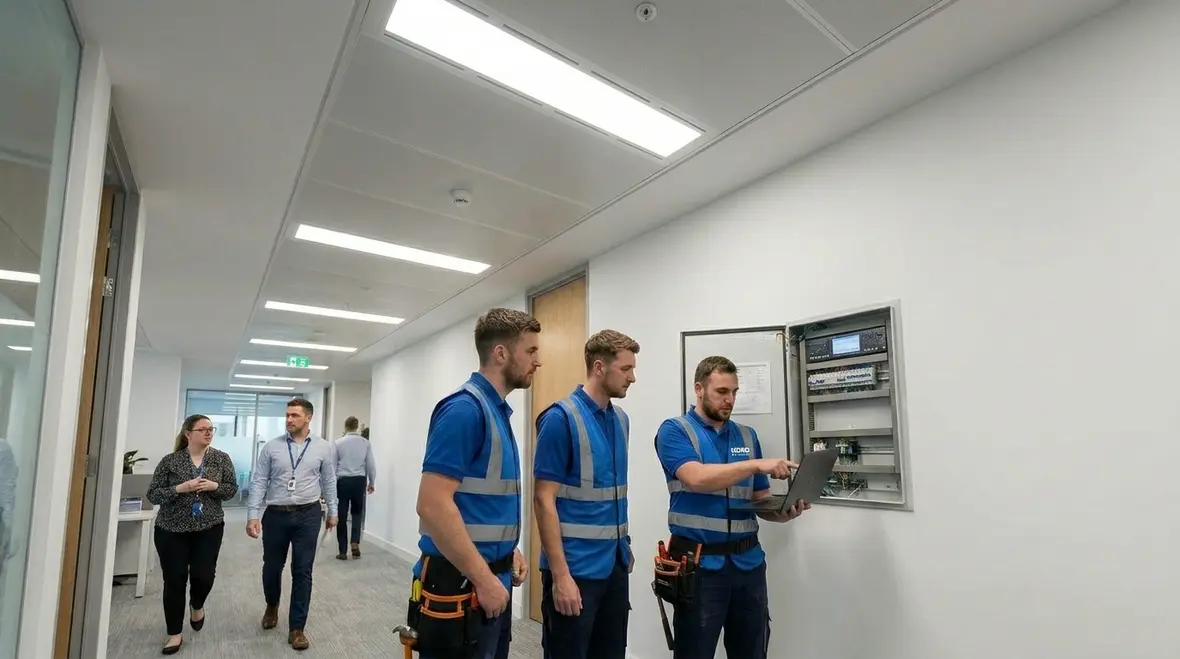
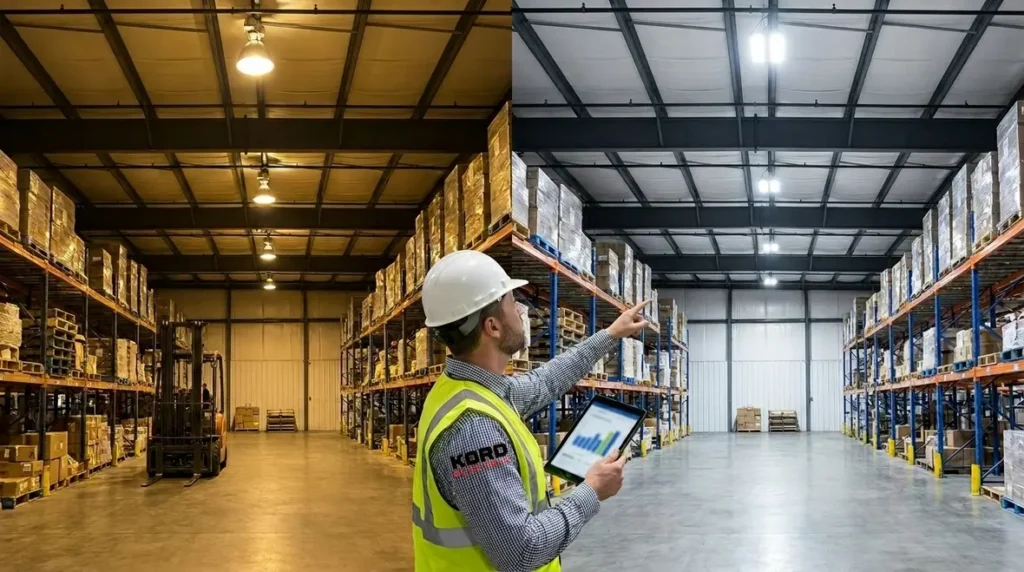
Smart lighting retrofits work because they treat lighting like a controllable system, not a fixed setup. Typically, a facility turns lights on and leaves them running, even when areas sit empty or when daylight already does the job. As a result, energy waste climbs quietly, like a plant that nobody watered but somehow still keeps growing.
Our approach focuses on three areas. First, we reduce runtime by scheduling and occupancy based control. Second, we fine tune brightness using dimming so the lights deliver the right level instead of blasting full output all day. Third, we manage power intelligently so the building stays comfortable and efficient together.
To keep comfort steady, we select controls that match how people actually move and work. Therefore, in offices, warehouses, lobbies, and corridors, the lighting supports tasks without sudden jumps. It is not just about dimming lights. It is about giving people reliable visibility and giving operators predictable behavior.
Commercial Lighting Controls Retrofit Options for Offices, Warehouses, and Garages
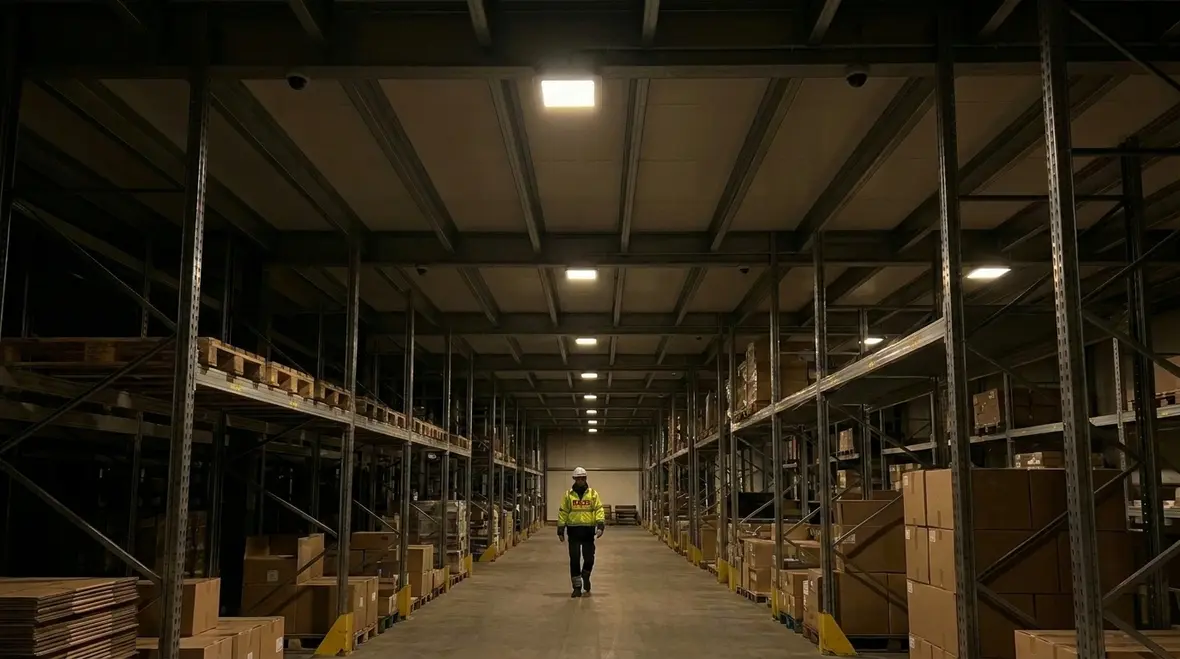
When companies ask us what their best path looks like, our technicians explain the options in plain language and then recommend based on the building. After that, we move forward with a plan that fits the facility’s layout, hours of operation, and local requirements.
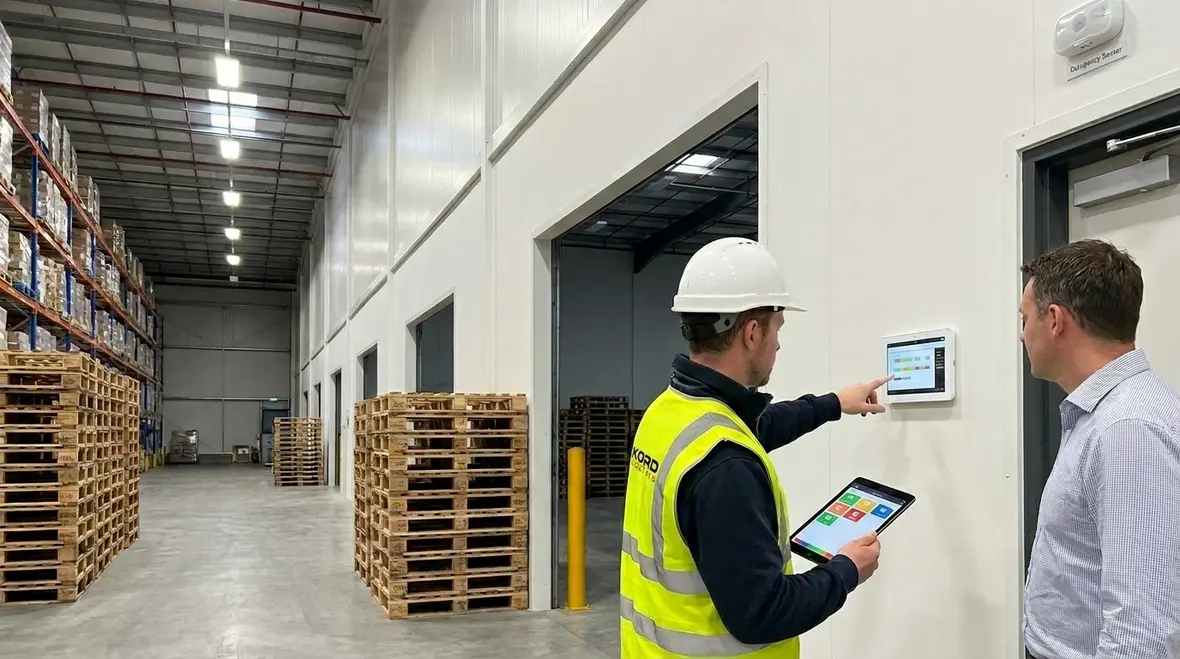
For many commercial buildings, we blend several strategies. Occupancy sensing helps areas that are used intermittently, such as meeting rooms, break rooms, storage areas, and restrooms. Daylight harvesting supports spaces near windows, so the system dims when sunlight contributes. Scheduling controls match the building’s routine, including early operations, night shutdown, and weekend activity.
In warehouses and industrial settings, we also consider high bay performance and group control so aisles light properly without wasting power. In parking structures and loading areas, we address motion response and consistent illumination so safety stays front and center. In other words, we do not just install parts. We engineer a system that behaves correctly across the whole facility.
And because people hate surprises, our expert service staff documents the expected behavior before commissioning. If a space should brighten upon motion, the system does that. If a schedule should ramp down after hours, it does that too. The goal stays simple: fewer wasted watts, better light, and fewer “why is it doing that” calls. (Those calls can make anyone grumpy, even in a superhero movie.)
How We Assess Your Lighting Costs and Comfort Baselines

Before we touch wiring or replace anything, we measure the reality on the ground. We audit existing lighting patterns and control behavior, then we identify where energy waste and comfort issues overlap. This step matters because two buildings with the same square footage can perform very differently based on occupancy patterns, window coverage, and maintenance habits.
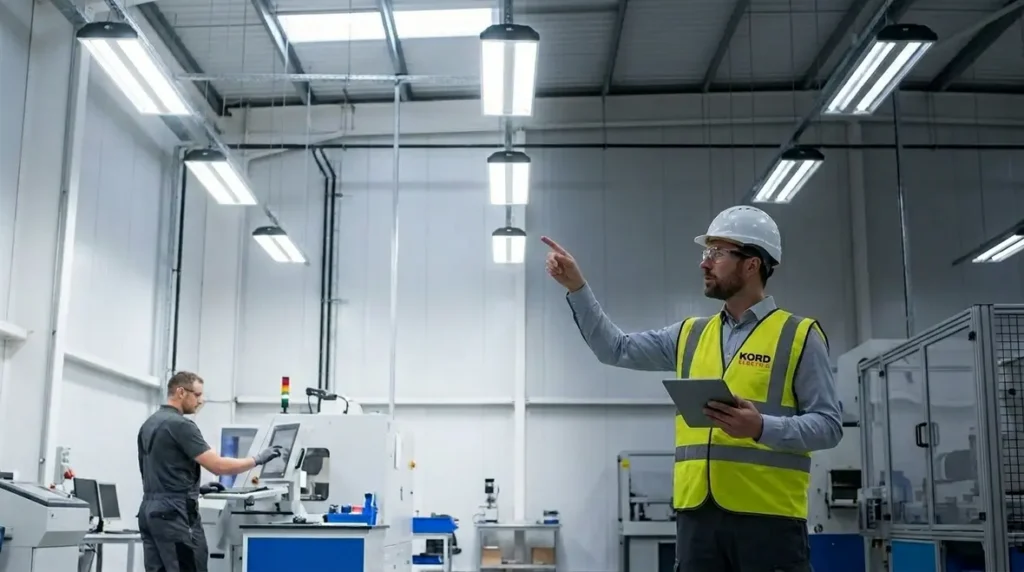
Our technicians review usage schedules, note which areas remain lit during low activity, and identify where glare or uneven lighting can hurt work quality. Then we examine the fixtures and wiring configuration to ensure the retrofit supports stable dimming and reliable switching.
We also consider how the facility team will manage the controls after installation. Therefore, we include operating staff in the process early. They learn how to adjust scenes, update schedules, and handle exceptions for events or maintenance. That reduces downtime and keeps the system aligned with how the building runs.
Transitioning from guesswork to data gives decision makers confidence. And when decision makers have confidence, projects move faster. It is almost like adults can be reasonable, even when the budget is watching them.
From Design to Commissioning: What Kord Electric Installs and Tunes

After the assessment, Kord Electric builds a retrofit plan that fits commercial and industrial spaces, not generic recommendations. We coordinate fixture compatibility, control placement, and power behavior so the system functions smoothly from day one.
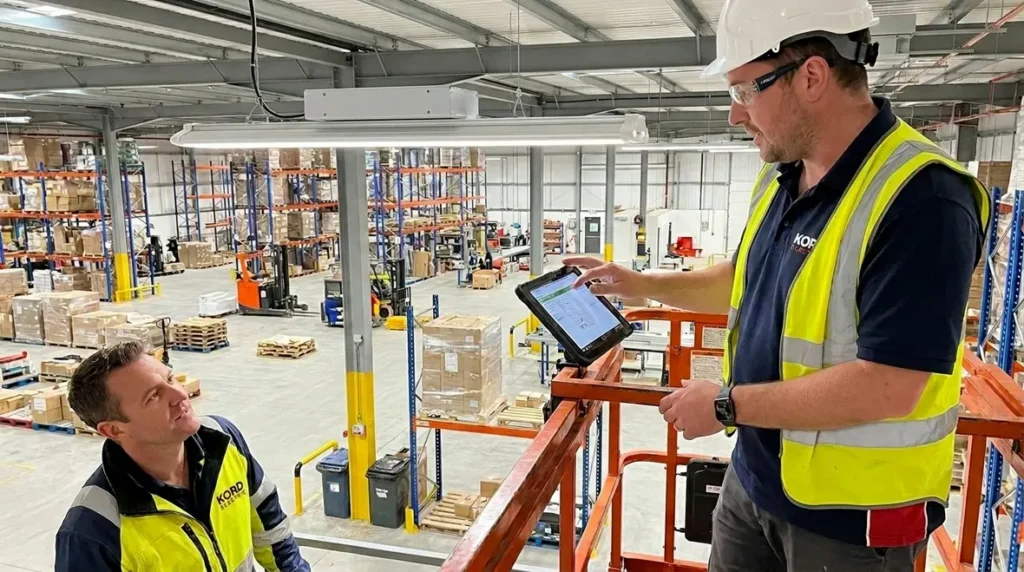
During installation, our team follows a careful sequence. First, we verify electrical conditions and ensure components integrate cleanly. Next, we implement controls that support dimming, scheduling, and occupancy response where each space needs it. Then we label circuits and zones so maintenance stays simple and troubleshooting stays quick.
Once everything is in place, we commission the system. Commissioning means we test lighting response under real conditions, confirm correct scenes, and verify that the behavior meets the comfort goals discussed during planning. In addition, our expert service staff checks that occupancy detection does not stay stuck “on,” and that daylight harvesting does not cause distracting changes.
Finally, we train facility staff. We explain what the controls do and what they should expect. We also share best practices, such as how to set schedules around shift changes and how to handle temporary events without turning the building into a bright, expensive stage production.
Energy Savings and Comfort: The Numbers and the Feel
Energy savings often show up through reduced runtime and lower fixture output. When lights dim to the right level and stay off in unused spaces, power use drops. Yet, savings do not come from discomfort. If the workplace feels dim or inconsistent, people push back, and that stops adoption.
That is why we tune the system to keep brightness stable during normal tasks. We set dimming limits to support readability and safety. Then we use zoning so each area controls according to its own usage patterns. This avoids the common problem where one control strategy tries to serve every corner of a building and fails halfway through.
Comfort also improves through consistent lighting distribution. When occupancy and scheduling coordinate correctly, people do not feel like they are walking into a spotlight show with no conductor. Instead, lighting transitions happen smoothly and predictably.
As the system operates, we help teams manage it without fear. Over time, facilities can adjust scenes for changing workflows, such as seasonal staffing shifts or new production schedules. In short, the goal stays steady: lower energy use, stable comfort, and fewer maintenance headaches.
Maintenance, Support, and Training for Facility Teams
Smart lighting retrofits still need human care, but they should reduce the workload, not increase it. Kord Electric focuses on long term support for commercial and industrial facilities and major property buildings. We help teams understand the controls so they can maintain performance without guessing.
Our expert service staff provides training that is practical. They show how to review settings, confirm zones, and respond to unusual behavior. If a sensor needs adjustment due to changes in layout, we help manage that update. If a schedule needs revision because a shift plan changes, we guide the modification process.
We also keep an eye on lifecycle realities. Lighting systems often include components that experience wear, and controls need accurate configuration. Therefore, ongoing service helps keep the retrofit delivering results instead of slowly drifting into waste again.
In other words, we treat the retrofit as an ongoing system, not a one day install. And yes, we follow up like professionals, not like someone who disappears after the “we are done” handshake.
How Lighting Controls Tie Into Broader Commercial Lighting Upgrades
A commercial lighting controls retrofit rarely lives in a vacuum. In many facilities, controls upgrades pair with broader LED retrofits or targeted fixture improvements. When Kord Electric teams design projects, we align control strategies with fixture selection so dimming ranges, color quality, and power behavior all cooperate instead of arguing with each other behind the ceiling tiles.
For property managers who are already exploring broader LED upgrades, resources like Kord Electric’s commercial lighting upgrade cost guide and recessed lighting installation services help show how controls, fixtures, and wiring all fit together for long term savings and compliance. Thoughtful planning avoids a patchwork of partial fixes and instead creates a unified system that supports energy goals, inspection requirements, and daily operations.
In many cases, pairing controls work with a structured lighting installation plan also reduces disruption. Rather than revisiting the same spaces repeatedly, our technicians coordinate fixture access, lift use, and scheduling so the facility moves through a clear sequence of work. The result is calm progress instead of a revolving door of surprise shutdowns.
Controls, Code Compliance, and Real-World Operations
Modern commercial lighting codes increasingly expect smart controls. Occupancy sensing, daylight responsive dimming, and automatic shutoff are not just efficiency perks; they are core parts of compliance in many jurisdictions. When we design a commercial lighting controls retrofit, we keep both comfort and code in view so you are not left with a great feeling system that stumbles at inspection time.
Our technicians translate those requirements into everyday behavior: lights that shut off when rooms go unused, zones that trim power near windows when the sun is already doing the heavy lifting, and schedules that match business hours instead of running like a 24/7 game show. The idea is simple. If a control feature exists purely to satisfy paperwork but never works in real life, we have missed the mark.
When you are ready to dig deeper into how lighting controls support broader compliance, you can connect this retrofit work with Kord Electric’s dedicated lighting installation services and Title 24 focused resources. Together, they show how smarter controls help facilities save energy, keep inspectors calm, and maintain a workplace that still feels like a place where people want to get things done—not a science experiment.
FAQ
Ready to Reduce Costs and Keep Comfort Steady?
If you want smart lighting retrofits that cut commercial energy use without sacrificing comfort, Kord Electric is ready. We assess your current setup, recommend the right control strategy, and install with commissioning and training included. Our technicians and expert service staff explain every step in business friendly terms, so your team knows what to expect. Reach out today to discuss your facility and get a retrofit plan built for commercial and industrial operations, whether you are updating a single building or coordinating improvements across multiple properties.
For organizations operating across Southern California, pairing a commercial lighting controls retrofit with broader Los Angeles County electrical services can also streamline planning. That way, lighting, controls, and other critical electrical upgrades move forward as one coordinated, carefully sequenced project instead of a scattered list of one-off fixes.
When you are ready, Kord Electric can walk your site, review current lighting behavior, and build a roadmap that connects controls, fixtures, and code requirements into a single, steady plan. Lower costs, steadier comfort, and calmer operations are not a fantasy plot line. They are what happens when lighting starts working with your facility instead of against it.