Commercial EV Infrastructure Design for Fleet Growth
Kord Electric starts every project with a practical approach to commercial ev infrastructure design that fits the pace and risks of real business. We plan how charging fits into a company’s power, parking, and daily operations before we ever pull a tool from the truck. Then we scale from pilot to fleet wide rollout using engineering, site coordination, and installation that commercial and industrial teams can trust. Finally, we support the system after go live, because in the real world, power issues do not clock out at 5 PM. Honestly, if EV charging taught us anything, it is that planning beats panic every time.
Fleet growth and charging demand do not wait
When others scale a vehicle fleet, they usually think in miles, routes, and schedules. Yet their real bottleneck often shows up later, when vehicles start plugging in at the same time. At that moment, charging demand rises faster than expectations, and power capacity becomes the headline story. That is why we treat commercial EV charging as an infrastructure job, not a storefront upgrade.
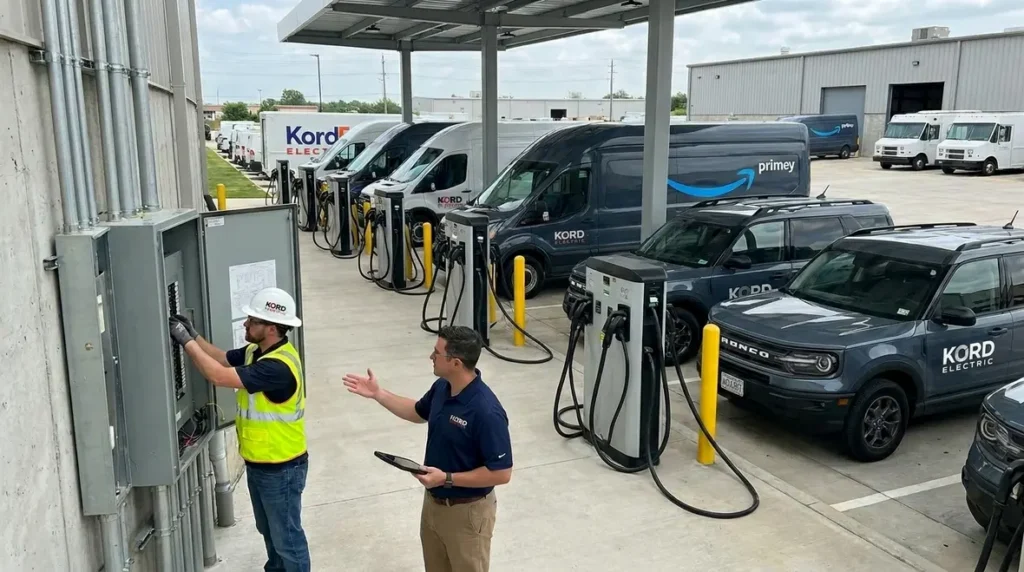
At Kord Electric, our technicians and expert service team look at three things early. First, we model charging windows based on how vehicles return, how often they idle, and what “ready to drive” means for your operation. Next, we check your site’s available electrical capacity and future growth. Then we map usage patterns across shifts and seasons. As a result, you avoid buying chargers today that your site simply cannot feed tomorrow.
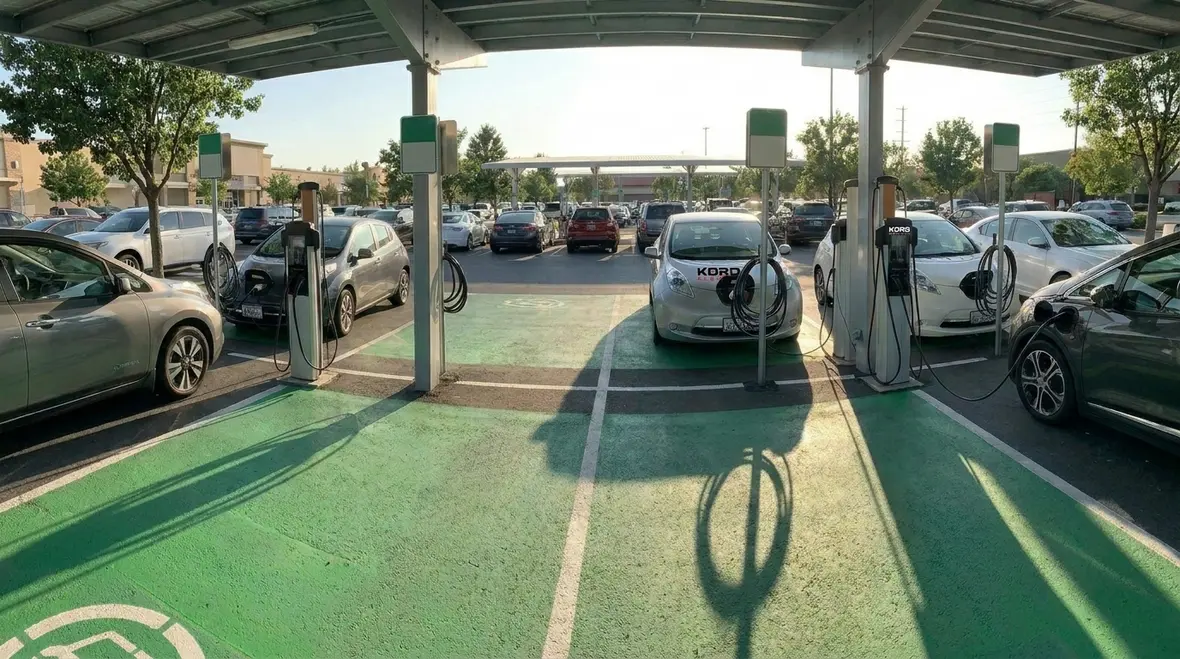
Assess the site first, then size the system
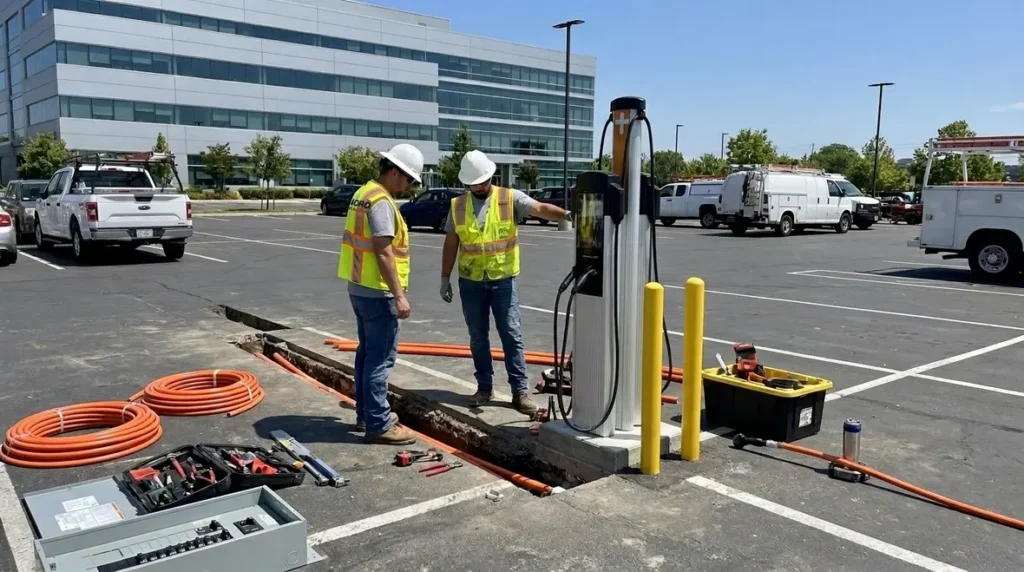
Scaling starts with a disciplined site assessment. Even if a property has plenty of parking, the electrical side can still be tight. We verify utility service limits, transformer headroom, and panel capacity, and we review demand loads that already exist for HVAC, lighting, and process equipment. After that, we evaluate how many charging points can run at once without causing voltage drops or tripping breakers.
However, the goal is not only to “make it work.” We design for real behavior. For example, if managers allow charging only during low usage hours, the system can be smaller and cheaper. On the other hand, if your operation needs top up throughout the day, we plan for higher simultaneous output. And because businesses change, we build in room for expansion instead of locking the site into one rigid configuration.
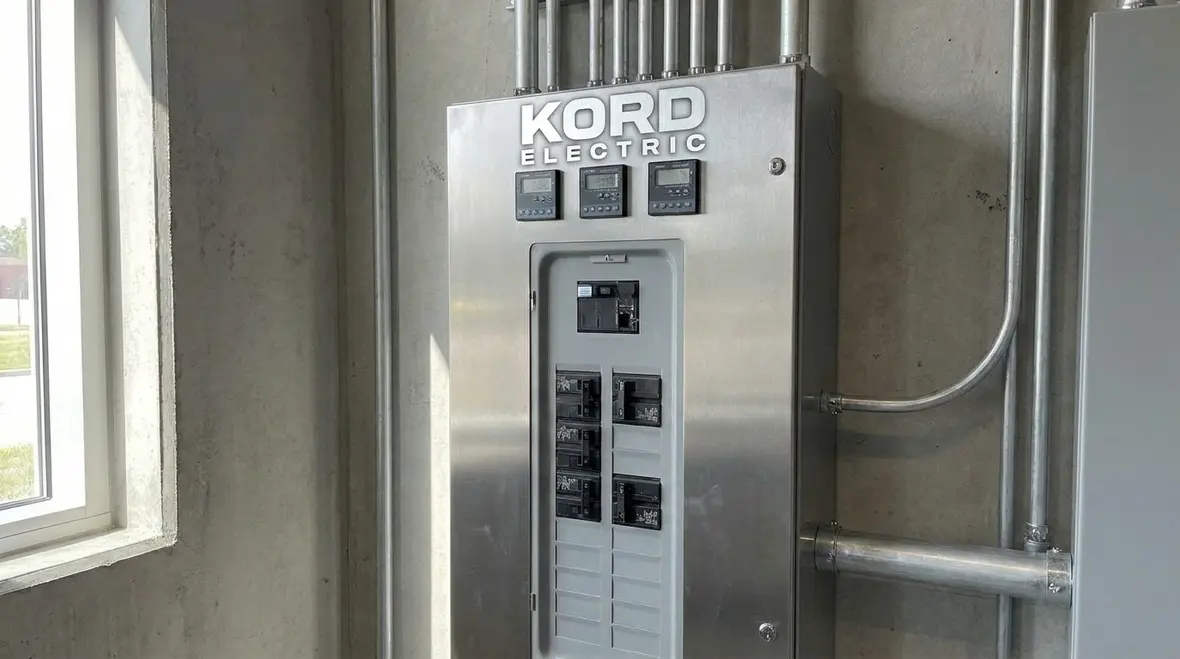
Plan for power, redundancy, and smart load control
Commercial operations need reliability, and reliability needs strategy. Charging infrastructure should not behave like a temperamental arcade machine. When demand spikes, smart load control helps keep your site stable. So we implement management strategies that spread power across ports and prioritize critical charging sessions. Meanwhile, we consider redundancy so a single component failure does not stop service across the whole lot.
Our team also thinks about safety and maintainability. We plan conduit runs and equipment placement so technicians can service hardware without tearing up finished landscaping or shutting down operations for weeks. And because some sites run 24 7, we schedule installation steps to minimize disruption to crews, tenants, and access routes.
Design for operations, not just installation day
Most people remember the installation photos. Fewer people remember the operational reality. When a facility scales, charging needs to fit staff workflows, access needs, and security expectations. So we include driver usability, signage planning, and physical layout in the commercial EV charging plan from the beginning.
Then we handle the details that make the difference. We verify mounting and cable routing for weather exposure, review site safety standards, and coordinate with property managers so chargers land in approved locations. Additionally, we account for fleet growth plans that change over time. If a logistics company adds another route next year, the charging system should adapt without costly rework.
And yes, it is possible to design charging that does not turn your parking lot into a maze. We treat your site like a system, not a bunch of boxes bolted to concrete. That way, when drivers show up tired after a long shift, the charging setup feels simple, predictable, and smooth.
Technology choices that keep costs under control
Scaling is partly engineering and partly economics. Companies often ask whether they should choose the highest output equipment or prioritize more stations. The answer depends on peak charging needs, vehicle battery sizes, and how your fleet operates. We help decide by mapping demand and building a phased rollout plan.
For many commercial and industrial facilities, a smart mix works best. Higher power units can serve vehicles that need faster turnaround. Meanwhile, a broader network of charging points can cover lighter duty vehicles that plug in less often. As a result, total cost stays reasonable while uptime remains high.
We also consider how charging connects to your broader facility strategy. Load management, monitoring, and scheduling reduce pressure on electrical systems. Furthermore, better visibility helps property owners and fleet managers plan maintenance windows and avoid surprises. When you can see what is happening, you can fix issues before they become big ones.
Install and commission with a technician driven process
Kord Electric runs installation and commissioning like a craft, not a gamble. Our technicians follow clear steps that protect electrical integrity and ensure proper operation before we hand anything over. First, we confirm equipment alignment with engineered specs. Then we test connections, verify protection devices, and check performance under real load scenarios.
Next comes commissioning documentation that helps teams operate and maintain the system without guesswork. Our expert service staff also explains what they see, how monitoring works, and what signs indicate a problem. This matters because when the facility manager or building team understands the system, response times improve and downtime drops. In other words, we do not just install chargers; we teach the people responsible for them.
Scaling rollout across multiple buildings and sites
When a business grows across regions, scaling becomes a project management challenge. Multiple properties can share a consistent design philosophy while still adapting to each site’s electrical reality. That is where repeatable planning helps. We use standardized design practices for commercial ev infrastructure design, then tailor components to local capacity, utility constraints, and layout conditions.
To keep rollout smooth, we coordinate timelines with property access rules, tenant operations, and contractor schedules. Then we plan how future expansions will connect without tearing up what we already built. Also, we create a maintenance approach that fits your team size and your operational hours. Some facilities need quick service response due to customer-facing activity; others prioritize planned maintenance during scheduled downtime.
Meanwhile, we keep an eye on system performance trends as sites go live. If a facility shows different utilization patterns than expected, we adjust configurations and load strategies. This is not “set it and forget it.” It is “set it, watch it, improve it.” Like any good playlist, the best results come after a few adjustments.
For companies operating across Los Angeles County and beyond, this approach also means designs can align with broader electrical service strategies. As systems scale, they can connect smoothly with regional electrical planning and dedicated support such as the comprehensive coverage offered through Los Angeles County electrical services for commercial and industrial facilities.
What happens after go live: monitoring, support, and maintenance
After installation, businesses need dependable support. Charging systems live in the real world, where weather, heavy use, and occasional hardware wear happen. That is why our expert service staff provides guidance and responsive help, especially for commercial and industrial facilities where uptime affects revenue.
Monitoring supports faster troubleshooting by showing performance metrics and flagging faults early. When issues do happen, we focus on safe fixes and fast restoration. In addition, we help teams understand the basics of safe operation, so staff do not accidentally treat chargers like they are magically self healing.
Finally, we plan maintenance in a way that keeps disruption low. We schedule service visits and coordinate access so facility managers can plan work without surprises. And if a site needs expansion later, our prior work makes it easier to add chargers with less downtime.
Featured FAQ
Next steps to scale with confidence
If your fleet is growing and your charging plan feels rushed, we should talk. Kord Electric helps commercial and industrial facilities plan, design, and install charging that fits site power, daily operations, and future expansion. Our technicians build with care, and our expert service staff supports you after go live. Reach out to us for a strategic assessment and a clear rollout path that keeps downtime low and readiness high. Let us turn charging from a headache into a reliable utility. For properties evaluating broader power reliability, resources like dedicated EV charger installation services and preventive electrical maintenance can also support long term performance across your entire electrical system.
From single depots to multi site portfolios, coordinating commercial EV infrastructure design with your wider electrical service strategy makes each project easier to expand and maintain. When your charging, lighting, and core power systems are planned together, your facilities team gains a clearer roadmap for upgrades, maintenance windows, and future capacity increases as fleet demand grows.
Whether you are planning a first pilot or a full fleet rollout, aligning your charging infrastructure with regional support such as comprehensive Los Angeles County electrical services gives your operation a stronger foundation. That way, when new vehicles arrive, your sites are already prepared to charge, operate, and grow without scrambling for last minute fixes.
Schedule a commercial EV infrastructure review
A focused review of your current fleet plans, site power, and growth timeline can reveal simple steps that prevent bigger problems down the road. Kord Electric can walk your property, review electrical drawings, and outline a practical path from first chargers to full fleet coverage.
When you are ready to move from “we should figure this out soon” to a clear, buildable roadmap, our team is ready to help.
Commercial EV infrastructure that grows with your fleet
Your vehicles, routes, and facilities will keep evolving. With the right commercial ev infrastructure design, your charging can keep pace without constant reinvention. Thoughtful planning, disciplined installation, and reliable support turn EV charging into another stable part of your building systems instead of a recurring “project.”
If you want charging that scales with confidence, not chaos, now is the time to design it that way.
Conclusion
Scaling a fleet without a matching charging plan is a recipe for frustration. When commercial EV infrastructure is designed with power capacity, daily operations, and long term flexibility in mind, fleet growth becomes a smoother, more predictable journey. Kord Electric helps commercial and industrial facilities build charging systems that fit how their properties really work, from the first conduit run to long term maintenance and upgrades.
If your operation is ready to move from “we will deal with charging later” to a clear, phased plan that actually supports fleet growth, Kord Electric is ready to help you get there.