Predictive Industrial Lighting Maintenance Plan
How Kord Electric uses an industrial lighting maintenance plan for maximum uptime
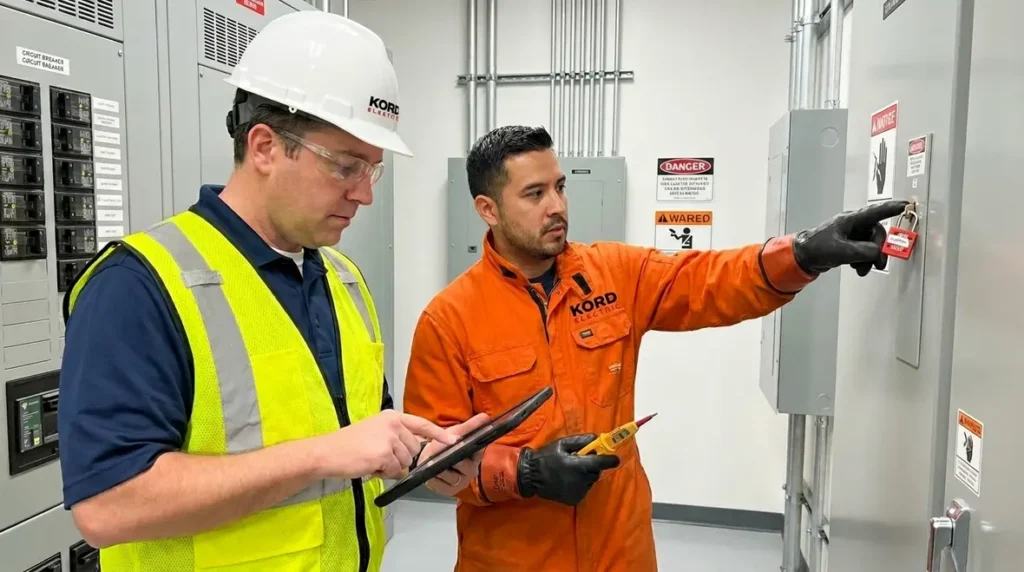
In the first stretch of any maintenance program, we do not guess. We plan. At Kord Electric, our industrial lighting maintenance plan starts with how your facility actually operates, then we use that reality to set inspection timing, prioritize risky areas, and schedule the right fixes before they turn into outages. In other words, we treat lighting like a system, not like a collection of bulbs that behave until they do not.
Others wait for the lights to fail, then they scramble. We prefer a calmer approach. Also, because no one wants to explain to a plant manager why “the lights just stopped working” in the middle of a shift, like a bad sitcom plot. Instead, we build a process that supports stable output, safer work areas, and predictable operations.
Predictive maintenance in industrial lighting: what it means for real plants
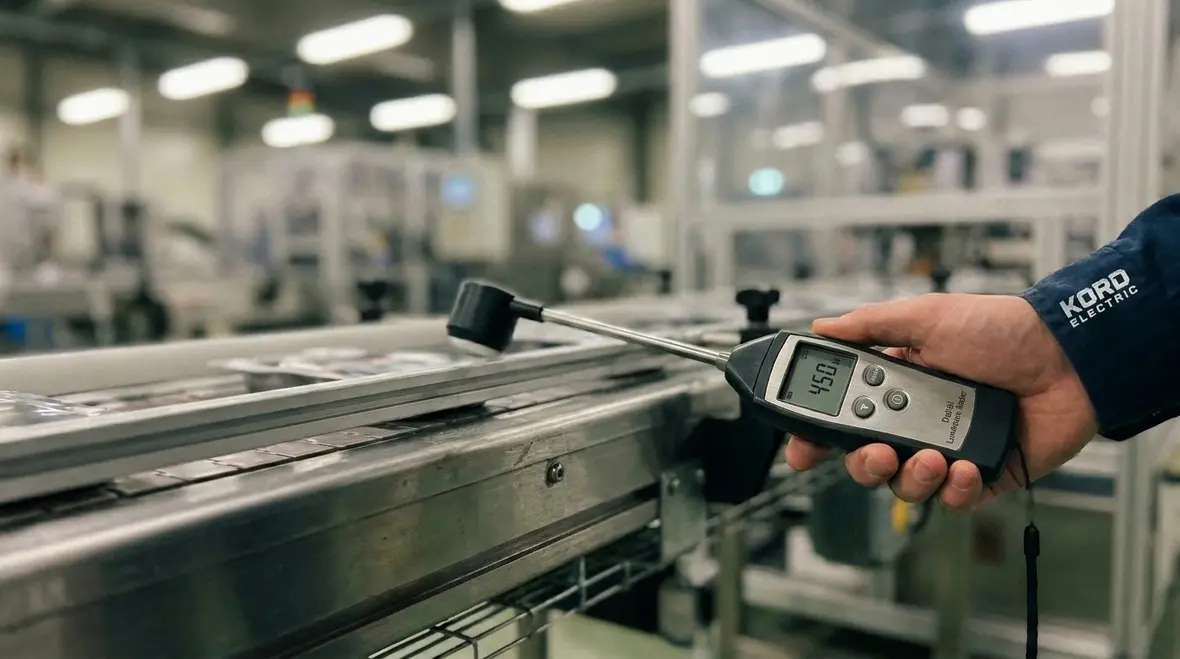
Predictive maintenance uses signals and trends to forecast problems before they become failures. In a commercial or industrial facility, that matters because lighting supports safety, productivity, and compliance. And once lighting goes down, you do not only lose visibility. You lose time, you add risk, and you trigger chain reactions across operations.
Our trained technicians and expert service staff look beyond the obvious signs. They track performance indicators that often change quietly first. Then, as patterns emerge, we target the components most likely to cause downtime. This method reduces surprise replacements and helps facilities maintain consistent illumination for work areas, aisles, loading docks, and parking zones for major property buildings.
Meanwhile, predictive work also improves budgeting. Instead of one big emergency spend, others see smaller, planned costs. We structure service so you can align with maintenance windows and ongoing production demands.
Dual column: the signals we watch and what they usually mean
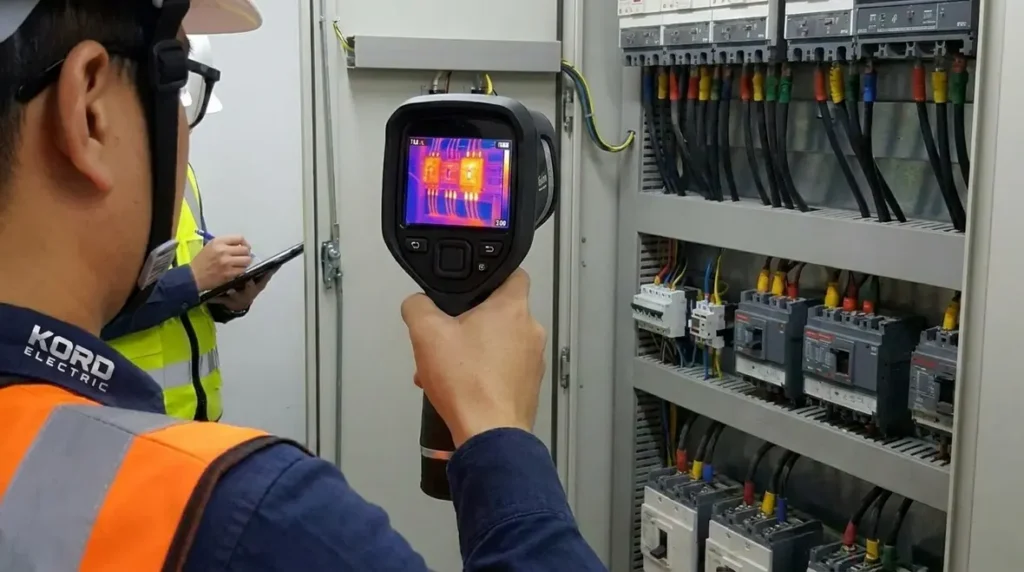
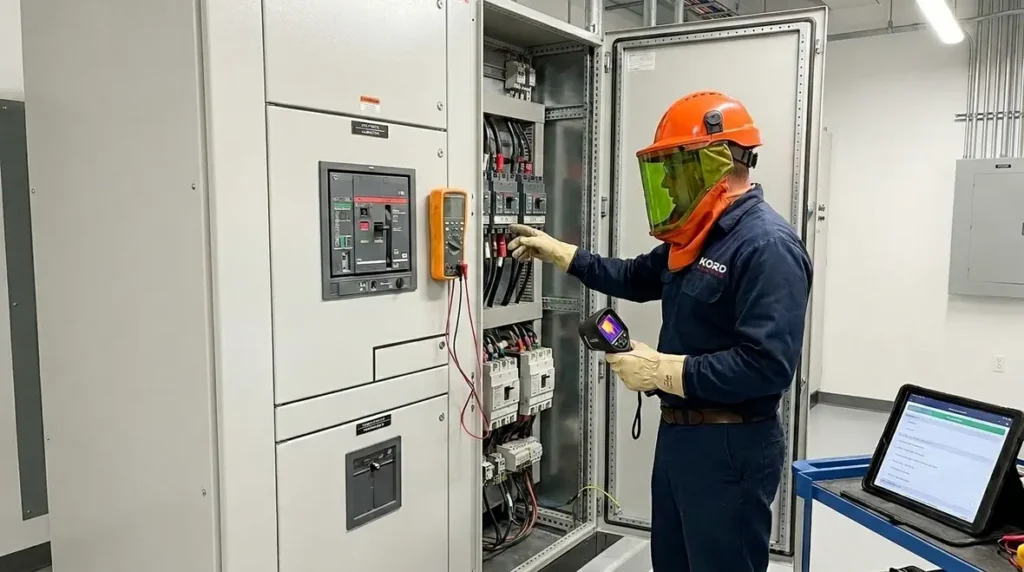
When we run our industrial lighting maintenance plan, we combine field observations with measurements and visual verification. That creates a clearer picture of what is happening inside the fixtures and the power feeding them.
| Signal or condition we notice | Most common implications for lighting systems |
| Frequent flicker in specific zones | Possible loose connections, driver or ballast wear, or early voltage instability |
| Faster lamp or LED driver failure rate | Thermal stress, driver aging, or exposure to harsher environments than expected |
| Inconsistent brightness across fixtures | Power quality issues or component mismatch in replacement cycles |
| Visible discoloration or heat marks | Overheating, sealing failure, or failure risk within the fixture enclosure |
| Uneven dimming behavior | Control system drift, output regulation issues, or communication instability |
| Odd corrosion at terminals | Moisture intrusion and accelerated degradation of electrical interfaces |

In many facilities, these signals overlap with broader power quality issues. When we see repeat patterns, our team also reviews how your lighting layout, equipment schedules, and control strategy interact. For example, if you are optimizing fixtures and aiming for better coverage, pairing this maintenance work with industrial lighting layout optimization for production efficiency keeps changes aligned with real workflow instead of treating them like isolated upgrades.
Voltage fluctuations and why lighting maintenance should include power quality
Lighting does not live in isolation. In commercial and industrial facilities, power quality can quietly push fixtures toward early failure. We often reference the role of voltage fluctuations because they show up in real sites as flicker, reduced lifespan, and inconsistent output, especially when loads cycle through the day.
For example, if a facility experiences voltage changes from starting motors, switching equipment, or large demand shifts, lighting can behave like it is trying to “keep up.” Over time, that stress can wear down drivers and power supplies. The result is not always immediate blackout. Sometimes the first sign is a complaint like, “The lights seem dim near that bay,” or “Why does it flicker only during shift change?”
When our expert service staff explains this to facility teams, we keep it grounded. Then we connect it to practical action. We review patterns, check for correlation with equipment cycles, and recommend maintenance steps that reduce risk. In addition, if the facility already has a history of power instability, predictive scheduling becomes even more valuable because it helps us intervene before the power stress completes the job.
Teams that want to go deeper into this topic can also review how Kord Electric handles voltage fluctuations in commercial and industrial facilities, especially when sensitive equipment and lighting share the same distribution.
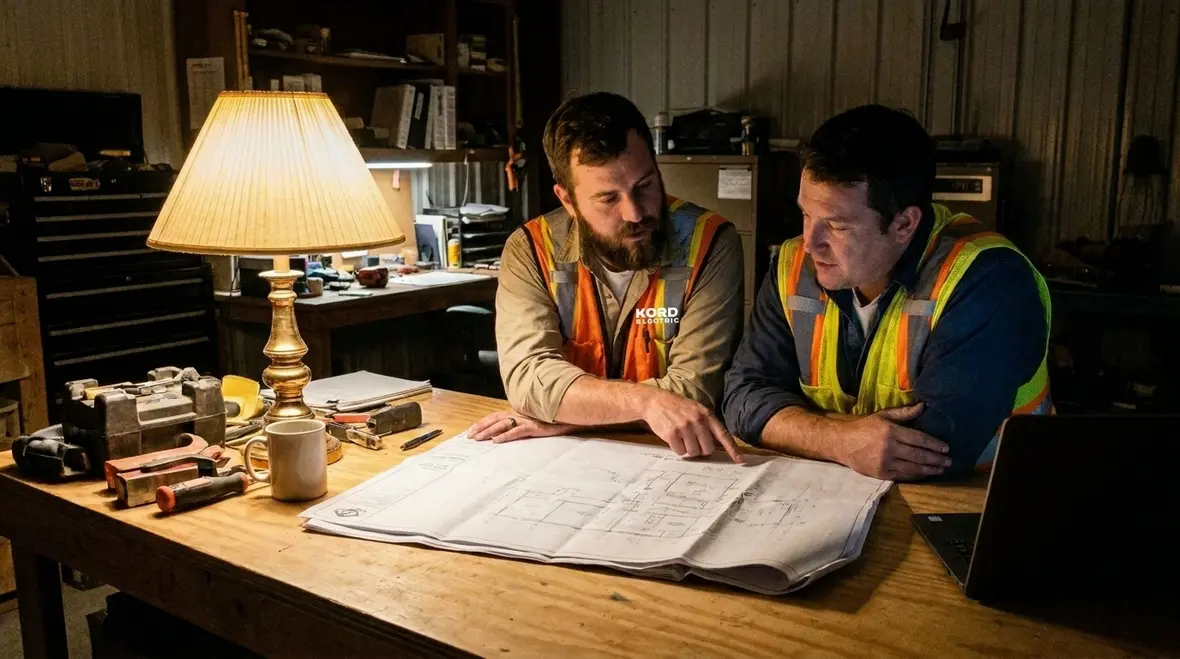
How we build a predictive industrial lighting maintenance plan for your facility
A strong program has a clear workflow. First, we gather site details and map lighting zones. Then we identify high impact locations, like work areas with continuous production, safety critical corridors, and exterior areas tied to vehicle movement. After that, we prioritize fixtures based on failure consequences and how often the space is used.
Next, we set inspection points that match your operating rhythm. For example, a warehouse that runs late into the night needs service timing that does not disrupt forklift traffic. Likewise, a plant with strict downtime windows benefits when we align service tasks with planned shutdowns.
Then we apply predictive logic. Our technicians look for early warning patterns, such as thermal stress signs, abnormal failure clustering, and power quality correlates. We also validate controls where applicable. That includes checking sensors, dimming modules, and communication paths, because control instability can mimic “fixture failure” when the issue sits upstream.
Finally, we document everything in a way facility leaders can use. We describe what we found, what we recommend, and how we schedule next steps. In many cases, we help others avoid “maintenance theater,” where work happens but does not reduce risk. We prefer maintenance that reduces downtime. Period.
Maintenance tasks that prevent failures, not just replace parts
Replacing a failed fixture is sometimes necessary, but it should not be the core strategy. In our approach, the industrial lighting maintenance plan emphasizes actions that prevent repeat failures.
We routinely address the stuff that causes long term trouble. That includes tightening and inspecting electrical connections, verifying proper torque where required, and checking housing integrity so moisture does not enter. We inspect for heat buildup, because heat shortens component life, and we check ventilation paths in fixtures designed to manage temperatures.
We also handle the control layer. If a system uses dimming or scheduling, we confirm it works as intended under real operating conditions. Then we validate that sensor coverage matches the layout. Many “lighting failures” are actually sensor placement or calibration issues, and those are easier to fix early.
Of course, components age. When we plan replacements, we match part quality and specification to your environment. We do not treat every fixture like it came from the same box. Industrial and major property buildings have different exposure levels, vibration profiles, and use patterns. So we plan accordingly.
For many teams, the most effective path is to coordinate these tasks with broader electrical work. For example, if you are already reviewing panels or branch circuits, combining that visit with targeted lighting checks and even Los Angeles County electrical services keeps everything aligned with your regional code and operational needs.
What our technicians say customers notice after predictive service begins
Once the program runs, facility teams often see changes quickly, even if the full benefits build over time. Others expect a long process. We tend to deliver visible improvements sooner than they think, because early fixes remove the most disruptive failure paths.
Typical feedback includes steadier illumination, fewer flicker complaints, and fewer “mystery outages” that appear without a clear trigger. Moreover, operations teams feel less interruption because we schedule work with shift needs in mind. In safety critical zones, consistent lighting reduces risk. In productivity zones, consistent output keeps workers focused and moving.
Our expert service staff also explains what we are doing as we do it. That matters because people like the truth, not a vague promise. So we outline the reasons behind our recommendations and we connect them to the patterns we observe. Think of it as on site coaching, with fewer catchphrases than a motivational poster.
Over time, this approach changes how facilities think about lighting overall. Instead of seeing fixtures as static hardware, teams begin treating them as part of a living, data-informed system—similar to how they approach critical power or production equipment. Bundling this mindset with services like commercial and industrial lighting installation services turns upgrades into a long term reliability strategy instead of a one time project.
Frequently asked questions about predictive industrial lighting maintenance
CTA: make your facility lights behave like they mean it
If your commercial or industrial lighting has started acting unpredictable, we should talk. Kord Electric can build a predictive industrial lighting maintenance plan tailored to your zones, your operating schedule, and the risks we observe on site. Our technicians and expert service staff will explain the findings in plain language, then we will set planned next steps that reduce downtime and improve stability. Reach out today to schedule an assessment for your facility, and let’s put an end to surprise darkness.
If you are also planning a broader electrical review alongside lighting work, Kord Electric’s team can coordinate services across panels, feeders, and distribution so your lighting reliability improvements connect directly with the rest of your power system. That way, every visit moves you closer to a safer, more predictable facility instead of chasing one-off issues in isolation.
Whether you manage a single production floor or a portfolio of major property buildings, treating lighting as part of a coordinated maintenance and upgrade strategy pays off in uptime, worker confidence, and fewer “why did the lights do that?” conversations during your busiest hours.