
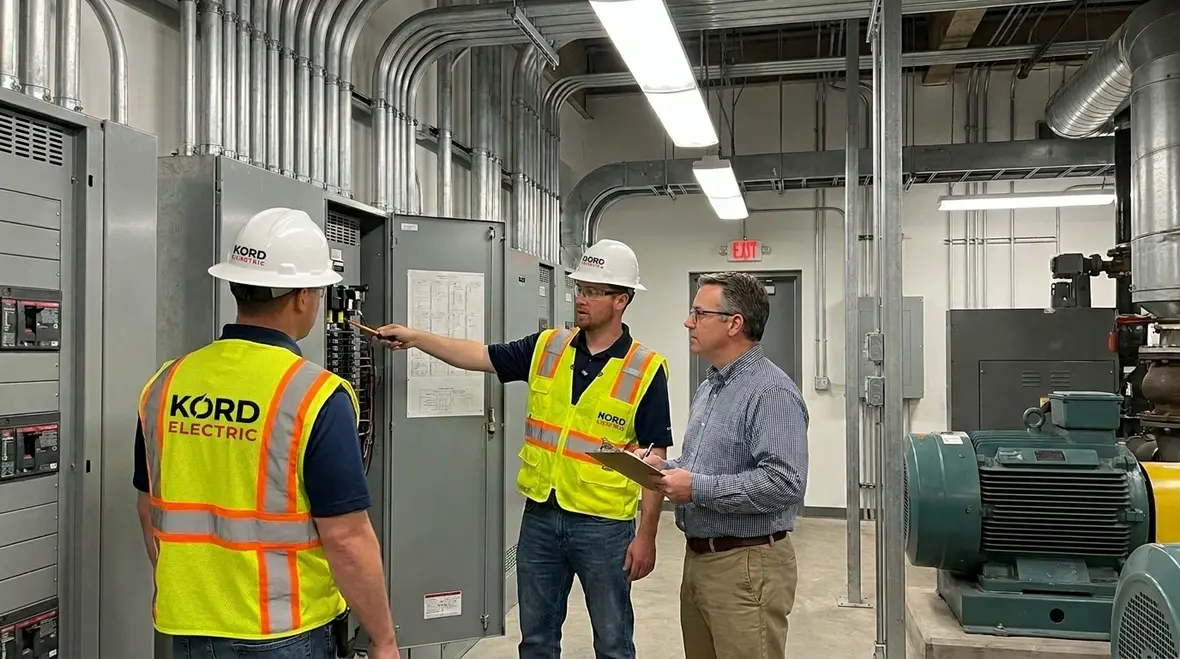
How Voltage Fluctuations Damage Commercial Equipment
Kord Electric helps commercial and industrial facilities protect their operations with commercial power quality solutions built for real job sites, not lab slides. When voltage shifts happen, sensitive loads do not “calmly adjust.” They suffer. And once performance starts drifting, maintenance gets expensive, downtime grows, and everyone blames everyone else. At least until our technicians and expert service staff arrive and explain what is going on, in plain language, the way it should have been explained from day one.
In this article, we explain why voltage fluctuations damage commercial equipment, how facility managers can spot the early warning signs, and what to do to stop the damage before it becomes a recurring headline. And yes, we will keep it professional, but we might also allow one small joke. Because power problems are stressful enough.
How Voltage Fluctuations Stress Commercial Equipment
In most commercial and industrial buildings, equipment relies on steady voltage to run within its design range. However, voltage fluctuations create quick changes in electrical pressure. As a result, motors, drives, HVAC systems, controls, and even lighting can experience abnormal stress. Over time, this stress shows up as heat, noise, erratic operation, and shortened component life.
Here is what often happens. First, a drop or rise in voltage forces equipment to draw more current than expected. Then the system compensates, but not perfectly. For rotating equipment like pumps and fans, that compensation can increase mechanical load and cause extra vibration. Meanwhile, for electronics like PLCs, VFDs, and automation controllers, the internal power supplies have to work harder to stabilize their outputs.
Now, our technicians will tell you the key detail facility owners miss. The damage rarely happens in a single dramatic event. Instead, frequent small swings add up. Think of it like a treadmill set to “just slightly too fast.” No one falls immediately. Yet, month by month, something feels off, and eventually it breaks.
Common Causes in Industrial and Major Property Buildings
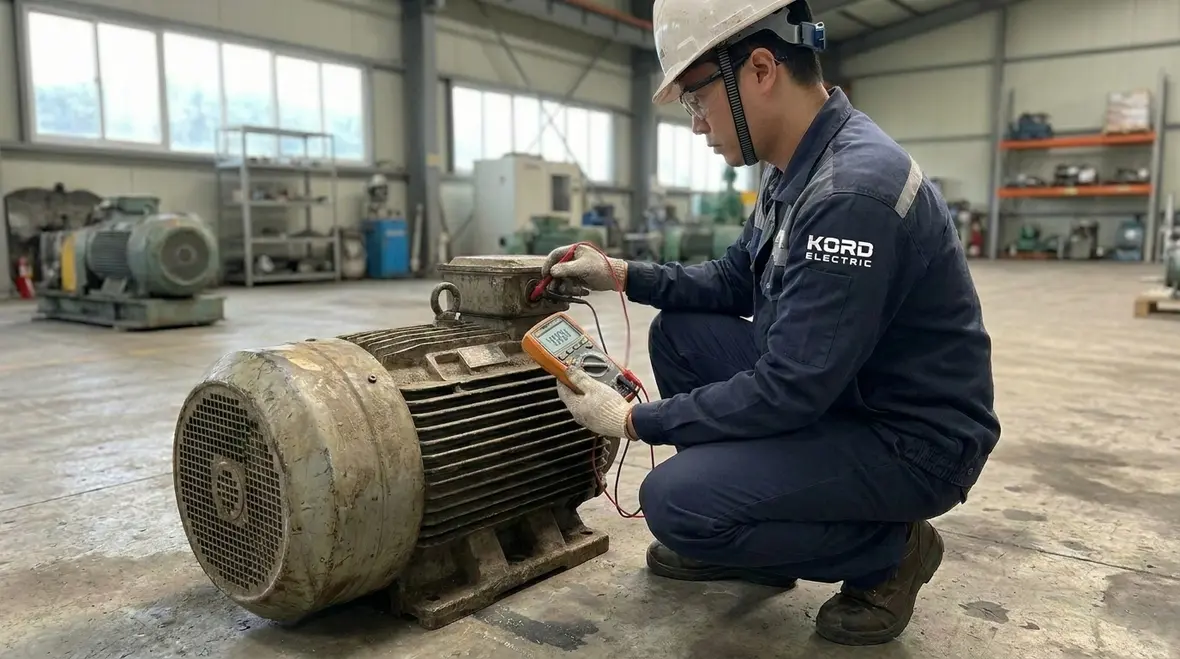
Voltage issues do not come out of thin air. They usually trace back to system conditions inside the utility interface, the facility distribution, or the load behavior on site. Therefore, we guide clients to look at causes rather than symptoms. When we do that, solutions become simpler and faster to justify.
Among the common triggers, we see:
- Large motor start ups that pull voltage down momentarily
- Loose connections and aging conductors that create unstable contact
- Overloaded transformers during peak demand periods
- Single phase events that upset three phase balance
- Nonlinear loads from drives, rectifiers, and certain power electronics
Next, our expert service staff often explains something that sounds simple but saves money. If the root cause sits at the service entrance or in upstream distribution, you cannot “fix it” with random maintenance. Instead, you need measurement, analysis, and the right commercial power quality solutions for that specific pattern. For a deeper dive into how those patterns show up across buildings, many facilities also review Kord Electric’s dedicated overview of voltage fluctuations in commercial and industrial facilities to connect site-level symptoms with system-level behavior.
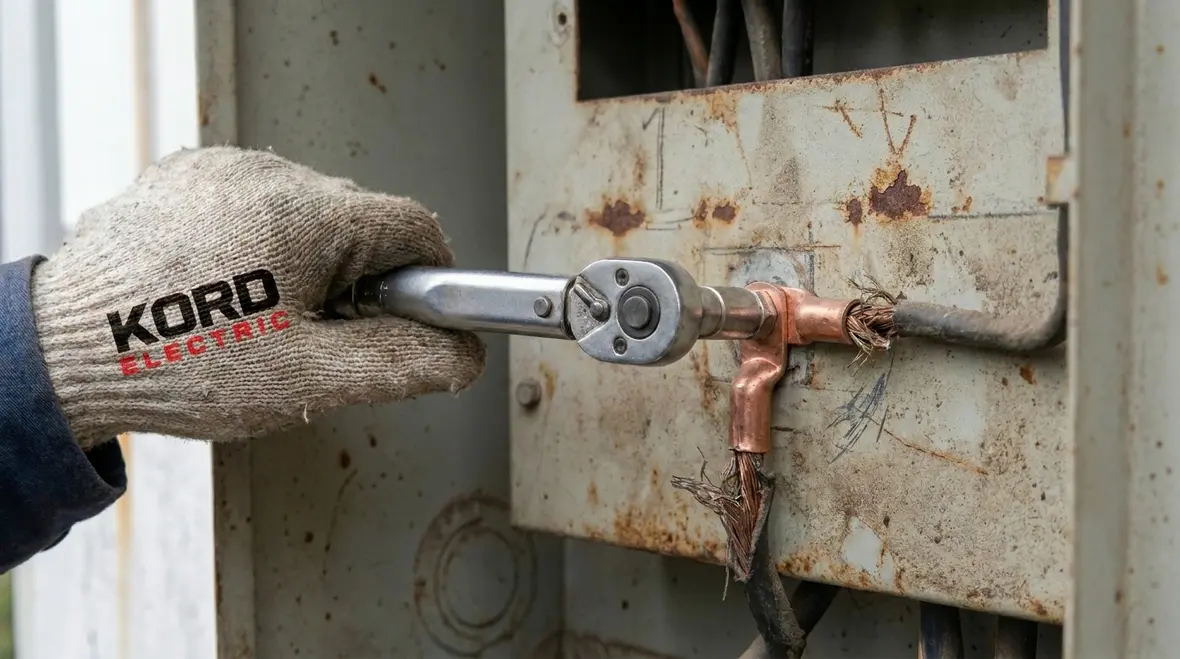
What Damage Looks Like, and How It Shows Up Early
Voltage fluctuations create both visible and hidden effects. Some show up quickly, while others reveal themselves slowly through failure rates and performance complaints. In fact, the early signs usually look like “behavior issues,” not electrical damage. That is why we encourage facility teams to treat recurring electrical problems like a system health issue, not a staff inconvenience.
Typical early indicators include:
- Intermittent resets in control panels or automation modules
- Flicker or abnormal dimming in lighting circuits
- Motor overheating that appears even when load seems normal
- Frequent nuisance alarms on drives and protection devices
- Higher maintenance calls for contactors, relays, and starters
As voltage instability continues, components experience higher thermal cycling. Over time, insulation life drops, bearings feel more stress, and power electronics can degrade. Additionally, sensitive systems that rely on stable timing and reference voltages may behave unpredictably. If that sounds dramatic, it is because it is. A building does not run on vibes. It runs on electrical conditions that must stay within design limits.
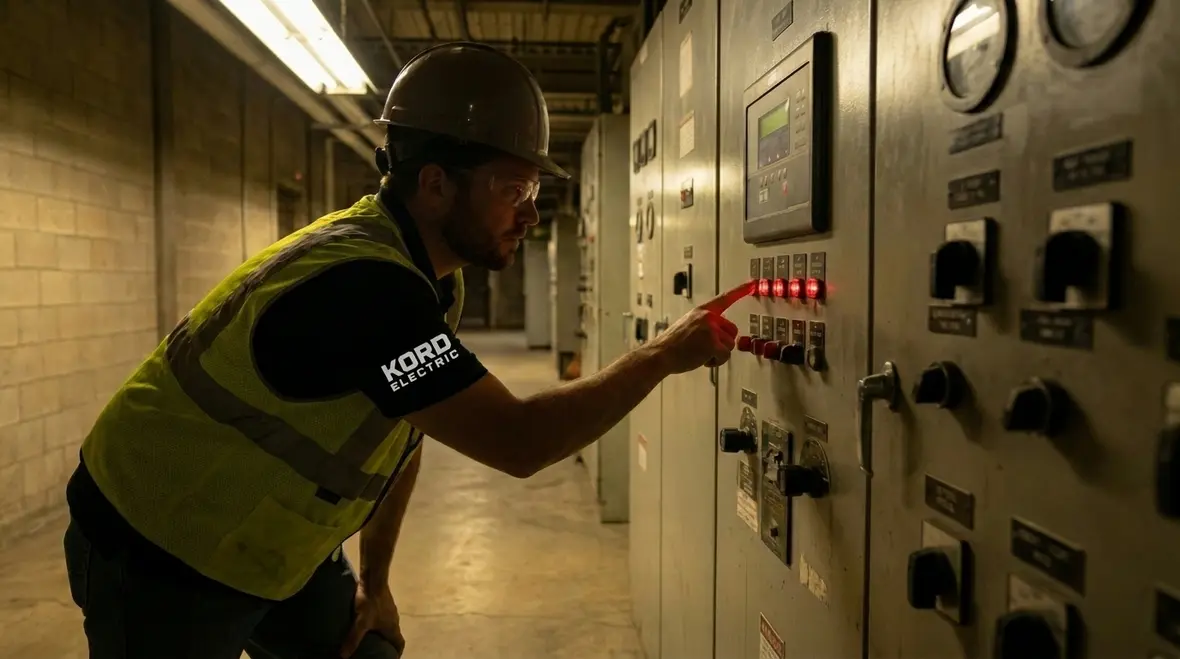
Why the Fix Fails When Voltage Is Not Measured First
We often hear a familiar story. Someone notices flicker, then swaps a breaker, then replaces a component, then calls again a few weeks later. Meanwhile, the underlying cause remains. The result is a cycle of trial and error that costs more than it should.
So, our process starts with data. We evaluate voltage quality across the facility, capture fluctuation behavior, and map it to equipment operation. Then we determine whether the issue comes from:
- Utility voltage variability at the service entrance
- Internal distribution problems such as feeders, panels, or connection points
- Load related dips and swells from motors, HVAC compressors, or production equipment
Then we match the right commercial power quality solutions to the actual waveform behavior. If the pattern involves repeated sags during motor starts, the solution differs from a condition caused by unbalanced phases. In other words, we do not guess. We measure. And yes, even when someone jokes that electrical work is just “follow the wires,” we politely remind them that the wires do not tell the whole story.
How to Stop Voltage Fluctuations From Damaging Assets
Once the team understands the fluctuation pattern, the next step is prevention and stabilization. That is where our technicians focus on practical upgrades that protect equipment and reduce downtime risk.
Depending on findings, typical actions may include:
- Correcting connection issues through targeted inspections and tightening where safe and required
- Balancing phases to reduce uneven stress on motors and transformers
- Optimizing motor starting methods to limit voltage dips
- Addressing overloaded transformers through capacity review and proper planning
- Installing power conditioning that stabilizes voltage and protects sensitive electronics
Importantly, we consider the facility as a system. For example, if an automation cabinet keeps resetting during peak production, we do not just treat the cabinet. We look upstream at the distribution path and the load timing. Then we deploy the right voltage stabilization approach, so the cabinet sees stable input when it matters.
Also, we plan for the building’s future. Commercial and industrial sites evolve: new equipment, expanded shifts, and changed load profiles. Therefore, our guidance includes how to keep protection effective as demand changes. In many cases, that means pairing corrective work with structured electrical preventive maintenance so voltage stability stays on the calendar instead of waiting for the next problem call.
Commercial Power Quality Solutions That Fit Real Workflows
In commercial and industrial environments, the “best” protection plan must work with operations, not against them. That means we discuss downtime windows, electrical design constraints, and how the solution integrates into existing panels and protection schemes.
Our expert service staff explains options in a clear, step by step way. Then we recommend a protection strategy that aligns with the site’s risk level. If a facility runs mission critical processes, we focus on stability for sensitive systems. If the concern centers on repeated motor related dips, we prioritize approaches that reduce sag depth and duration.
And because business owners think about budgets, we also help them connect the dots between power quality and cost. When voltage instability damages equipment, it drives:
- Premature failures and replacement parts
- Unplanned outages and production losses
- Higher labor time for troubleshooting
- Strained warranty coverage and repeated service visits
Put simply, better voltage stability lowers the number of times someone has to say, “We did everything we could, and yet it still happened.” Nobody wants that sentence. It is like hearing the movie theater sound system crackle right before the climactic scene.
If your facility is already dealing with unexplained trips or outages, many teams also look at broader Los Angeles County commercial electrical services from Kord Electric so that power quality improvements connect cleanly with larger system upgrades instead of living as isolated fixes.
FAQ
What Kord Electric Does Next
If your commercial or industrial facility sees flicker, nuisance alarms, or repeat failures, do not wait for a bigger outage to justify action. At Kord Electric, we send our technicians to measure voltage quality, identify the true cause, and recommend the right commercial power quality solutions to stop further damage. Reach out today for an assessment, and let us help your equipment run the way it was built to run. Calm power means calmer operations, and nobody has to improvise during peak demand.
For facilities that want a structured roadmap instead of one-off repairs, Kord Electric also connects these assessments with broader reliability planning, from power quality corrections to preventive maintenance and emergency support. The goal is simple: fewer surprises, steadier operations, and equipment that quietly does its job while your team focuses on theirs.
If your building has already experienced unexplained resets, flickering equipment, or “mystery” downtime, it may be time to look beyond quick fixes and treat voltage stability as a core part of your electrical strategy. When commercial power feels predictable, everything from tenant satisfaction to production scheduling gets easier.


