Data Center Power Quality Maintenance Guide
Kord Electric approaches data center power quality maintenance like it matters because it does. In our first response to a site, we help owners and operators reduce downtime risk by addressing the small issues before they grow loud. Then, we verify performance with practical field checks, clear reports, and repeatable plans that keep critical loads steady. Power quality work is not glamorous, but neither is duct tape, and yet everyone knows duct tape saves the day. Our technicians and expert service staff explain what they see, why it matters, and how to fix it in commercial and industrial facilities and major property buildings, where uptime is the real business model.
How does power quality affect data center uptime?
In third person terms, others often think of power as either “on” or “off.” In reality, a data center lives in the gray area between those extremes. Voltage dips, brief interruptions, harmonics, and unstable frequency can stress UPS systems, chillers, servers, and even building controls. When power quality slips, sensitive electronics may keep running, but they run hotter, degrade faster, and become more expensive to support.
Also, reliability teams learn that quality issues rarely show up as one big failure. Instead, they appear as a pattern of nuisance alarms, repeated resets, rising fan speeds, and strange log entries that look like a horror movie subplot. Then, someone asks, “Why did this happen?” Our technicians answer with evidence, not guesswork, and they connect symptoms to the actual power waveform.
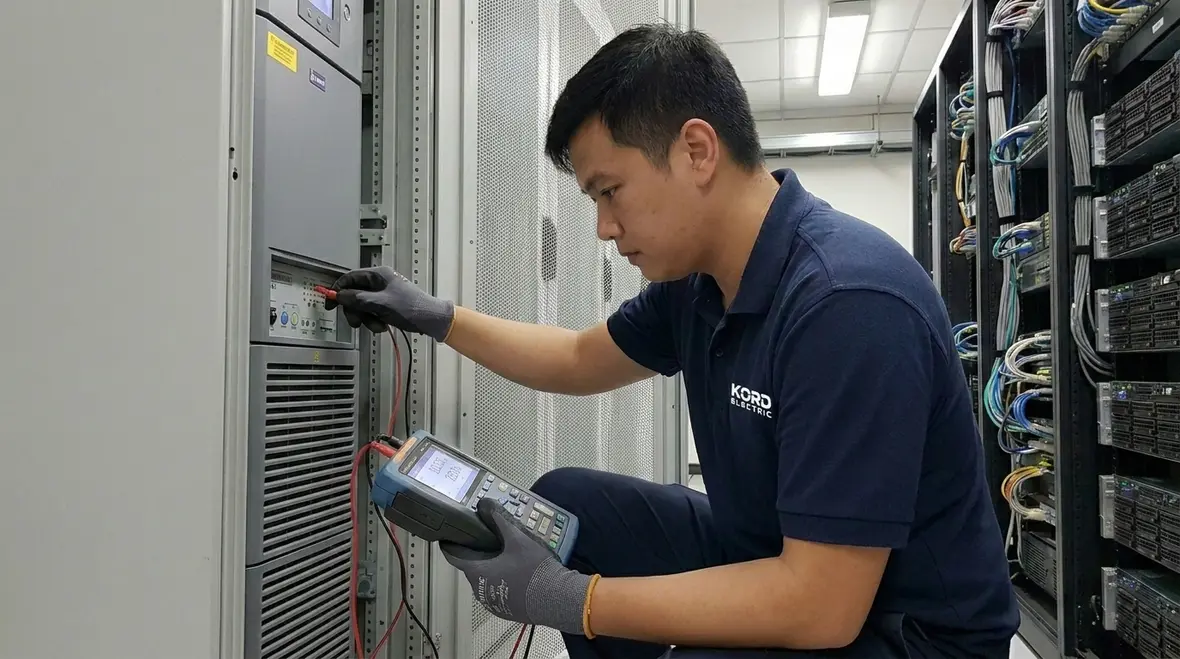
What should be included in a maintenance plan?
A strong plan covers detection, correction, and verification. Therefore, Kord Electric recommends a schedule that matches the risk level of each electrical subsystem. In practice, that means covering upstream utility interfaces, switchgear, transformers, UPS paths, PDUs, grounding systems, and any facility power conditioning equipment.
Further, the best plans define how often teams do measurements and what triggers action. For example, a monthly baseline measurement may catch drift early, while quarterly checks confirm that changes to load or equipment have not introduced new disturbances. Meanwhile, annual verification ensures protection settings still coordinate correctly. Our expert service staff then explains the results in plain language so the facility team can make timely decisions.
And yes, we include the boring parts. Because if a contactor is failing quietly, it is going to fail loudly later, like a sitcom character who ignores the obvious warning sign.
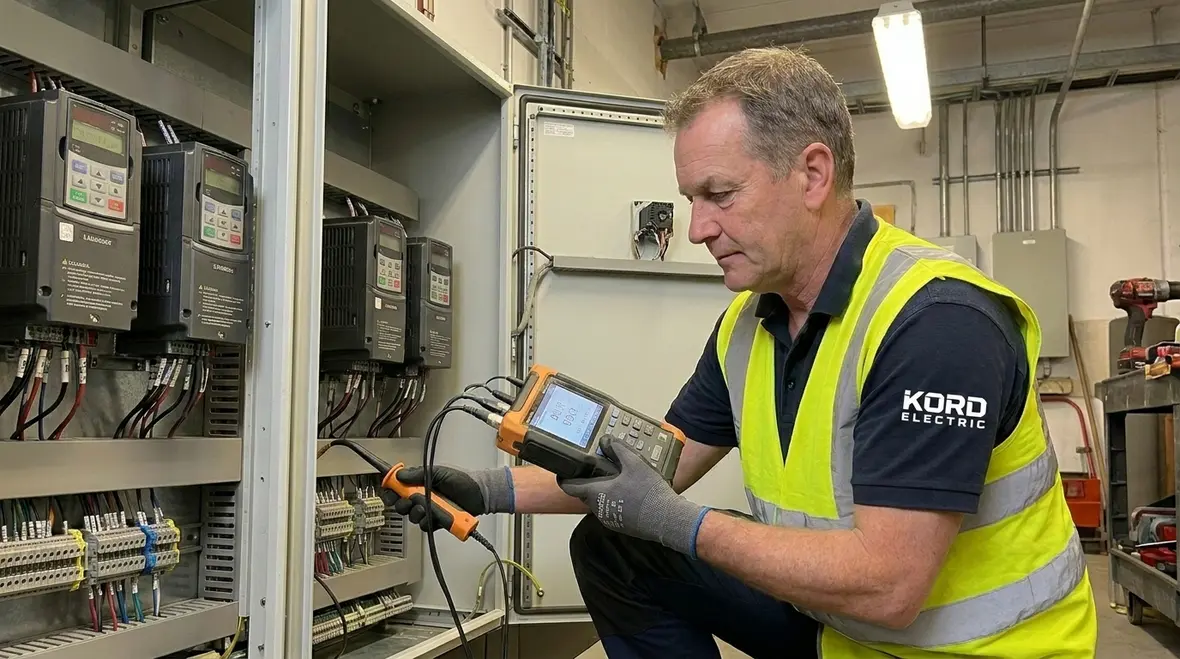
For data center leaders who want a broader view of electrical reliability strategy before they get into the day-to-day details of maintenance, resources such as Kord Electric’s data center electrical maintenance checklist and data center electrical distribution design for reliability articles help connect design, inspection, and long term uptime planning in one place.
Aligning maintenance with real operating risk
In commercial and industrial facilities, not every room deserves the same inspection calendar. Critical IT rooms, central UPS systems, and main distribution gear that feed data center racks usually sit at the top of the priority list. Secondary systems and lightly loaded panels still matter, but they may fit a longer interval once baselines are confirmed. Kord Electric’s team helps facility managers tier these systems so they can focus effort where power events would hurt most.
Which inspections reduce the risk of voltage events?
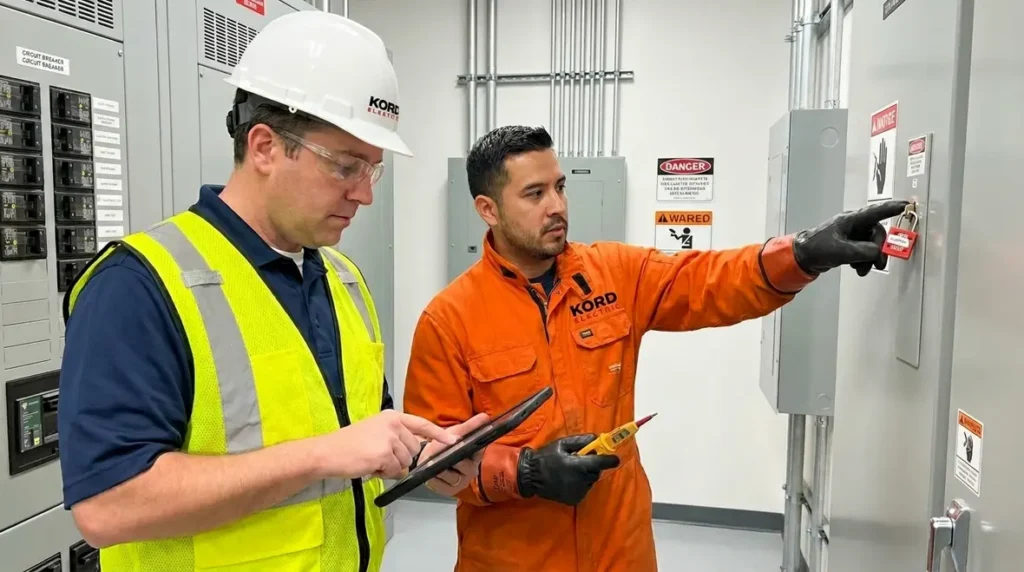
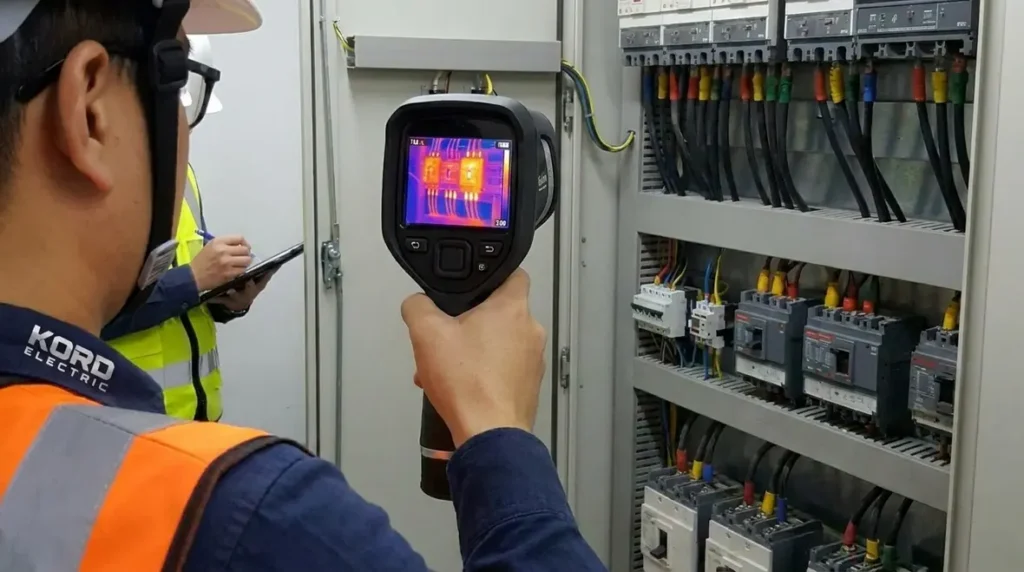
Voltage events create the most visible trouble. During maintenance, teams should inspect connections, terminations, and busbar interfaces for looseness, overheating, and corrosion. Our field work typically includes thermal checks, torque verification where applicable, and visual inspection of bus joints and cable terminations. However, inspection alone is not the finish line.
Next, teams should verify load transfer behavior across UPS and critical distribution paths. They should check that bypass operations behave as expected and that paralleling controls maintain stable output. Additionally, they must review generator interaction if the facility uses backup power. Generator systems can introduce voltage deviations and frequency swings at startup, and those variations can be as disruptive as a sudden loud neighbor knocking on the wall at 2 a.m.
Then, we look at grounding and bonding continuity because it controls how fault energy and transient energy return. Poor grounding does not always trip breakers, but it can cause unstable reference levels, noise injection, and equipment misbehavior.
Voltage stability and broader facility risk
Unstable voltage does not just bother servers. It also impacts motors, pumps, and building systems that interact with your data center. That is why Kord Electric’s approach to voltage fluctuations in commercial and industrial facilities often feeds directly into data center power quality maintenance. When building-level voltage stability improves, the data center sees fewer unexplained resets, fewer callouts, and fewer tense conversations about why “everything blinked” again.
How do harmonics harm sensitive loads?
Harmonics do not just “exist.” They circulate, multiply losses, heat cables and transformers, and confuse protection devices. In many commercial and industrial environments, variable frequency drives, rectifiers, and power electronics create harmonic distortion. When the data center adds more IT load, the harmonic profile can shift without any staff realizing it.
For that reason, Kord Electric helps teams measure harmonic content, identify sources, and confirm filter performance where present. We also support power factor correction review when it is installed, because poorly tuned correction can worsen resonance effects. Our technicians explain that resonance is like a musical glass that breaks at exactly the wrong note. The system does not need to be “broken” to be dangerous. It just needs to land in the wrong range.
After measurements, we suggest practical steps: balancing loads across phases, verifying drive settings, reviewing filter tuning, and confirming that UPS and PDU designs match the actual load profile. Finally, we repeat checks after changes so teams know the fix worked, not just that the alarms stopped for a week.
Linking harmonics to broader data center electrical requirements
Harmonic control also shows up in the bigger picture of data center electrical requirements for uptime. When UPS systems, PDUs, and distribution are designed with harmonic behavior in mind, it becomes easier for maintenance teams to keep those systems inside their comfort zone over time. That means less derating guesswork, fewer nuisance trips, and better alignment between what the nameplate says and what the equipment actually experiences on a busy day.
What monitoring and testing should teams perform?
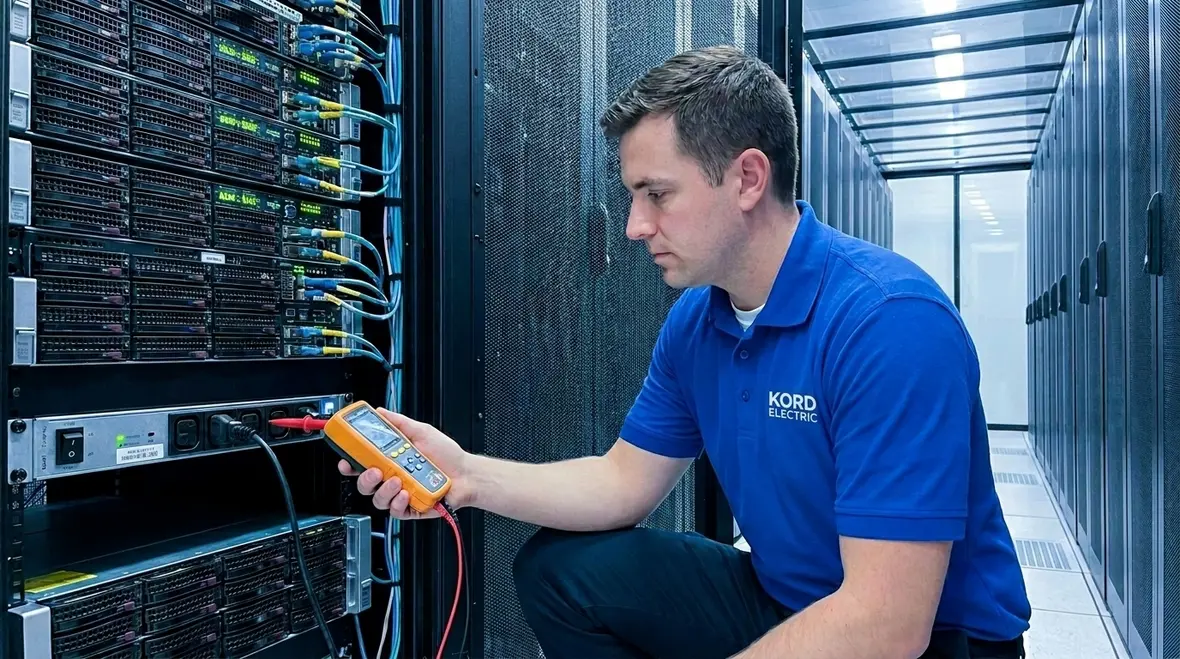
Monitoring provides early warning. Testing provides certainty. Kord Electric typically supports both so facilities do not rely on guesswork. For monitoring, teams should collect data at key points: utility input, main switchgear feeders, UPS output, and critical distribution panels. Our approach favors measurements that reveal trends in voltage, current, frequency, transient disturbances, and harmonic distortion.
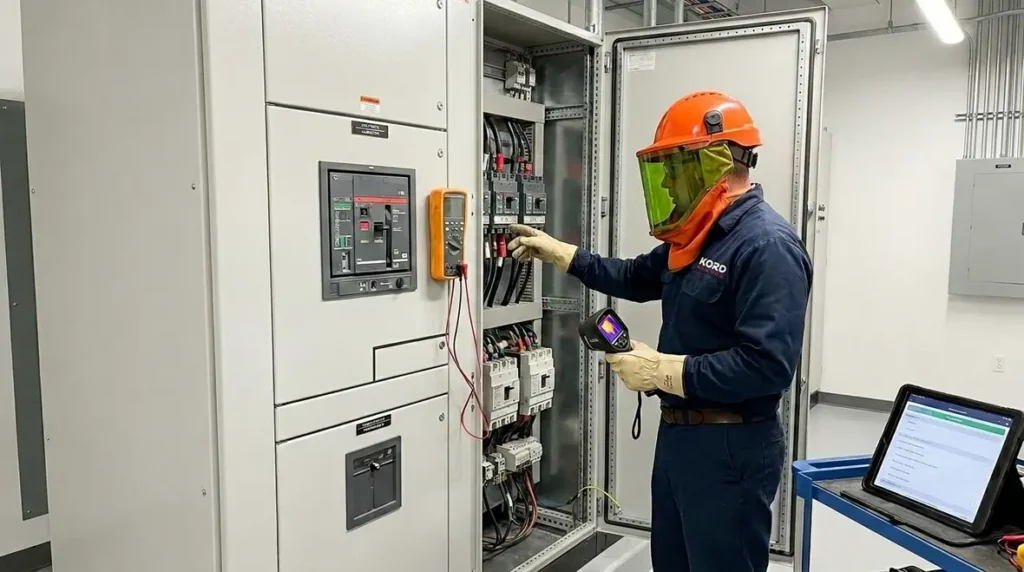
Meanwhile, testing confirms system health. That includes verifying protective device performance, checking insulation integrity where appropriate, and validating UPS configuration and alarm thresholds. We also review event logs from UPS, switchgear, and building management systems, because those logs often show the timeline of disturbances more clearly than anyone’s memory.
Transition matters here. If a team upgrades IT equipment or adds new cooling, the electrical profile changes. Therefore, the maintenance schedule should adjust after major building work. Our expert service staff helps coordinate those updates so power quality stays stable during transitions, not just after the dust settles.
In the end, consistent testing and monitoring make data center power quality maintenance measurable. And when it is measurable, it is manageable.
Integrating checklists into ongoing data center power quality maintenance
Many facility managers pair their monitoring plans with a structured data center electrical maintenance checklist so field teams can move from “we should check that sometime” to “we checked it, documented it, and know when we will check it next.” This kind of discipline keeps logs organized, makes audits easier, and ensures critical observations do not live only in someone’s notebook.
How should technicians handle troubleshooting and fixes?
Troubleshooting should be systematic, calm, and fast. If a facility sees repeated nuisance events, our technicians first isolate whether the disturbance comes from upstream utility issues, on site switching, harmonic sources, or UPS and distribution behavior. Then, they narrow the scope by comparing measurements across stages of the electrical path.
Our method also treats documentation like a real tool. We capture time stamps, align measurements with event logs, and record equipment configuration at the time of the issue. That way, others do not end up debating the same mystery like it is a court drama with no evidence.
Then, we propose fixes that match the cause. If a connection issue drives overheating, we correct terminations and verify temperatures again. If harmonics cause distortion, we adjust filters or mitigate the source equipment. If grounding contributes to noise, we verify bonding points and continuity. After that, we test again to confirm the system behaves within expected limits.
In commercial and industrial facilities and major property buildings, this workflow keeps downtime low and prevents “band aid upgrades” that solve one problem while causing another.
Coordinating troubleshooting with regional electrical support
For facilities in and around Los Angeles, pairing structured troubleshooting with dedicated Los Angeles County electrical services gives teams a familiar partner who already understands local utility behavior, permitting expectations, and the unique operating patterns of regional data centers and industrial buildings.
How do standards and budgeting shape maintenance?
Facilities want to know what they are meeting and what it will cost. Standards give structure, but budgets decide how work gets scheduled. Kord Electric aligns maintenance activities with recognized electrical practices and site requirements, so teams can defend decisions during audits and internal reviews.
Also, good budgeting focuses on risk. A site with frequent load cycling or new equipment additions needs more frequent verification. A site with stable operations might need fewer checks but still must keep baselines updated. Kord Electric helps teams create an approach that keeps critical loads safe without overspending on checks that do not add value.
And we do it with clear communication. Our expert service staff explains options, tradeoffs, and timelines so others can choose what fits operational reality. No mystery invoices. No vague promises. Just a plan that makes sense for the facility and the business that depends on it.
Budgeting beyond the next outage
When leaders map out multi-year electrical plans, they often combine data center power quality maintenance with broader upgrades such as panel labeling improvements, rewiring projects, or targeted work on hidden electrical risks in commercial buildings. This turns one-off fixes into a roadmap, so every maintenance dollar supports long term uptime instead of just surviving the next event.
FAQ
Ready to protect critical power?
If your facility runs on tight margins, do not wait for the next event to learn what your electrical system is telling you. Kord Electric supports commercial and industrial facilities and major property buildings with structured data center power quality maintenance, from measurement and diagnostics to practical repairs and verification. Contact us for a site assessment and a maintenance plan that fits your uptime goals. We bring calm expertise, clear reporting, and technicians who explain the “why,” not just the “what.”
Whether you operate a single server room or a large multi-tenant data hall, pairing ongoing power quality work with regional support such as emergency electrical services and broader commercial electrical maintenance gives your organization more than a safety net. It gives you a playbook. And when the lights flicker or the logs start telling a strange story, a good playbook is worth far more than another roll of duct tape.