Troubleshooting Commercial Electrical Issues Fast
Spot and fix troubleshooting commercial electrical issues before they escalate
At Kord Electric, we often see the same early symptoms that can turn into downtime fast. Troubleshooting commercial electrical issues usually starts with things like flickering lights, tripping breakers, warm panels, burning smells, and outlets that feel oddly “dead” in only one area. We also hear reports of equipment that suddenly shuts down, HVAC systems that lose power, or a facility that feels fine during the day but acts up at night when loads change. And yes, we know the classic response: “It must be the building.” Sometimes it is. Most of the time, it is an electrical problem that people just did not catch soon enough.
In this guide, we explain how our team identifies common faults quickly, what to check first, and how our technicians communicate solutions clearly so facilities stay safe and productive.
Recognize the fast signals of trouble in commercial panels
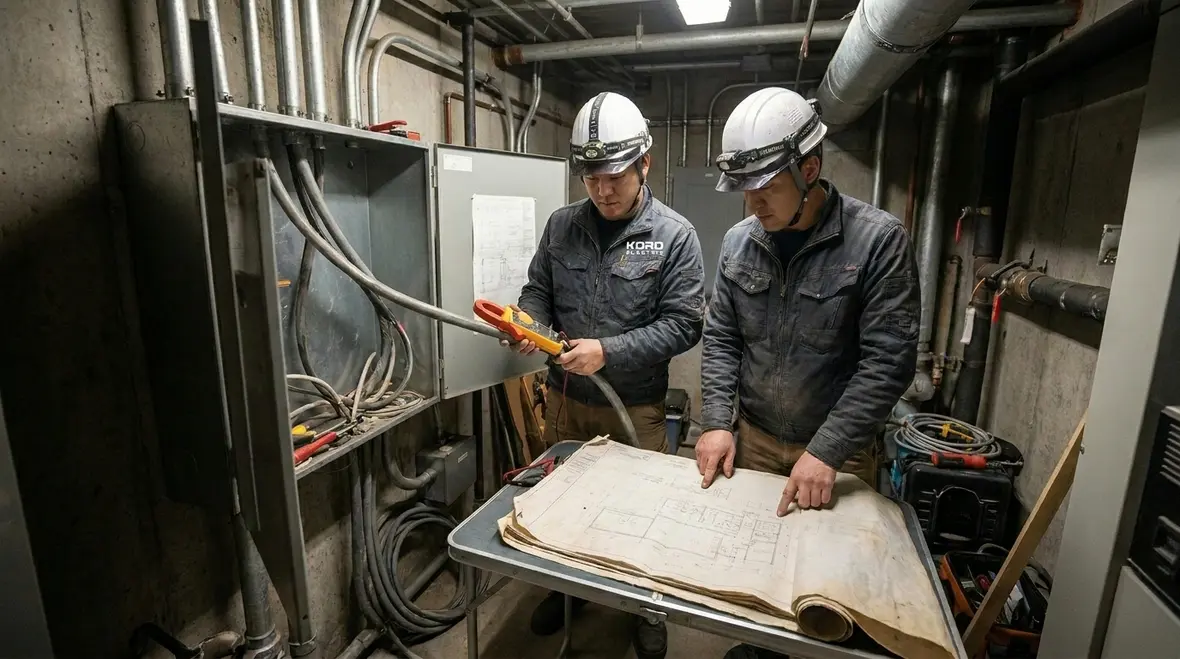
When a commercial or industrial system starts acting strange, speed matters. First, we focus on the signals that show up before a full failure. Then we connect those signals to the likely electrical causes.
Our expert service staff looks for patterns, because electrical issues rarely feel random. For example, a breaker that trips after a specific type of operation usually points to overload or insulation breakdown in a specific circuit. Meanwhile, flicker that follows door openings, elevator starts, or forklift charging often suggests voltage drops or a loose connection somewhere in distribution.
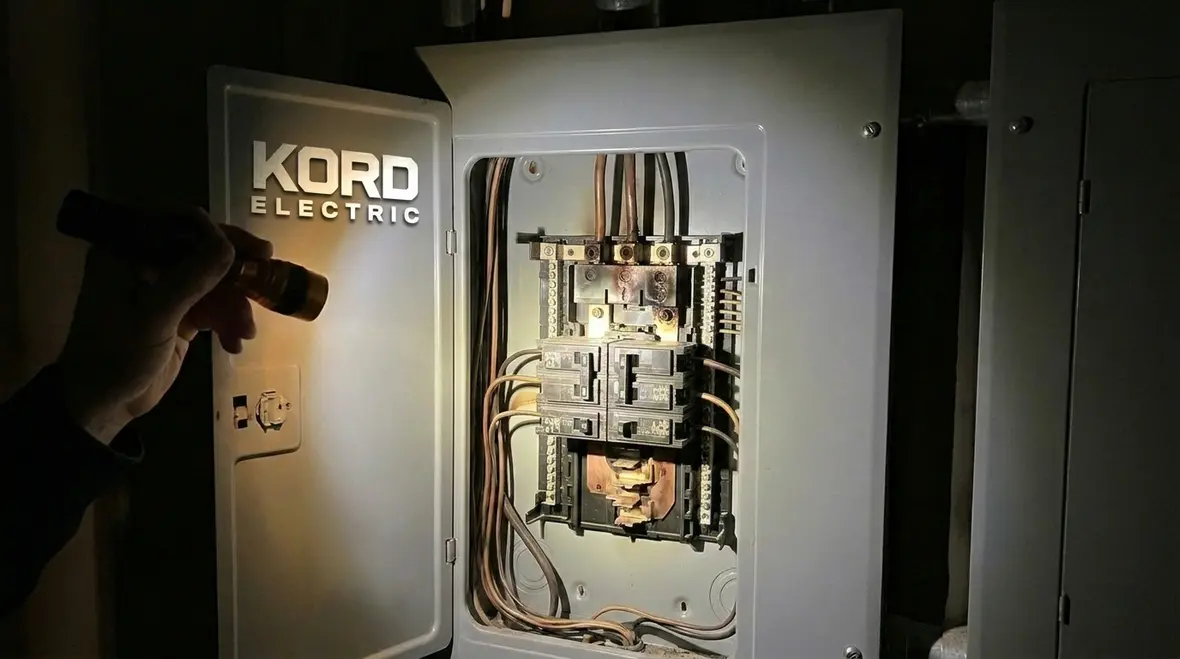
We also track physical clues. A panel that smells “hot” or shows signs of discoloration can mean a loose lug or failing connection. Likewise, humming or buzzing from a transformer or switchgear can hint at mechanical strain or electrical arcing. And if you ever hear a sound like a loose snack bag in a ventilation system, do not ignore it. It is usually something that should not be making noise in the first place.
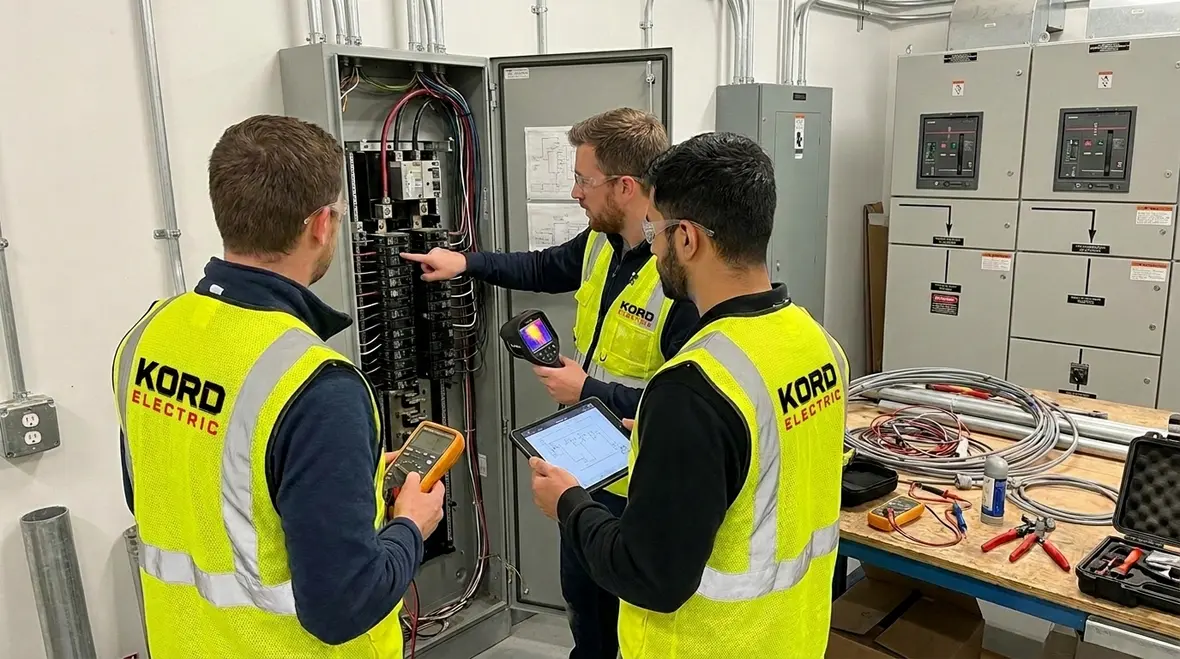
To keep things calm and controlled, our technicians document what they observe, note which areas are affected, and confirm whether the issue follows a load change. That step reduces guesswork and speeds troubleshooting commercial electrical issues toward a real fix.
Why preventative checks beat emergency calls
We cannot stop emergencies, but we can reduce them. Preventative checks catch problems while they are small enough to repair with minimal disruption. When facilities wait too long, they pay in three ways: higher repair costs, longer downtime, and increased risk to people and equipment.
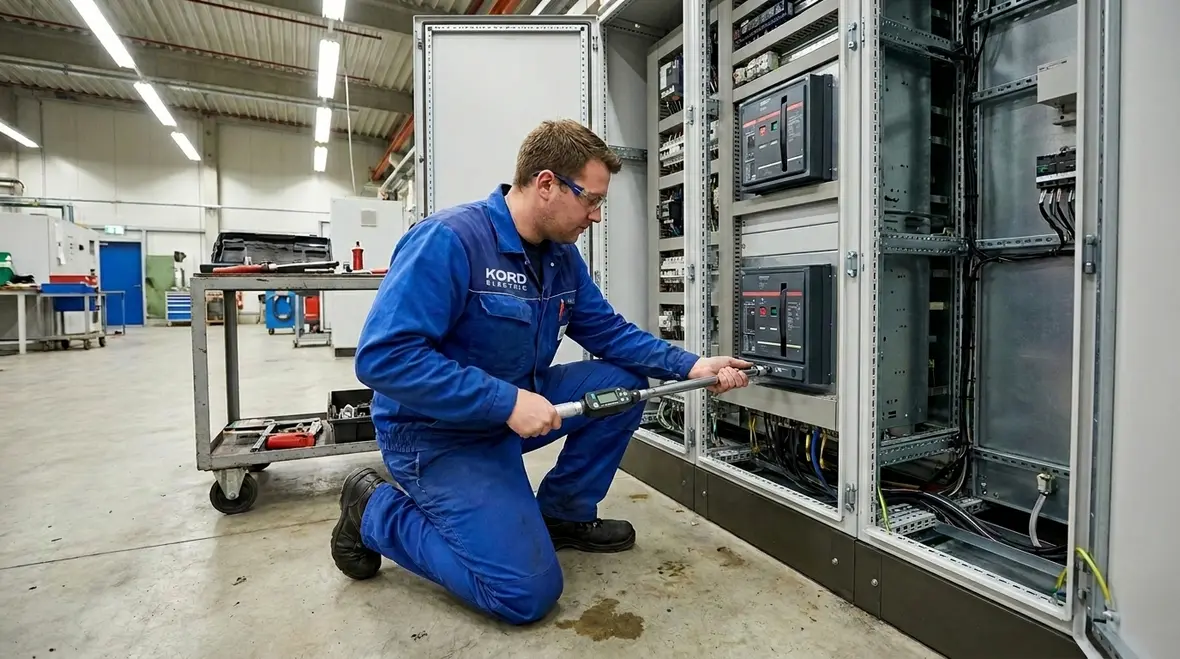
So we recommend a routine that matches how your building operates. For large properties, Kord Electric schedules inspections around typical peak loads. Then we verify that terminations stay tight, protective devices stay in range, and critical feeders remain stable.
Common commercial electrical issues that preventative work reduces include failing breakers, corroded terminations, overheating neutral conductors, and uneven loading. We also check for moisture intrusion and dust buildup, because these quietly degrade performance over time.
When preventative work is done well, our technicians can usually spot early deterioration. Then they explain what they found and what it means in plain language. After all, nobody wants a mysterious “we think something might be wrong.” They want the truth, and they want it fast.
If you want an example of how this kind of proactive work pays off, consider how we approach broader electrical preventive strategies in other systems. In our commercial landscape lighting safety guide, we show how regular checks on outdoor circuits prevent small issues from turning into outages or hazards. The same mindset applies inside your switchgear rooms and panels: steady inspections, clear documentation, and fixes made before anyone has to place an emergency call.
How our technicians isolate faults without guessing
Once an issue appears, we move in a sequence that limits disruption and increases accuracy. First, our expert service staff verifies the symptom. Next, we narrow the area. Then we confirm the cause.
Here is a practical approach we use in commercial and industrial facilities.
- Verify the scope: We confirm whether the issue affects one suite, one floor, an entire building section, or a specific time window.
- Check the protection path: We look at breakers, fuses, and protective devices to see if they show evidence of overheating, nuisance tripping, or signs of arcing.
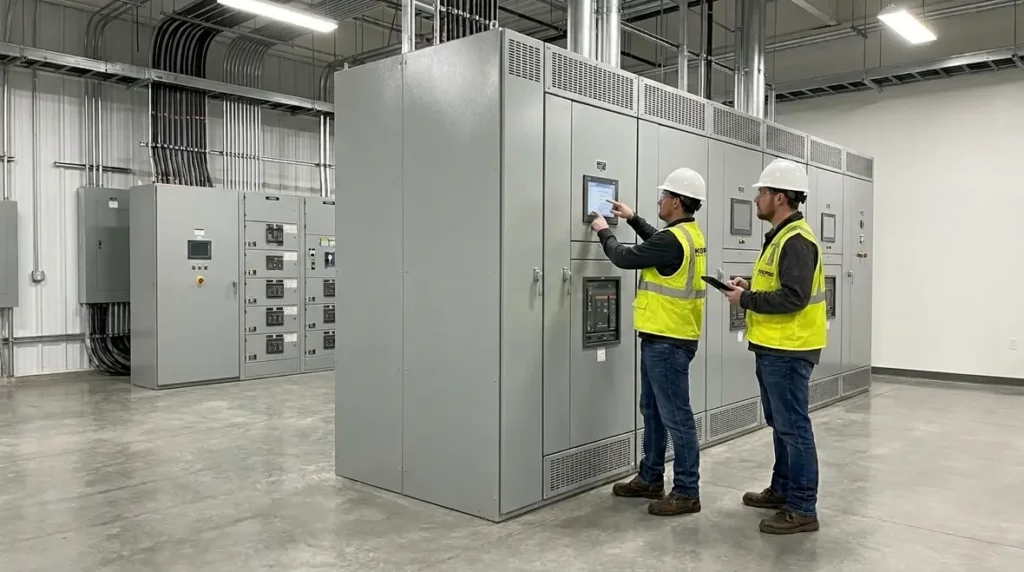
- Inspect distribution points: We examine panels, switchgear, disconnects, and service entrances for loose connections and thermal wear.
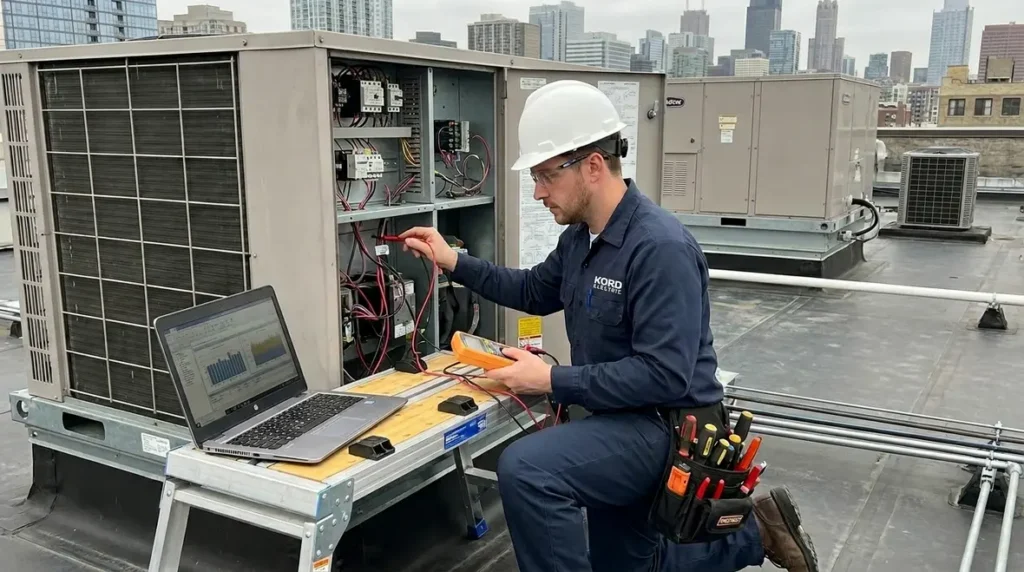
- Assess load behavior: We compare when the issue happens to when equipment runs, such as pumps, HVAC, compressors, refrigeration, loading docks, or manufacturing lines.
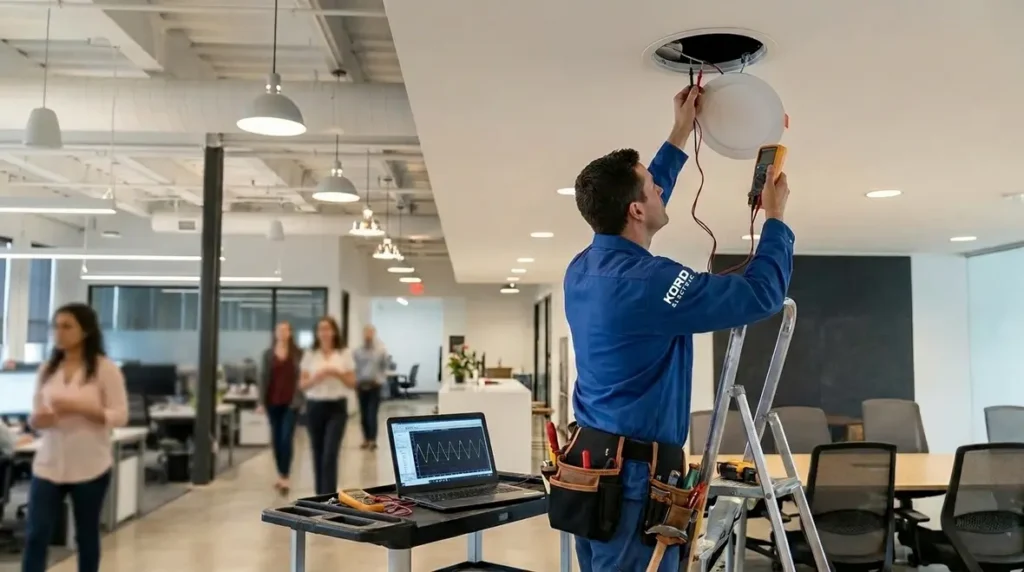
- Measure before replacing: We measure where possible, instead of swapping parts like it is a TV remote with low batteries.
As we isolate, we communicate. We tell the facility manager what the likely causes are and which checks confirm or rule them out. Then we propose repairs that restore power and reduce the chance of repeat failures.

Common electrical problems and what to do first
Every facility has its own personality, but the electrical problems repeat across the industry. Below, Kord Electric outlines the first steps we recommend and what our technicians typically check. This is where troubleshooting commercial electrical issues gets practical and grounded in real job sites.
Flickering or dimming lights: We first check whether the flicker happens on one circuit or across multiple areas. Then we inspect for loose terminations at panel boards, verify voltage stability, and review how loads change during the shift. If sensitive equipment runs during the flicker, we treat it as a priority because unstable voltage can damage controls.
Breakers that trip repeatedly: We do not reset and hope for the best. Instead, our expert service staff verifies whether the trip follows a specific equipment start cycle. We also check for signs of insulation breakdown, damaged wiring, or an overload that grew over time due to equipment additions.
Warm panels, breakers, or bus bars: Heat is a clue, not a vibe. We investigate connections, torque marks, and any evidence of corrosion. We also inspect whether neutral loading is uneven, especially in facilities with lots of single phase equipment.
Burning smell or visible scorching: We treat this as urgent. First, we secure the area, then we locate the source. In these cases, we prioritize safety and stop the conditions that allow arcing or conductor failure to worsen.
Power interruptions that match specific operations: If power issues line up with elevators, HVAC staging, or production equipment, we focus on the feeder path and start-up load behavior. Then we verify whether contactors, motors, or variable loads create voltage dips that exceed tolerance.
In each scenario, we explain our findings. That way, the team does not just get a repair ticket; they get understanding. And when the next “mysterious” problem appears, they know what changed.
Keep commercial sites running while repairs happen
Commercial and industrial facilities do not stop for our schedule. So we plan repairs around your operations. First, we coordinate access with your facility manager. Then we identify critical loads and decide whether we can isolate a circuit without affecting production or safety systems.
Our technicians commonly use a phased approach. For example, we can often service one feeder section while other areas remain powered. In addition, we stage equipment so technicians can complete work quickly and safely.
We also focus on documentation. We track what failed, what we measured, and what we corrected. That matters later, especially for major property buildings where multiple systems connect and problems can look similar at first glance.
And yes, we plan for the human factor. Facilities have alarms, operational routines, and sometimes security procedures that require coordination. Our team respects that. We show up prepared, we communicate clearly, and we keep your building moving forward instead of freezing in place.
What to avoid during troubleshooting and repairs
We see a few mistakes come up again and again, usually because someone is trying to be helpful under pressure. And we get it. When a plant line stops or a front-of-house area loses lighting, people want answers now.
Still, certain actions should not happen without qualified electricians.
- Resetting breakers repeatedly: This can hide a real fault or worsen damage, especially if arcing is involved.
- Replacing parts without confirming the cause: Swapping a breaker or component can work once, but it does not stop the underlying issue.
- Ignoring heat and odor: If something feels warm or smells wrong, the problem may be inside a connection or termination that needs immediate attention.
- Working without a safe plan: Lockout and safe isolation procedures matter in commercial and industrial environments.
- Using vague “temporary” fixes: Temporary can mean unsafe, and unsafe can mean costly.
Our expert service staff helps facilities avoid these traps. We take the time to confirm and we repair with intent, not luck. That approach keeps reliability high and downtime low.
If you are planning broader system changes, it also helps to think beyond a single repair. Articles like our data center electrical requirements for uptime guide show how design, protection, and maintenance choices upstream shape what you see during troubleshooting. The same disciplined thinking that keeps a data center online also helps keep commercial offices, industrial plants, and major property buildings calm when something trips or flickers unexpectedly.
FAQ
Call Kord Electric for calm, fast electrical recovery
When your facility faces repeated trips, flickers, heat, or sudden shutdowns, do not roll the dice. Kord Electric sends skilled technicians who isolate the real cause, explain findings clearly, and repair with a plan that supports uptime. If you want to reduce future downtime and keep systems reliable for your commercial and industrial operations, reach out today. We will assess the situation, recommend the right next steps, and get your power back where it belongs. Now, let us handle the electrical drama.
For facilities across the region, our Los Angeles County commercial and industrial electrical services team handles everything from troubleshooting calls to larger upgrades, panel projects, and preventive programs. When you need a partner who can move quickly without cutting corners, that is where we fit in.
If you are planning broader improvements on top of immediate troubleshooting, it can also help to explore related service areas like automated lighting control for facilities or industrial lighting layout optimization. Those upgrades often reduce nuisance complaints, improve power quality, and make future faultfinding simpler because the system is designed, labeled, and documented from day one.