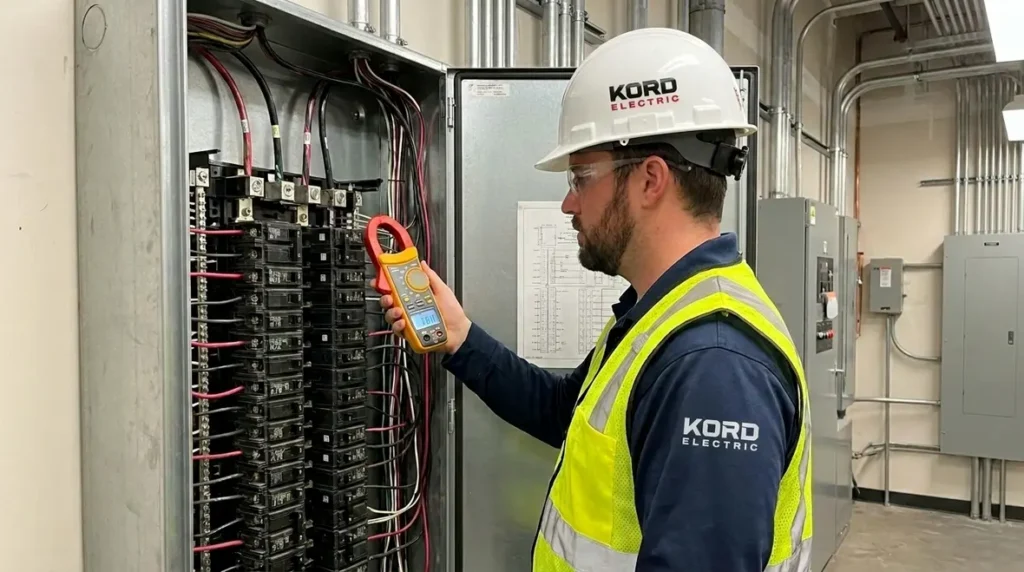
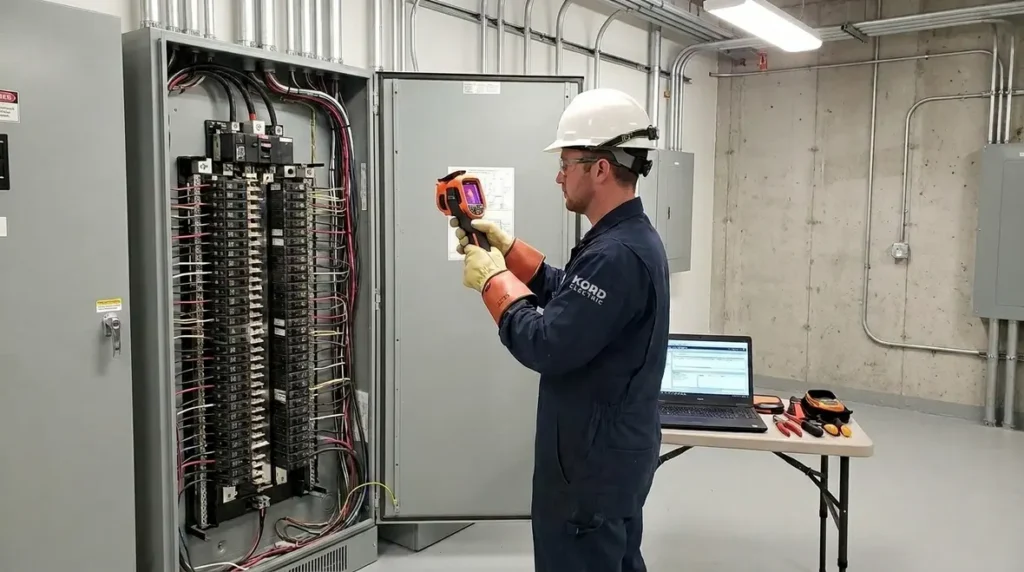
Commercial Panel Load Calculation for Tenant Upgrades
Commercial Panel Load Calculation: why tenant upgrades go smoothly
When a tenant improvement starts, the first quiet battle is electrical capacity. At Kord Electric, we guide commercial and industrial facilities through a Commercial Panel Load Calculation so new loads fit safely into existing electrical gear. Our team runs the numbers early, before anyone buys equipment, installs fixtures, or promises a fast opening date. That way, we avoid the classic scenario where the power is “fine” right up until it is not, like a sitcom character who says, “I’m sure it will hold,” while the floor creaks. In this article, we explain how load calculations work in real tenant improvement projects, and why our expert technicians keep the process calm, clear, and code focused.
How tenant improvements change electrical demand
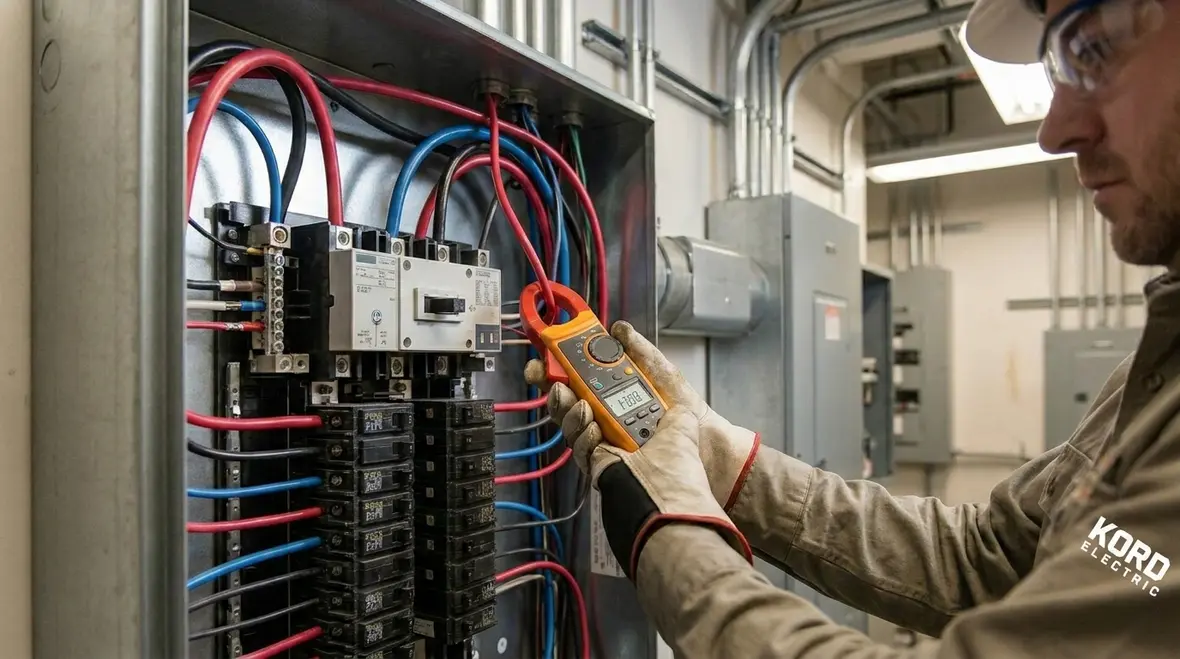
Commercial space never stays still. Even when the lease says “same use,” people bring in new needs: additional lighting, HVAC controls, reworked outlets, refrigeration, IT racks, security systems, and sometimes production equipment. As loads shift, demand can rise faster than the building manager expects. Therefore, we start by mapping what is currently installed and what will be added.
Next, we ask the right questions of the property team and the tenant. We do this because the details matter: the new equipment nameplate rating, motor horsepower, schedule of operation, and whether loads run at the same time. Then, we connect those details to the building’s actual electrical setup, such as panel ratings, bus capacity, circuit breaker sizes, and upstream transformer limits.
At Kord Electric, our technicians do not just “check a box.” Instead, our service staff explains what drives the calculation, so others in the project understand why a panel can handle certain additions, and why it cannot handle others without upgrades. In other words, we bring clarity, not mystery meat numbers.

What goes into the calculation, step by step
A proper Commercial Panel Load Calculation is not guesswork. It is a structured method that aligns with common electrical design logic. We typically work through these steps in a clear order.
- Inventory existing circuits: We review what the panel currently serves and identify active loads, not old plans that never got built.
- Define the tenant scope: We capture the new loads and their ratings from submittals and equipment data.
- Apply load factors: We account for diversity and how different loads are unlikely to run at full output at the same time.
- Consider branch and feeder capacity: We look at how branch circuits add up and how feeders and upstream gear support them.
- Check demand and voltage: We verify current draw at the panel and ensure voltage assumptions match reality.
- Plan for spare capacity: We allow room for future tenant changes, because tenants always change something later. That is just human nature.
Then, we compare the calculated load to the panel’s safe operating capacity and the selected equipment ratings. If the numbers show overload risk, we recommend options early, such as adding circuits, installing supplemental panels, balancing phases, or upgrading upstream service where needed.

Demand factors, diversity, and why time matters
Now we get into the part that makes people say, “Wait, so it is not just the sum of everything?” Correct. In most commercial and industrial cases, not every load hits peak at the same moment. Lighting might peak during occupied hours, while refrigeration cycles and motors may operate based on conditions. Therefore, the load method uses factors that reflect typical operation.
Our technicians explain this clearly during tenant improvement planning, because everyone benefits when the team understands the “why.” For example, a motor for a small process line may not run continuously, while a set of office outlets draws low power most of the time. Meanwhile, certain systems, like life safety and emergency-related loads, require different handling. In short, we apply the right logic for each category so the calculation matches real life.
Also, the schedule matters. If a space operates three shifts, the diversity assumptions may shift. If it runs during a single shift, demand is different. Thus, we work with building operations to match the calculation to the expected use.
Common mistakes we prevent during major building projects
Even smart teams fall into the same traps during tenant improvements. Luckily, our Kord Electric technicians have seen the outcomes, and we help avoid them early. Here are a few mistakes we routinely prevent.
- Using old panel schedules: Plans can drift from reality. We verify what is installed before we finalize calculations.
- Ignoring nameplate data: Equipment labels tell the truth. We rely on rated values, not vague marketing specs.
- Overlooking phase balance: Uneven loads can cause overheating even when totals look acceptable.
- Forgetting future growth: Tenants do not stop expanding. We plan for reasonable room to grow.
- Skipping upstream checks: A panel may look fine on paper, but feeders or service gear can be the bottleneck.
And yes, the “it worked before” argument does not survive contact with a new tenant. Power demand does not negotiate. Therefore, we calculate, document, and recommend upgrades only when they truly support safe operation.
How our maintenance plans support load stability
After the tenant improvement, the electrical system still lives in the real world. Connections loosen, equipment ages, and usage patterns shift. That is where our maintenance approach becomes a quiet advantage. If you already follow our commercial and industrial electrical maintenance plans, you know we aim to keep systems reliable over time, not only during the install window.
We align our field service work with the same discipline used in load planning. Thus, we check panels and related equipment for issues that can affect performance and safety. Then, we help facility managers stay ahead of problems that might show up later as nuisance trips, hot spots, or capacity surprises. Nobody likes surprise costs. Surprise bills hit like a plot twist you did not ask for.
To support our approach, our service staff also explains what they find and what it means. So others on site can make decisions with confidence, not fear. In commercial and industrial buildings, calm clarity is not fluff. It is how you protect schedules and budgets.
Making upgrades when the math says “not enough”
When the load method shows the panel lacks headroom, we do not just point and shrug. We propose practical paths forward that fit commercial and industrial project reality.
- Additional panel or subpanel: We distribute new loads to keep existing equipment within safe limits.
- Circuit rebalancing: We adjust phase distribution to reduce uneven current draw.
- Feeder or service upgrades: Where needed, we support upstream capacity so the system can handle demand.
- Equipment options: Sometimes the best fix is the right selection or schedule control for new devices.
- Documentation and commissioning support: We help teams keep records that support future maintenance and tenant changes.
Importantly, we coordinate with property teams and contractors to reduce downtime risk. Then, we keep communication direct. If something needs action, we say it early, not after the drywall is in place. Our goal stays simple: help your building handle tenant improvements without creating electrical drama.
If your facility wants to pair that planning mindset with a broader reliability strategy, our dedicated electrical preventive maintenance services help keep panel calculations accurate over time by catching shifts in load and equipment condition before they become problems.
Planning tenant work across an entire property
Most commercial properties do not have a single quiet corner where one tenant upgrade lives alone. Instead, panel loads stack up across floors, suites, and equipment rooms. When we perform a Commercial Panel Load Calculation for a new tenant, we also look at how that space fits into the broader electrical story of the building, including nearby panels, shared transformers, and existing heavy loads.
For example, a new office tenant with dense open-plan workstations might move into a property already supporting a data room, a commercial kitchen, or a light manufacturing area. Each of those uses has its own load profile, but the breakers and feeders still see everything blended together. When we model the tenant’s new equipment and lighting, we factor in what the rest of the property is doing so nobody gets surprised by a panel that quietly crossed its comfort line months ago.
On multi-tenant floors, we also watch for subtle issues like shared neutrals and long branch circuits that were originally sized for a very different use. Over time, these details can make the difference between a panel that rides comfortably under its rating and one that starts throwing nuisance trips every time several tenants hit a busy season at once.
Coordinating Commercial Panel Load Calculation with schedules and budgets
Tenant improvement timelines can feel like someone hit fast-forward on the whole project. Permits, space planning, buildout, IT, and move-in all compete for the same calendar. We fit Commercial Panel Load Calculation into that timeline without turning it into another bottleneck. That starts with early scope clarity and strong communication between our electricians, the GC, and the property team.
When we join during early design, we can flag potential capacity issues before big-ticket decisions get locked in. That means fewer change orders, fewer “we have to re-route this feeder” calls, and far fewer last-minute scrambles to find space for an extra panel. It also gives owners and tenants time to make smart tradeoffs between ideal layouts, available power, and realistic budgets. Nobody enjoys discovering that a favorite layout depends on a service upgrade that was never in the financial plan.
We also document calculations in clear, project-friendly language. That way, architects, engineers, and building managers can reference the same set of numbers without hunting through dense notes. If the tenant’s program changes midway through the job, we update the Commercial Panel Load Calculation and spell out exactly what that change does to the panel and upstream equipment.
Linking panel calculations to long term reliability
A good commercial panel study is not just about getting through inspection. It also sets the stage for a building that behaves predictably five or ten years later. When our field team completes a Commercial Panel Load Calculation, we organize the information so it folds naturally into maintenance planning, troubleshooting, and future tenant work across the same gear.
For facilities that already rely on Kord Electric for ongoing electrical maintenance, having that calculation on file makes it easier to spot when reality drifts from the original assumptions. Maybe a piece of equipment was swapped out quietly, or temporary loads slowly became permanent. During inspections, we compare measured demand to the original model and call out any trends that suggest the panel is edging toward its limit.
This is also where our troubleshooting work and our tenant upgrade work support each other. If a building starts experiencing nuisance trips or unexplained hot spots, we can quickly reference prior calculations and maintenance reports to see whether the issue is a new fault, a capacity creep, or a combination of both. That level of context keeps decisions grounded in data instead of guesswork.
Working with complex commercial and industrial facilities
Some tenant upgrades are straightforward office buildouts. Others live inside active industrial spaces, production lines, labs, or specialized environments like commercial kitchens and data rooms. In those cases, a Commercial Panel Load Calculation must respect not only capacity but also process continuity, equipment sensitivities, and the simple fact that downtime costs more than the wiring itself.
For industrial and manufacturing clients, we pay close attention to motor loads, starting currents, and coordination with existing protection schemes. For data-heavy tenants, we look at how new IT racks, UPS systems, and cooling equipment will behave under real usage, not just nameplate numbers. In commercial kitchens and food production, we review how refrigeration, cooking, and ventilation equipment stack up across phases during busy service hours, not just during quiet testing windows.
In every case, our goal is the same: a panel schedule and feeder plan that behaves calmly when the tenant is at full stride. When a facility operates across multiple sites or major property buildings, we mirror that approach from panel to panel and building to building, so load planning does not become a patchwork of one-off decisions.
FAQ
Conclusion: schedule a confident plan with Kord Electric
Tenant improvements move fast, but electrical planning should move even faster, in the right direction. At Kord Electric, our technicians help commercial and industrial facilities complete the Commercial Panel Load Calculation process early, with clear documentation and practical upgrade recommendations. If you are planning a new tenant space, expanding operations, or modernizing equipment, let us run the numbers and protect your electrical capacity before construction locks you in. Call us today and we will help you keep the lights steady, the schedule intact, and the project calm.
For property teams coordinating multiple upgrades across a wider area, our dedicated Los Angeles County electrical services give you a single partner for tenant work, system studies, and long term reliability across your portfolio.
If you are also looking ahead at broader maintenance or future capacity planning, pairing tenant-focused load calculations with a structured maintenance strategy creates a stronger, calmer path forward for your building’s electrical system.