
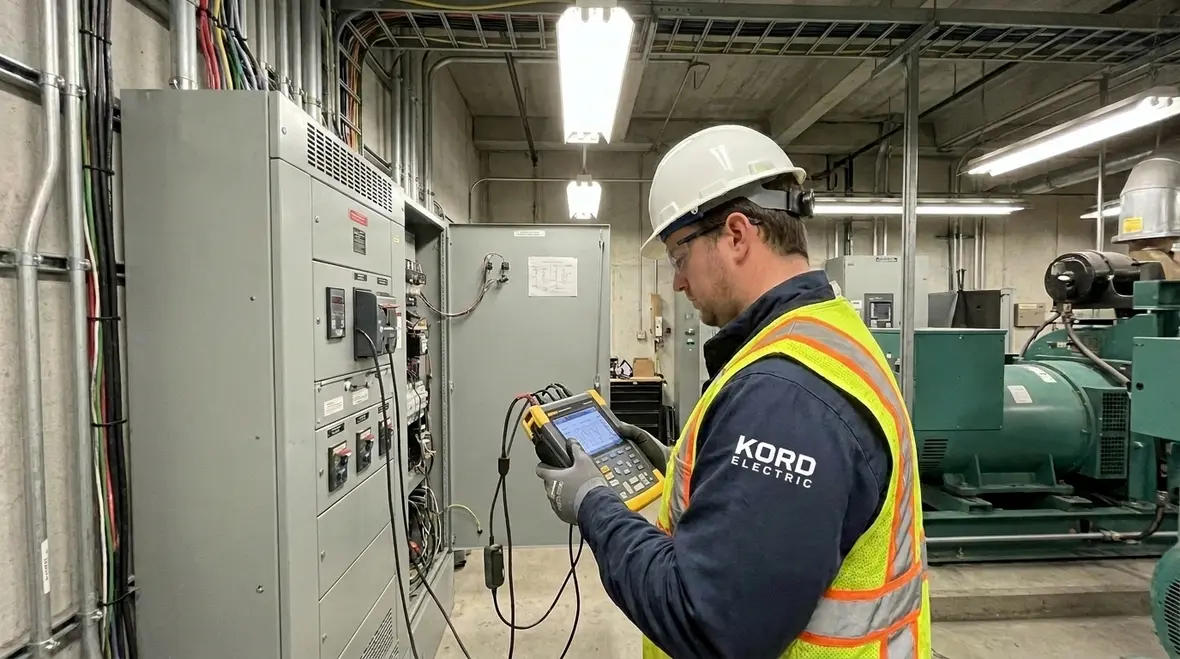
Commercial Power Quality Audits for Sensitive Electronics
At Kord Electric, we treat electrical reliability like it matters because, for commercial and industrial facilities, it does. That is why our team recommends Commercial Power Quality Audits before “small” electrical issues turn into costly downtime. During these evaluations, we track what the grid and internal wiring do to the voltage, current, and frequency that sensitive electronics depend on. And yes, even modern gear can get cranky when power behaves like it is texting while driving. After all, an audit helps others stop guessing, spot the real causes, and protect equipment that cannot just reboot and move on like your favorite streaming show.
Why power quality quietly decides equipment health
Third person observations matter here, but the results always land in your plant, your building, or your facility. When power quality shifts, sensitive electronics feel it first. Drives, PLCs, medical systems, network gear, HVAC controls, and lab instruments often respond faster than a human ever will. Even if equipment keeps running, it may quietly lose efficiency, shorten component life, or fail under stress that looks random.
Commercial and industrial operators usually notice the symptoms before they connect them to the cause. Lights flicker in one area. A motor starts slowly. A controller locks up after a storm. Meanwhile, the real story could involve voltage dips, harmonics, neutral issues, or unstable regulation from the utility side or within the facility. So, we help others identify the pattern, not just the complaint.
Our technicians explain it plainly: power quality is not one single number. It is a set of conditions that together determine how “clean” and stable electricity stays at the point of use. When stability slips, electronics can see the equivalent of mild chaos, and they do not have a warranty for chaos.
What voltage fluctuations do to sensitive systems
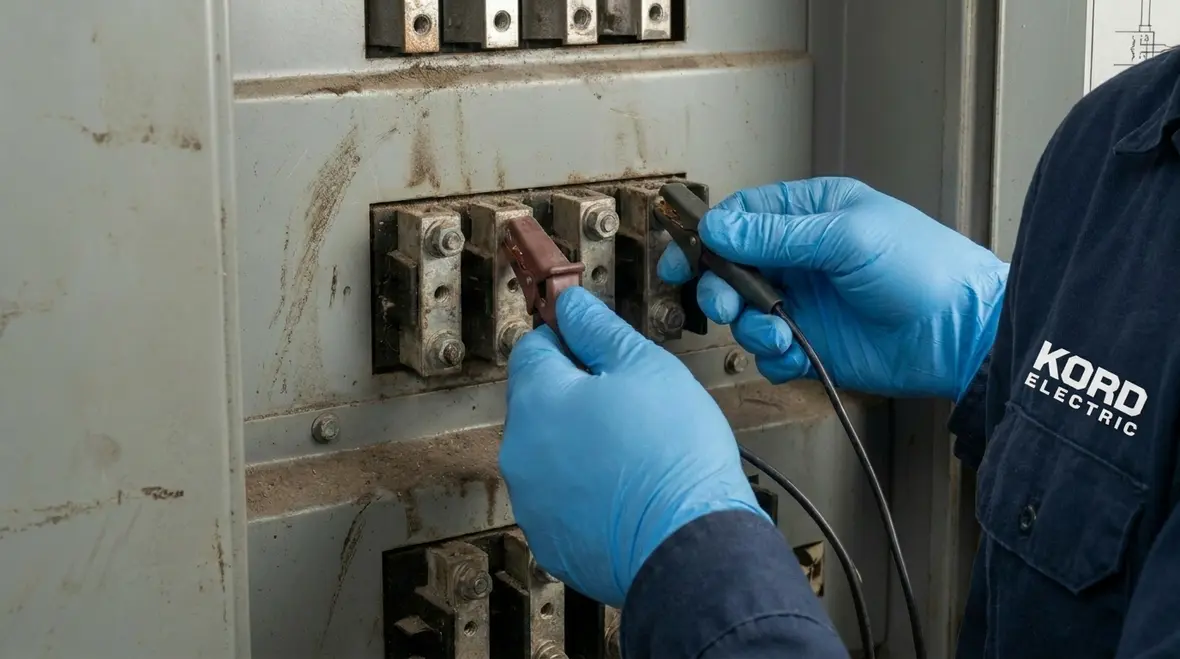
Voltage fluctuations create stress by making equipment experience changing electrical conditions. Sometimes the dips are brief. Sometimes the swings are frequent. Either way, sensitive devices can interpret the change as a fault, a reset request, or an abnormal operating condition.
In the commercial and industrial setting, one of the most common triggers is a voltage event that does not look dramatic on a simple meter reading. In reality, the waveform and timing still matter. When voltage regulation struggles, equipment that depends on stable voltage rails can exhibit degraded performance. For example, variable speed drives can draw different current patterns during instability. Then harmonics can increase, which can further strain transformers and switchgear. Then you get a feedback loop that feels like a bad group project where everyone blames everyone else.
Our experienced service staff often points out that the true risk shows up in three ways. First, there is immediate disruption like resets or nuisance alarms. Second, there is gradual wear such as component heating and aging. Third, there is hidden productivity loss, where systems run but with reduced output, reduced efficiency, or more frequent maintenance calls.
To keep things practical, we reference how fluctuations can show up in facilities. For more detail, we align our audit approach with the realities discussed in our page on Voltage Fluctuations in Commercial and Industrial Settings at kordelectric.com.

Commercial Power Quality Audits: what we measure and why it matters
When others ask what our team actually checks, we describe it as a forensic electrical review. The goal is to understand the quality at the load, not just at the service entrance. So, instead of relying only on average readings, we observe how power behaves under normal and high demand conditions.
During Commercial Power Quality Audits, our technicians typically focus on measurable electrical indicators that connect directly to equipment behavior. We examine voltage stability, dips and swells, waveform characteristics, and patterns tied to operational cycles. We also evaluate system grounding and neutral performance when relevant, because the neutral path can become a silent problem during unbalanced loads.
Next, we look for harmonic distortion, which can act like background noise for electronics. Even when the equipment “works,” harmonics can cause overheating and create additional stress for capacitors, transformers, and generators. Then we compare what we measure with the facility’s equipment inventory and operating schedule, so the audit results connect to real-world drivers, not vague theories.
Finally, we translate findings into actionable recommendations: where to correct, what to correct, and how urgent the correction is based on risk. And because downtime is expensive, we plan improvements with the business in mind, especially for facilities that cannot just shut down and “figure it out later.”
How we spot the source instead of treating symptoms
Many facilities try to solve power problems with quick fixes. Sometimes that helps. Often, it delays the real solution. Our approach, used by our expert service staff, targets root cause because commercial and industrial environments tend to have multiple contributors at once.
For instance, voltage issues can originate from the utility, from internal distribution, or from load behavior inside the building. A large motor start can cause a transient dip. A non linear load can contribute harmonics. A loose connection or failing breaker can add intermittent instability. Even a changing load profile across shifts can make an issue appear and disappear, leaving maintenance teams feeling like detectives hunting a suspect that wears a different disguise every day.
Our technicians interpret the measurements alongside single line diagrams, equipment schedules, and past incidents. Then we build a likely timeline of how an event forms and where it impacts the load. That leads to smarter decisions such as upgrading specific components, adjusting protection settings, balancing loads, or improving power conditioning at the right location.
We also coordinate with facilities leadership so they understand how each recommendation reduces risk. In other words, the audit becomes a plan, not a folder that collects dust like old manuals.
Protective strategies that keep electronics stable
After we identify the problem drivers, we help others protect sensitive electronics with practical, facility appropriate strategies. Since this is commercial and industrial only, the solutions need to match real operating constraints, not just generic home setups.
Common strategies include targeted power conditioning where sensitive loads reside, surge and transient protection sized for the actual system, and adjustments that improve voltage regulation and stability. In facilities with significant harmonics, our recommendations may involve mitigation steps that reduce distortion and protect upstream equipment.
Where grounding and bonding create vulnerability, we help correct them to support stable reference levels for electronic equipment. And where load behavior drives instability, we guide operational planning and electrical corrections that reduce abrupt changes. The aim is not to eliminate every disturbance. The aim is to reduce the disturbance to a level that sensitive electronics can tolerate day after day.
And yes, the jokes show up because power problems can feel like they came from a sitcom. But the outcome should not be comedic. It should be stable operations, fewer nuisance resets, and maintenance teams who spend their time fixing problems that actually exist.
Scheduling audits around real operations
A smart audit does not interrupt production. We plan for the facility’s needs and the equipment’s operating schedule. That means coordinating with building leadership, reviewing downtime tolerance, and choosing measurement windows that capture typical and stressed conditions.
In many commercial and industrial locations, the biggest events happen during shift changes, equipment cycling, commissioning, maintenance windows, or seasonal load shifts. Therefore, our technicians often schedule measurement periods to include these conditions. Then the audit captures the behavior that matters, not just a quiet snapshot when everything runs smoothly.
As a result, others receive recommendations backed by evidence, which helps engineering teams justify upgrades and helps operations teams prioritize what to do first. It also helps procurement teams avoid buying the wrong gear because they saw one symptom and assumed the cause.
We keep communication steady throughout. We also explain what we see in plain terms so decision makers can act without needing a textbook in one hand and a change order in the other.
For facilities in and around Los Angeles that depend on steady production, pairing these audits with regional support like Los Angeles County electrical services helps align Commercial Power Quality Audits with real-world shift schedules, maintenance windows, and local power conditions.
FAQ about Commercial Power Quality Audits
Ready to protect equipment and reduce risk?
If your facility runs critical electronics, automation, or high value systems, waiting usually costs more than measuring. Kord Electric helps commercial and industrial property teams understand what power quality problems exist, where they come from, and which fixes protect equipment with the least disruption. Our technicians and expert service staff explain the results in business friendly language, then we guide next steps you can act on. Contact us to schedule Commercial Power Quality Audits and bring stability back to your electrical foundation.
For many organizations, these audits also connect naturally to broader services such as commercial electrical maintenance, troubleshooting, and regional support. Aligning Commercial Power Quality Audits with services tailored to your facility’s needs helps keep improvements consistent instead of one-off fixes.
When you are ready to coordinate Commercial Power Quality Audits with related support, you can also explore Kord Electric’s commercial and industrial service options to see how ongoing electrical expertise fits into long-term reliability planning.


