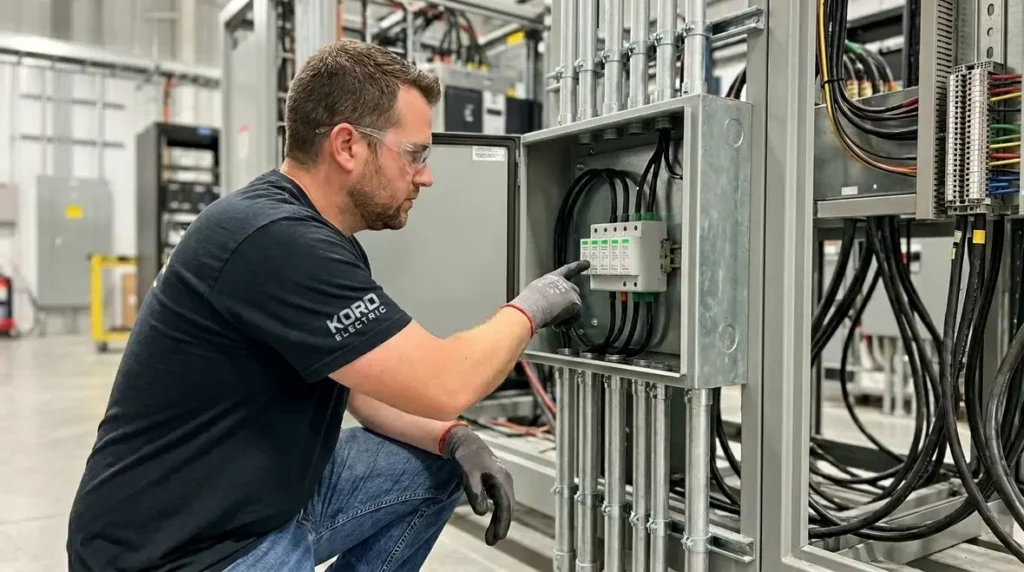
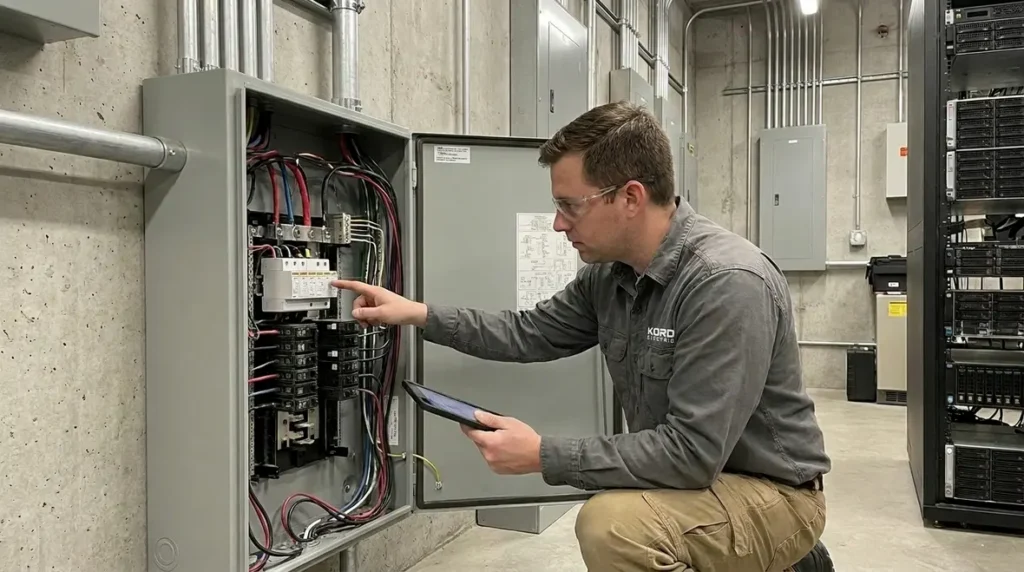
Kord Electric Industrial Emergency Power Solutions
Kord Electric helps commercial and industrial facilities stay online when the lights try to go out early. We install and support industrial emergency power solutions that protect operations, safety systems, and critical equipment during outages. However, a generator is only half the story. In other words, reliable emergency power depends on planning, testing, and on like getting the right answers from experts who show up and do the job. So, while others treat backup power like an insurance policy, we treat it like a mission: calm, controlled, and ready to perform when real life gets noisy. And yes, we still believe emergency power should be boring in the best way. No drama, just uptime.
How we keep commercial and industrial facilities safe during outages
When power drops, risk rises fast. First, critical loads may fail, and that can affect process safety, alarms, access control, refrigeration, elevators, and medical or life safety systems. Then, during the first seconds, employees may move slower, supervisors may scramble, and the building can feel like it is playing a bad action movie. We do not want that. We help facility teams reduce hazards by engineering industrial emergency power solutions that transfer power quickly and predictably.
In practice, our approach starts with a clear definition of what must run. We work with the facility team to separate essential loads from “nice to have” loads. Next, we verify that the selected system can handle startup inrush currents, motor loads, and control power demands. After that, we align the transfer sequence so loads come online without fighting each other like coworkers in a break room over the last donut.
Then we document everything in a way operators and maintenance staff can use. As a result, safety checks, operating procedures, and escalation paths stay clear. And when someone asks, “What happens if this switch fails,” our answer is not vague. Our technicians explain the system behavior step by step, so the people running the building are never guessing.
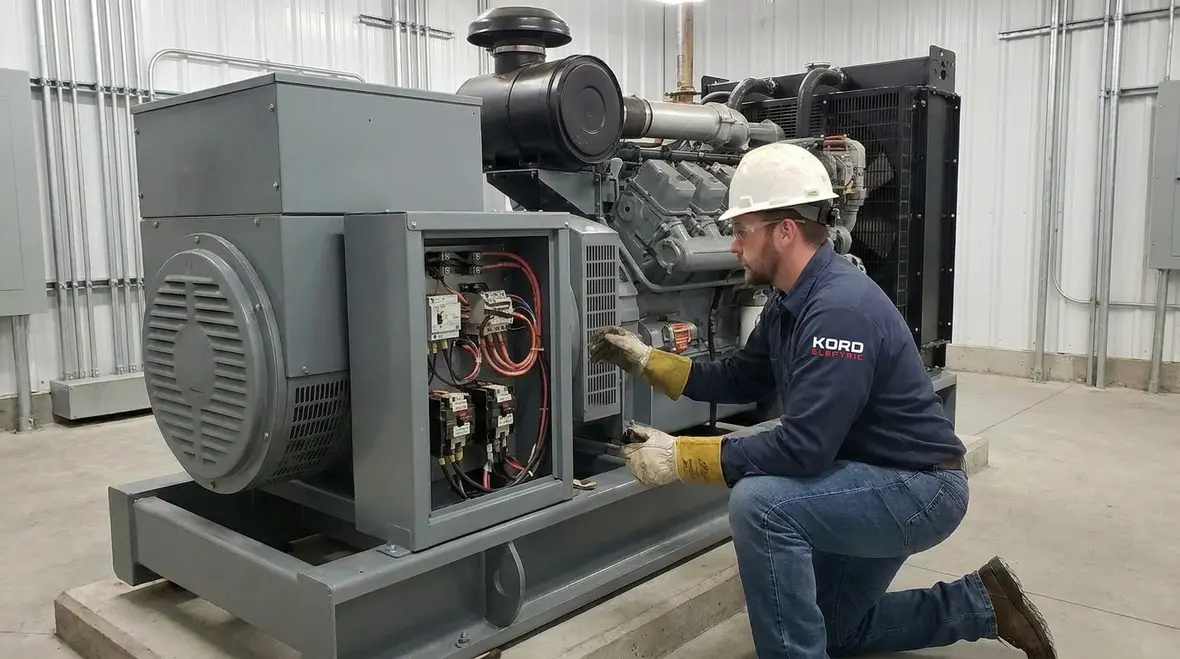
Reliable emergency power starts with load analysis and transfer design
To get results, we start deeper than many teams do. We do not just pick a generator and call it a day. Instead, we analyze real load profiles, including connected equipment that may not seem important until it stops. For example, a conveyor motor may look simple, yet it can draw heavy startup current. Similarly, building controls and ventilation fans may cycle based on sensors, and that changes demand during an outage.
From there, we design the transfer process. A transfer switch must move loads smoothly and on time. If transfer is slow, certain systems can reboot repeatedly, which increases wear and creates confusion. If transfer is too aggressive, it can cause nuisance trips. Therefore, we model the sequence so essential systems come online in the right order.
Our expert service staff also pays attention to power quality. Voltage drops, frequency stability, and harmonics can matter when you run sensitive controls. We aim to deliver emergency power that behaves like stable utility power. So even during an outage, critical equipment can keep doing its job without turning the facility into a blinking light show.
And if a facility has complex panels or multiple zones, we plan how loads group together. That reduces the chance of overloading the system and gives operators a clearer view of what is running, and why.
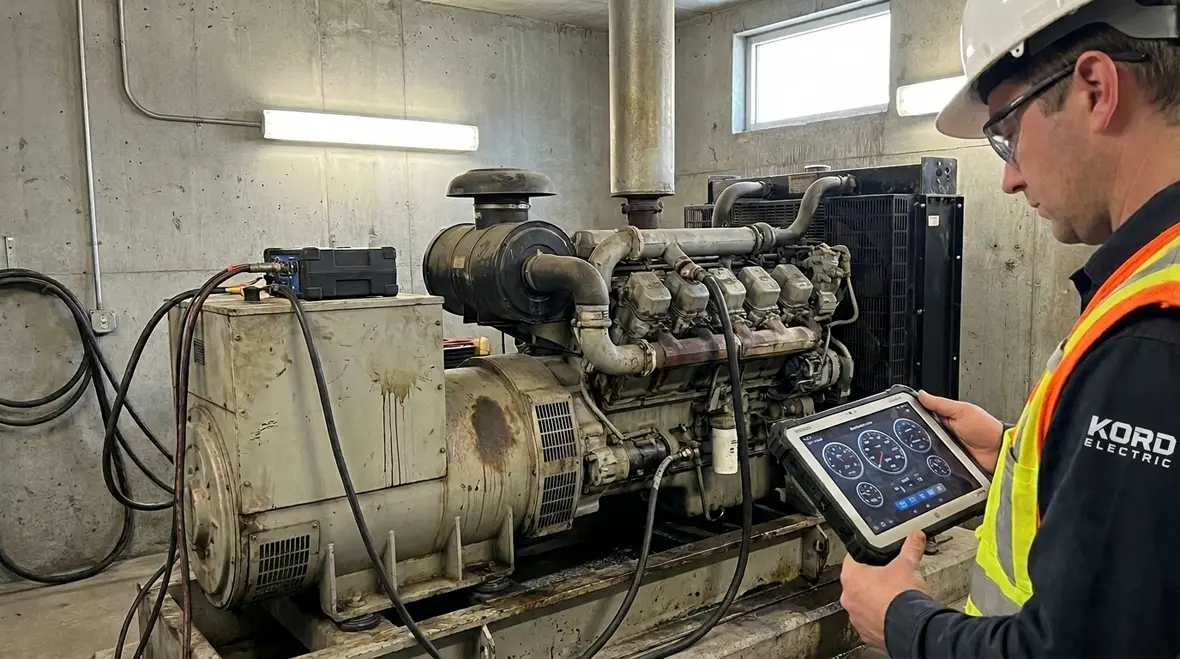
Backup power systems that actually perform under real conditions
Many systems look good during inspection. Yet performance depends on the details once conditions get tough. We ensure that industrial emergency power solutions fit the environment of the facility, not the fantasy version of it. First, we review ventilation and exhaust requirements for generator rooms or enclosures, because heat and airflow affect safe operation. Next, we evaluate fuel supply design, since runtime matters more than people think. Then we consider start reliability, including battery capacity, charger health, and control logic.
We also plan for the moments right after transfer. A generator must handle sudden load steps. If multiple motors start together, the system needs enough capacity and control settings to avoid unstable operation. Therefore, we coordinate control timing and load steps to match system capability. In other words, we design the “after the outage” behavior, not just the “during inspection” behavior.
Our technicians then verify installation quality and commissioning results. We test load transfer sequences, confirm sensor inputs, and check that protective devices behave as expected. Most importantly, we document settings and provide operational guidance. So when a facility manager hears “it should work,” we help them move to “we know it will work.”
Oh, and we hear it all the time: “We thought the generator would handle it.” Sure. Like a superhero handling a ten story fall in flip flops. It can work, but only if it is engineered for the real weight.
Testing, maintenance, and safety procedures that prevent surprises
Emergency power is not a set it and forget it system. It is a living asset that requires disciplined care. We help commercial and industrial sites build a maintenance rhythm that catches issues early. For example, we schedule periodic testing of transfer switches and generator performance under controlled conditions. We also inspect connections, control panels, protective relays, and alarms.
Then we focus on the practical part: fuel health, lubricants, cooling systems, and battery maintenance. Fuel systems degrade over time. So we ensure correct storage practices, filtering, and monitoring. Likewise, batteries can weaken quietly, and that is the kind of “quiet failure” that turns a routine outage into a crisis.
Additionally, we help facilities run clear safety procedures. Our expert service staff explains how alarms should be interpreted and who should respond. We also help define responsibilities so maintenance teams and operations staff do not blame each other while the building is running on backup. Transition words matter here because the process needs flow: we assess, we correct, we retest, and we record. That continuity builds confidence.
Because in a real emergency, time is short and nerves are high. When the procedure is clear and the system is verified, the response becomes calm and controlled.
Smart documentation and training for operators and maintenance teams
Equipment alone does not keep a facility safe. People do. So we make sure your staff can operate and troubleshoot emergency power systems with confidence. We provide commissioning reports, system one line documentation, and clear operating instructions. We also offer training sessions where our technicians walk through what the system does during normal operation and during transfer.
Next, we discuss what happens when certain signals appear. For instance, what does a low fuel warning mean, and what action should follow? What do specific alarms indicate, and which team should receive the alert? Then we make sure your teams know where to look first, because the first action saves time.
We also help coordinate with existing facility practices. If your building uses a maintenance management system, we align service schedules with your workflows. That way, the emergency power program stays integrated with the rest of the facility operations plan.
Meanwhile, our expert service staff explains the reasoning behind key settings, not just the settings themselves. Therefore, operators can make smart decisions during abnormal events. And when questions come up, they get answered by people who actually installed and verified the system, not just someone reading a manual like it is bedtime stories.
Why Kord Electric delivers a safer backup power plan for major properties
Commercial and industrial facilities face higher stakes than most. Critical systems, tight schedules, and complex loads demand careful engineering and strong execution. Kord Electric supports major property buildings by combining planning, installation, commissioning, and service under one consistent standard.
First, we listen to the facility goals and constraints. Then we design an emergency power approach that matches the site. After that, we build with quality and verify performance. Finally, we provide ongoing service to keep the system reliable as the facility changes.
We also respect that downtime is expensive and inconvenient. So we plan work to reduce disruption. We coordinate with facility teams, schedule testing windows, and keep communication clear. As a result, projects progress without turning your facility into a construction site reality show.
If you have ever wondered whether your current emergency power plan would hold up, we can help you find out. And if you have ever heard “it should be fine,” we prefer evidence. We prefer safety backed by verified performance. For facilities that want an even deeper dive into outage risks, our team also shares insights from related topics such as emergency power failures in commercial buildings and practical preventive maintenance planning.
FAQ
Ready to protect your facility with dependable emergency power?
If your building cannot afford downtime, it deserves an emergency power plan backed by real verification. Kord Electric helps commercial and industrial facilities with industrial emergency power solutions that stay reliable during outages. Contact us to review your essential loads, transfer design, and maintenance approach. Then our technicians explain the next steps in plain language and provide a clear path to stronger safety and uptime. Let us help you replace uncertainty with confidence. Reach out today and keep your lights steady when it matters most.
For factories and large properties across the region, pairing these solutions with dedicated regional support such as Los Angeles County electrical services gives your team a single, trusted partner for emergency response, preventive maintenance, and long-term electrical planning.
If you want to go even further with proactive reliability, Kord Electric also supports services like structured electrical preventive maintenance and focused troubleshooting for factories so your power system behaves like the stable, well-documented asset it should be.
Take the next step toward calmer outages and stronger uptime
When you combine disciplined design, realistic testing, clear documentation, and trained operators, emergency power stops feeling like a gamble and starts behaving like a quiet, dependable tool. That is the standard we bring to every project, from single buildings to multi-site industrial operations.