Commercial EV Charger Load Management Guide
At Kord Electric, we help commercial and industrial facilities scale EV charging without turning your electrical system into a live science experiment. That is where commercial ev charger load management comes in. We design and deploy smarter charging so multiple vehicles can charge at the same time while the site stays within its available power. Then, our electricians and expert service staff explain what the system does, why it matters, and how it protects your budget from surprise upgrades. In other words, we manage the “everyone plugs in at once” moment, so it does not become “everyone waits and complains” later.
What load management does for commercial EV charging
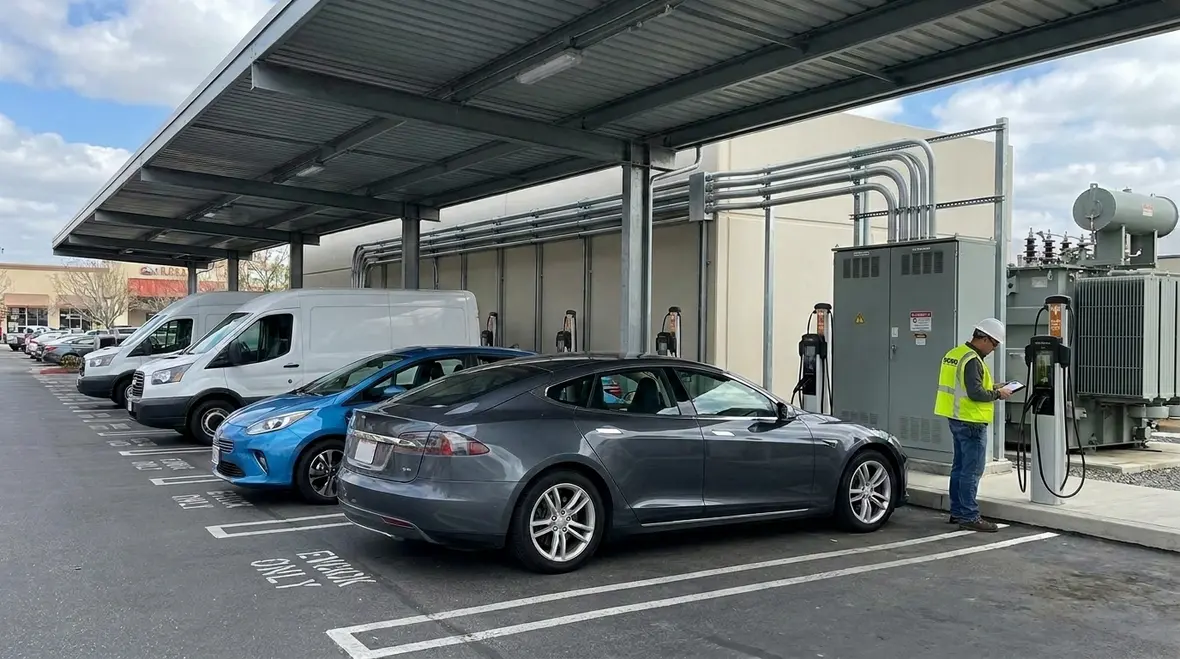
In plain terms, commercial EV charging load management prevents your charging equipment from pulling more power than your site can handle. When several chargers operate together, each one could request a high amount of electricity, especially during peak hours. However, most facilities have a limited service size, aging panels, or demand charges tied to real usage. Therefore, load management systems share available capacity across chargers.
Instead of all stations charging at full power all the time, the system assigns power based on real time conditions. It monitors demand and then adjusts charger output so charging continues while staying within limits. As a result, you reduce the risk of tripping breakers, overloading feeders, or triggering costly utility events. And yes, it avoids the corporate version of yelling at a group chat: “Stop plugging in everything at once!”
Capacity planning for scaling without buying new infrastructure
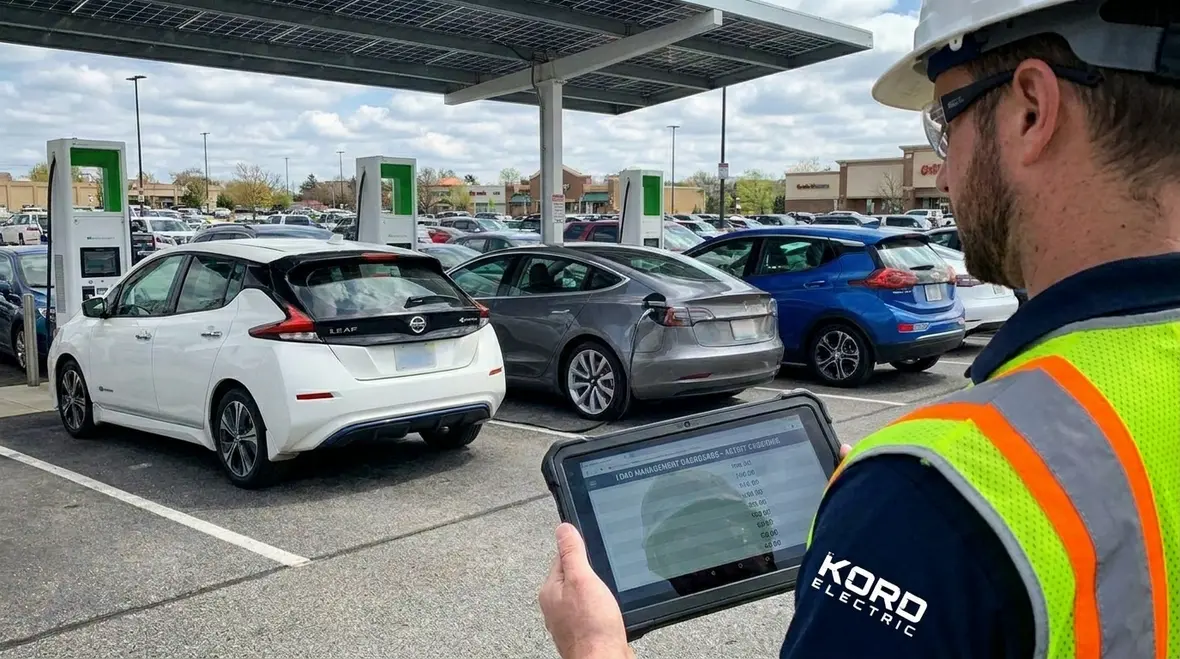
Scaling works best when it starts with honest math and field reality. Our process begins with evaluating the facility’s electrical setup: service size, transformer capacity, panel load, existing circuits, and how the site actually behaves during the day. Then we look at the charging pattern. Who arrives first, who stays longest, and how often vehicles return? A workplace with predictable shift schedules acts differently than a retail property with foot traffic and demand spikes.
Next, we build a charging plan that matches those patterns. For example, if a fleet returns in the evening, we may allocate more capacity during that window. If visitors arrive throughout the day, we distribute charging in a way that prevents sudden demand spikes. That is how commercial EV charger load management stays practical instead of theoretical. It also helps facility owners avoid oversized installations that sit idle and collect dust like last year’s holiday decorations.
For properties where EV charging is one part of a broader reliability strategy, many facility teams also review how Kord Electric handles voltage fluctuations in commercial and industrial facilities to keep sensitive equipment stable as loads grow and shift across the site.
How load management systems balance power across multiple chargers
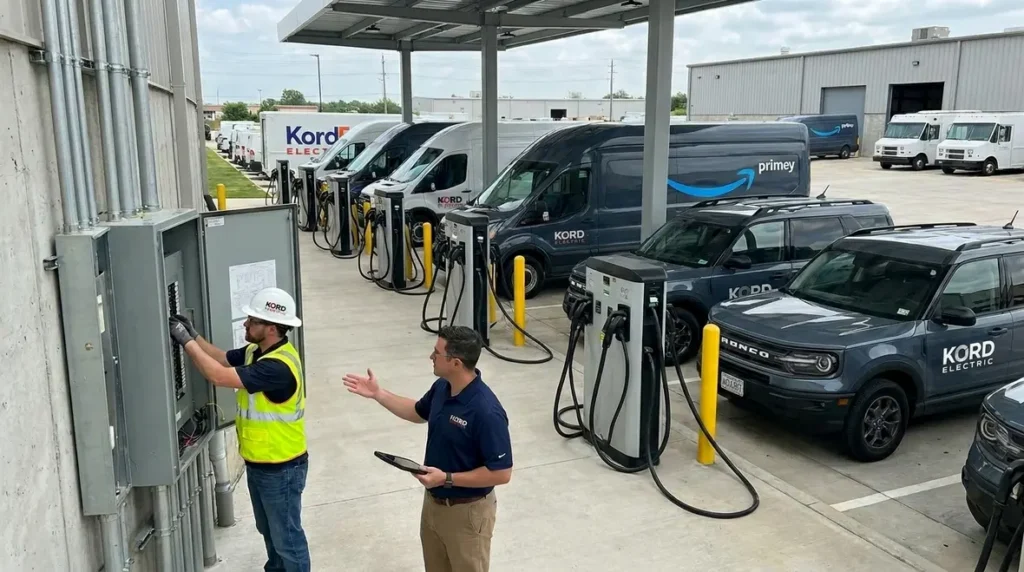
A load management system works through communication and control between the chargers and the site’s power data. Often, it uses a master controller that reads current or demand and then sends limits to each charger. Consequently, each unit can reduce or increase its output to match the shared cap.
In practice, this can work in several ways. One approach limits total site load, ensuring the chargers stay under a set maximum. Another approach balances power based on priority rules, such as giving more power to the vehicle that will depart first. Some systems also account for time based behavior, like reducing output during peak utility periods.
To keep this easy, our technicians explain the logic in plain language during commissioning. They also confirm the settings with you, because configuration should reflect how your operation runs, not how we wish it ran in a fantasy spreadsheet. When someone asks, “Why is that charger running slower right now?” our team can point to the load distribution settings and show the reason.
Demand charges, peak limits, and why utilities care
Many commercial and industrial facilities pay more than a flat energy rate. Utilities can add demand charges based on peak power draw. Therefore, a site that charges EVs without control may create new demand peaks. Those peaks can appear at the same time multiple vehicles plug in, especially in the first hour of charging.
With load management, we help smooth the site’s electrical demand. The system avoids sudden surges by reducing charger output when other loads already run near capacity. Even if the total energy used stays similar, the peak moments can shrink. That is important because utilities often price peaks, not just consumption.
Also, peak limiting supports compliance with electrical constraints. For example, certain buildings need to stay under a specific limit due to lease requirements or internal risk policies. Our expert service staff helps facilities map the charging plan to those limits, while still meeting practical charging needs.
When budgeting around these peaks, property managers often pair load management planning with dedicated cost breakdown resources, such as Kord Electric’s own commercial EV charging installation cost guide to understand how power, hardware, and utility behavior shape long term operating expenses.
Site safety and electrical protection at scale
Scaling chargers adds more devices to the electrical environment, so safety becomes non negotiable. Load management helps, but we also focus on the full electrical design: proper circuit sizing, correct breaker selection, safe conductor routing, and weather appropriate equipment for outdoor locations.
When the system reduces charger draw, it lowers stress on feeders and panels. That can prevent nuisance trips and reduce wear on components. At the same time, protection devices still must match the design. In other words, load management supports safety, but it never replaces sound electrical engineering.
Our team verifies installation details and performs checks that match the facility’s operating conditions. Then we train the right people on how to monitor charger behavior. So when a building manager sees changing charger speeds, they do not assume the charger is broken. They understand it is doing exactly what it was told to do, like a professional driver taking the long route to avoid a traffic jam you cannot see from the office.
For facilities that also depend on stable power quality for production equipment, data systems, or specialized machinery, this approach pairs well with targeted services such as voltage fluctuation diagnostics and repair, giving your power system both resilience and visibility as EV loads grow.
Implementation steps for commercial properties and industrial fleets
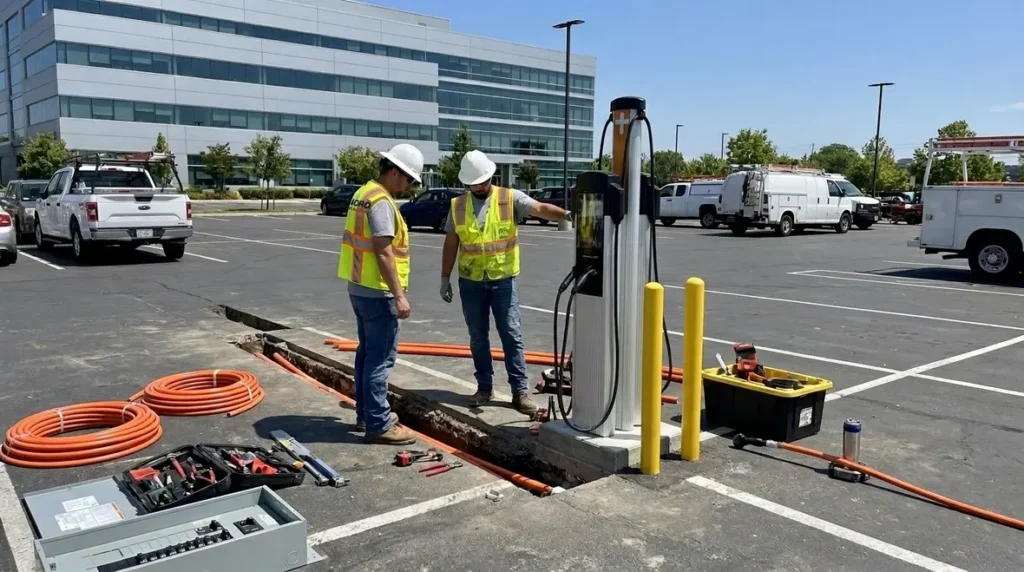
Rolling out charging across a commercial or industrial property should follow a clear path. First, Kord Electric performs a site assessment and collects electrical information. Second, we review your charging goals, including vehicle mix, dwell times, and any operational rules. Next, we design the system so the chargers and load management work together from day one.
Then we install the equipment and configure the control settings. This is where our technicians earn their keep, because setup needs to align with your service limits and utility behavior. After configuration, we test the system under real load scenarios. Finally, we provide documentation and training for your team, so you can monitor performance and respond quickly if anything changes.
For example, if a tenant adds vehicles or your fleet grows, we can adjust the charging allocation rules. That is the advantage of a controllable approach: scaling stays planned rather than chaotic. And just like upgrading your phone plan, it is better when you do it with intention, not after the bills arrive and everyone suddenly becomes a finance expert overnight.
Many commercial and industrial operators layer this implementation roadmap with broader planning around EV adoption, referencing resources like Kord Electric’s EV charging infrastructure scalability guide for commercial sites to make sure today’s project decisions support the next phase of demand.
Dual column overview of key choices
Decision area |
What we do with it |
Available service capacity |
We set a shared power limit and configure charger behavior around it. |
Charging schedules |
We align power allocation to dwell times and peak arrival patterns. |
Fleet priorities |
We enable priority rules so the right vehicle gets the right power. |
Utility peak risk |
We reduce sudden demand spikes by smoothing charger output. |
Monitoring and support |
Our expert service staff helps you interpret events and keep uptime high. |
FAQ for commercial EV charger load management
Conclusion: plan the next phase with Kord Electric
Scaling commercial charging should feel steady, not stressful. With Kord Electric, we design and install systems that coordinate power across chargers, reduce peak risk, and protect your site’s electrical limits. Our technicians and expert service staff explain settings clearly, then test everything before you open the doors. If you are expanding a fleet, upgrading a property, or adding new chargers this year, contact us. Let us build a plan that works now and still holds up when demand grows.
If your facility operates across Southern California, especially in and around Los Angeles, you can also connect this planning with regional expertise by reviewing Kord Electric’s dedicated Los Angeles County electrical services for comprehensive commercial electrical support alongside your EV charging roadmap.
For commercial and industrial properties ready to move from ideas to construction, Kord Electric’s commercial EV charger installation services bring together design, permitting, installation, and commissioning so your commercial ev charger load management strategy is built into the project from the first walkthrough to the final test charge.