Industrial Power Quality Audit for Reliable Production
Kord Electric steps into your facility with a clear goal: we improve industrial operations by running a professional industrial power quality audit that pinpoints the real causes of downtime, overheating, nuisance trips, and wasted energy. Within the first inspection days, our team maps what the utility delivers, what your loads do, and where the mismatch turns into lost production. And yes, we speak plainly. Our technicians explain findings the way a good coach breaks down film, not like a textbook that fell asleep halfway through chapter three.
In this article, we explain how a power quality assessment actually works for commercial and industrial facilities and major property buildings, why it matters for motors, drives, and controls, and how others teams use the results to fix problems that keep coming back.
What is an industrial power quality audit and why it matters
When a facility “has power issues,” the trouble is often more specific than people think. Your equipment may not be failing randomly. Instead, the electrical environment may be quietly stressing it. A industrial power quality audit measures key power characteristics and ties them to system behavior. Then we recommend practical corrective steps that fit your operation, not just a perfect lab setup.
We focus on measurable problems such as voltage sags that interrupt drives, harmonics that overheat transformers, unbalance that damages motors, and transients that upset sensitive controls. Also, we look at how your distribution system routes current during normal and abnormal conditions. That connection matters because equipment rarely fails at the moment the waveform looks “bad.” It fails after repeated stress, like a Netflix binge that ends with poor decisions and a dead phone battery.
How Kord Electric technicians evaluate power quality in the field
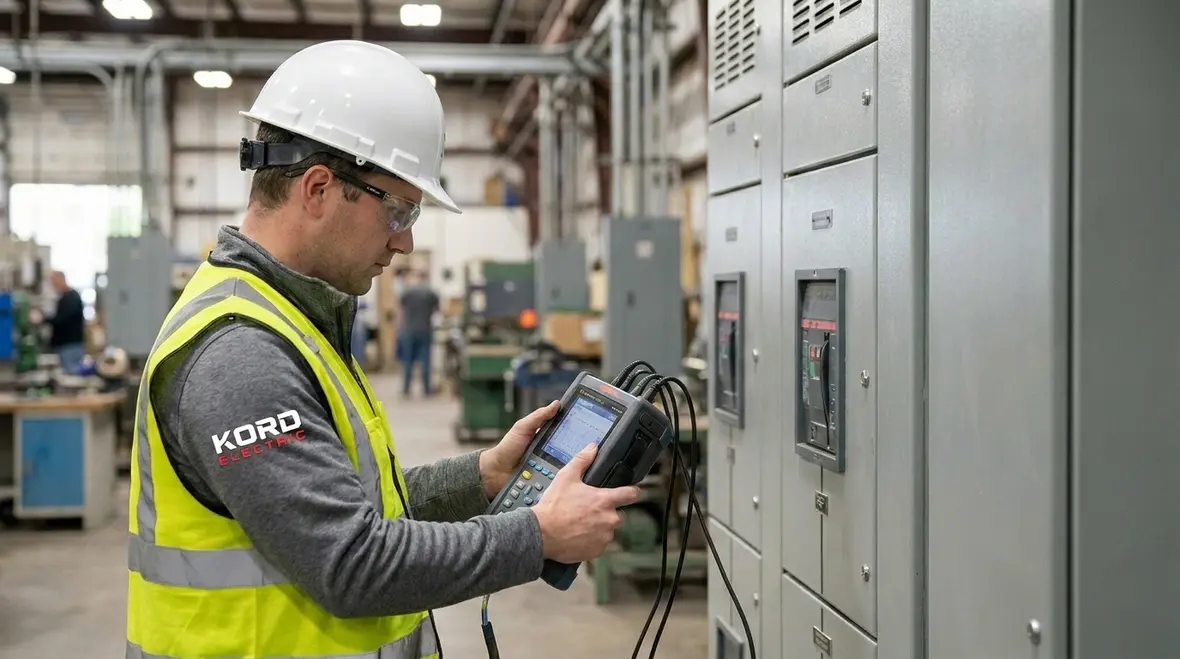
Our expert service staff does not rely on guesswork or “it seems fine” troubleshooting. We start by reviewing your one line diagrams, protection settings, motor lists, drive types, UPS usage, and any recent alarms or maintenance records. Then, we compare that information with what we measure on site.
During the audit, our technicians typically capture data for voltage and current over time, including:
- Voltage magnitude variations, including sags and swells
- Harmonic distortion levels from drives, rectifiers, and nonlinear loads
- Phase voltage and current unbalance that stresses motor windings
- Frequency stability and event transients that can disrupt controls
- Load profiles so we can correlate electrical events with operating modes
Next, we verify where problems originate by tracing them through your distribution network. For instance, a harmonic “hot spot” may start at a specific MCC or VFD lineup, then travel into feeders and panels. Likewise, an unbalance issue may show up during shift changes when certain process lines start together. And when we find a pattern, we say so. We do not hide behind vague language. Our technicians explain the why, not just the what.
Where power problems hide inside commercial and industrial systems
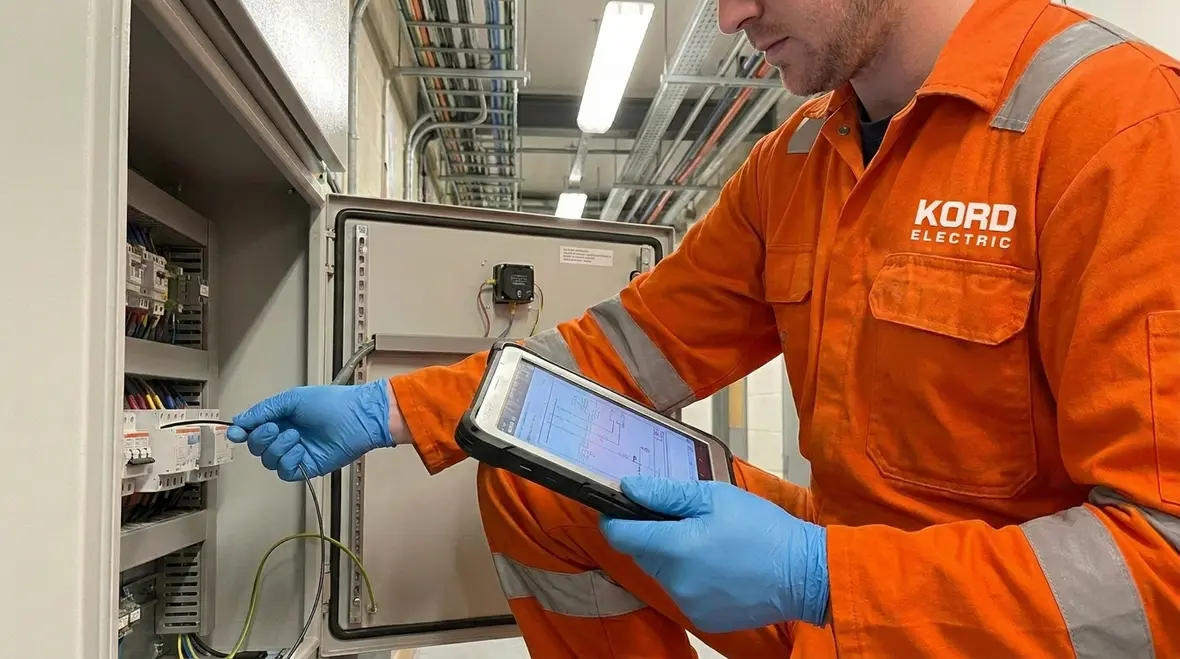
Many facilities blame the utility because it “supplies the power.” That can be true, but it is not always the full story. Problems can also hide inside your own wiring, equipment, or operating schedule. Others teams sometimes swap parts first and measure later. We prefer the opposite: we measure first so we do not waste your budget on a guess.
Here are common places where quality issues form in major property buildings and industrial plants:
- Motor starting and switching events that cause voltage dips, especially on large drives and compressors
- Variable frequency drives and rectifiers that inject harmonics into the system
- Loose terminations and worn connections that create intermittent voltage drops and heat
- Overloaded neutrals in systems with unbalanced nonlinear loads
- UPS and transfer switches that create ride through behavior which can mask or shift issues
Then, we translate these electrical behaviors into operational impact. For example, harmonic distortion can overheat transformer insulation, while voltage sags can cause nuisance resets in PLC systems. Unbalance can quietly reduce motor efficiency and increase bearing wear. In other words, the electrical problem is not just a waveform. It is a cost center.
Which issues show up most often during a professional assessment
Across industrial sites and large commercial facilities, we frequently see a few repeat offenders. The goal of the audit is to confirm which ones affect your system, and how severe each issue really is. Because “we have harmonics” is like saying “we have weather.” Great. Now, is it a light drizzle or a tornado?
We commonly identify:
- Voltage sags and interruptions that correlate with start events, feeder switching, or upstream constraints
- Harmonic distortion from drives, power supplies, and charging systems, which can increase losses and nuisance tripping
- Phase unbalance that stresses motors and causes inconsistent process speed or torque
- Transient overvoltages from switching and lightning events that reduce component life
- Neutral issues that show up as overheating in panels and cables
After we capture the data, our team builds a clear picture of what happens before, during, and after each event. Also, we connect the results to equipment settings such as relay curves and drive fault thresholds. This step matters because an issue can exist without triggering alarms until a specific production schedule pushes it over the edge.
How we turn findings into action that protects production
Measurement is useful, but the real value is the plan. Kord Electric uses the results of the industrial power quality audit to propose improvements that match your facility constraints, your operating windows, and your risk tolerance. We do not sell “random upgrades.” We design solutions that target the measured cause.
Depending on what the assessment shows, our expert service staff may recommend:
- Corrective equipment changes for sag and interruption mitigation, such as ride through strategies or improved protection coordination
- Harmonic reduction steps like filters, detuning strategies, or system design adjustments for drive-heavy environments
- Power factor and load balancing improvements to reduce stress and improve efficiency
- Neutral management upgrades where unbalanced nonlinear loads overheat conductors
- Switching and grounding review to reduce transients and stabilize control power
- Maintenance actions for terminations, bus connections, and thermal hotspots
Then we help others move from recommendations to execution. If outages must be minimized, we schedule work around production. If long lead items exist, we propose interim steps that still lower risk. In short, we treat your electrical system like a production asset, because it is. And if your power quality has been “good enough” for months, we will gently explain that “good enough” is how you end up with a surprise shutdown on a Friday afternoon. Nobody wants that sequel.
What results and deliverables you should expect
A solid audit includes more than charts. We deliver clear documentation that your maintenance, engineering, and leadership teams can use. First, we provide a summary of observed power quality events and steady state conditions. Then we include analysis showing likely sources and the equipment most at risk.
Our deliverables commonly include:
- Measured waveforms and event logs, with time stamps tied to operations
- Harmonic and unbalance metrics expressed in practical terms for facility stakeholders
- Root cause hypotheses supported by your one line and operating history
- Recommended corrective actions with priority levels and estimated impact
- Suggested monitoring points so you can verify improvements after changes
Also, we make sure the technical story translates into business outcomes. We explain how each improvement reduces the chances of drive faults, nuisance trips, motor overheating, and control resets. Finally, we help you plan next steps, whether that means immediate maintenance or a phased improvement roadmap.
FAQ
Why facilities choose Kord Electric for power quality
Our approach stays grounded in measurement, clear explanations, and solutions that fit commercial and industrial operations. We focus on major property buildings and industrial facilities where reliability matters and power quality issues can turn into real losses. Our technicians treat your system with respect, and our expert service staff communicates findings in a way that helps others make decisions fast.
And yes, we keep the process calm. Even if your facility feels like it runs on coffee and hope, we bring structure. Then we build a plan that reduces risk, improves performance, and helps your equipment last longer. That is not magic. It is good engineering with a dash of “let’s not repeat last month’s shutdown.”
If you are responsible for factories or large commercial properties in and around Los Angeles, pairing an industrial power quality audit with dedicated regional support such as Los Angeles County electrical services helps align findings with the real-world demands of your production schedule, shift work, and local utility behavior.
Ready to protect your production with an audit?
If your facility experiences nuisance trips, overheating, unexplained resets, or frequent drive and control faults, act before the next event makes the schedule expensive. Kord Electric can run a professional industrial power quality audit and deliver a clear, usable action plan. Contact us to review your system, discuss your operating cycles, and schedule measurements at the right points. We will explain findings in plain business language, then help you move to fixes that protect uptime.
For facilities that also want structured troubleshooting support and preventive strategies beyond a single audit, consider pairing your power quality work with services aligned to broader reliability goals, such as those outlined in Kord Electric’s industrial and commercial electrical maintenance and regional service offerings across Los Angeles County.