Emergency Lighting Battery Maintenance Guide
Emergency Lighting Battery Maintenance starts with a habit, not a hope
At Kord Electric, we know this scene: a power outage hits, people look at exit signs, and everyone suddenly remembers the building code they ignored last year. That is exactly why Emergency Lighting Battery Maintenance must happen on schedule. Our team of skilled technicians, and our expert service staff, help facility managers and electrical supervisors test, document, and maintain emergency lighting batteries so the system performs when it matters most. In other words, we keep the “walk to safety” part of your plan from turning into a dark comedy.
Some people test only when they see a problem. Others wait for an audit. However, preventative care works better. It finds weak cells early, reduces surprise failures, and helps protect people and operations at commercial and industrial facilities, plus major property buildings.
Why emergency lighting batteries fail when you least want them to
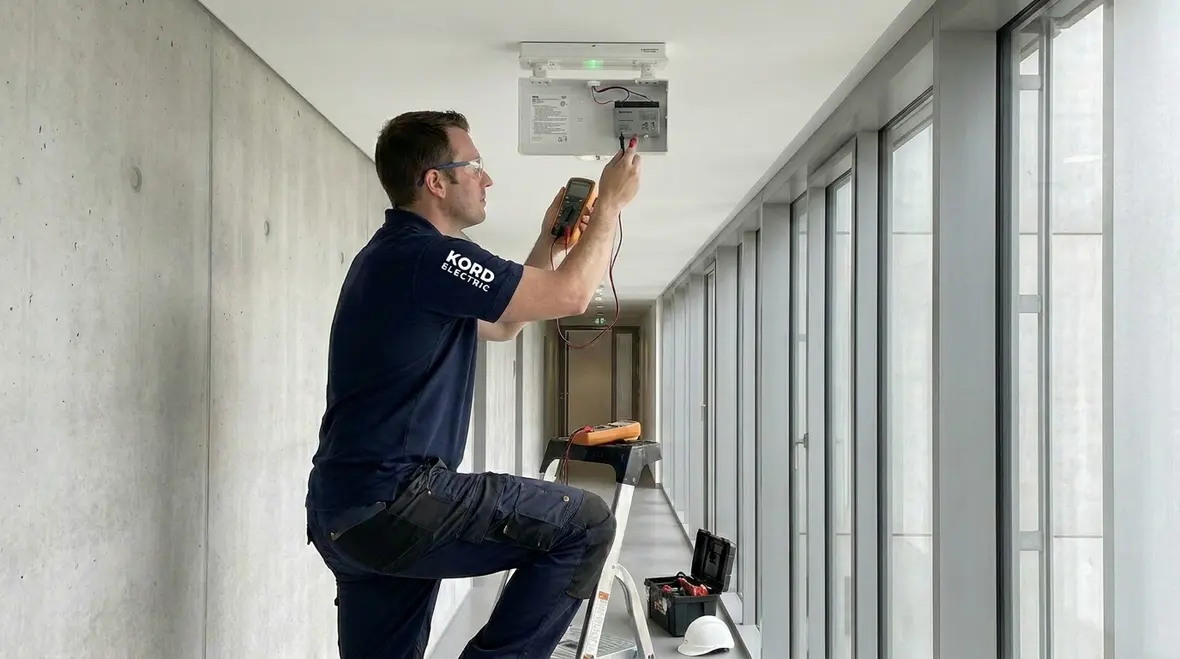
Emergency lighting batteries do not break like a light switch. Instead, they age slowly, and they lose capacity in ways that can look normal until the moment you need full runtime. Over time, heat, vibration, and frequent charge cycles strain battery chemistry. Then, even if the system powers up during a test, it may not deliver enough output under real outage conditions.
In facilities that serve staff, tenants, patients, customers, or the public, that gap is not a minor inconvenience. It becomes a safety risk. And while some owners think they can “just replace them when the signs go,” that approach costs more and often creates longer downtime.
Our technicians explain it clearly: battery performance depends on how well it is charged, monitored, and verified. That is why preventative care centers on testing, not guessing.
Preventative care testing reduces risk and downtime
When others plan maintenance like they plan vacations, they schedule it after something goes wrong. We recommend the opposite. A strong testing plan helps you spot reduced capacity before it fails during a real utility outage. It also reduces unexpected service calls that disrupt operations.
Most importantly, preventative testing gives you a record. That record supports compliance and helps you answer the question auditors always ask: “What did you do, and when did you do it?” With documentation, your facility does not have to rely on memory or last minute screenshots.
Also, testing can reveal related issues. For example, if multiple fixtures show weak performance at the same time, it may point to charging equipment problems, wiring conditions, or thermal stress patterns. In those cases, Emergency Lighting Battery Maintenance becomes part of a larger reliability effort.

How we test batteries in real buildings, not in theory
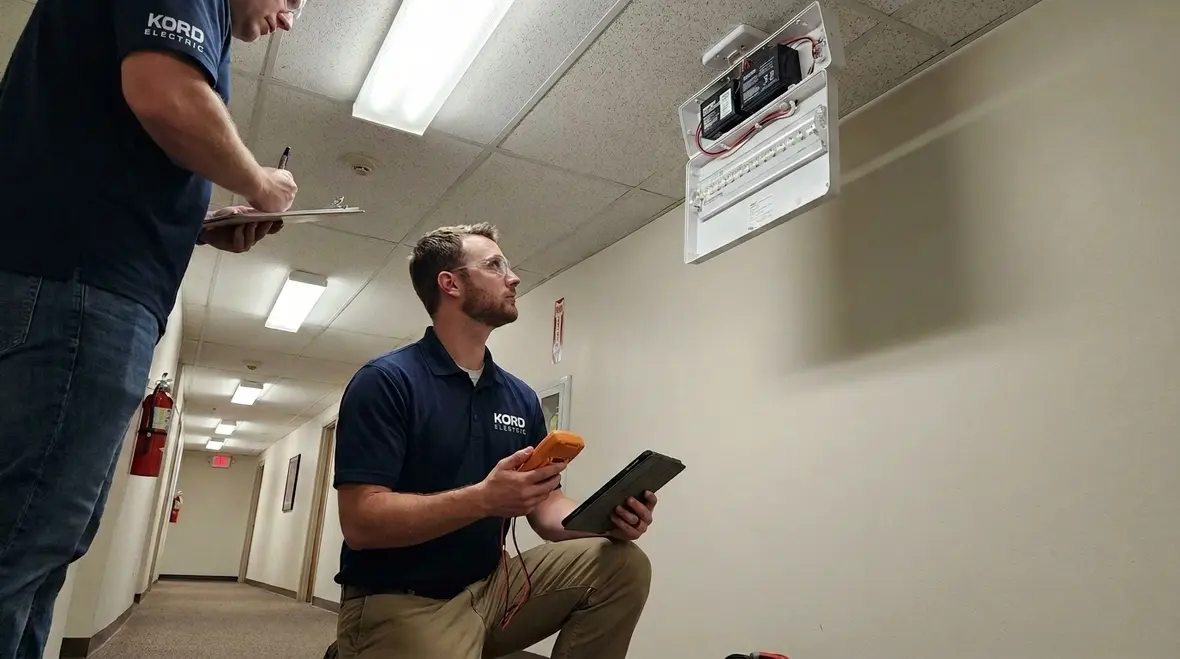
Our expert service staff follows a method that works in the places where people actually work. We tailor service to the building, the equipment type, and the way the facility operates. Then we verify performance using practical testing steps that do not interrupt normal operations more than needed.
Here is what our process focuses on, in clear terms:
- Scheduled runtime checks to confirm the system can deliver required emergency duration.
- Voltage and charge verification so batteries receive proper charging conditions.
- Fixture and output inspection to confirm the lighting path supports safe egress.
- Battery condition trending so aging issues show up early instead of suddenly.
- Clear reporting so maintenance teams and owners can make decisions with real data.
Then we talk through what we find. If a battery is nearing its end of life, we explain the tradeoffs and timing options. If the system shows signs of thermal stress, we recommend next steps. Our goal stays simple: keep the emergency system reliable, not “technically functional.” Because yes, sometimes a sign can light up and still fail the job when power disappears.

Reliability starts in design, and testing protects it
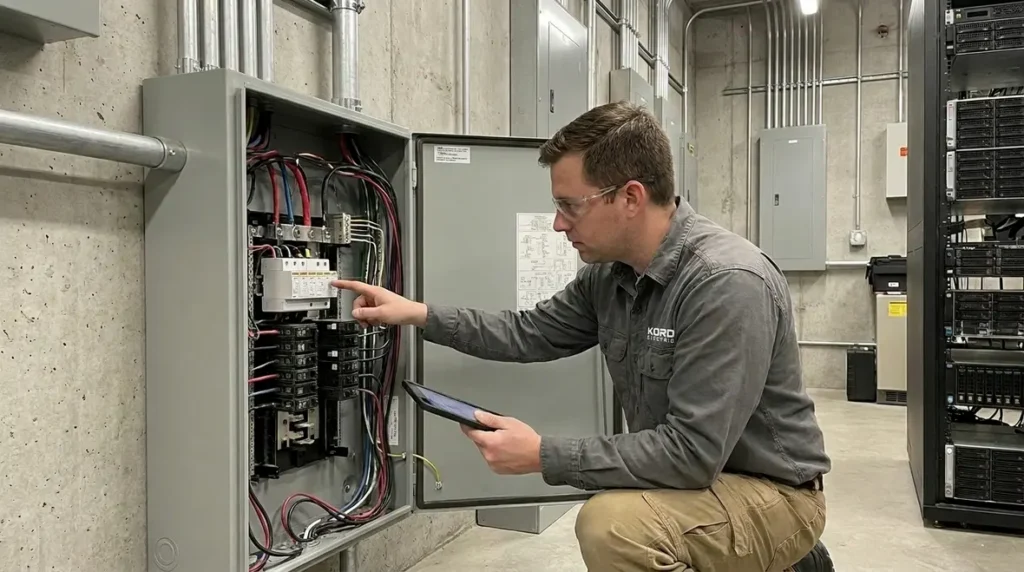
Strong emergency lighting performance depends on more than batteries. It also depends on how the building electrical distribution system supports critical loads. Kord Electric has discussed reliability-focused design for data center electrical distribution, and the same principles help major property buildings and commercial facilities keep critical systems dependable. For a deeper dive into those concepts, you can explore our article on data center electrical distribution design for reliability, which shows how selective coordination and thoughtful load management support long term performance.
When distribution systems use coordinated protection, stable power paths, and thoughtful load management, they reduce the stress that shortens equipment life. However, even the best design cannot stop aging forever. That is why testing stays essential.
So we support a practical reliability approach: design matters, operations matter, and Emergency Lighting Battery Maintenance closes the gap between engineered intent and real-world performance.
In a reliable setup, emergency lighting batteries receive consistent charging. Additionally, controls and wiring support predictable behavior. Therefore, when we test, we get accurate feedback rather than misleading results.
What owners should track between tests
Testing provides key data, but owners and operations teams also affect battery life. We tell facility managers to track the signals that often show up before a failure. Some of these are easy, and some require a short checklist, but they help prevent problems from growing quietly.
Consider tracking these items:
- Temperature conditions around battery cabinets and fixture compartments.
- Frequent nuisance alarms that suggest charging or control issues.
- Changes in building use such as new equipment heat load or altered occupancy patterns.
- Maintenance history for related emergency power components, not just the batteries.
- Recent electrical work like panel upgrades or lighting retrofits that may impact circuits.
Then, when others call for service, we can connect the dots faster. And once the pattern is clear, we can improve outcomes. That is how preventative care becomes a system, not a one-time event.
Common mistakes we see during inspections
Even good teams make honest mistakes, especially when schedules get tight. Our technicians often see repeating themes during audits, and we address them directly.
- Testing too late, which hides capacity loss until it is too late.
- Testing only what looks easiest instead of verifying the full emergency lighting layout.
- Skipping documentation or using vague notes that cannot support compliance.
- Ignoring correlated symptoms like simultaneous fixture issues across the same area.
- Assuming “the battery is new so it is fine”, even though heat and charge conditions still affect performance.
Here is the playful truth: batteries do not care about your optimism. They care about chemistry, temperature, and charge stability. And they will always show their feelings at the worst time, like a pop quiz after a long meeting.
By contrast, our approach makes testing predictable and measurable. That keeps owners in control and helps facilities avoid last-minute surprises.
FAQ: Emergency lighting battery maintenance for commercial and industrial buildings
Ready to keep emergency lighting dependable?
If your building depends on safe egress, then preventative care should not be a last minute scramble. Kord Electric helps commercial and industrial facilities and major property buildings plan and perform reliable Emergency Lighting Battery Maintenance with clear testing, practical recommendations, and expert documentation. Our technicians explain results in plain language and help you act before capacity drops.
For sites that also need broader electrical support, especially in and around Los Angeles, our team provides dedicated regional coverage through our Los Angeles County electrical services, so critical systems stay reliable long after the first maintenance visit.
Call us to schedule a maintenance review and set a testing plan that keeps your emergency lighting ready when power goes away, and to connect your Emergency Lighting Battery Maintenance program with the rest of your electrical reliability strategy.