Industrial Lighting Sensor Upgrades for Efficiency
Kord Electric helps commercial and industrial facilities move past basic LED installs with Industrial Lighting Sensor Upgrades that cut wasted light and reduce energy use. In the real world, lights do not burn the same way all day. Rooms sit empty. Forklifts roam. Clouds roll in. And then the building does what buildings do best: it pays for it.
That is why our technicians and expert service staff focus on sensor driven controls that match how your property actually operates. As we explain on job sites, it is not about “more tech.” It is about smarter light management, the kind that feels calm, steady, and predictable. Like a good sitcom rerun, but with fewer surprises and lower bills.
How sensors reduce waste in commercial spaces
When Kord Electric installs controls, we treat lighting as a system, not a switch. Industrial Lighting Sensor Upgrades add a layer of awareness to your fixtures. Instead of running on a fixed schedule, the building reads conditions and responds.
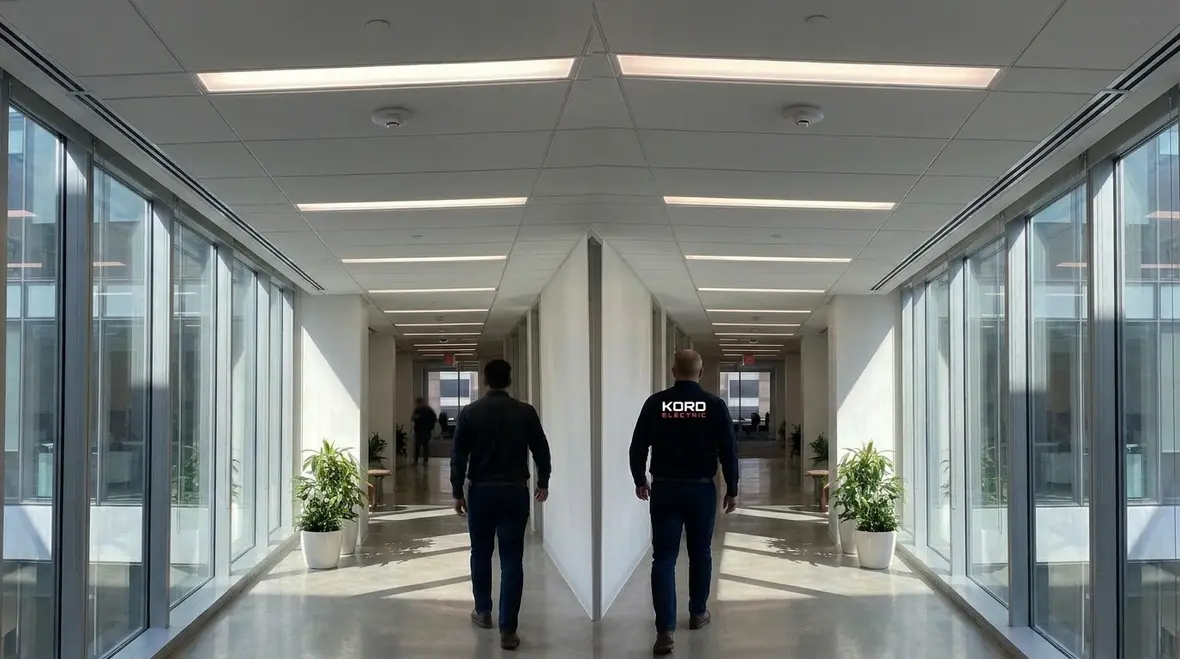
First, occupancy sensing prevents lighting from staying on long after the area clears. Next, daylight sensing dims or offsets artificial light when natural light enters the space. Then, we add time based logic so the lights behave with real occupancy patterns, not a generic template that was written by someone who never stepped into a warehouse.
In addition, sensors help keep output steady. When a facility sees uneven lighting levels, people tend to override controls. However, a well tuned sensor strategy often reduces those overrides. As our expert service staff tells property managers, when occupants can trust the lighting system, they stop fighting it.
Why energy efficiency improves beyond simple retrofit
Many teams focus only on fixture efficiency. That part matters, but it is not the whole story. A high efficiency lamp can still burn energy if it runs when no one needs it. Therefore, the upgrade must address behavior and timing.
With Industrial Lighting Sensor Upgrades in place, energy efficiency improves in three ways. First, the system shortens unnecessary run time through occupancy detection. Second, it uses daylight harvesting so fixtures run at lower levels when sunlight covers the space. Third, it keeps lighting closer to the task need, which helps maintain comfort without over lighting.
Then there is demand and operating stability. When lighting becomes smarter, facility teams can reduce peak demand and smooth load patterns. That can matter for commercial and industrial accounts where utility costs and demand charges carry weight.
And yes, there is humor in it too. A lighting system that turns itself down is like a superhero who shows up on time and refuses to overstay the welcome. The building stops acting like a guest who never leaves.
Voltage stability and sensor performance in industrial buildings
For sensor systems, voltage matters. When power quality shifts, controls can behave inconsistently, and dimming performance may drift. That is why Kord Electric stays focused on electrical conditions as well as lighting hardware.
We often reference the same practical topic we cover in our guide about voltage fluctuations in commercial and industrial facilities. In those situations, you can see flicker, equipment nuisance trips, or dimming modules that do not respond as expected. Instead of blaming the sensor, we verify the supply.
To help clients, our technicians check for signs of unstable voltage, transient events, and wiring issues that can affect control devices. If the electrical system swings, sensors may still trigger, but the lighting output can feel unreliable. Therefore, the upgrade plan should include power quality checks where needed.
Once the electrical baseline holds steady, the sensor upgrade performs as designed. Then the building gets the consistent dimming and switching behavior that staff can trust. And trust is the key word, because when the system performs, facility teams stop hunting for “ghost problems.”
Planning sensor placement for warehouses, offices, and plants
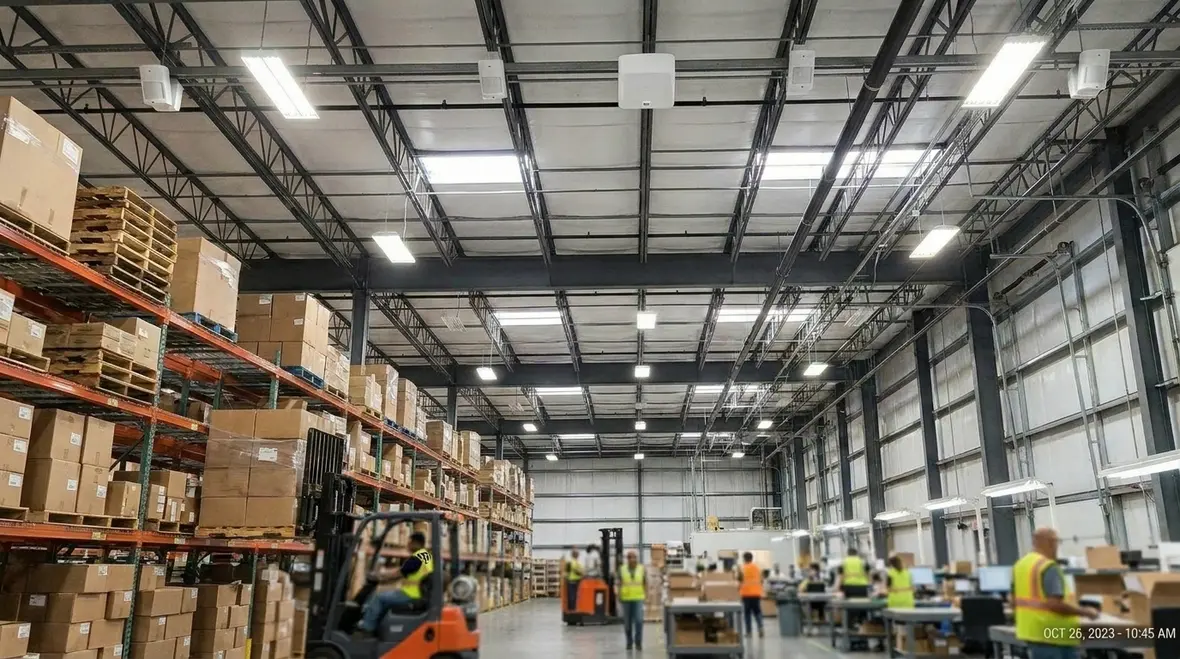
Correct placement decides whether sensor logic works or fails. Kord Electric approaches layout like a map of real movement and real tasks. For warehouses, we look at aisle geometry, bay spacing, and traffic patterns. For production areas, we focus on hot spots where activity changes quickly.
For office zones and major property building corridors, we aim to reduce nuisance motion while still catching presence fast. We also consider ceiling height, reflectivity, glare control needs, and whether machinery creates intermittent motion. Sensors can see, but they do not guess. If a sensor faces only empty air, it cannot manage occupancy well.
Then we coordinate with lighting design. If the space uses different fixture types or different light levels across zones, we separate those zones appropriately. In other words, the sensor does not try to control the entire building as if it is one big conference room. It respects the way the space actually behaves.
Our expert service staff also confirms settings with the people who run the space. For example, if a loading dock needs brighter light during certain operations, we can adjust control thresholds and time delays. That way the system supports the workflow instead of interrupting it.
Control strategies that keep comfort and cut costs
Sensor upgrades succeed when they balance comfort and savings. Kord Electric uses control strategies that prevent “light shock” and reduce stop and start behavior. That means we tune ramp rates, set sensible dimming floors, and define occupancy hold times that match human presence.
There are also practical rules for how people use space. In industrial buildings, staff do not move in perfect circles like a training video. They pause, walk, and return. Therefore, we set occupancy hold times and sensitivity levels so lights stay on during reasonable activity and then step down when work stops.
Daylight harvesting gets tuned as well. We aim to avoid over dimming, which can push staff to turn switches back up. Instead, we use gradual response and stable set points. As a result, the building maintains safe, comfortable light levels that support work quality and safety.
And of course, we keep it service friendly. Our technicians explain the logic clearly, so facility teams know what to expect. When people understand how controls behave, they stop treating the system like a mysterious black box. Even in pop culture, the best tech is the tech you can actually explain.
Commissioning and training that protect the upgrade long term
After installation, the job is not done. Kord Electric performs commissioning because the difference between “installed” and “working” can be huge. During commissioning, our technicians verify sensor response, test daylight response, confirm switching and dimming, and check how zones interact.
We also validate the lighting levels under real conditions. That means checking early morning, midday, and late afternoon where sunlight changes. If the facility has large skylights or high solar exposure, we plan for how those shifts affect daylight harvesting.
Then we document the settings. This matters for long term operations, especially for major property buildings with multiple tenants or shifts. Our expert service staff shares the basics with the people who manage the property. They show how controls respond, what adjustments are safe, and how to recognize when something changes due to layout or occupancy patterns.
In short, we make sure your sensor upgrade lasts. Like a good plan, it holds up after the hype fades. Unlike some gadgets that die after the return window closes, this system stays reliable.
Featured FAQ: Industrial lighting sensor upgrades for efficiency
Quick comparison
Without sensors lights follow schedules or manual switches, so they often run in empty areas.
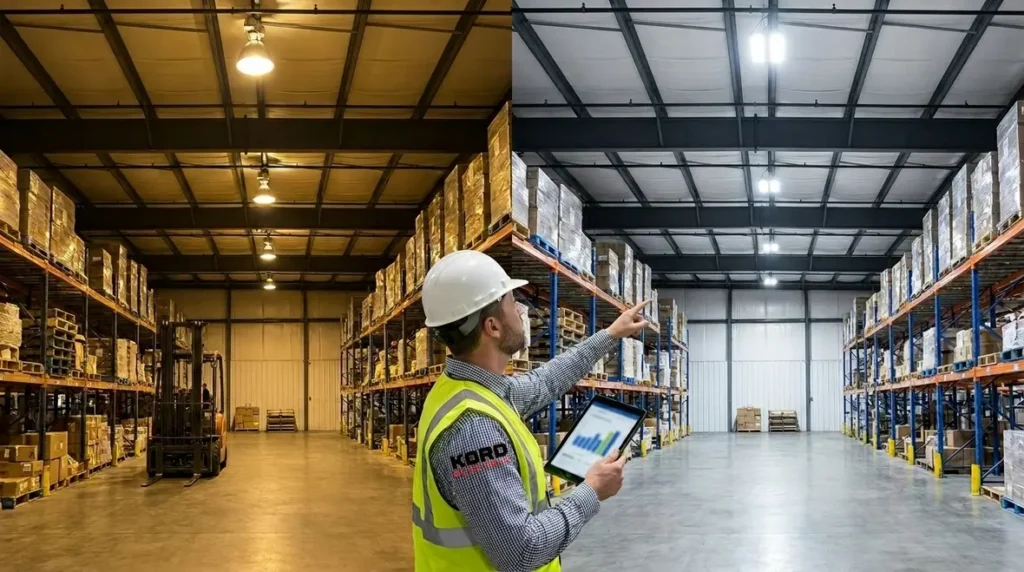
With Industrial Lighting Sensor Upgrades lights respond to presence and daylight, so they dim or switch off when spaces do not need full output.
Take the next step with Kord Electric
If your facility still pays for light when no one needs it, Kord Electric can help with a practical sensor driven upgrade plan built for commercial and industrial buildings. Our technicians and expert service staff assess layout, tune controls, and commission the system so it performs reliably. In addition, we consider electrical stability so sensors dim and switch as they should. Schedule a consultation with us today, and let us turn your lighting from guesswork into steady, measurable efficiency.
For facilities planning broader electrical work alongside controls, our team can align sensor upgrades with services like automated lighting control and industrial lighting layout optimization for production efficiency, creating one coordinated project instead of scattered changes.
If your operation runs in and around Southern California, pairing Industrial Lighting Sensor Upgrades with regional support such as Los Angeles County electrical services gives your facility a partner that understands local grid conditions, code expectations, and industrial timelines.
When you are ready to move from idea to implementation, Kord Electric can also connect your sensor upgrades with structured preventive programs like electrical preventive maintenance for commercial and industrial facilities, so the same team that installs your controls helps keep them performing year after year.