Commercial Electrical Troubleshooting Best Practices
Common Commercial Electrical Issues: What We Check First
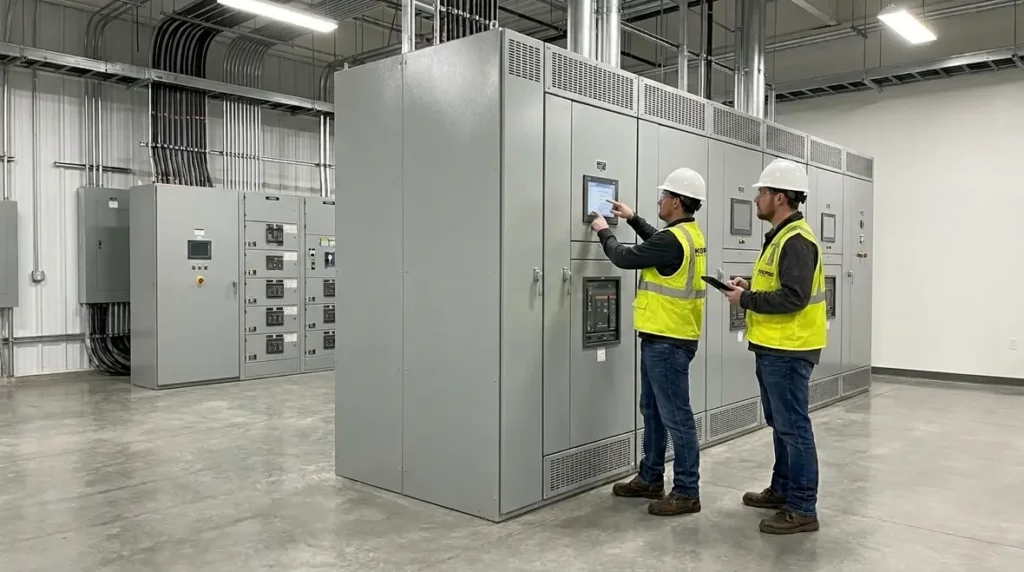
At Kord Electric, our Electrical Troubleshooting Best Practices guide how we respond when something feels off in a commercial or industrial facility. First, we confirm the complaint and then we isolate the problem with safe, methodical checks. Next, we verify power quality, inspect terminations, and look for heat, moisture, or loose connections that can start small and end expensive. Finally, we document what we find so you can make confident decisions, not just hopeful ones.
And yes, we know the building might still run like it is “fine.” But “fine” is the kind of word that shows up right before a breaker trips again, like a sitcom plot twist. Our technicians and expert service staff explain each step in plain language, so others on site understand what is happening and why we take the measurements we do.
Why Commercial Panels, Breakers, and Loads Fail Under Real Use
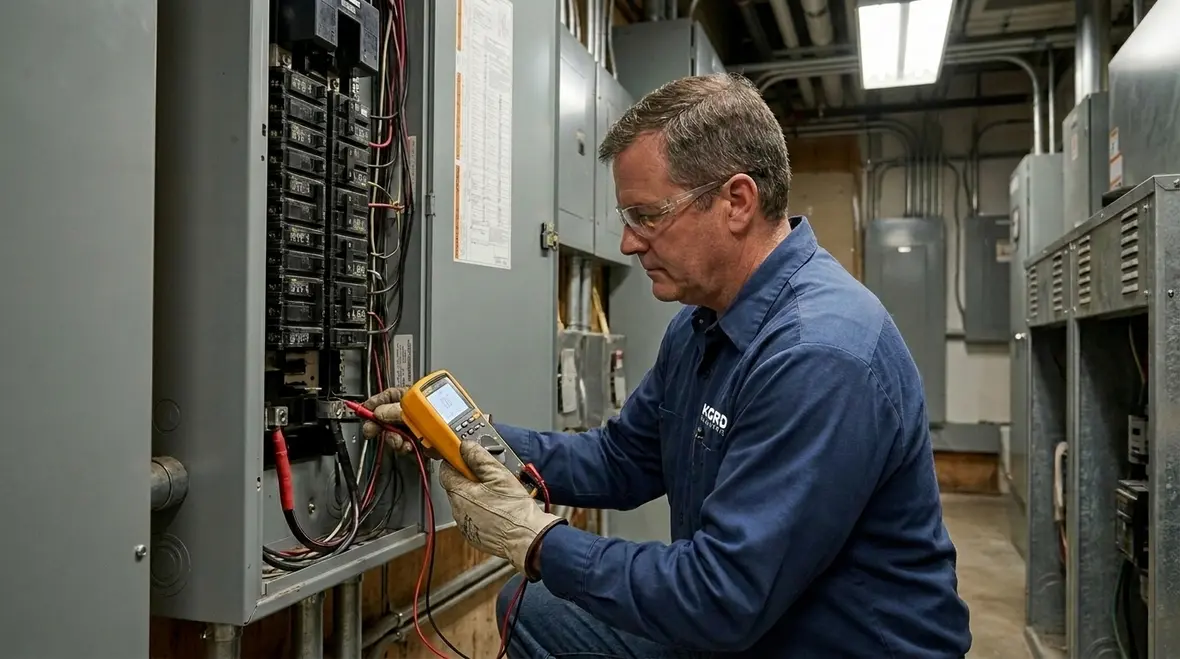
Commercial and industrial systems work hard. They cycle daily, run heavy motors, and endure long hours, temperature swings, and sometimes uneven maintenance. Because of this, electrical issues tend to appear where stress concentrates: in panels, at breaker connections, and along feeder routes.
When we see repeated breaker trips, we think beyond “reset and move on.” Instead, we check for overload conditions, short circuits, and ground faults. We also evaluate whether the breaker size matches the load, whether harmonics distort current, and whether there is corrosion on bus bars or cable lugs. These factors can create heat, which then accelerates insulation aging. At that point, the problem graduates from annoying to dangerous.
Also, people often blame the breaker when the real story is in the wiring. A loose termination can look fine from across the room, but it can cook quietly for months. Then, one day, it decides it has had enough.
What Power Quality Problems Look Like in Major Property Buildings

In large commercial settings, power quality issues rarely announce themselves politely. They show up as flickering lights, dimming during startup, buzzing from transformers, or equipment resets that seem random until they line up with motor cycles or HVAC operation.
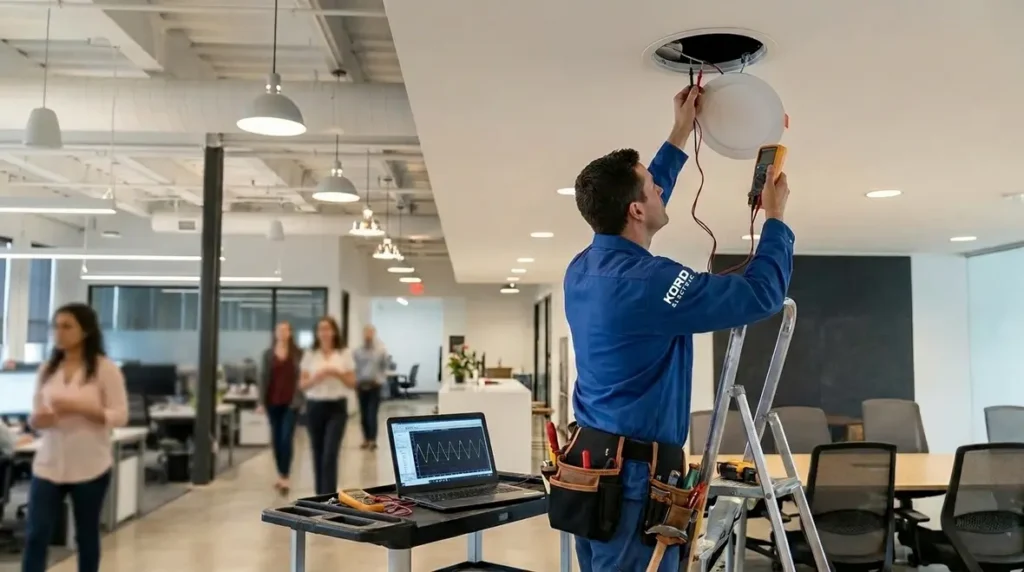
We troubleshoot power quality by checking voltage stability, phase balance, waveform distortion, and grounding integrity. Then, we compare those results with equipment behavior. For example, an elevator controller might reset when voltage dips during demand spikes, while refrigeration compressors might suffer premature wear when harmonic content stresses the system.
Transitioning from “symptom chasing” to real diagnostics matters. Therefore, our technicians explain how each measurement connects to the likely cause. They do not just tell you the numbers. They show you what the numbers mean for your business uptime, tenant comfort, and life safety systems.
Electrical Troubleshooting Best Practices for Common Outages
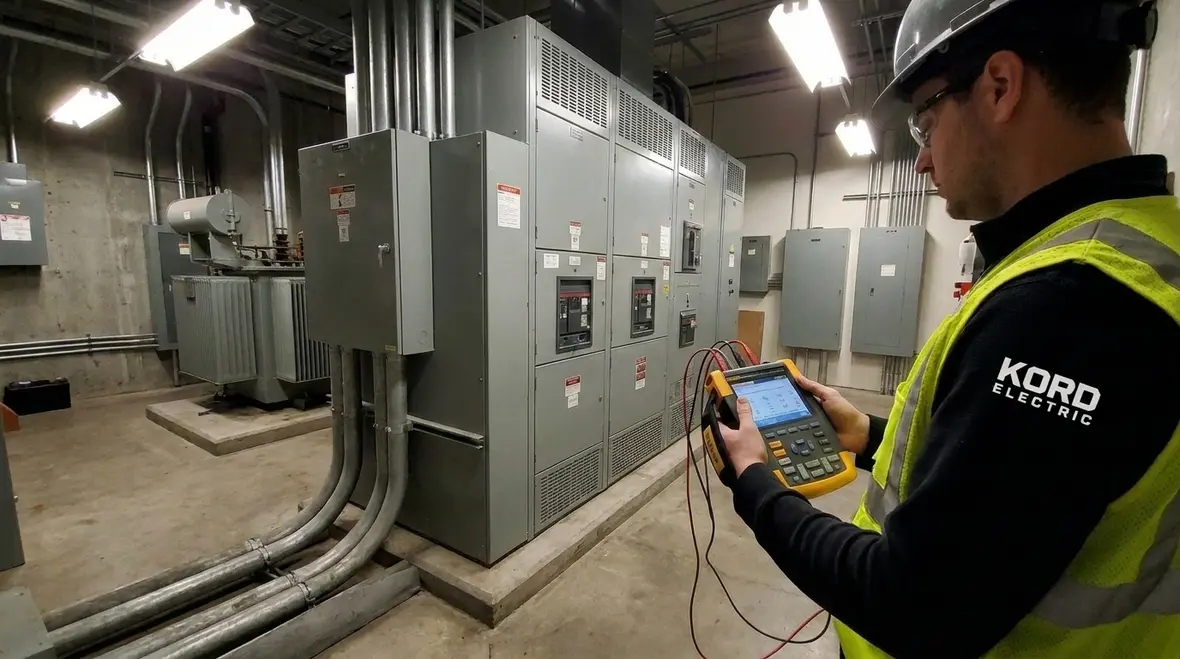
When an outage hits, time matters. However, we do not treat it like a fire drill where everyone runs in circles. Instead, we use Electrical Troubleshooting Best Practices to reduce risk and speed up the path to the correct fix.
Our process typically includes these steps:
- We confirm the outage scope by checking which circuits are impacted and whether the fault is upstream or localized.
- We look for patterns such as recurring trips, outages after specific equipment starts, or problems that match weather or water intrusion.
- We verify breaker function, then inspect terminations and cable condition at accessible points.
- We test grounding and bonding since poor connections can create hidden fault paths.
- We measure insulation health and continuity where safe and appropriate for the system design.
Meanwhile, others on site can focus on keeping operations steady. As we work, our expert service staff communicates what we know, what we do next, and what we will need from building maintenance. That coordination reduces guesswork, and guesswork is how people end up replacing parts that were never the real problem.
How to Spot Heat, Moisture, and Loose Connections Early
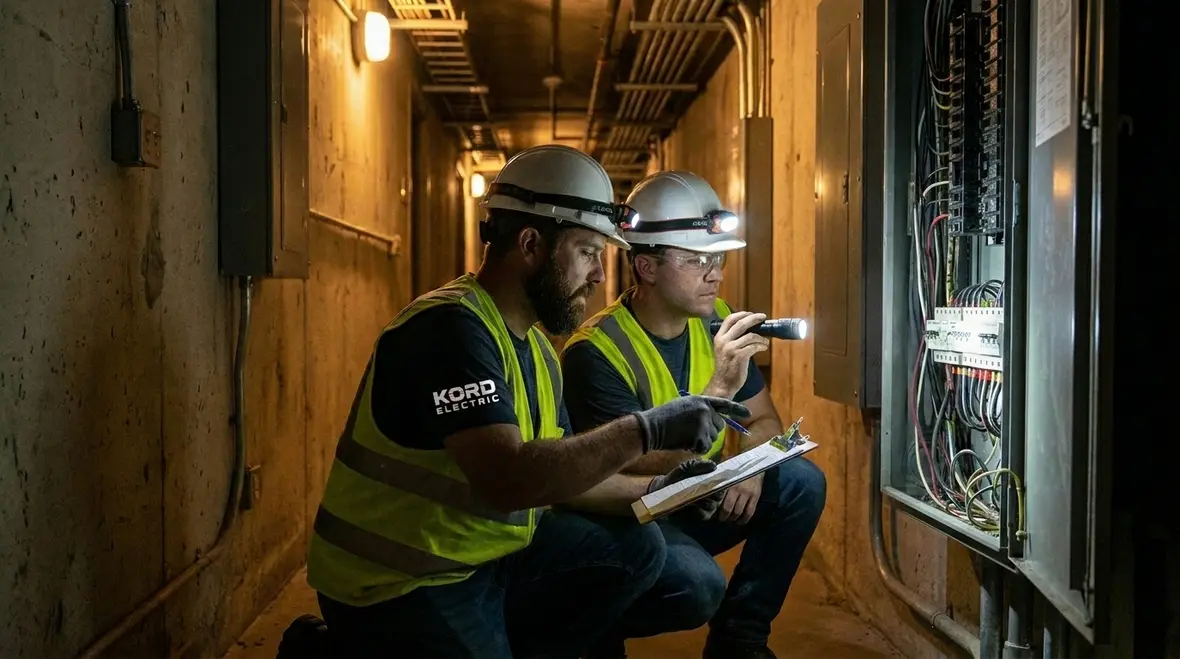
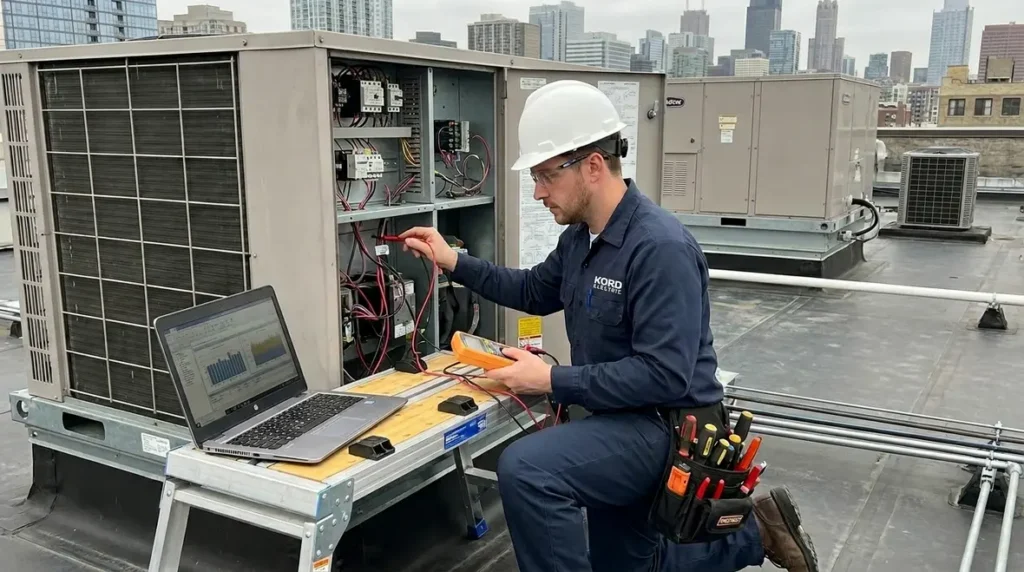
Some faults build over time. They start with a tiny resistance point, then gradually create heat at a connection. If moisture joins the party, insulation breakdown accelerates. This is common in large property buildings where pathways for water and condensation are present, especially near mechanical rooms, exterior gear, and below grade conduits.
There are practical signs that our team looks for during inspections: discolored panel interiors, a burning smell, crackling sounds near lugs, repeated nuisance trips, and circuit performance that worsens after humidity increases. Also, if infrared inspection shows hotspots, we treat it as a priority, not a “later” item.
We keep the explanation simple for facility teams. Our technicians tell you what we found, what it could lead to, and what the safe repair route looks like. Then we recommend next steps that protect the system long term, not just patch the symptom.
When to Call a Pro for Commercial Electrical Issues
It helps to know which moments require a professional response right away. For commercial and industrial facilities, electrical problems can affect critical operations and life safety systems, so we recommend calling Kord Electric as soon as the issue shows escalation.
Call a pro immediately if you notice burning smells, smoke, arcing sounds, frequent breaker trips that keep returning, signs of water intrusion in electrical gear, or any damage after a storm. Also, if critical equipment such as pumps, chillers, emergency lighting circuits, or control systems behaves oddly, do not assume it will resolve on its own.
In addition, you should involve a professional when measurements do not match expectations. If a circuit “used to run fine” but now draws abnormal current, heats up, or trips under light load, something changed. Usually it is a connection, insulation condition, or power quality shift, and those issues require careful testing.
Our technicians handle these situations with a calm approach. We do not rush, because rushing leads to missed checks. We also speak with your team in business casual terms, meaning we can be firm without being hard to work with. Think of us as the steady voice in the chaos, the calm narrator who explains what is really happening before the episode gets too intense.
Industrial Repair Options That Reduce Repeat Failures
Once our team identifies the root cause, we focus on repairs that prevent recurrence. Replacing a visible component without addressing the underlying condition usually leads to repeat failures. That is the electrical version of replacing a smoke detector battery while ignoring the kitchen fire.
Depending on findings, Kord Electric may recommend:
- Torque and rework of terminations on bus bars and feeder connections, followed by inspection for heat damage.
- Breaker and contact replacement when internal wear or damage affects performance.
- Corrective grounding and bonding improvements to stabilize fault paths and reduce nuisance faults.
- Power quality mitigation steps when harmonic distortion or voltage imbalance drives equipment instability.
- Cable and insulation remediation when insulation health tests show decline.
We also advise on operational adjustments where appropriate. For example, if equipment start cycles create voltage dips, we can help evaluate load coordination and protective settings. Our expert service staff explains the tradeoffs so decision makers understand costs, downtime windows, and risk levels. Then others can plan work that fits major property schedules.
FAQ: Commercial Electrical Issues and Pro Service
Final Word From Kord Electric
Electrical issues in major commercial and industrial facilities do not get better by ignoring them. If lights flicker, breakers trip often, motors behave oddly, or equipment resets keep happening, Kord Electric will help you find the real cause and fix it the right way. Our technicians and expert service staff explain each step, so your team stays informed while we work safely and efficiently. Call us today to schedule a diagnosis and protect uptime, equipment life, and safety.
For multi-site commercial properties and large industrial operations, it also helps to connect troubleshooting work with a larger service strategy. That is why many facility teams pair diagnostic visits with ongoing Los Angeles County electrical services that understand local codes, real-world load demands, and the need to keep schedules realistic while still protecting equipment.
If you want more insight into structured diagnostics for production environments, you can also review our related guide on electrical system troubleshooting for factories, which expands on checklists, documentation, and preventive steps that complement the Electrical Troubleshooting Best Practices in this article.