

Commercial Smart Building Integration Services
Commercial smart building integration: where upgrades meet real daily operations
At Kord Electric, we help commercial and industrial facilities move from basic electrical control to Commercial smart building integration that actually fits how people work. In the first phase, we focus on what you already have: panel boards, feeders, existing relays, metering, lighting controls, and the building’s current network. Then we add smart features in a way that supports uptime, safety, and predictable costs.
Many teams worry that smart upgrades will feel like replacing a whole engine because of a small warning light. That is not our style. Instead, our expert technicians plan the integration like a careful renovation, not a demolition. And yes, we make sure the lights come back on after every step. We are not trying to win a reality show for “worst electrician of the week.”
How we modernize existing electrical systems without breaking what works
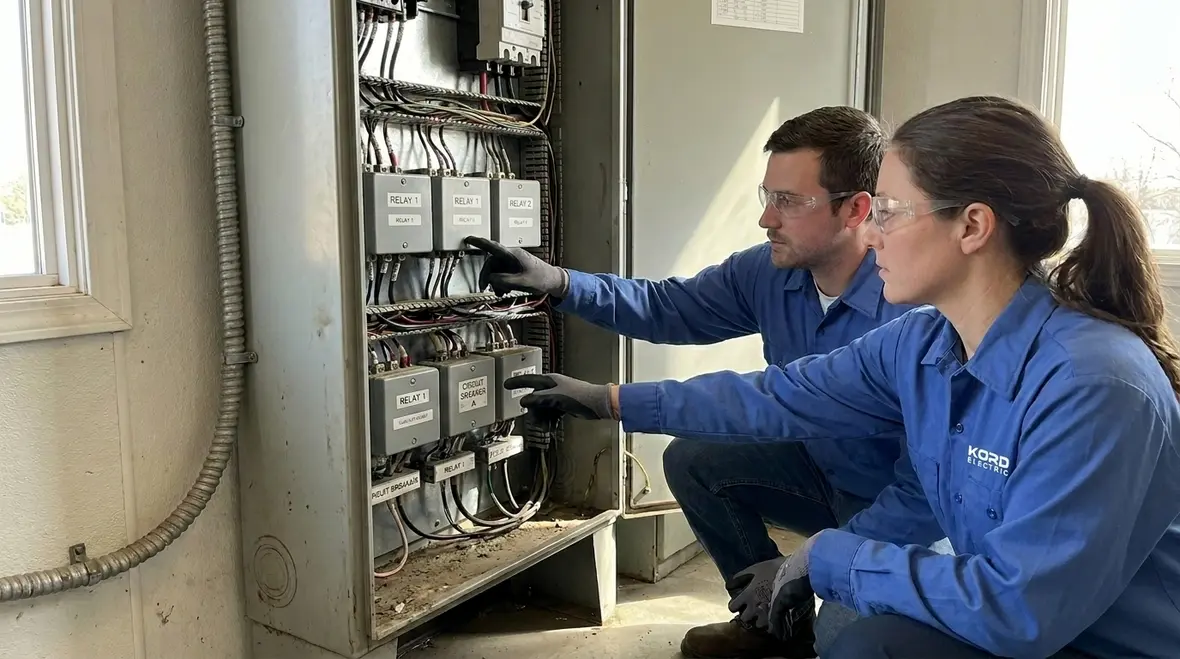
We start by treating your existing electrical system as a living asset. First, our technicians evaluate load profiles, short circuit ratings, grounding methods, device age, and wiring paths. Next, we review how your facility currently manages power quality issues, branch circuit protection, and equipment feedback. After that, we map where smart sensing and controls can fit without forcing you to rewire every bay, floor, or suite.
Then we design for integration, not replacement. That means we add communication where it makes sense, use compatible control interfaces, and preserve your original protections. For instance, if your facility already uses a power monitoring device, we do not trash it just to feel modern. Instead, we align new data points with what your operators already trust. Meanwhile, we keep the system documentation clean so your team can troubleshoot quickly later.
Finally, we build a change plan. We schedule work around production windows, tenant operations, and critical equipment uptime. As a result, your upgrades arrive like a steady upgrade, not a surprise storm.
What smart technology can add to power, lighting, and safety controls
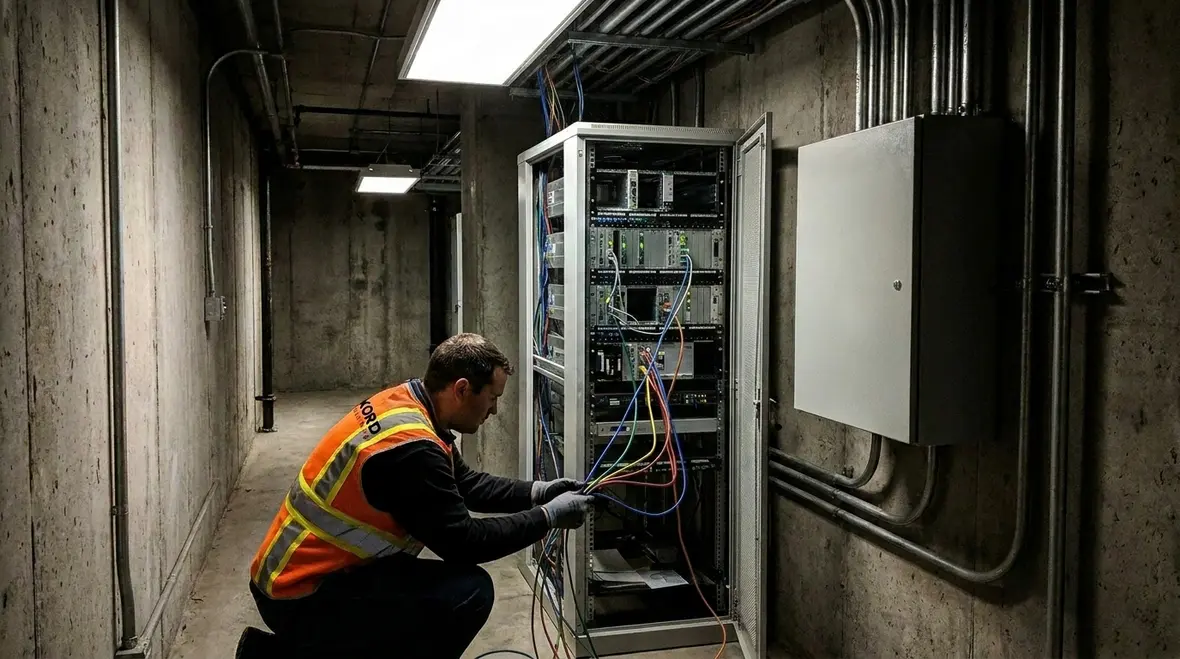
Smart technology does not only mean colorful dashboards. In commercial and industrial facilities, it usually means better visibility, faster fault detection, and controls that respond to real conditions.
From there, we integrate smart features across three main areas.
- Power monitoring: We add metering and quality measurements so you can spot abnormal current draw, voltage dips, harmonics, and recurring overload patterns early.
- Lighting and scheduling: We connect lighting control logic to schedules, occupancy inputs, and local overrides so you reduce waste without leaving people in the dark like it is a cave tour.
- Safety and protection: We support arc flash strategy updates, fault event logging, and selective coordination insights based on measured behavior, not guesses.
Moreover, when our technicians explain the system, they do not speak in mystery language. We show your facilities team what each sensor measures, where alarms originate, and what actions the controls will take. In other words, your staff gains confidence instead of confusion.
Integrating controls with your network and building management systems
After we handle electrical compatibility, we move to control integration. Most facilities run some form of building automation platform, and each platform has specific requirements. So we coordinate the smart electrical layer with your existing building management system, access points, and control gateways.
We also plan for network reality. Some buildings have stable fiber routes, while others have patchy wireless coverage across long corridors or large warehouses. Therefore, we place gateways and communications equipment where performance holds up, and we test signal stability before any final commissioning.
Next, we define data points and naming conventions. That step seems small, but it prevents headaches when operators look for “what does this alarm actually mean?” Later, we configure alarm thresholds based on actual usage trends. We do not pick numbers from a spreadsheet and pray. We base them on baseline measurements and your operating needs.
Finally, we train your team. Our expert service staff explains how to use the interface, how to interpret event logs, and how to respond when an alert triggers. That training turns smart control from a “cool feature” into a practical tool.
Commissioning, testing, and keeping uptime during upgrades
Smart integration is only as good as the final test. We commission systems in stages so we can isolate issues without shutting down your whole facility. First, we verify sensor readings against known electrical behavior. Then we test control responses under normal and edge-case conditions, like rapid load changes or temporary utility variations.
We also verify that protective devices coordinate correctly. Smart monitoring can reveal patterns, but it cannot replace safe protection design. So our team confirms settings and confirms that alarms reflect real events rather than noise.
Below is how we approach the process, and you will see why we treat testing as a business requirement, not a hobby.
| Step | What we do |
Pre work verification |
We review one line diagrams, verify device compatibility, and confirm labeling so changes stay traceable. |
Staged commissioning |
We test in sections to keep production running and reduce risk across large facilities. |
Alarm and logic checks |
We simulate conditions and confirm that events trigger at the right time, with the right severity. |
Operator training |
Our technicians explain the readings and response steps so your team knows what to do next. |
As a result, you get confidence, audit-ready documentation, and fewer “surprise” calls at 2 a.m. from a control room that has never heard your name before.
Data you can act on: reducing energy waste and preventing repeat issues
Once the smart electrical layer runs, the value comes from decisions. We help facilities turn raw measurement into action plans that reduce waste and stop recurring failures.
For example, we often see patterns like motor starters drawing higher current than expected, or lighting zones that never fall to expected standby levels. Smart monitoring makes those issues visible, and then we connect the findings to practical fixes: setpoint adjustments, scheduling changes, maintenance triggers, and targeted component inspection.
We also help teams connect electrical behavior to operational outcomes. If a facility shifts production lines or changes occupancy patterns, power profiles change. Therefore, we recommend periodic review to keep thresholds aligned with new reality. This step reduces nuisance alarms and keeps the system focused on true risks.
Most importantly, our expert service staff explains these trends in plain terms. We show what changed, when it changed, and what it likely means. That way, your decision makers do not need a degree in power engineering to understand the report.
If you are exploring how smarter monitoring can support long-term performance, you can also connect this work with structured electrical preventive maintenance programs that keep critical systems on track year-round.
Common obstacles and how we solve them for commercial and industrial jobs
Every facility has constraints. Sometimes it is limited downtime. Sometimes it is legacy wiring or incomplete documentation. Sometimes it is multiple tenants with separate expectations. Whatever the cause, we address obstacles early so the project stays on track.
One obstacle is mismatched equipment. Older panels may not support new communication without adapters or interface upgrades. We handle that by verifying device compatibility and planning interface paths before installation begins.
Another obstacle is inconsistent labeling. Without accurate labels, troubleshooting turns into detective work. Therefore, we improve documentation and labeling during the upgrade so your team can navigate quickly.
Finally, there is concern about cybersecurity and access. We coordinate with your IT or facilities security team to follow safe practices for access control, logging, and network segmentation. We also train your staff so they understand where they should and should not change settings.
And yes, we keep it calm. We do not treat your building like a test lab. We treat it like a business that has to keep running.
For facilities working through recurring power quality or stability issues during upgrades, it can also help to review dedicated guidance on voltage fluctuations in commercial and industrial facilities as part of the planning process.
FAQ about upgrading electrical systems with smart controls
Ready to make upgrades that your team can trust?
If you are managing a commercial or industrial facility and you want smart control without guesswork, Kord Electric is ready. We design integrations around your existing electrical systems, coordinate with your building management setup, and test everything before you rely on it. Then we walk your staff through the operation so you know what the system is telling you. Contact us today to schedule an assessment and build a smart upgrade plan that keeps uptime steady and risks low.
For facilities across the region, our broader Los Angeles County electrical services provide a foundation for Commercial smart building integration, covering design, installation, maintenance, and emergency support under one experienced team.
If your upgrade roadmap includes smarter lighting alongside electrical controls, it can also help to review how automated lighting strategies support performance and comfort in our guide on automated lighting control benefits for facilities before finalizing schedules and sensor layouts.
Conclusion
Commercial smart building integration works best when it respects the systems you already depend on while opening the door to better insight, safer operation, and more predictable costs. By focusing on compatibility, staged commissioning, clear documentation, and hands-on training, Kord Electric helps commercial and industrial facilities upgrade without drama. When your panels, monitoring, controls, and building management system all speak the same language, your team can spend less time reacting to surprises and more time guiding the facility where it needs to go next.
If you are planning upgrades for a campus, multi-tenant property, or specialized industrial site, our technicians and expert service staff are ready to help you connect electrical reality with smart control strategy. From power monitoring to automated lighting and safety-focused protections, we build each Commercial smart building integration project around uptime, clarity, and long-term reliability. When you are ready, we are here to help you turn the next round of upgrades into an asset your entire operations team can trust.


