Commercial Smart Lighting Cost and ROI Guide
When a facility manager asks about the Commercial Smart Lighting Cost, they usually want one thing: a straight answer that does not sound like a sales brochure. At Kord Electric, we analyze the cost benefits of commercial smart lighting systems with the same calm focus we bring to data center electrical work, because one bad decision can ripple through an entire building. Therefore, we look at upfront spending, ongoing energy use, maintenance effort, and how smart controls protect operations when conditions change. And yes, we also look at comfort for people inside the space, because “bright enough” should never mean “uncomfortable enough to file a complaint.”
Commercial Smart Lighting Cost breakdown for commercial buildings
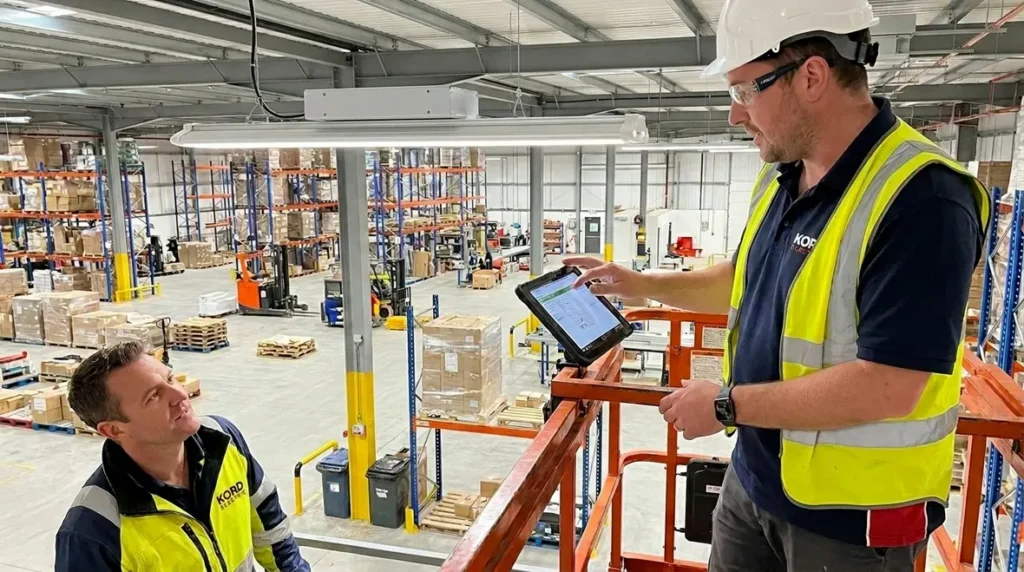
To understand the Commercial Smart Lighting Cost, we start by separating it into clear pieces. Then we match each piece to a real outcome, not a wish. Our technicians and expert service staff explain the plan step by step, so stakeholders know what they are paying for and why it matters.
Typical cost drivers we evaluate
- Controls and software such as occupancy sensing, daylight harvesting, scheduling, and zoning
- Fixtures and drivers including LED upgrades where needed, plus compatible dimming support
- Design and commissioning so settings match the space, not just the spreadsheet
- Installation labor and any electrical upgrades for correct power and control wiring
- Integration with building systems like BAS, if the site needs it
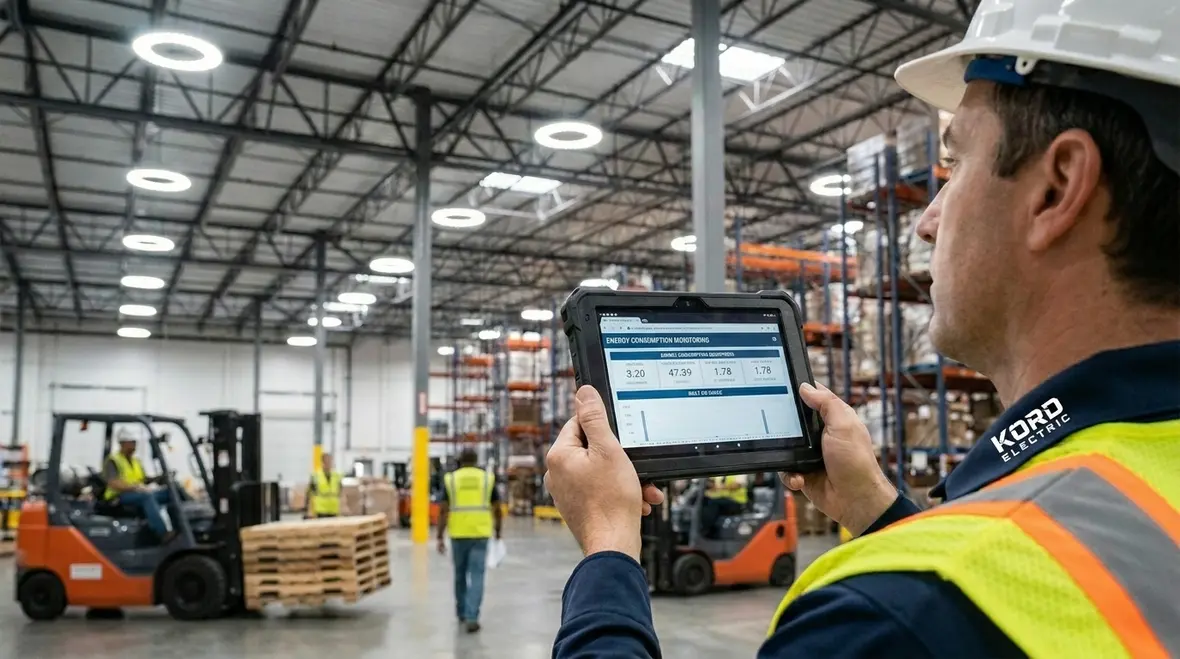
Next, we compare those costs against expected returns. In practice, a smart lighting retrofit does not behave like a one time purchase. It is more like upgrading a control panel for human comfort. You do the work once, and you keep benefiting every day.
ROI math that does not ignore real operations
Many ROI models look good on paper and fall apart in the hallway. Therefore, we build our estimates around how commercial and industrial facilities actually run. Others may assume uniform occupancy or stable schedules. We do not. A warehouse has peaks. An office tower has shifting zones. A manufacturing floor can change lighting needs by time of day and task type.
Key return factors we calculate
- Energy savings from LED efficiency plus smarter dimming and shutoff
- Reduced maintenance since smart schedules and sensors reduce lamp stress and shorten re-lamping cycles
- Lower staff burden because fewer manual overrides and less “fix it at 6 PM” work
- Better lighting quality which supports safety and productivity in the real world
- System life extension where controlled use reduces wear on components
To make it practical, we also include the cost of inaction. If lighting stays inefficient, a building absorbs the ongoing utility expense. Then, if occupants complain, managers often respond with blanket brightness, which pushes energy use back up. It is like turning a thermostat to max because you dislike comfort, not because the system is broken. People joke about it, but buildings do not laugh.
Design for uptime and consistency across zones
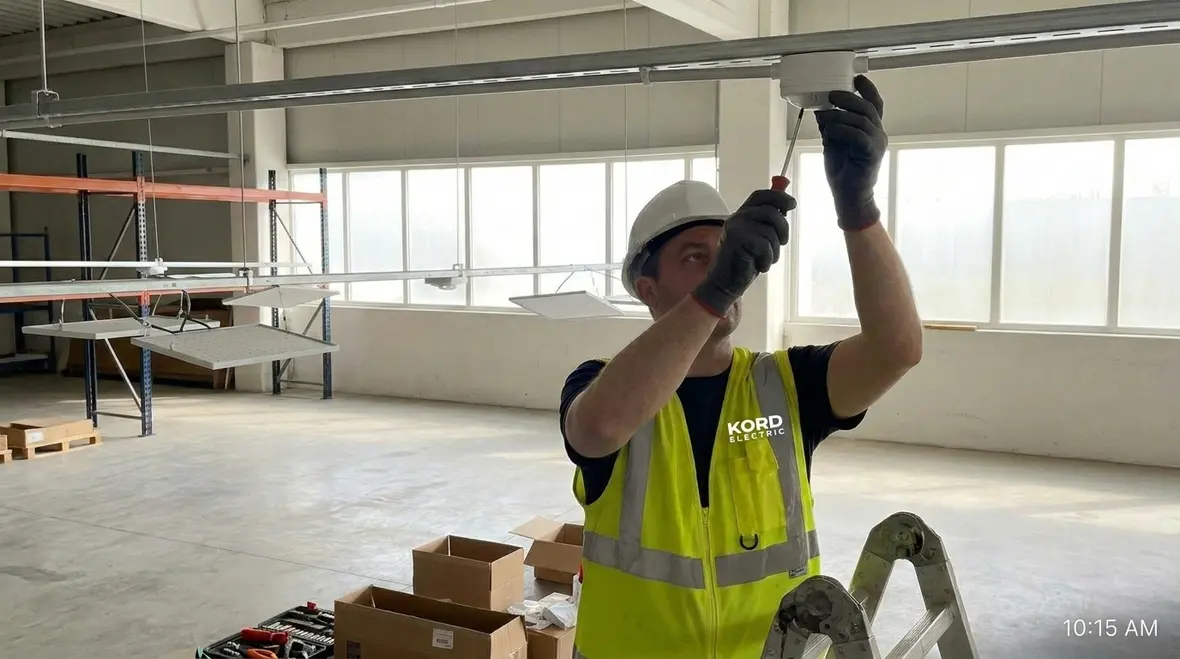
Smart lighting only delivers value when the controls behave correctly in every area. For that reason, we design zoning around workflow and electrical reality, not guesswork. Our approach aligns with how Kord Electric thinks about infrastructure essentials in other systems, including stable power distribution, clean control logic, and disciplined planning for changes over time. For teams who live in high-demand environments, we often recommend reviewing how smart lighting planning pairs with broader planning in resources like Data Center Electrical Infrastructure Essentials, because the same mindset applies: build the backbone right, then let the controls do their job.
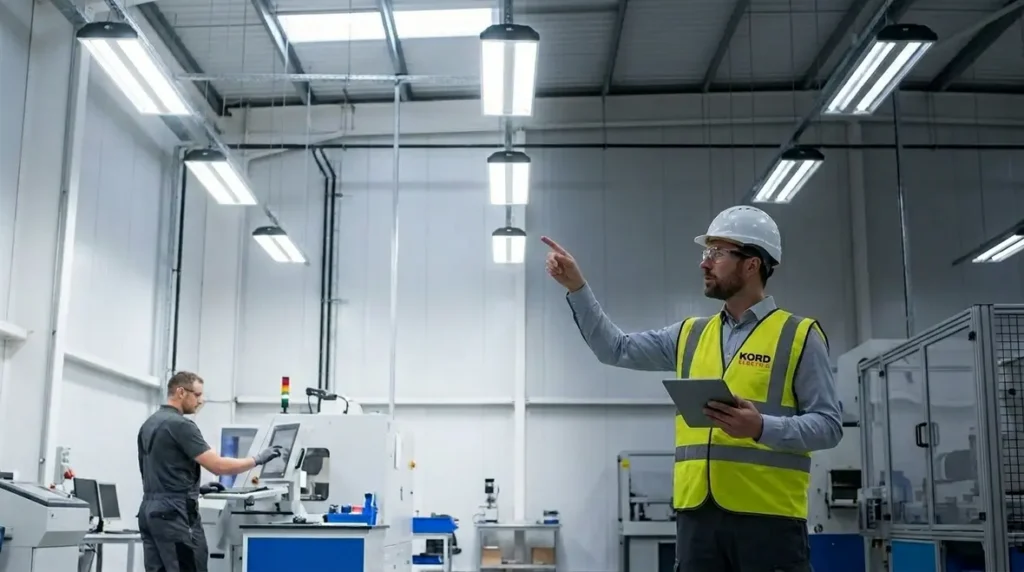
So we ask questions that matter for major property buildings and industrial sites. For example, we plan sensor placement to avoid dead zones and false triggers. We set daylight harvesting so areas near windows do not flicker like a bad stage light. We configure schedules that match shift patterns, including nights, weekends, and special events.
Where design prevents waste
- Using occupancy sensing to reduce wasted runtime in low use areas
- Grouping fixtures logically so the control response fits the space
- Staging upgrades to limit downtime and keep operations moving
Meanwhile, we coordinate with the facility’s electrical plan so the lighting system does not fight the building. A well engineered installation supports stable performance. A rushed one creates service calls that no one likes, especially when the site is running hot and busy.
Integration and controls: the hidden leverage
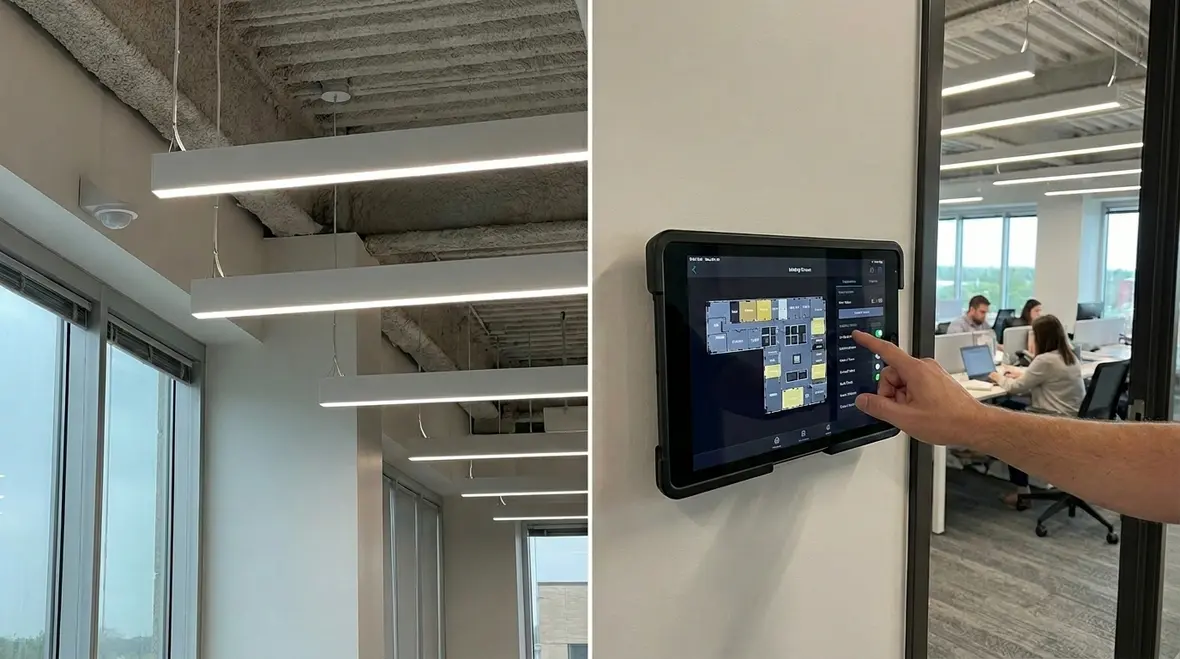
Commercial smart lighting systems can stay “smart” only if they communicate well with the rest of the building. Therefore, we evaluate how lighting controls connect with energy monitoring, building automation, and emergency needs. Even when a full integration is not required, we still design with future upgrades in mind, because technology improves while buildings stay put.
Integration choices we discuss with teams
- Stand alone controls for simpler sites with clear zones
- Partial integration for energy reports and schedule control
- Full integration where BAS already manages alarms, schedules, and monitoring
At this point, our technicians explain the tradeoffs in plain terms. They do not hide behind jargon. They describe what happens if the network drops, how the system holds last known settings, and how the lighting returns to safe operation.
That matters because your lighting system should not behave like a celebrity who disappears during the interview. It should stay steady, predictable, and compliant.
Comparing smart lighting to traditional upgrades
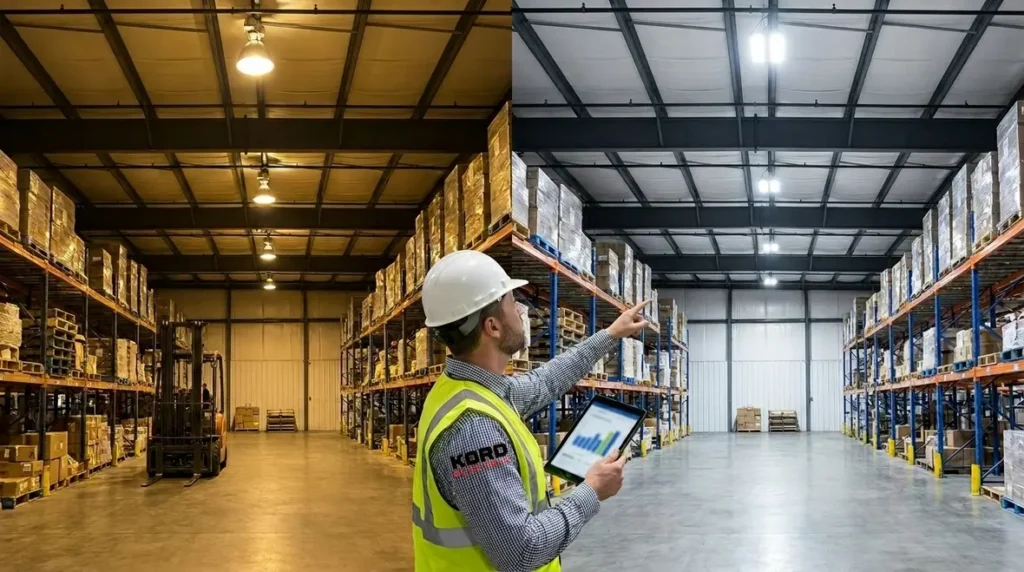
Some building owners compare smart lighting only to switching all fixtures to LED. That is a start, but it is not the full picture. LED efficiency helps, but controls determine how much of that efficiency you actually keep after the project goes live.
Traditional upgrade
- Often focuses on fixture replacement and brightness targets
- Relies on static schedules or manual controls
- Maintenance stays reactive in many facilities
Commercial smart lighting systems
- Uses sensors and scheduling to reduce run time and wasted brightness
- Adapts to occupancy patterns and daylight changes
- Supports monitoring and planned service
In other words, smart systems do not just reduce electricity. They reduce unnecessary use. And because facility teams see fewer “lights always on” complaints, they keep ownership of the outcome rather than chasing it.
Common mistakes that raise total cost
Even the best equipment can deliver weak results if the project planning misses the basics. Therefore, our service staff flags the usual pitfalls early, before they turn into costly change orders.
- Underestimating control design which leads to poor sensor coverage and user overrides
- Ignoring electrical compatibility which can require unplanned wiring changes
- Skipping commissioning so settings do not match real usage patterns
- Weak zoning strategy which causes lights to dim when people need full output
- Forgetting maintenance planning which can raise labor costs over time
And yes, we have seen projects where the building team tried to “make it work” without proper commissioning. Then the system ran exactly as configured, which is the joke. The lights performed like trained robots, just not like humans needed them. When this happens, people assume the hardware failed, when the issue is often the setup.
Our approach centers on disciplined planning and clear explanation. Our technicians walk through how sensors react, how scheduling works, and how facility staff can make adjustments without breaking control logic.
FAQ: Commercial smart lighting for commercial and industrial facilities
Ready to evaluate smart lighting returns with Kord Electric?
Commercial smart lighting pays off when the design matches how your facility operates. So we invite your team to contact Kord Electric for a focused evaluation. Our technicians and expert service staff will explain the Commercial Smart Lighting Cost drivers, map zoning and control settings to your spaces, and build a clear ROI model that respects uptime and real schedules. If you want lighting upgrades that feel smooth, calm, and reliable, we are ready. Let’s turn wasted light into smarter performance.
If you are planning broader work on your facility’s lighting, you can also review how our dedicated Lighting Installation Services support commercial and industrial projects from initial design through commissioning. When smart controls, code compliance, and long-term maintenance planning are aligned from the start, the return on your lighting investment becomes much easier to defend in every budget meeting.
For facilities that lean heavily on critical systems and want to protect uptime beyond just lighting, pairing your smart lighting upgrades with a structured electrical preventive maintenance program keeps the rest of the infrastructure in step. That way, the controls doing the smart work are backed by power distribution that is just as disciplined.