Commercial Subpanel Load Management Guide
Managing electrical demand in a large commercial or industrial building can feel like trying to keep a subway on time during rush hour. You can do everything right, and the system still finds a way to get… dramatic. That is why Kord Electric focuses on Commercial Subpanel Load Management and how to run it like a controlled process, not a guessing game. In this guide, our technicians and expert service staff explain how others should plan, measure, balance, and document subpanel loads so facilities stay safe, efficient, and ready for growth. And yes, we also make sure your breakers do not trip at the exact moment a meeting starts. Because nothing says “leadership” like a dark conference room.
How Kord Electric approaches commercial load planning
Commercial sites rarely fail all at once. Instead, they slowly drift into trouble through added tenants, new equipment, and “temporary” changes that never become permanent. Therefore, we start by treating the electrical system as a living asset. Our technicians review the facility layout, identify key loads, and map how power flows through main panels and subpanels. Then we confirm which circuits feed HVAC, lighting, receptacles, motors, charging stations, and specialized systems.
Next, we set expectations with clear steps. First, we collect actual load data rather than guessing from nameplate ratings. Second, we compare that data to available capacity and expected future demand. Finally, we prioritize the actions that prevent overloads, reduce nuisance tripping, and lower the risk of overheated connections. In other words, we manage demand with reality, not wishful thinking.
Understand subpanel capacity before you add anything
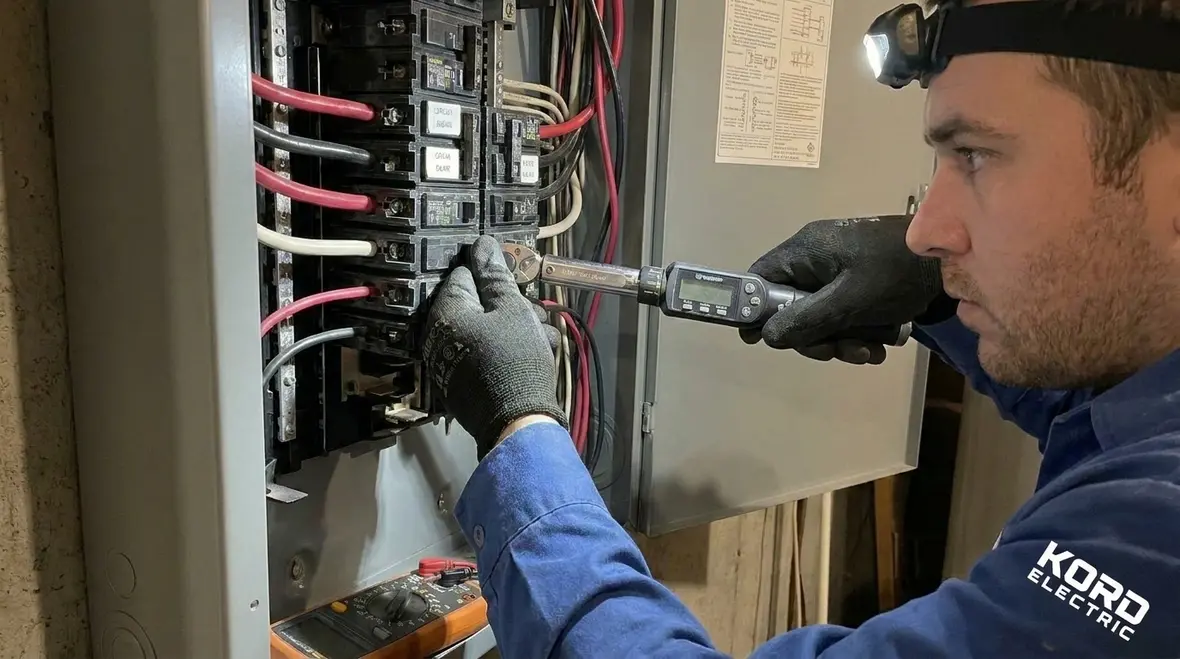
When a building grows, the electrical system grows in stories about what “should be fine.” Unfortunately, subpanels do not run on optimism. They run on conductor ampacity, breaker ratings, and the heat generated by current. So, we look at the details that determine whether the system can handle current safely.
Our expert service staff explains the core checks that support sound Commercial Subpanel Load Management. We verify breaker size, feeder sizing, conductor type, insulation rating, and terminal torque history. Then we evaluate load diversity. For example, kitchens and elevators may not operate at full output at the same time, yet they still demand enough current to matter during peak periods. We also consider harmonic effects from variable speed drives and modern power supplies, because these can increase heating in conductors even when current looks acceptable.
Once that baseline is clear, we advise how others should add circuits. If a subpanel approaches limits, we recommend splitting loads across multiple subpanels, balancing phases, or adding capacity through upstream upgrades. This keeps the building from becoming a stress test every time someone flips a switch.
How to measure load using real data, not spreadsheets
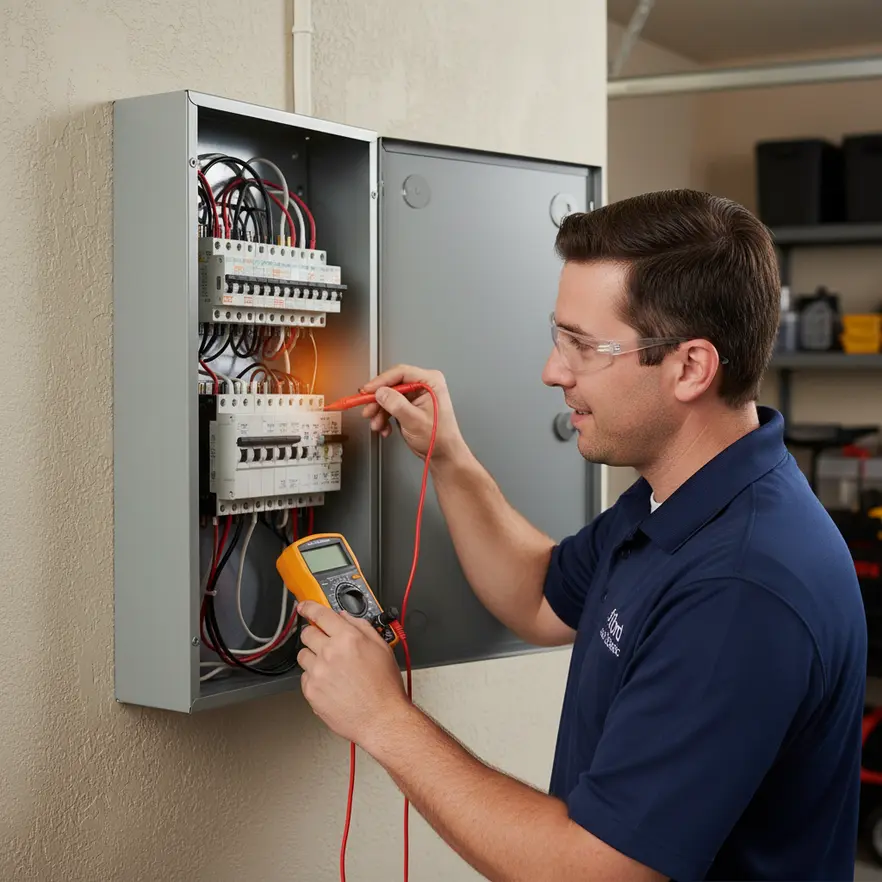
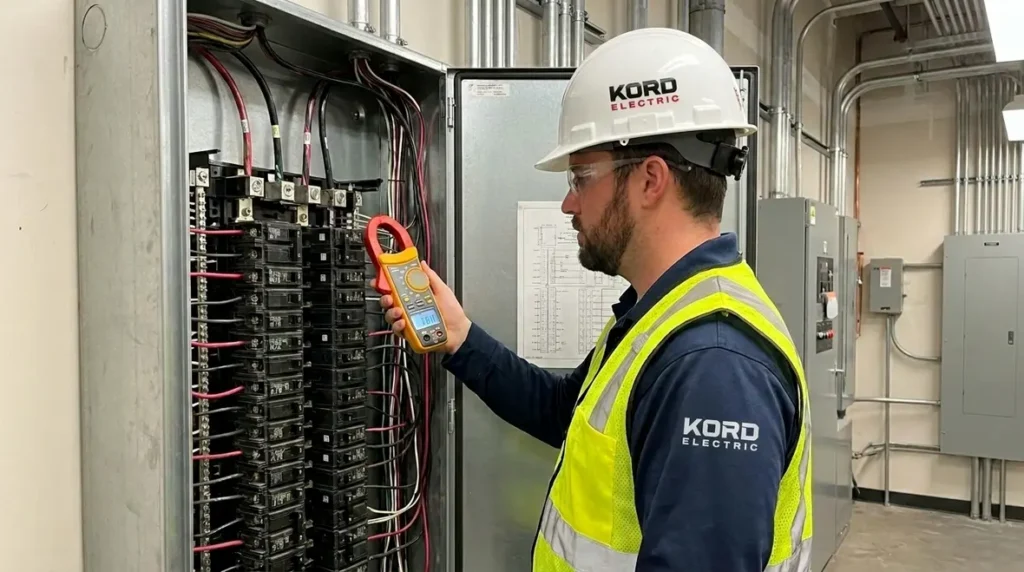
Some teams plan electrical work using estimates, and the result is usually expensive downtime. Therefore, we recommend measurement-based planning. Kord Electric uses practical field methods to track current draw, identify peaks, and observe how loads shift through the day and during seasonal changes.
For best results, we capture usage patterns for critical areas. We also watch for signs of uneven phase loading. One phase may run hot while another stays cool, and that imbalance can shorten equipment life. Then we correlate subpanel readings with building schedules. For instance, if office occupancy changes after 5 pm, lighting and plug loads should drop. If they do not, it suggests missing controls or poorly set circuits.
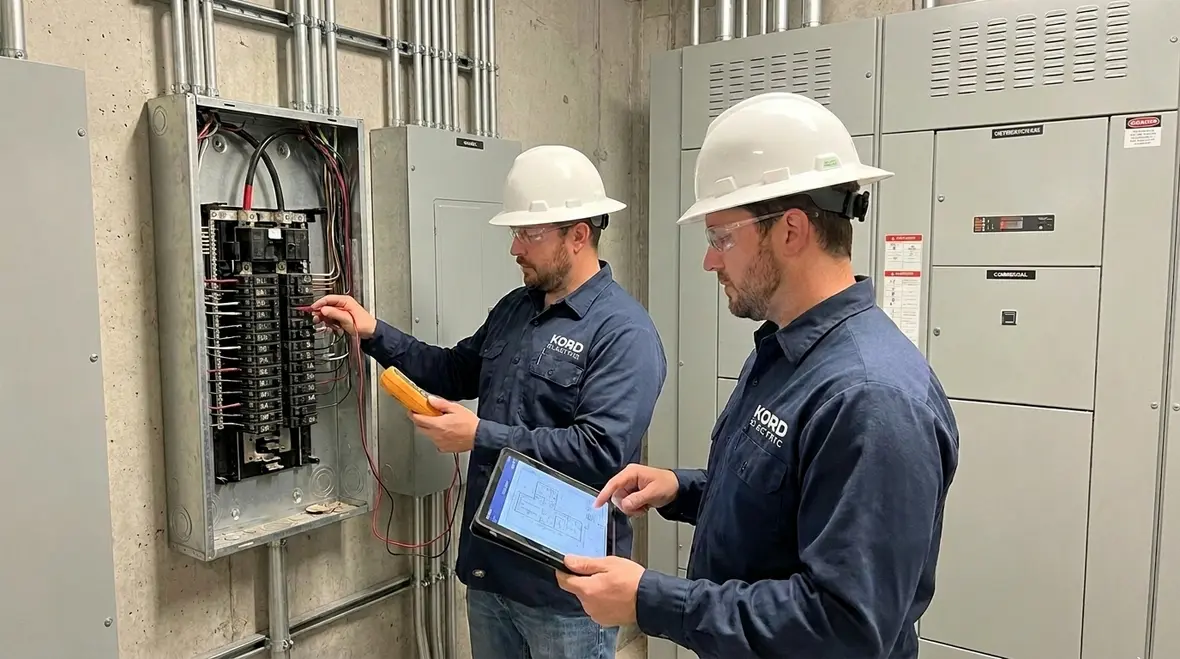
To keep the process calm and professional, our technicians document findings in straightforward language. We also explain what the readings mean in plain business terms. Because while we enjoy a good electrical metaphor, we prefer your CFO does not have to decode it like a spy message.
Balance phases and avoid overheating at connections
Even when the total load seems within limits, overheating can still occur. Most people picture overloads like a movie: big sparks and dramatic failure. Real life is quieter, and usually that is worse. Loose terminations and high-resistance connections generate heat over time. Meanwhile, phase imbalance can push one section of a subpanel harder than others.
So, our approach focuses on corrective balance and connection health. Our technicians verify torque on terminals when appropriate, inspect lugs for signs of discoloration or oxidation, and check for misrouted conductors. Then we rebalance circuit distribution across phases to keep current close to even. We also examine load categories. If one phase feeds a large portion of motor loads, lighting, and UPS output, it deserves attention before it becomes a recurring issue.
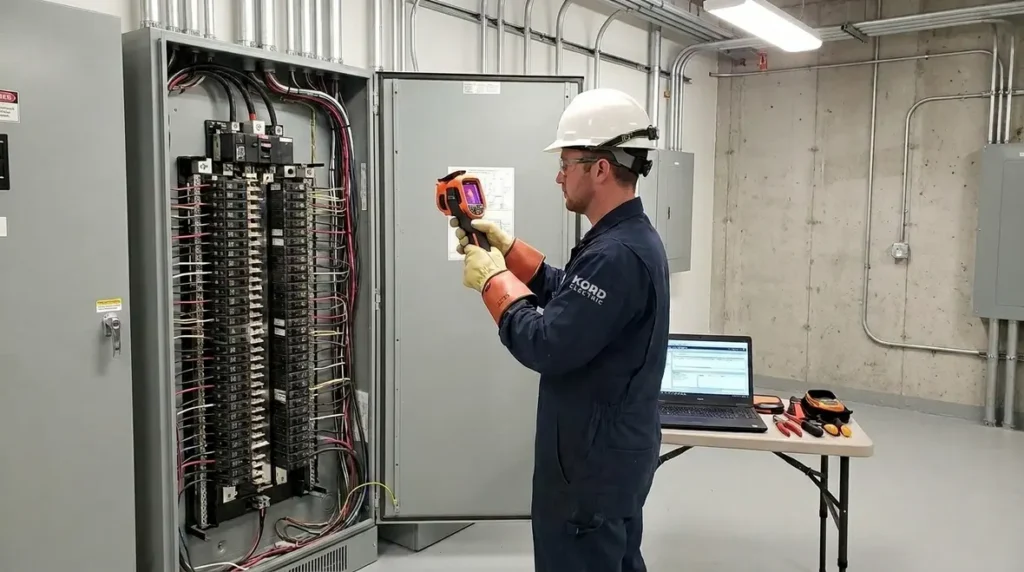
In addition, we encourage a steady maintenance routine for commercial and industrial facilities. That includes visual inspections, breaker health checks, and targeted infrared scans when conditions warrant. These steps do not replace measurement, but they support Commercial Subpanel Load Management as an ongoing practice rather than a one-time project.
Manage growth with a load allocation plan that sticks
Businesses change. A new production line starts. A tenant expands a showroom. A service team adds refrigeration or server equipment. If the electrical plan cannot absorb change, the building ends up paying interest on every “small” decision.
That is why we help others build a load allocation plan with room to adapt. Kord Electric recommends a structure that tracks what each circuit serves, what amperage it consumes under typical and peak conditions, and where future capacity will come from. We also define limits for each subpanel so expansion stays controlled. When teams know the boundaries, they stop treating the panel like a bottomless storage bin.
Our expert service staff also helps set up a simple governance workflow. First, they log any new loads and record approvals. Second, they confirm whether those loads require additional capacity or redistribution. Third, they update as built documentation so future projects do not start from guesswork. Then, the facility gets predictable upgrades instead of emergency repairs.
For facilities building a deeper preventive strategy around this kind of planning, it pairs naturally with broader programs like electrical preventive maintenance services and structured commercial maintenance plans that keep panels, feeders, and distribution gear in healthy condition over the long term.
Coordinate HVAC, motors, and specialty loads without surprises
Commercial and industrial sites carry complex loads that do not behave like steady office lighting. Motors, rooftop units, pumps, and large fans change current draw during start-up, part load, and maintenance cycles. Therefore, we treat these loads as separate from “typical plug loads” even if they share the same panel.
Our technicians coordinate motor and HVAC planning by reviewing start methods, soft start or variable frequency drive settings, and protective device coordination. They also evaluate how these loads interact with upstream feeders. A subpanel can look healthy at steady state, but a brief start surge can stress it and cause nuisance trips.
For specialty equipment, we check documentation for electrical requirements and verify site conditions. Charging stations, manufacturing tools, medical or lab equipment, and high density IT loads often need tighter attention to power quality and dedicated circuits. As a result, we design circuits to match the real needs, not generic rules.
And if someone asks, “Can we just tie it in?” we respond like professionals with a gentle smile. Then we explain why that approach sometimes works like duct tape on a satellite dish. It might hold for a minute, but it is not a system.
When those specialty loads include large charging infrastructure, we often reference lessons from projects similar to Kord Electric’s dedicated commercial EV charger installations, where careful load management, phased growth, and capacity planning are essential from day one.
Keep compliance and documentation strong across every phase
Commercial and industrial facilities need documentation that survives audits, repairs, and future expansions. When teams lack clear records, troubleshooting turns into detective work with limited clues. That increases downtime and cost, and it also increases risk.
Kord Electric helps facilities keep compliance strong by focusing on traceable documentation. We record circuit identification, breaker ratings, feeder details, load data, and any changes performed during projects. Then we make sure the documentation matches the field reality, not an older drawing from a previous life of the building.
We also guide others on how to manage long-term service records. For example, load balancing changes, torque verification outcomes, and inspection findings should appear in a consistent format. This way, future teams understand what was done, why it was done, and what the expected result was. And yes, it saves time when the next contractor arrives with confident questions and limited context.
Strong documentation also makes it easier to plug Commercial Subpanel Load Management into broader programs like commercial and industrial electrical maintenance plans, where recurring inspections, infrared testing, and load studies build a complete picture of system health.
Connecting subpanel load management to broader facility strategy
Commercial Subpanel Load Management does not live in a vacuum. It connects directly to how a facility manages risk, plans capital projects, and supports tenants or production teams. When subpanels run close to the edge, every new lease, process change, or technology upgrade becomes a potential hazard instead of a routine improvement.
By treating subpanel planning as part of a larger electrical strategy, facility leaders can make better decisions about when to consolidate loads, when to redistribute capacity, and when to invest in upstream infrastructure. This includes evaluating how main switchboards, transformers, and feeders support subpanels so the entire system behaves like one coordinated network instead of a series of isolated fixes.
In practice, that might look like pairing load management with campus-wide lighting upgrades, structured testing programs, or targeted emergency response planning. It also means tracking how decisions in one area – like a new bank of EV chargers or expanded lab space – affect the capacity of every connected panel. When the building’s story changes, the electrical narrative should keep pace.
For large facilities across Southern California, this type of integrated planning often goes hand in hand with services such as commercial and industrial lighting installation projects and ongoing preventive inspections that keep every panel, subpanel, and circuit aligned with the bigger picture.
When to call in commercial electrical experts
There is a difference between basic panel labeling and true Commercial Subpanel Load Management. When facilities see recurring breaker trips, unexplained voltage drops, warm covers, or rapid growth in electrical demand, it is time to bring in a team that lives in this world every day.
Expert commercial electricians do more than “fix the problem.” They test, document, and design around how the building actually operates. They know when a simple redistribution will work and when the facility needs a more substantial upgrade. They also understand how to stage work to minimize downtime, protect sensitive equipment, and keep operations moving while improvements are underway.
For buildings with mission-critical operations, that experience matters. Coordinating load management with emergency response planning, backup power strategies, and broader infrastructure upgrades ensures that one weak panel does not become a single point of failure for the entire facility.
If your team needs a partner for this kind of work, it often makes sense to engage an electrical contractor that already supports large commercial and industrial clients through services like 24/7 emergency electrical response, preventive maintenance, and complex project execution.
Planning load management across Los Angeles County facilities
For multi-site portfolios and large campuses across Los Angeles County, Commercial Subpanel Load Management becomes a repeatable framework rather than a one-off task. Each building may have different gear, tenants, and history, but the core questions stay the same: What does this panel serve? How close is it to its limits? What growth is coming next?
By applying a consistent method to every facility – from office towers and studios to manufacturing plants and logistics hubs – organizations gain a clear view of where to invest first and how to stage improvements over time. That may include standardizing inspection templates, aligning documentation formats, and setting thresholds that trigger upgrades before risk becomes reality.
In regions with heavy electrical demand and fast-changing tenant use, partnering with a contractor experienced in Los Angeles County electrical services helps keep that framework grounded in local codes, utility requirements, and real-world operating conditions. It turns load management from a reactive scramble into a calm, predictable part of long-term planning.
FAQ
Final word from Kord Electric
Commercial and industrial buildings deserve electrical planning that stays ahead of demand, not behind it. At Kord Electric, our technicians and expert service staff help others apply Commercial Subpanel Load Management with real measurements, phase balancing, safe expansion planning, and clear documentation. If your facility is growing or you notice trips, heat, or uneven performance, do not wait for a “someday” upgrade. Contact us now for a capacity and load review, and we will map the next steps in plain business language.
Whether you manage a single building or a portfolio across Los Angeles County, it pays to treat Commercial Subpanel Load Management as a core part of your electrical strategy. Align it with preventive maintenance, smart upgrades, and responsive service, and your panels stop being a source of anxiety and start becoming a quiet asset in your long-term growth plan.
If you are ready to take the next step, our team can help you integrate subpanel load management with broader services such as structured maintenance programs, emergency response, and regional support for complex Los Angeles County electrical projects so your infrastructure stays as strong and adaptable as your business.