Commercial Subpanel Sizing Guide for Safe Power
Commercial subpanel sizing guide: the first step for safe power distribution
At Kord Electric, our commercial subpanel sizing guide starts with a simple promise. We help facilities size each subpanel so the wiring and breakers stay within safe limits, and the system can handle real demand today and tomorrow. In the first 100 to 150 words, we do this by treating load calculation like it matters, because it does. From there, our team connects the dots between code minded design, practical equipment ratings, and the way commercial sites actually operate. And yes, we still see panels oversized for vibes and undersized for budget. That is not a plan. That is a gamble, like letting a coworker “guess” the voltage. We do better than that.
How we approach subpanel load calculations for businesses

Third person clarity helps here. Others might begin with a guess, but our electricians and expert service staff begin with documented loads. Then, they break the site into logical groups: HVAC, lighting, receptacles, cooking equipment if it applies, motors, and any specialized systems. After that, we apply the method used for load calculations based on the building type and the panel’s role in the system.
Our technicians also look at how the site behaves during peak times. A typical office might spike with cooling demand in the afternoon, while retail spaces can surge when multiple areas reopen after hours. Likewise, warehouses can pull power in bursts when dock operations start. Therefore, the load calculation must reflect those patterns, not just the nameplate ratings.
What information Kord Electric gathers before we size a subpanel
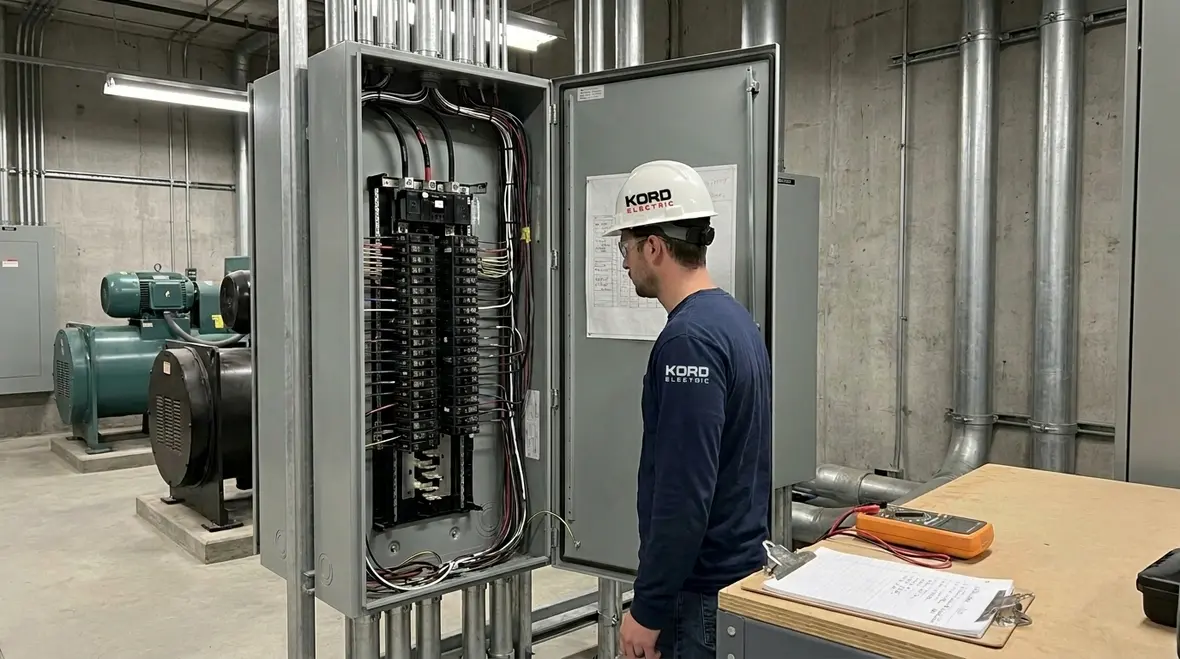
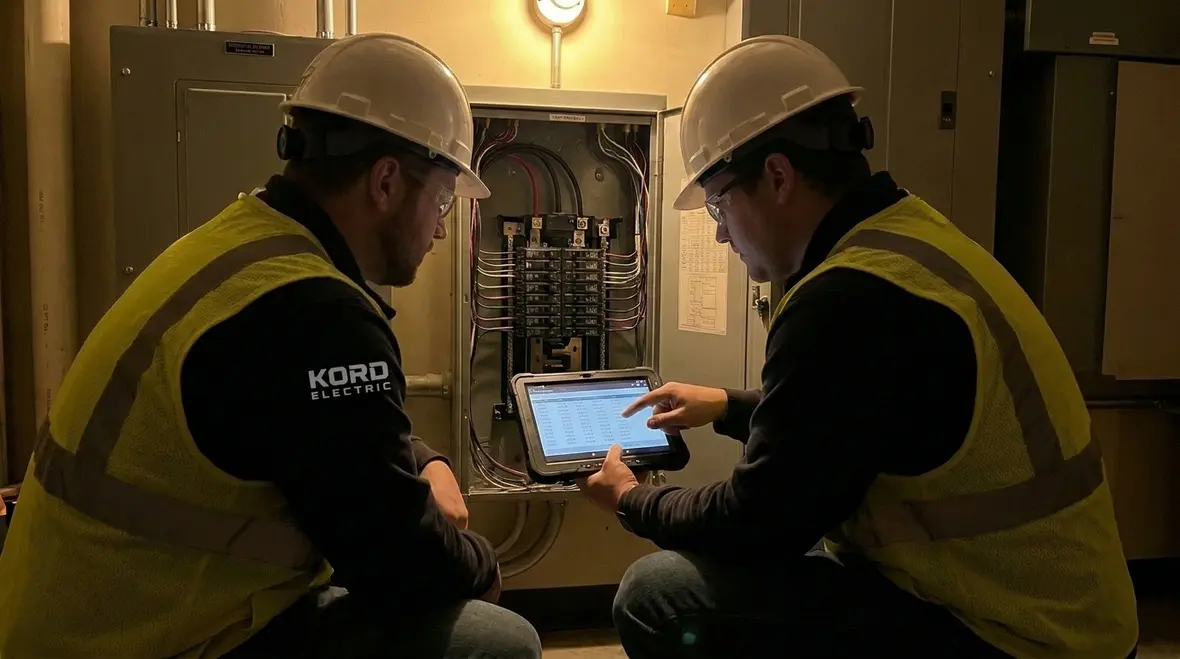
To size a subpanel correctly, we collect details that many people overlook until problems show up. First, we review the main service data, existing panel schedules, and any past fault history. Next, we gather equipment schedules, including motors, drives, compressors, pumps, and panel mounted controls. Then, we confirm the voltage and phase details for the service and subfeed.
Our expert service staff also checks installation constraints that affect sizing decisions. That includes conduit fill, wire insulation ratings, ambient temperature, and expected derating factors. Moreover, for commercial and industrial facilities, we confirm whether the subpanel will feed critical loads that must stay online during disturbances. In other words, we treat each project like a system, not a collection of parts.
Which load types drive commercial subpanel amperage decisions
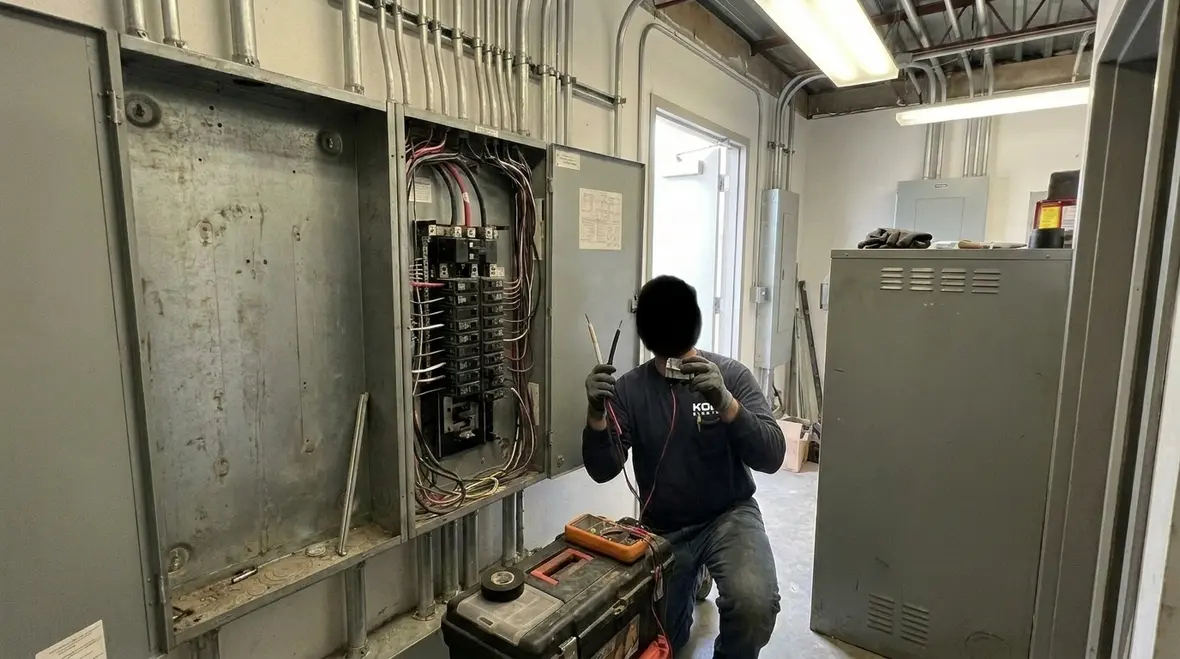
Load types rarely act the same. Consequently, the calculation must separate them and then combine them properly. For example, lighting loads typically have different demand behavior than large motors. Receptacle loads often vary by occupancy and usage patterns. Meanwhile, HVAC loads can fluctuate with control sequences, staging, and outdoor temperature.
When Kord Electric builds a commercial load picture, we also account for continuous loads and noncontinuous loads where the situation requires it. Continuous loads can run at steady high levels for long periods, so we plan for that reality. Noncontinuous loads may start and stop, but they still create demand and inrush currents that influence breaker and conductor performance.
And if your facility has motors, we treat those as their own category. Starting current can stress components, so the subpanel must support safe starting behavior. Think of it like traffic: the speed limit matters, but so does the traffic jam that happens at the on ramp.

Conductor sizing, breaker ratings, and demand: the practical triangle
After load totals are estimated, the next step is practical design. Our technicians align three things: conductor size, breaker rating, and demand behavior. Then they verify that the conductor can carry the expected current under installation conditions. After that, they confirm that the breaker settings protect the wiring and match the load’s needs.
Here is where many sites run into trouble. Facilities sometimes pick a breaker size that feels “close enough,” or they choose conductors that technically pass in normal conditions but fail under heat or long runs. Therefore, our approach keeps the wiring and protection aligned. We also check for harmonics and other power quality issues when the equipment warrants it, since those can affect heating and neutral loading in certain systems.
Demand is the part that gets misunderstood most. Demand can reduce the calculated load compared to nameplate totals, but it does not turn bad wiring into good wiring. It only reflects realistic usage patterns and code approved methods. So we apply demand thoughtfully, then we verify with actual equipment data.
How maintenance affects panel performance over time
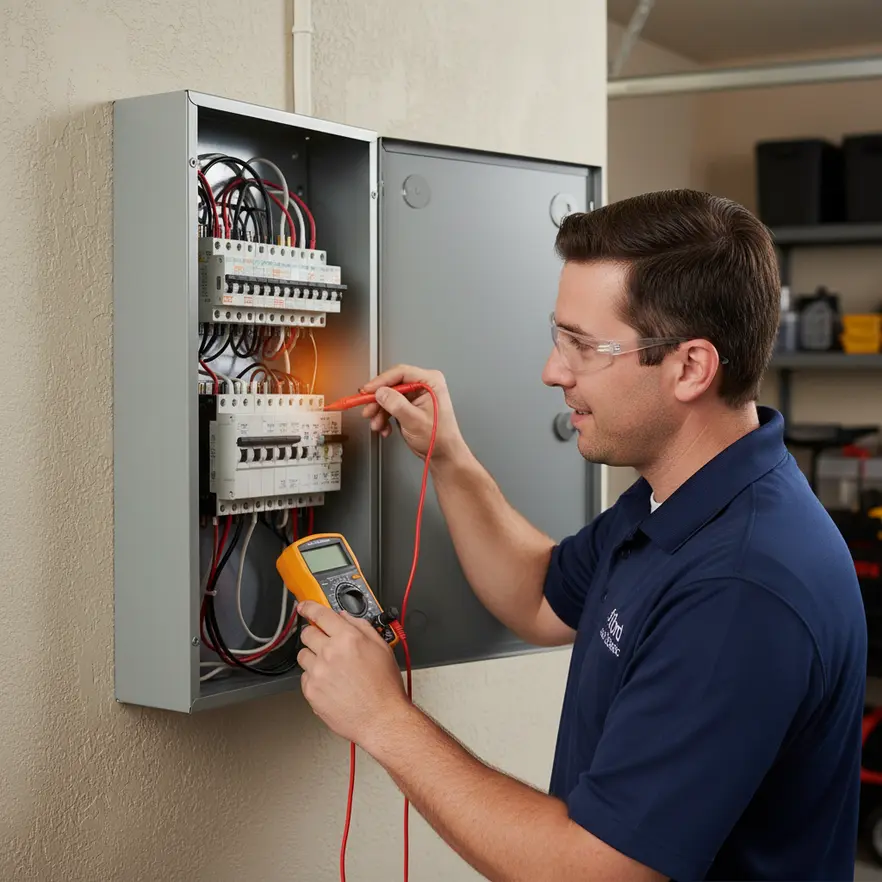
Correct sizing matters, but so does what happens after installation. Over years, panels can degrade due to loose connections, corrosion, dust buildup, moisture, or thermal cycling. Kord Electric service teams support facilities by following disciplined maintenance practices, including careful inspection of connections and component condition.
In our work, we also align with the principles found in our NFPA 70B electrical panels and switchgear maintenance guidance. That guidance emphasizes routine inspection, testing when appropriate, and timely correction of issues before they become outages. Therefore, even a well sized subpanel can underperform if connections loosen or protective devices drift out of spec.
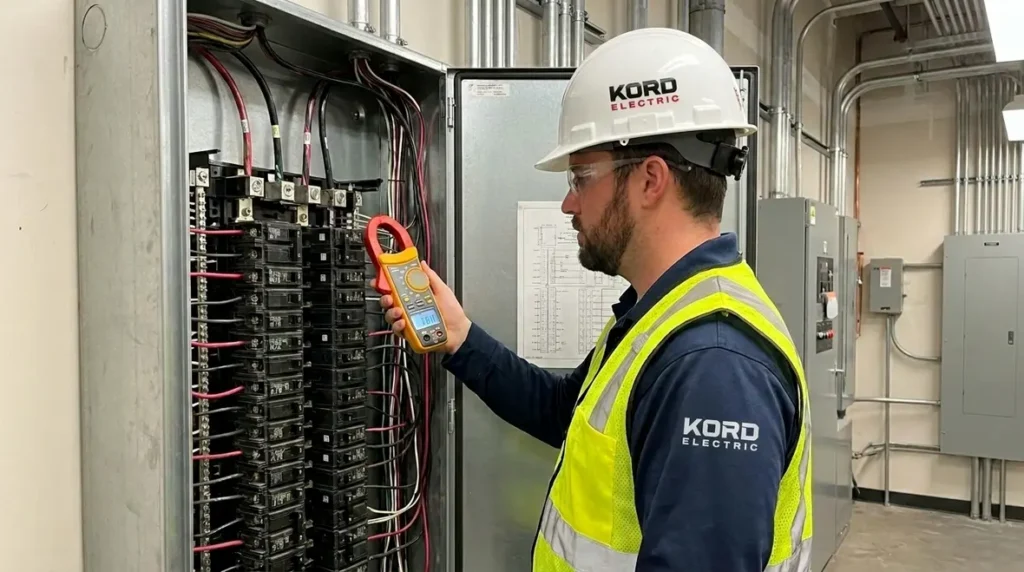
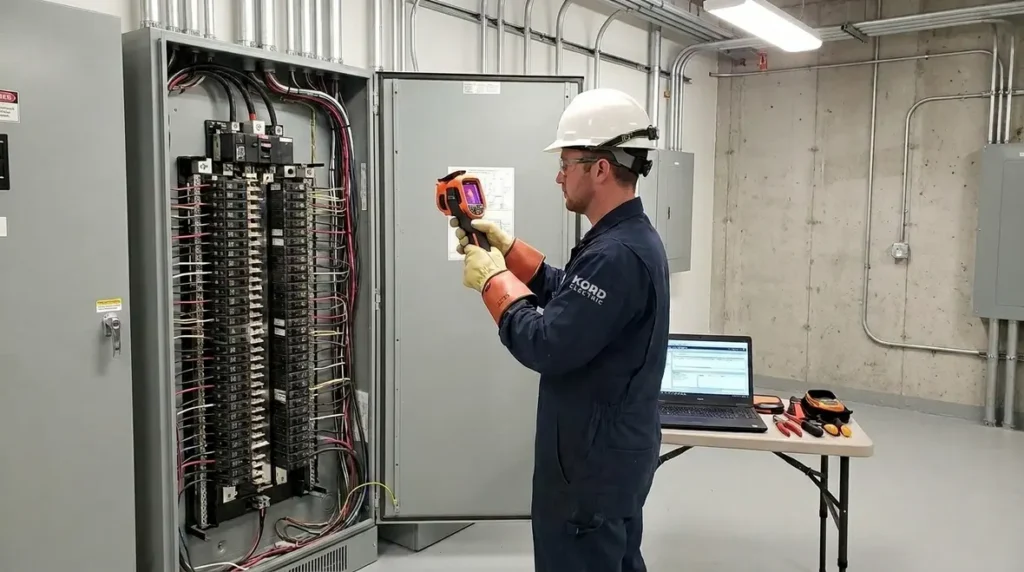
Our technicians focus on visible indicators first, like overheating at terminations, discoloration on bus bars, and signs of arcing. Then, they confirm proper torque on terminations where applicable and check whether labels and panel schedules still match reality. It is amazing how often the panel schedule looks like it came from a different building entirely.
Staying code minded for commercial and industrial facilities
Commercial and industrial projects demand consistency. Our team designs subpanels with code minded methods and clear documentation so the system stays safe and understandable for future maintenance. That includes choosing suitable enclosures, proper ratings for the environment, and protection that matches the wiring method and load profile.
We also keep future expansion in mind without turning the panel into an expensive space heater. Instead, we plan for practical growth based on tenant plans, expansion schedules, and likely equipment additions. As a result, facilities avoid a rebuild when they add a production line, a new HVAC unit, or a new charging system.
And because this is commercial work, coordination matters. We align subpanel design with upstream protection and with how the facility will manage load sharing. When systems coordinate well, the site experiences fewer nuisance trips and more predictable performance. When they do not, staff members end up playing electrician detective at midnight. Nobody should have to binge that kind of drama.
FAQ: Commercial subpanel sizing and load calculation
Commercial subpanel sizing and preventive maintenance: planning the bigger picture
Subpanel sizing never happens in a vacuum. The same facility that needs a disciplined commercial subpanel sizing guide also needs clear labeling, practical inspection routines, and a maintenance strategy that respects how the building really runs. That is why Kord Electric connects subpanel work to broader efforts like electrical panel labeling best practices, data center and process load planning, and ongoing preventive maintenance.
A facility that treats subpanels as “install it and forget it” hardware ends up chasing odd behavior later: unexplained trips, mystery warm spots, and equipment that only misbehaves on the hottest or busiest days. By contrast, a facility that pairs thoughtful commercial subpanel sizing with structured electrical preventive maintenance gives itself room to grow without gambling on safety or uptime. It is the difference between reacting to problems at midnight and planning improvements calmly in daylight.
Conclusion: Let Kord Electric size and support the right subpanel
Kord Electric helps commercial and industrial facilities size subpanels the right way, using disciplined load calculation, practical conductor and breaker alignment, and maintenance that protects performance over time. Our technicians and expert service staff explain the process clearly, so your team understands what we recommend and why. If your facility is planning upgrades, adding equipment, or cleaning up an aging electrical layout, contact us. We will build a safer, smarter power plan that keeps operations steady, even when the site is not taking it easy.
If you are reviewing this commercial subpanel sizing guide because your facility is already seeing nuisance trips, unexplained warm panels, or expansion plans that outgrew the original design, this is the right moment to bring in help. Our team can assess existing distribution, document risks, and recommend targeted improvements that fit your budget and timeline. We also coordinate subpanel work with lighting, HVAC, process loads, and future projects, so today’s fix does not become tomorrow’s constraint.
For facilities that want subpanel sizing to line up with inspections, documentation, and long term reliability, Kord Electric’s electrical preventive maintenance services provide a structured path. From routine panel checks to NFPA 70B informed inspection plans, we help commercial and industrial buildings keep power systems calm, predictable, and ready for whatever the schedule brings.