Commercial Subpanel Upgrade Warning Signs
Commercial Subpanel Upgrade Necessity Signs: what usually happens before it fails
In commercial spaces, a commercial subpanel upgrade necessity signs rarely announces itself with a dramatic movie moment. Instead, the first warnings show up as slow, steady electrical strain. For example, owners notice breakers that trip more often, lights that flicker when equipment starts, or warm spots that should never feel warm. Sometimes the real clue is data, like frequent service calls or rising demand that the panel was never built to handle. When those symptoms show up, Kord Electric steps in to help building teams avoid downtime and safety risk. We have technicians and expert service staff who explain what we find in plain language, because nobody wants an electrical report that reads like it was written by a cartoon villain.
How electrical strain shows up in real buildings
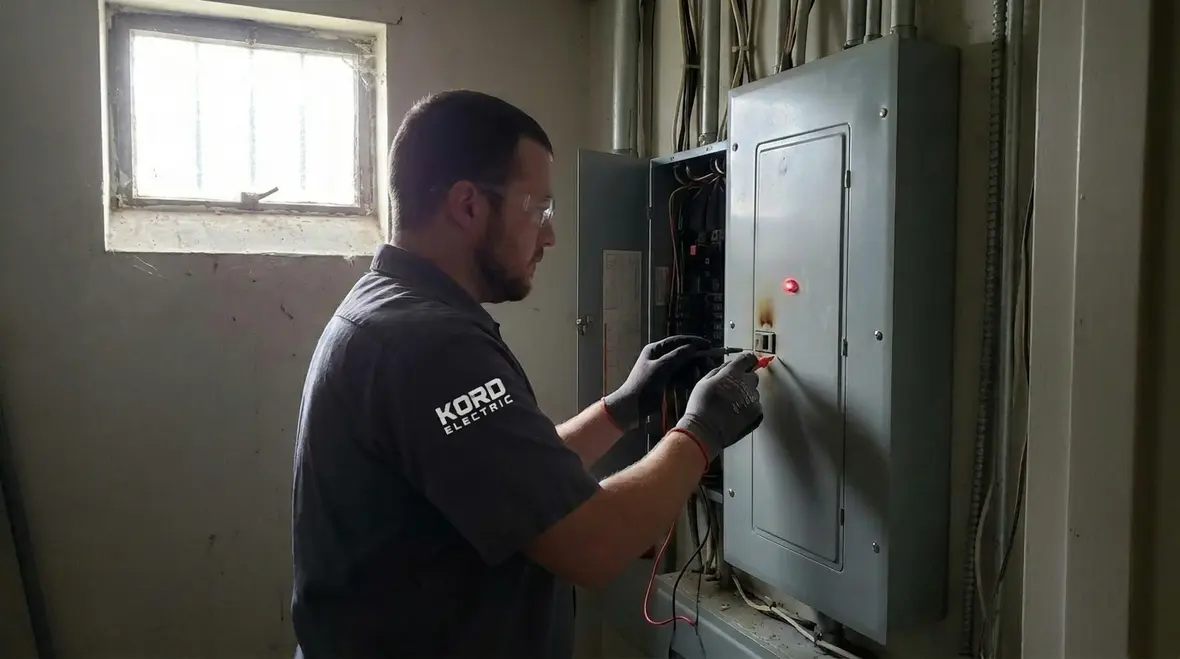
Electrical strain does not just mean “something is wrong.” It means the system works harder than it should, and that added stress changes how components behave. First, a subpanel may still function, yet it runs hotter, makes more noise, and loses efficiency. As load grows, the panel ends up living in the danger zone more of the day than it should. Then, thermal cycling happens as loads shift from morning to evening, and expansion and contraction wear down connections over time.
At Kord Electric, we often see strain build because commercial and industrial facilities add people, machines, or process loads. In addition, renovations can change circuit paths and increase demand without updating the distribution plan. Eventually, the panel looks “fine” from a distance while internal parts show the stress. Our technicians walk the space, observe loads, and test where it matters, so the team does not chase rumors.
Here is what commonly shows up:
- Breakers that trip under normal use, not just during abnormal events
- Visible discoloration on breakers or bus bars from heat
- Humidity or dust that accelerates corrosion on terminations
- Inconsistent power quality like flicker, dimming, or strange surges
And yes, sometimes a building manager says, “It worked last year.” That is true, until “last year” meets “new equipment added this quarter,” which is how panels end up in overtime.
Overheating, discoloration, and the hidden heat problem
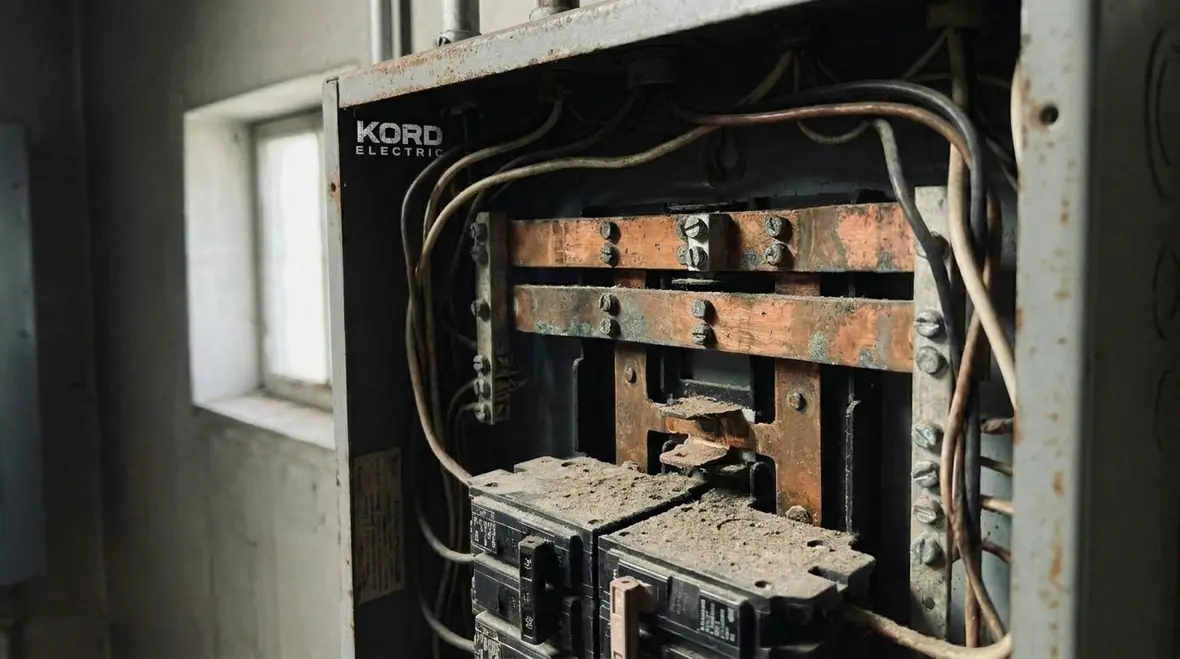
One of the most direct indicators is heat. When a subpanel runs hot, it signals poor connections, overload, or components that no longer match the actual load. In commercial systems, heat moves like a leak in a roof. You might not see the damage right away, but the problem spreads quietly. Over time, elevated temperature can loosen terminals and degrade insulation, which then increases resistance and pushes temperatures even higher. That cycle can turn a small issue into a major outage.
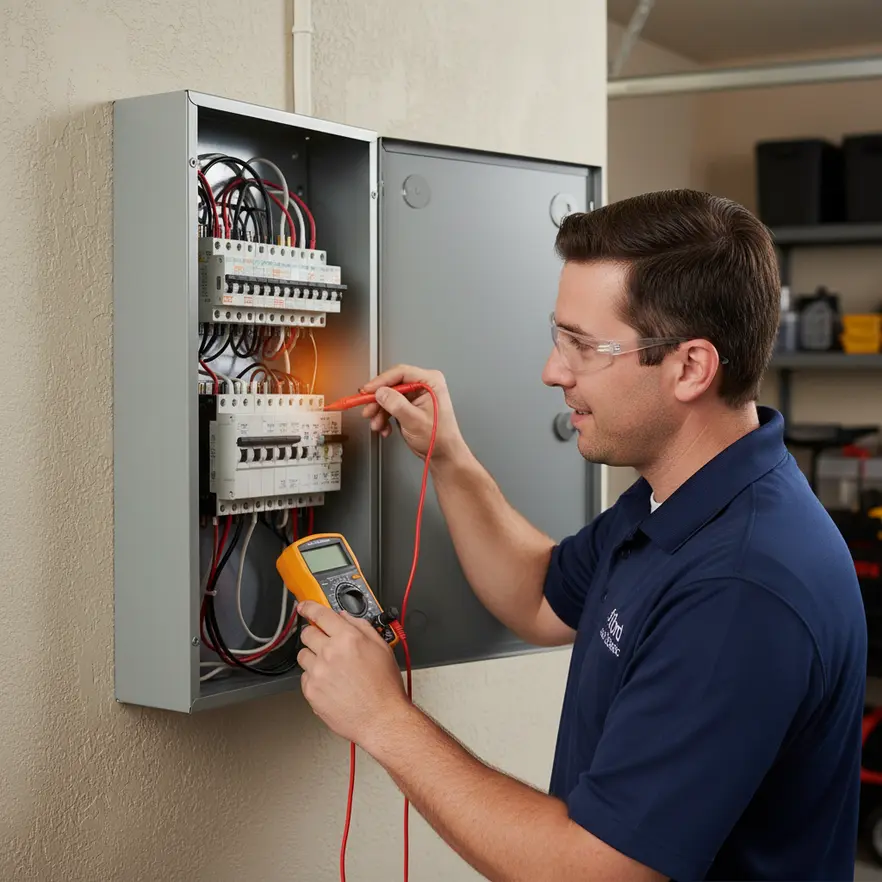
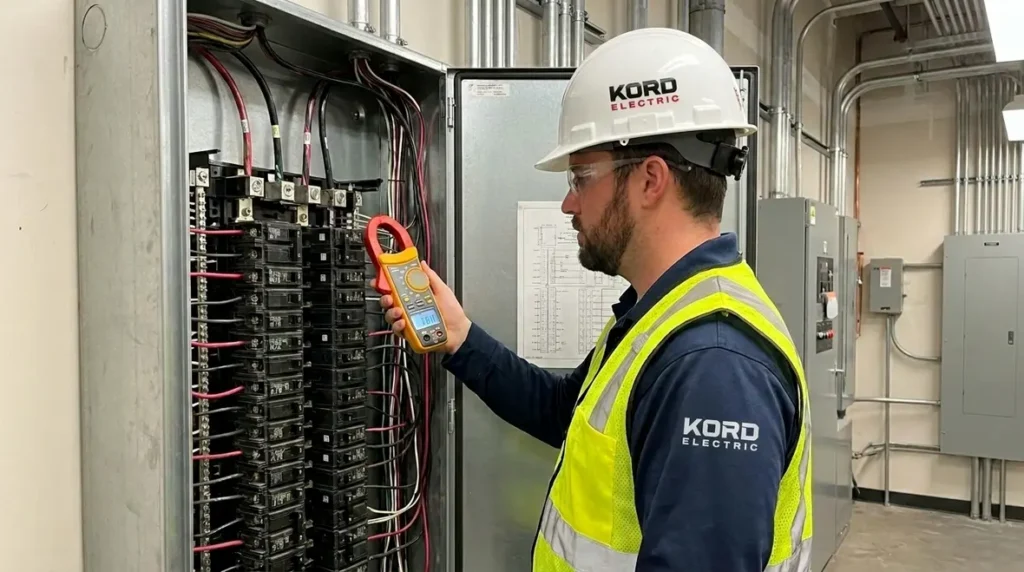
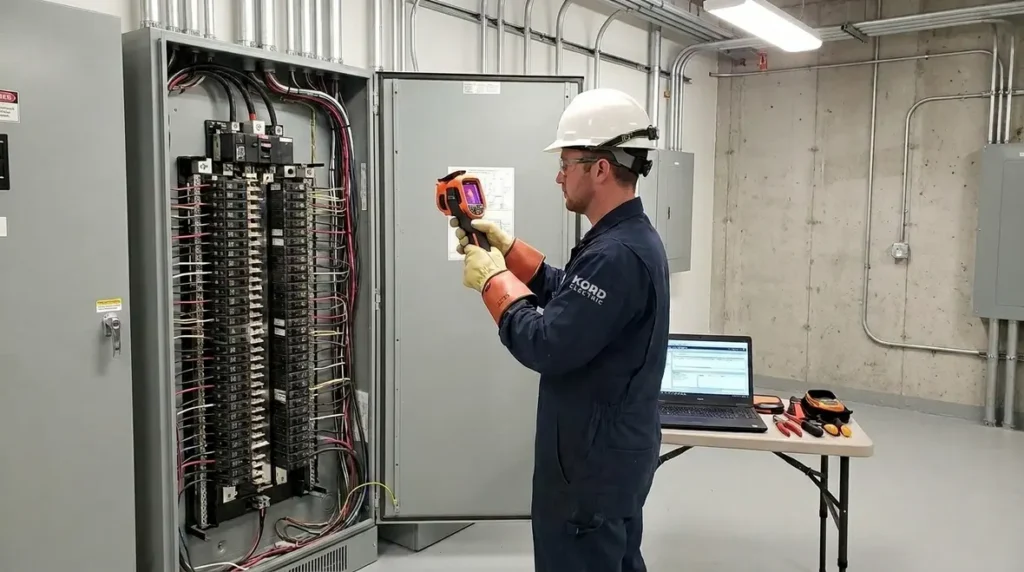
During inspections, our expert service staff looks for the details that many teams miss: hot spots, sharp odors, and signs of arcing. We also pay attention to how the panel sits in the building environment. For example, if a subpanel lives near steam lines or in a poorly ventilated room, the heat challenge grows. Furthermore, if the panel cabinet traps heat due to restricted airflow, the inside temperature rises even when the electrical load seems “reasonable.”
In many cases, a commercial subpanel upgrade becomes necessary not because the panel is old alone, but because the panel’s internal design cannot safely handle current conditions. That is why we often pair our observations with load analysis and inspection of terminations.
Breakers that trip, nuisance faults, and unstable performance
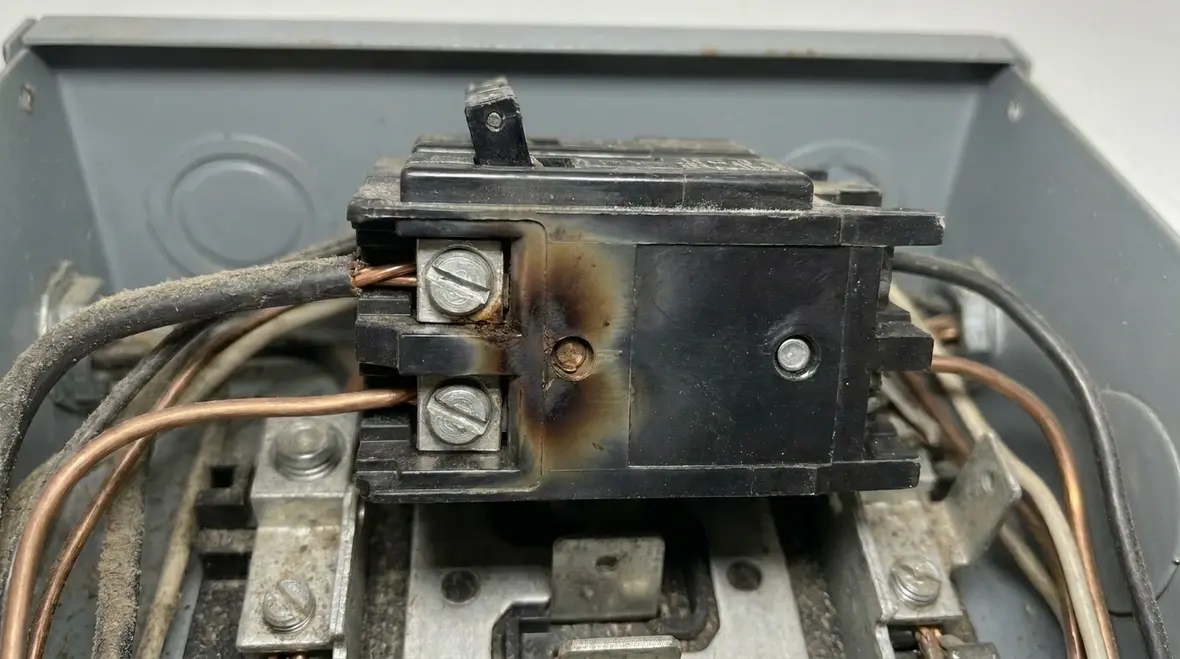
Breakers that trip can feel like the electrical system is “being moody.” In reality, they work as protection. When they trip frequently, it means the system is struggling to stay within limits. Sometimes the issue is a single overloaded circuit. Other times, the subpanel itself cannot distribute power cleanly, especially when loads rise or when power quality issues exist. Either way, constant tripping damages confidence, disrupts operations, and creates a risk of unsafe workarounds.
In commercial and industrial facilities, the cost of downtime adds up fast. A production line pauses, refrigeration cycles break, or critical office systems reboot. Then people start resetting breakers instead of fixing the cause. That approach might get you through the day, but it rarely fixes the root issue.
Kord Electric technicians focus on what those trips reveal. We document patterns: which breakers trip, at what time of day, and what loads start right before the fault. Then we check whether the trip is due to overload, short circuits, ground faults, or aging components that drift out of spec. If a building team keeps seeing the same nuisance faults, that trend often points to a need for updated distribution capacity or improved panel design.
When power quality and demand growth outpace the panel
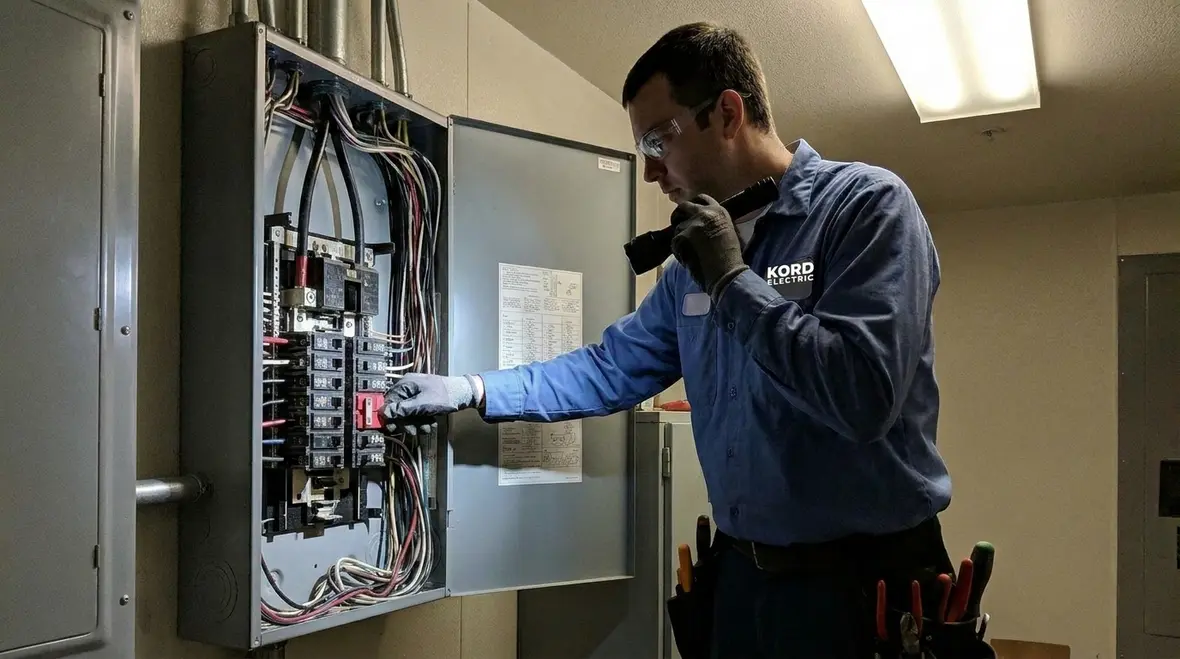
Facilities today carry loads that were not common years ago. Not only do commercial buildings add more devices, they also add motors, HVAC upgrades, charging stations, and process equipment that can create spikes. As demand grows, a subpanel can end up with less spare capacity than the team expects. And when spare capacity shrinks, small problems turn into bigger ones.
Power quality issues like flicker and voltage drops often appear during equipment startup. For instance, when compressors kick on or when machinery engages, lights in the surrounding area may dim or fluctuate. That can mean the wiring and connections face higher current than intended, or the upstream distribution cannot hold voltage stability. Meanwhile, sensitive electronics in offices, telecom, and monitoring systems do not tolerate unstable power very well. Over time, they can fail early.
At this stage, a thorough review becomes essential. Kord Electric aligns electrical maintenance with how the facility actually operates. If the team follows an organized plan, they catch issues before they become emergencies. If they do not, the building tends to wait until a service call feels unavoidable.
If your property team wants a structured path, our blog on commercial and industrial electrical maintenance plans covers how planned inspection and service help reduce surprises and protect reliability. In addition, those maintenance plans help facilities track changes in load and system health, which is the smartest way to plan upgrades instead of reacting to outages.
Why age, corrosion, and lack of preventive maintenance matter
Some panels fail early due to installation quality. Others fail slowly due to time and environment. In commercial and industrial facilities, corrosion can be a serious factor. Dust, moisture, chemicals, and fluctuating humidity affect cabinet integrity and termination condition. Even if the panel looks serviceable on the outside, internal components can degrade.
Age matters too, but it matters as a multiplier. An older subpanel with frequent use faces more thermal cycles, and that accelerates wear. Further, older designs may not match today’s safety needs, labeling standards, or load requirements. Then, building teams add circuits for new offices, new equipment bays, or new tenant needs, often without a full distribution capacity review.
That is where preventive maintenance changes everything. When Kord Electric technicians inspect a subpanel on a schedule, we can catch loose connections, identify hotspots, and document component health. We also explain findings in a way that helps decision makers act with confidence. Our expert service staff does not just say “replace it.” We show what is happening, why it matters, and what upgrade path fits your facility. It is the difference between guessing and managing.
How Kord Electric recommends upgrading, testing, and planning for uptime
When a commercial subpanel upgrade necessity signs scenario becomes clear, our work plan focuses on safety, reliability, and uptime. First, our technicians confirm the existing conditions through inspection and testing. Then, we evaluate capacity and distribution needs based on the loads in the building. Next, we coordinate the upgrade schedule around operations, so production and critical services keep running.
Because commercial and industrial facilities cannot afford long downtime, Kord Electric approaches upgrades like a controlled operation, not a last minute scramble. We verify labeling, circuit organization, and protective device compatibility. We also review upstream protection and the pathway for power so the new subpanel works as part of a full system, not as a standalone box.
After the upgrade, we test and verify performance. Finally, we help the facility set a maintenance rhythm that reduces the chance of repeating the same problem later. And if you think that sounds like extra work, consider the alternative: random outages, urgent repairs, and frantic meetings that start with “Does anyone know what happened?”
FAQ for commercial and industrial facilities
Short answers to common upgrade decisions
- What is the biggest risk of ignoring subpanel strain? Safety risk, increased outage probability, and faster component failure.
- Can maintenance fix these issues without an upgrade? Sometimes, but when the panel cannot handle demand or has unsafe internal conditions, a commercial grade upgrade becomes necessary.
- Will upgrading impact operations? Kord Electric coordinates schedules and testing to minimize downtime for commercial and industrial work.
- Who should handle commercial subpanel work? Trained electricians and expert service staff with testing tools and experience in major properties.
Ready to prevent the next outage and plan the next upgrade
Kord Electric helps commercial and industrial facilities spot the electrical strain that leads to costly downtime. When the symptoms begin, we inspect, test, explain, and recommend the right path based on your real load and operating needs. Do not wait for a breaker to trip at the worst moment, like right before a critical shift change. Contact our expert service staff today to discuss your subpanel conditions and develop a reliable upgrade and maintenance plan that keeps your building steady.
For properties that want to pair subpanel upgrades with structured inspections, Kord Electric also offers dedicated electrical preventive maintenance services so panel health, power quality, and code expectations stay aligned over time instead of only getting attention during emergencies.
If your facility operates across multiple cities or you manage a portfolio of major properties, you can also explore how our broader Los Angeles County electrical services support upgrades, troubleshooting, and long term reliability for complex commercial and industrial sites.