

Commercial Surge Protection Installation Guide
Commercial surge protection installation for the buildings that never get to “pause”
In commercial and industrial facilities, the power grid does not ask permission before it changes. That is why we recommend a commercial surge protection installation for sensitive equipment, especially when a single spike can shut down a process, corrupt data, or quietly damage hardware over time. We at Kord Electric design and install surge protection with your real world in mind, not a textbook fantasy.
And yes, we have heard the jokes. Someone always says, “A surge is just electricity having a bad day.” Then we show them the cost of a bad day for an HVAC controller, a PLC, a server room, or a life safety system. Suddenly, the joke stops sounding funny. Our technicians explain everything in plain language, then we build a plan that fits the building and the risk.
What surge events do to modern building systems
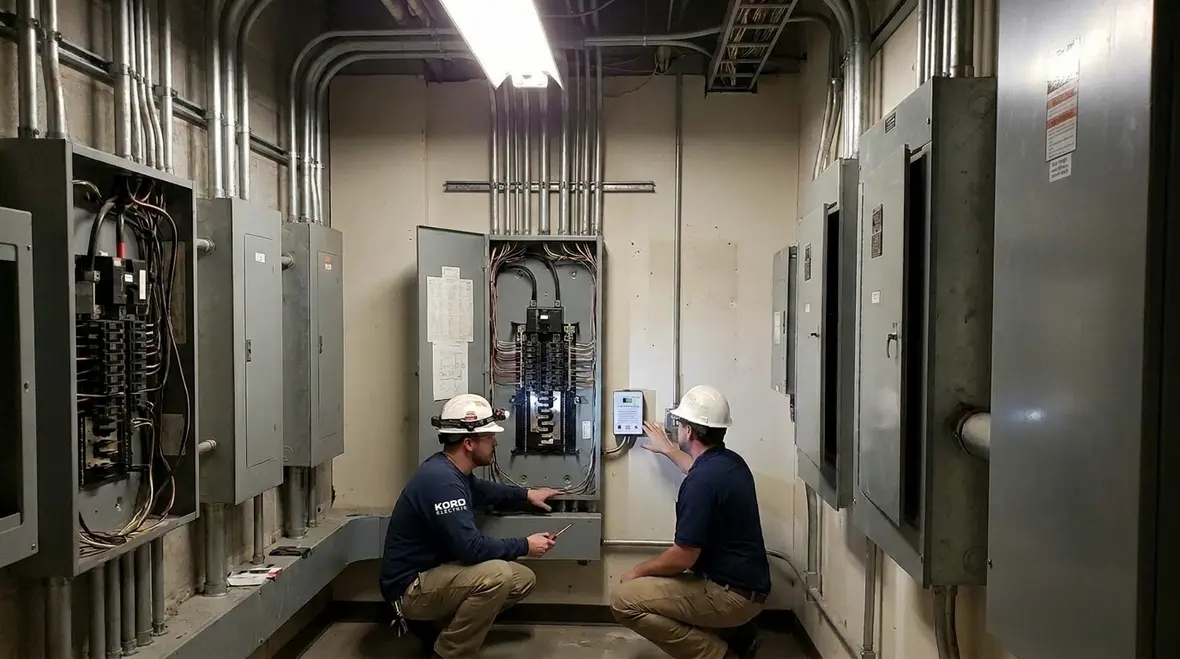
Surges are short spikes or sudden bursts of voltage. They can come from lightning, utility switching, motor start ups, or even from large loads cycling inside the same facility. While the event may last less time than a blink, the equipment can still feel it. Then, even after the lights come back, the real damage may already be underway.
Today, major property buildings run on more than power. They run on control signals, networking, and smart building systems. As a result, surge energy can travel through power lines and also sneak through data and control wiring. Therefore, sensitive devices experience stress in ways that might not trigger an immediate failure. Instead, equipment can degrade. Over time, components run hotter, insulation breaks down, and reliability drops. In other words, the building starts acting like it is fine, while the bills quietly get bigger.
To be clear, we do not treat this like a one size fix. We treat it like a system problem that needs a coordinated solution across panels, circuits, and connected devices. Our expert service staff walks customers through what happens, where it happens, and why protection belongs at the right points.
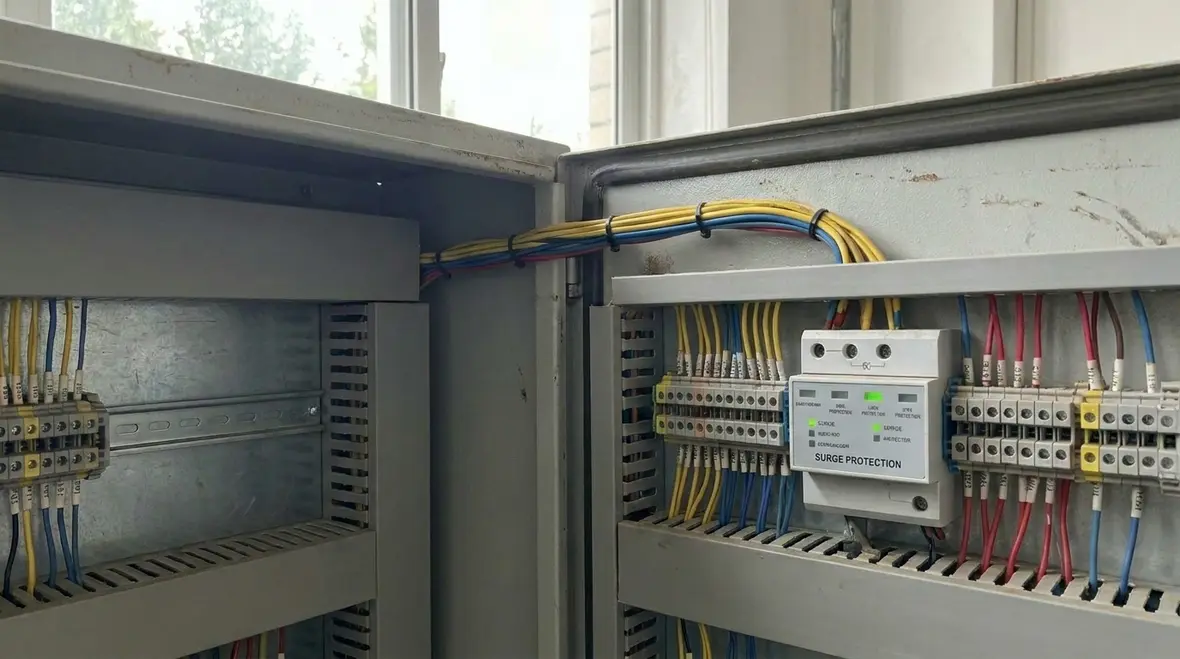
Why protecting sensitive equipment is a necessity, not a luxury
When a commercial or industrial facility loses uptime, the impact spreads fast. Maintenance teams chase faults. Operations slow down. Data systems struggle. And tenants or customers start noticing. Furthermore, many pieces of equipment today rely on stable voltage conditions to operate accurately. Even small deviations can cause errors, resets, or communication drops.
We often hear the question, “Do surges really happen that often?” They do. You do not need a lightning strike every week for surges to cause trouble. Utility events occur regularly, and internal switching events are common in buildings with pumps, compressors, elevators, and large HVAC loads. Then, one “normal” day turns into a “why did this fail” day.
Also, the equipment you protect rarely runs alone. It depends on other devices that share the same electrical environment. So, when we protect the right assets, we reduce cascading failures. That means fewer lockups, fewer brownout symptoms, and fewer mystery outages that steal your time.
In our experience, surge protection pays for itself because it prevents downtime and lowers repair costs. And we say this as a company, not a fortune teller. We can show you the equipment categories we focus on, then map them to a practical protection approach.
How modern commercial electrical systems shape the right protection plan
In today’s buildings, the electrical system acts like a backbone for everything from power distribution to controls and communications. As our team references in our guidance on commercial electrical systems for modern buildings, these facilities use integrated systems that share power and signals across multiple areas. That is exactly why surge protection must be planned, not guessed.
For example, we consider service entrance design, grounding and bonding quality, panel layout, and how circuits route through the building. Next, we look at the equipment list. We identify what needs protection first, such as:
- Industrial controls and motor drives
- Server and network equipment
- Security systems and access control
- Building automation controllers and sensors
- Critical HVAC and refrigeration controls
Then we match protection to those loads. That might include coordinated protection at the service and further protection at distribution levels. In addition, we account for cable routing and how surges can couple into adjacent wiring. Finally, we verify installation quality so the protection does what it is supposed to do when the next spike arrives.
And if you are thinking, “We already have a breaker, so we are good,” we get it. Breakers protect against overcurrent, not the fast voltage jumps that surge protectors handle. Breakers are like a seatbelt. Surge protection is like airbags. Both matter, just in different moments.
Where surge protection installation actually belongs in a building
Effective protection requires placement, coordination, and proper connection details. So we do not treat surge protection as a single add on device. We install surge protection where it reduces exposure for sensitive equipment while coordinating with the building’s electrical layout.
In many major property buildings, we start at the service entrance because that is where incoming power can bring the largest threat. From there, we support distribution panels and specific branch circuits that feed critical systems. This approach reduces the voltage stress that reaches connected loads. Meanwhile, we also consider point of use protection where devices are highly sensitive or where wiring distances increase exposure.
Our technicians explain the logic as they work. For instance, they show customers how equipment location affects surge exposure and how grounding influences performance. Then, they connect the dots between protection points and real equipment risk. We keep it simple, calm, and practical, because building owners and facility managers need clear decisions, not vague assurances.
We also plan for future growth. Major facilities add equipment over time. If surge protection stops at day one, it may not cover new loads later. Therefore, we help customers plan protection that supports expansion and modern upgrades.
What our technicians verify after installation, because details matter
Surge protection does not succeed by intention alone. It succeeds because the installation meets the right standards and matches the building system. After installation, we verify key factors that help ensure protection performs during real events.
First, we check proper connections and installation details. Next, we confirm coordination between the service and downstream protection devices so they work together. Then, we verify grounding and bonding paths so the system can control surge energy as designed. We also confirm labeling and documentation, because maintenance teams should not have to play detective later.
Our expert service staff also educates building operators. They learn which areas connect to critical systems, what protection protects, and what to watch during maintenance. In other words, the job does not end at the panel door. We close the loop with training and clarity.
And if anyone asks for the “magic fix,” we remind them that good electrical work is not magic. It is careful planning, correct placement, and solid verification. The building does the rest, quietly and reliably, like a well trained security guard who never needs to raise their voice.
FAQ about surge protection for commercial and industrial facilities
Final word: let’s protect your equipment before the next spike finds it
Surges do not announce themselves. Yet your equipment feels the results, one stressful event at a time. If you operate a commercial, industrial, or major property building, we can help you reduce that risk with a properly planned commercial surge protection installation and expert verification. Contact Kord Electric to schedule an electrical assessment and protection plan tailored to your systems. We explain clearly, install carefully, and keep your facility running with fewer interruptions. Let’s handle the boring part so your business can enjoy the uptime.
If you are already planning broader upgrades across panels, lighting, or critical infrastructure, consider pairing surge protection with a structured electrical preventive maintenance program. Coordinating these efforts helps protect sensitive equipment, reduce surprise outages, and support long term reliability across your entire facility.


