Commercial Electrical Safety for Workplace Hazards
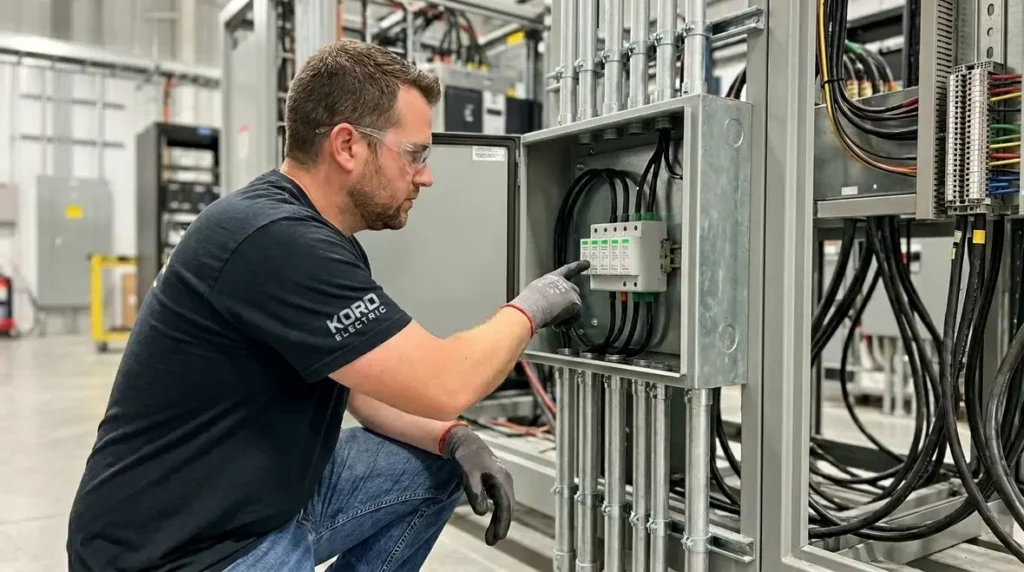
In commercial spaces, electricity does not care if the meeting starts in five minutes. That is why Kord Electric insists on practical commercial electrical safety tips for workplace hazards right from day one. We teach teams to spot damaged cords, keep panels closed and labeled, and follow lockout tagout before anyone touches equipment. Also, we do not treat safety like a poster on the wall. Our technicians and expert service staff explain the “why” in plain language, so people remember it during real work, not just during inspections. And yes, we have seen what happens when someone “just quickly” resets a breaker. Spoiler: the electrical system never forgets, and neither do we.
Why workplace hazards in commercial buildings escalate fast
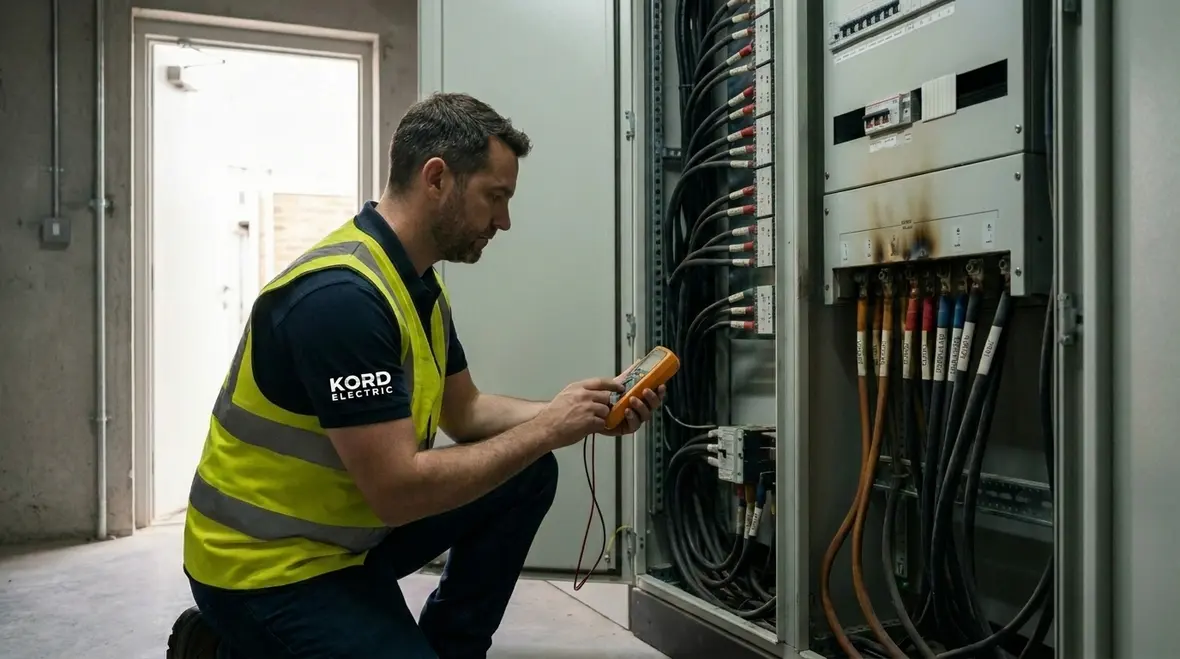
In industrial and major property buildings, electrical risks spread quickly because multiple systems share power and space. One faulty connection in a distribution area can lead to overheating, arcing, and damaged components. Then, other loads can trip, leaving critical circuits down during peak operations.
Additionally, many workplace hazards come from normal daily habits. Employees may move equipment, reconfigure workstations, or use temporary power during maintenance. Even when everyone tries to do the right thing, small deviations from procedure stack up. That is why Kord Electric focuses on prevention, not panic.
Our technicians explain that electrical safety is a chain. If one link breaks, the whole process suffers. For example, skipped torque checks on terminations might not fail today, but it can fail during the next heat cycle. In other words, the building acts like a slow cooker for trouble.
Top commercial electrical safety practices for daily operations
We build a safety rhythm that matches how commercial sites actually run. First, teams should treat all electrical panels as energized until proven otherwise. Next, they should keep covers in place and remove any “temporary” wiring only through proper procedures.
Also, cables and cords must stay in good condition. When insulation shows cracks, discoloration, or exposed conductors, the hazard becomes immediate. Likewise, cords should not run across walkways where they get pinched, crushed, or chewed by the normal chaos of the day.
To keep things steady, we recommend these core habits:
- Use labeled circuits so workers can confirm the correct breaker before work
- Keep equipment dry and away from leaks, especially around power supplies
- Control access to electrical rooms with key or badge systems
- Document and correct recurring trips, stutters, and overheating smells
- Train staff to report damaged outlets and loose connections immediately
Our expert service staff takes time with facility teams to explain what “safe” looks like in the field. That includes how to recognize warning signs early, before someone experiences a shock or an outage. And if you think this sounds strict, remember: strict is what keeps the lights on for your tenants and customers.
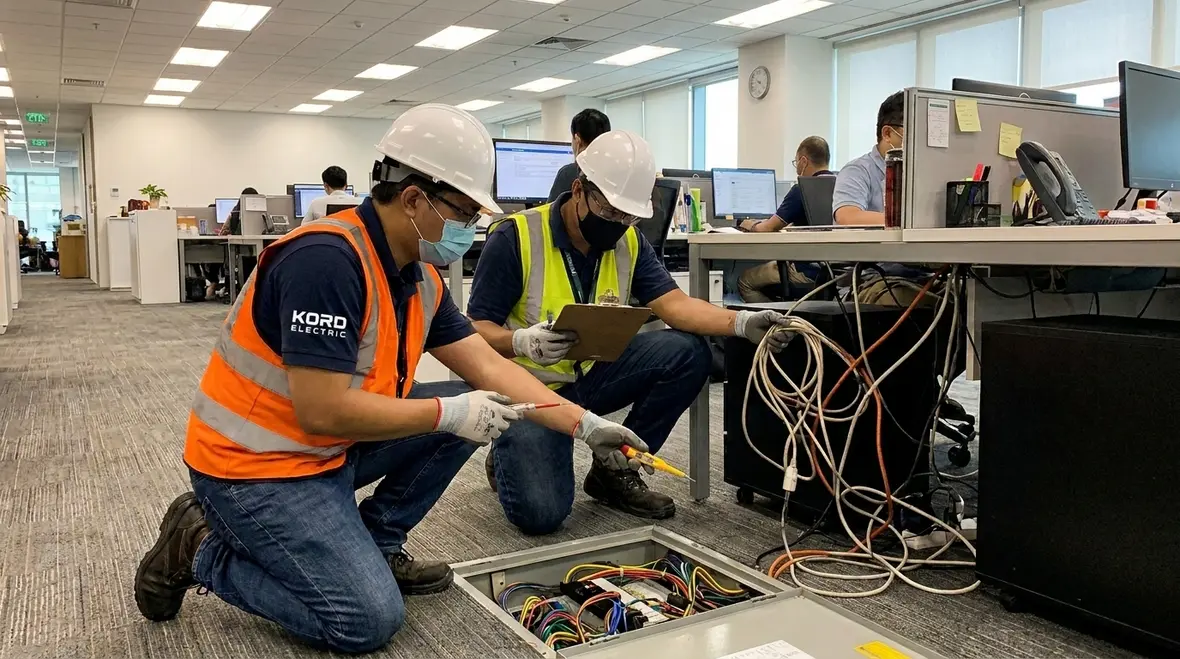
How to manage panels, breakers, and grounding like pros
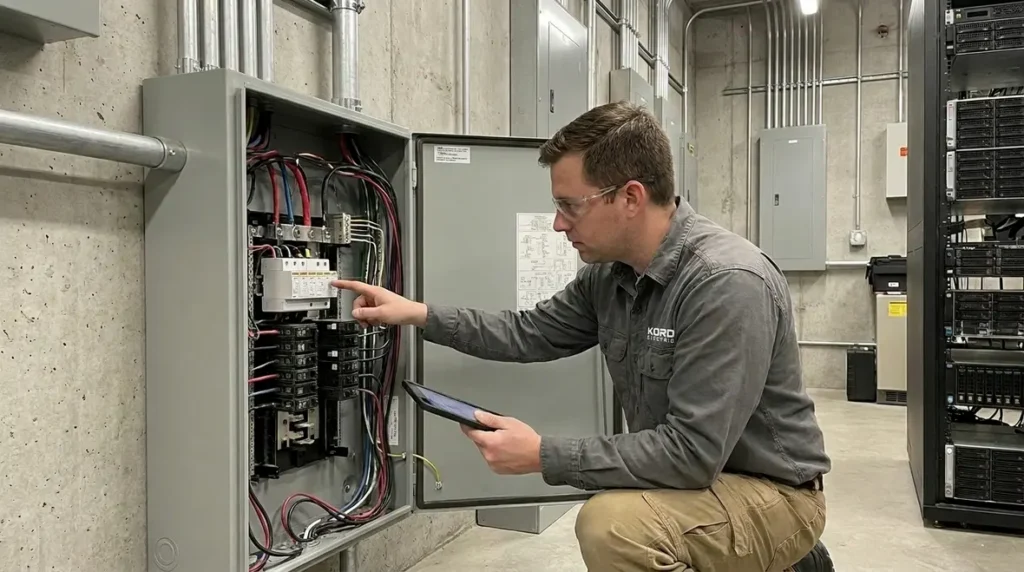
Commercial and industrial facilities depend on reliable power distribution. So, safe panel and breaker management matters more than most people realize. Kord Electric helps teams set clear rules for who opens panels, when they open them, and what steps they must follow to reduce risk.
For grounding, we treat it like the quiet guardian of the system. If grounding is weak, the path for fault current becomes unpredictable. As a result, protective devices may not trip correctly, and equipment may remain energized longer than expected.
Here is what we focus on when we support major property buildings:
- Verify labeling matches real circuit function after any change
- Inspect for corrosion, loose lugs, and heat damage during service visits
- Confirm torque and connection integrity during scheduled maintenance
- Ensure bonding and grounding systems connect properly and stay that way
- Maintain working clearances so workers do not crowd energized equipment
Furthermore, we explain that panel safety is not only about shutting things off. It also includes keeping the work area organized so tools do not drop into live sections, and so workers do not improvise. In our experience, “creative problem solving” is fun in movies, but it is expensive in the electrical room.
For teams that want deeper guidance on distribution gear and compliance, we also point facility managers toward resources on NFPA 70B electrical panels and switchgear maintenance and broader NFPA 70 national electrical code practices so the on-site rules connect directly to national standards.
Lockout tagout and energized work: what teams must do
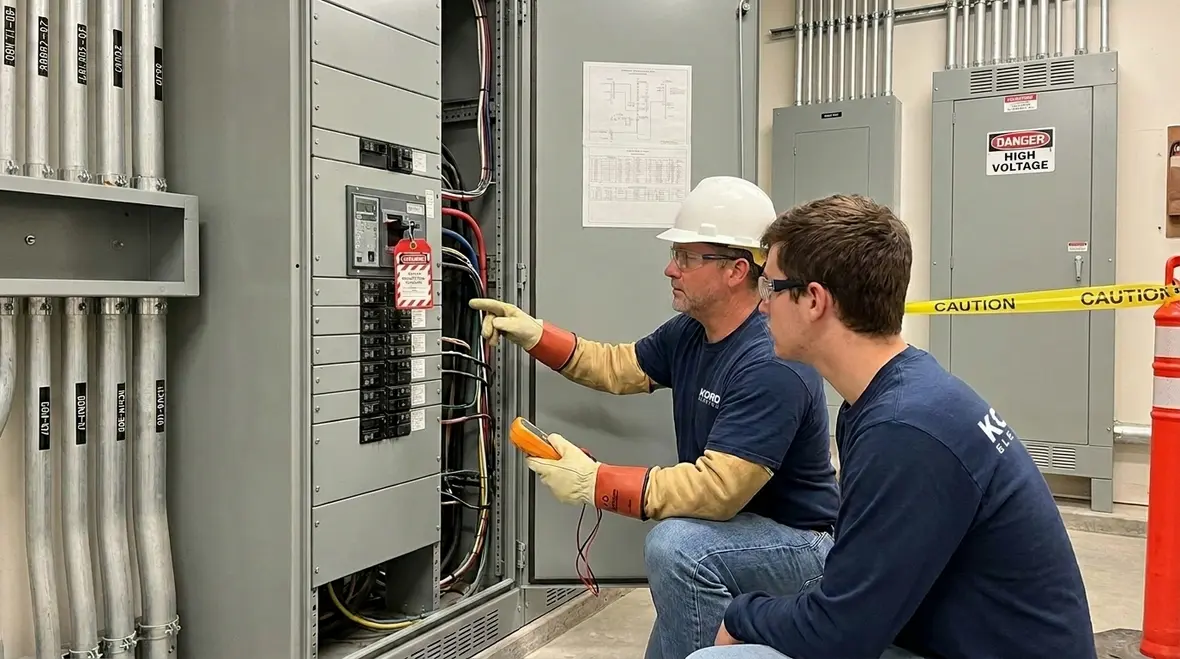
Lockout tagout protects people during maintenance and repair, but only when the process is consistent. We make sure facility teams understand that lockout tagout means more than attaching a lock. It includes verifying that the equipment is actually de-energized and that stored energy releases safely.
In commercial electrical safety, this is where mistakes get serious. Even if someone flips a switch, capacitors and stored energy can keep parts hazardous. Additionally, backfeed from other sources can energize equipment that appears off. That is why Kord Electric supports procedures that account for the whole system, not just the visible breaker.
Our technicians walk teams through real scenarios, such as:
- Replacing components in motor control centers and ensuring upstream sources stay locked
- Working around switchgear where multiple feeders exist
- Handling equipment with automatic transfer where power sources change
- Dealing with stored energy, including capacitors and thermal effects
Then, we document steps and help teams train others. We also keep language simple, because when pressure rises, people need clarity, not a textbook.
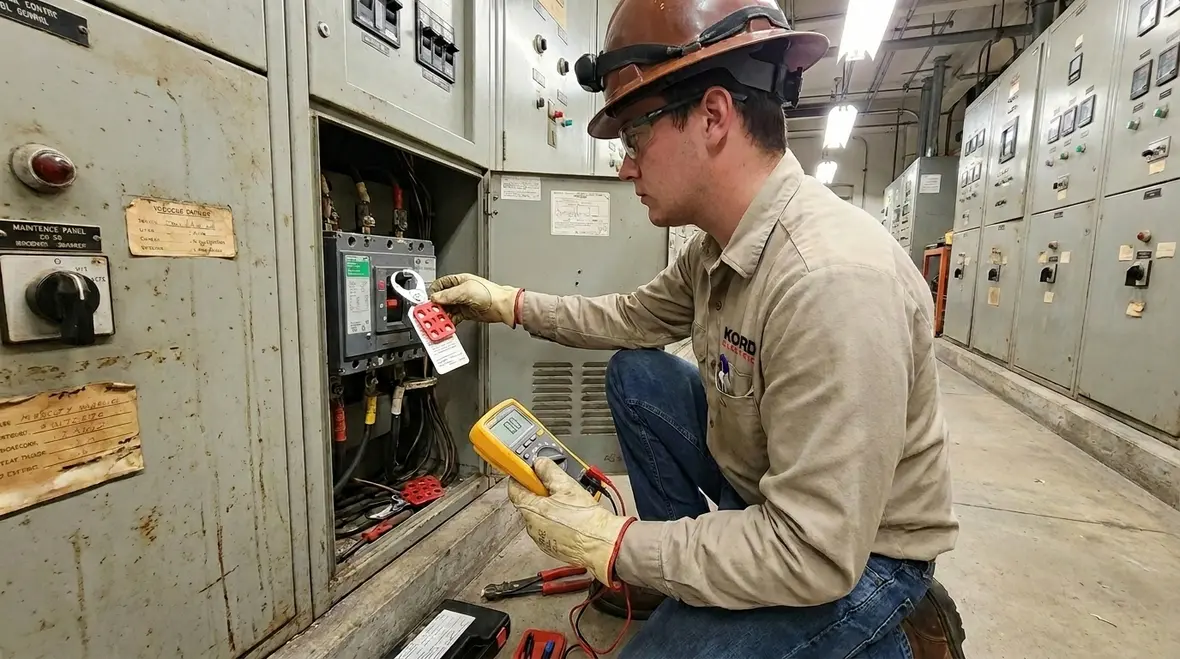
Prevent slips, trips, and arc flash injuries during maintenance
Electrical hazards do not only come from contact with live parts. Often, injuries happen because the work environment stays unsafe. For example, clutter around electrical equipment leads to trips and falls, which can cause tool drops and accidental contact.
Arc flash risk becomes a different kind of problem. It can occur when energy releases in an unexpected way, and it can happen even when a worker believes the system is safe. Therefore, proper planning, safe work practices, and correct protective equipment matter.
Kord Electric helps facilities approach arc flash and maintenance safety with practical steps, such as:
- Performing hazard awareness before work begins
- Following an arc flash risk assessment process for relevant equipment
- Using the correct personal protective equipment for the task
- Maintaining barriers and tools designed for energized work boundaries
- Keeping access routes clear and marked
And yes, we tell teams not to treat PPE like a costume. You do not wear a seatbelt only when you feel like it. You wear it because the situation might change, and you still need to walk away. Likewise, the right protection keeps employees safe when conditions shift.
Training and inspections that actually stick
Safety fails when training stays generic. Kord Electric works with commercial and industrial facilities to connect training to the exact equipment they operate. Our expert service staff explains in a calm, step by step way how faults happen, why inspections matter, and how teams can reduce recurring hazards.
Inspections should also cover the “in between” items. Many sites focus on major problems but overlook early warning signs, like loose connections, dust accumulation in enclosures, moisture intrusion, and labels that no longer match reality.
To keep training effective, we recommend these methods:
- Schedule toolbox talks around specific tasks, not vague reminders
- Use real service findings from the site as teaching material
- Review incident reports and near misses, then adjust procedures
- Track corrective actions with owners and due dates
- Repeat verification after work changes, because systems evolve
Also, teams should test how well procedures work during practice. When employees understand the steps and can follow them under time pressure, accidents become less likely.
For facilities that want a structured program instead of one-time fixes, Kord Electric’s dedicated electrical preventive maintenance services help align inspections, documentation, and training into one long-term plan that keeps commercial electrical safety tips connected to real schedules and real equipment.
FAQ: Commercial electrical safety and workplace hazards
Ready to strengthen electrical safety at your commercial site?
If your facility runs heavy equipment, supports multiple tenant spaces, or depends on uninterrupted operations, safety needs more than good intentions. Kord Electric delivers expert electrical service for commercial and industrial facilities, and our technicians explain the details in plain language so your team can act with confidence. We help you reduce workplace hazards through proper maintenance, safety planning, and practical training.
When you are ready to turn planning into action, you can pair these commercial electrical safety tips with targeted services like electrical preventive maintenance for commercial and industrial facilities or project-based upgrades such as commercial and industrial lighting installation services. Both help your building move from “hoping things stay safe” to a documented strategy for inspections, repairs, and upgrades.
Reach out to us today to review your current safety approach and schedule the right service for your building.