Smart Lighting Control Systems That Maximize ROI
Maximizing ROI starts with smart lighting control systems
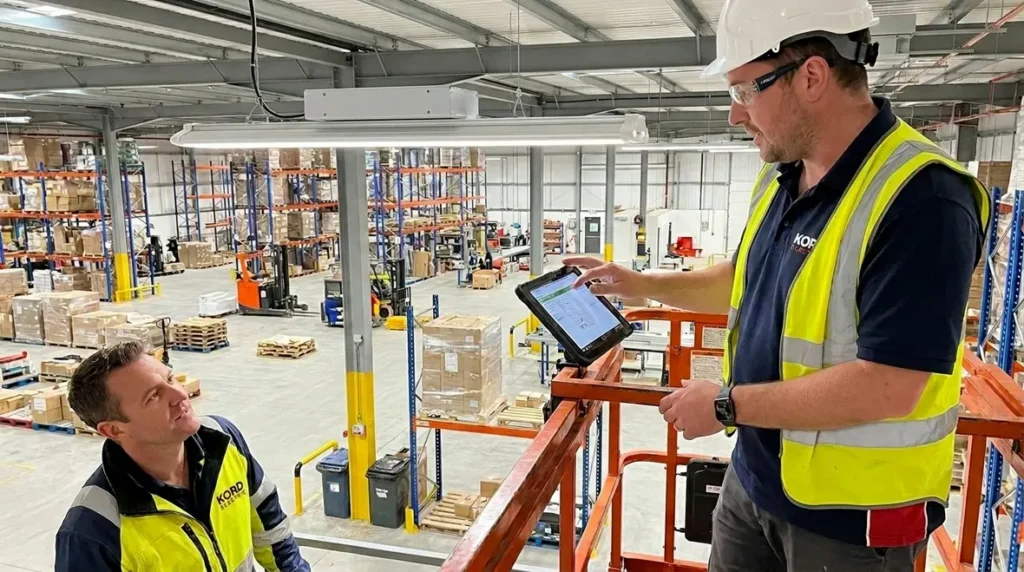
At Kord Electric, we design and deliver smart lighting control systems for commercial, industrial, and major property buildings, where every wasted watt and every out of schedule hour turns into real money. We help others stop guessing and start controlling lighting with precision. As a result, our clients cut operating costs, reduce maintenance calls, and improve tenant comfort all at once. And yes, we know lighting controls can sound about as exciting as watching paint dry. However, when the numbers hit the spreadsheet, it suddenly feels like a plot twist from a good TV season.
How smart lighting control systems pay back fast in commercial buildings
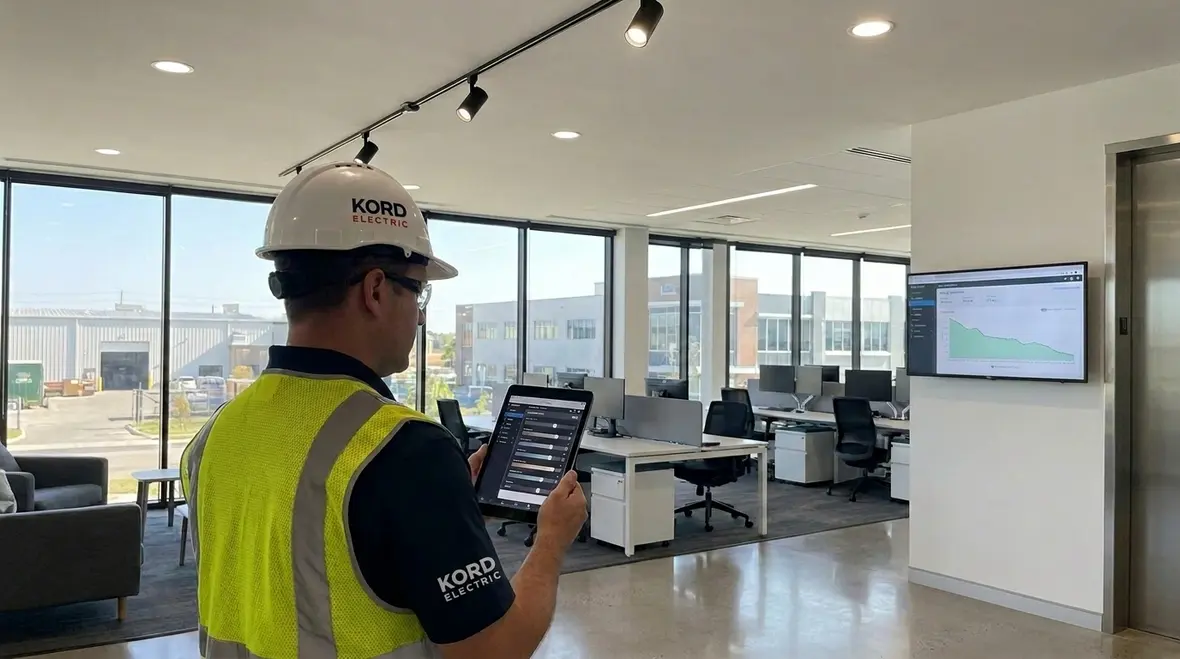
Commercial owners often ask how ROI gets built instead of hoped for. First, we map your lighting bill to the way your building actually gets used. Then we align that with occupancy, daylight, and schedules so lights run when they earn their keep. In many facilities, the easiest savings come from turning off areas that stay empty, trimming light levels when daylight does the work, and preventing “lights on all day” habits that no one remembers to fix.
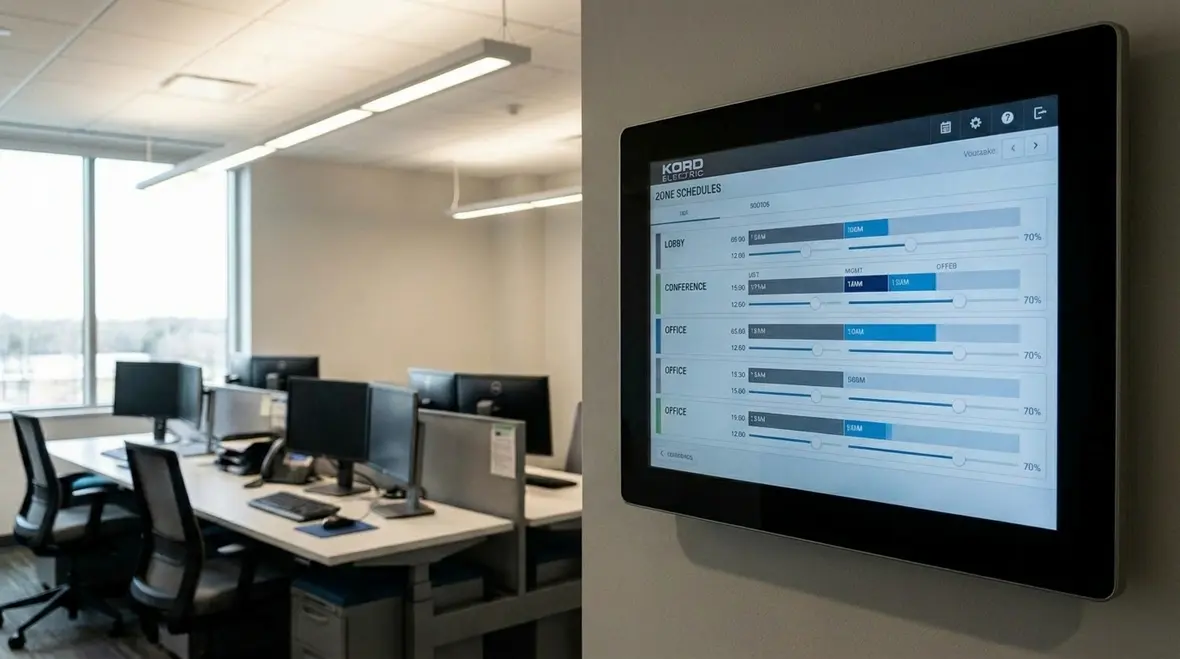
Next, we focus on controllability. Instead of one broad switch for entire floors, we break systems into zones that match real activity. For example, a warehouse bay and a lobby never follow the same rhythm. Therefore, the lighting logic should follow the building, not the other way around. Finally, we set performance targets and track results so the ROI stays real after commissioning.
If you manage facilities with critical life-safety systems, you already know the value of disciplined inspections and documentation. The same mindset applies to smart lighting control systems. Just like well-maintained fire protection systems keep people and property safe, well-tuned lighting controls keep your energy and maintenance budgets from drifting off course.
Where ROI gets lost without proper zoning and scheduling

Even well built buildings lose money when lighting controls work like a blunt instrument. Without zoning, the system treats every space as if it runs the same schedule. However, most commercial and industrial facilities are mixed use by nature: production zones, storage areas, corridors, offices, and conference spaces all operate differently.
Additionally, scheduling failures create “phantom runtime.” Lights can stay on because calendars drift, holidays are not updated, or time clocks get overridden by convenience. Then someone notices the bill, tries a quick manual adjustment, and the problem returns. We help others avoid this cycle by designing schedules that match actual usage and by adding overrides that make sense for staff, not just for technicians.
To keep it simple, we tell people: if you cannot explain why a light is on, you cannot control it well enough to protect ROI. Our expert service staff explains these choices clearly so owners, managers, and facility teams understand what the system does and how it supports operations.
This approach mirrors how disciplined companies think about inspection-ready systems: every pump, valve, or panel has a job, and if you cannot say what that job is, you cannot prove compliance. When you treat lighting with the same clarity you expect from your fire pump systems, waste has a much harder time hiding in the background.
Occupancy and daylight tuning that avoids waste

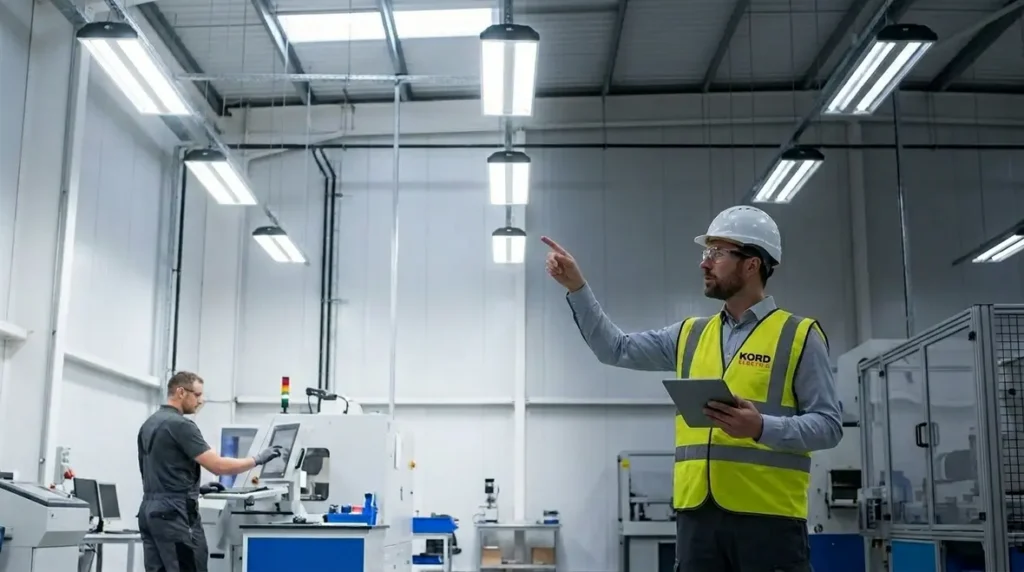
Smart lighting control systems perform best when the sensors and logic behave like a calm manager, not like a jumpy intern. Occupancy sensors can reduce runtime in spaces that are frequently empty, but they must be tuned so the lights respond smoothly. If sensitivity is wrong, the system either wastes energy or annoys people. Therefore, we calibrate for your site conditions, including airflow patterns, traffic flow, and typical occupancy behavior.
Daylight harvesting adds a second lever. When sunlight reaches a work area, the system can dim artificial lights while keeping target illumination levels steady. As a result, you protect visual comfort and reduce energy use at the same time. However, daylight strategies fail when the building geometry, window locations, and glare risks get ignored. We address this with practical planning and testing.
Then we document the settings. We also train your teams so they can make minor changes without turning the building into a science project. Yes, we have seen facility managers treat lighting settings like they are adjusting a guitar. It does not end well for either party.
This is also where smart lighting control systems make friends with other building priorities. In warehouses, hangars, or industrial facilities where you already invest heavily in specialized suppression systems, tuning occupancy and daylight sensors the right way keeps both safety and savings aligned. The spaces stay well lit when they need to be, while energy waste quietly disappears in the background.
Maintenance savings and longer equipment life

ROI does not only come from energy. It also comes from fewer failures and fewer service calls. When lighting operates closer to intended duty cycles, lamps, drivers, and fixtures experience less stress. In addition, controls can flag faults early, which helps avoid “find it when it breaks” maintenance.
Moreover, staged dimming and smooth transitions reduce electrical cycling that can shorten component life. This matters most in commercial and industrial environments with frequent starts and stops. Therefore, we help others design control strategies that reduce extremes. We also coordinate the system with your maintenance plan so technicians can service areas efficiently.
Our technicians and expert service staff handle commissioning with care. They verify that zones respond correctly, schedules hold up across time changes, and manual overrides work as expected. In other words, we make sure the system performs today, not just during the demo.
That same discipline is what keeps your extinguishers charged and your valves inspected. Owners who already rely on full fire protection services appreciate how smart lighting control systems can be folded into a broader “no surprises” maintenance strategy. Fewer emergency calls, fewer midnight headaches, and a building that simply behaves the way it is supposed to.
Risk control, compliance, and the future proofing owners ask for
Facilities face more than energy costs. They face safety requirements, tenant expectations, and operational risk. Smart controls help reduce that risk by delivering predictable behavior and clear reporting. For example, if an area does not reach target levels, the system can help guide investigation rather than leaving staff to hunt in the dark.
We also plan for growth. Major property buildings often add tenants, reconfigure spaces, or expand production schedules. When the control layout is flexible, the building adapts without a full system overhaul. Therefore, owners protect capital investment and avoid repeating design work.
Furthermore, we consider how your team will operate the system. Controls should fit into existing workflows, not fight them. We help others define roles for facility managers, electricians, and operations staff so everyone knows what they can change and what they should not. That calm structure keeps downtime low and prevents “mystery settings” from creeping in.
This kind of structure is familiar if you have ever coordinated fire sprinkler inspections, alarm testing, or extinguisher service across multiple locations. When your smart lighting control systems follow similarly clear rules and permissions, audits become easier, complaints drop, and the building is ready for whatever the next phase of use looks like.
Realistic ROI planning for large sites
ROI becomes accurate when we quantify inputs instead of using wishful thinking. At Kord Electric, we start with your current lighting behavior and utility rates. Then we estimate savings based on runtime reduction from occupancy scheduling, plus dimming benefits from daylight harvesting. We also factor in maintenance savings from reduced failures and better fault detection.
Next, we help you choose the right control granularity for your building. Too little zoning limits performance. Too much zoning can increase design complexity. Therefore, we balance impact with practicality, focusing on areas that drive the biggest energy use or create the most operational hassle.
Then we plan the rollout. Many facilities cannot shut down lighting for long periods. We stage implementation so work stays safe and productivity continues. After installation, we confirm performance with testing. In fact, we treat commissioning like a final exam, not like a quick check and a handshake. Because if the system does not behave in the real world, the ROI story falls apart.
If you operate locations across California, you may already rely on regional partners to keep your prevention and suppression systems aligned in cities like Temecula, Corona, or Clovis. In the same way that local fire protection services keep each site tuned to local codes and conditions, smart lighting control systems can be designed with site-specific schedules, usage patterns, and target outcomes, all tied back to a shared ROI framework.
FAQ
Ready to protect ROI with Kord Electric?
If you want smart lighting control systems that deliver measurable savings in commercial, industrial, and major property buildings, we are ready to help. Our technicians and expert service staff will review your current lighting behavior, design a practical control plan, and commission it with real performance checks. Then we show your team how to operate the system without guesswork. Call Kord Electric today and let us turn lighting waste into predictable savings, not a mystery you chase every month.
If you are also responsible for fire sprinklers, alarms, or extinguishers, you can streamline your projects even further by coordinating smart lighting control systems with Kord Fire Protection’s full fire protection services. One partner can help you protect both your people and your budgets across energy, safety, and compliance.