
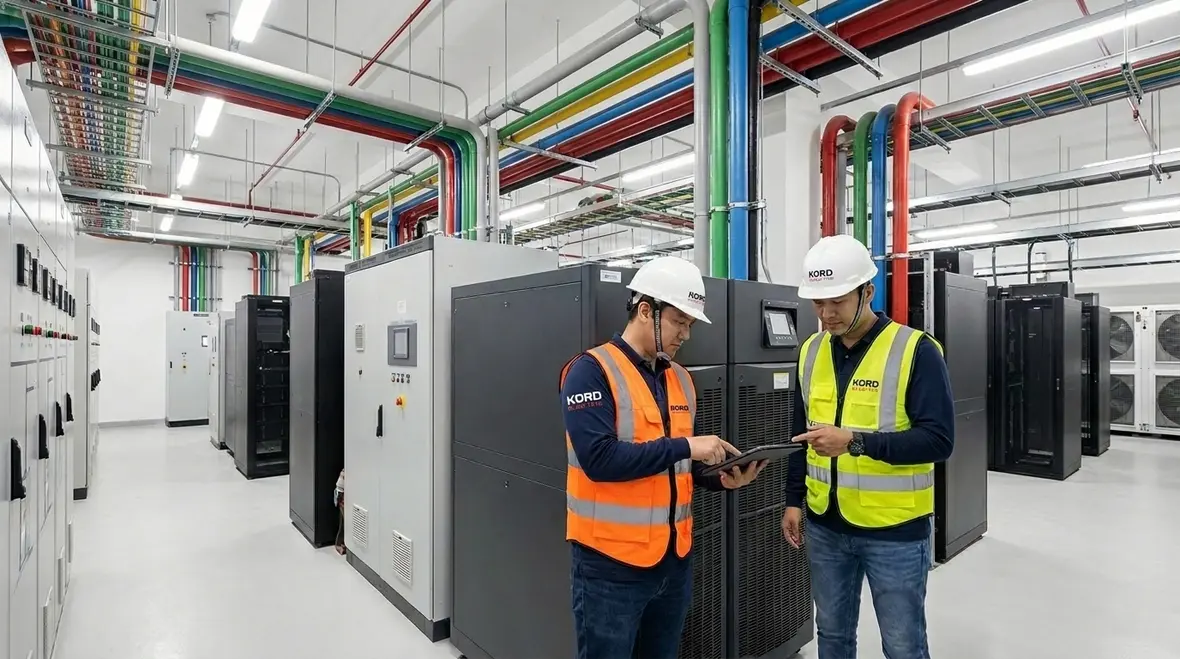
Critical Power Infrastructure Redundancy Strategies
At Kord Electric, we help commercial and industrial facilities avoid downtime by installing critical power infrastructure redundancy strategies that keep electricity available when systems fail. We design redundancy with real world behavior in mind, so when an upstream feed hiccups, a breaker trips, or a transfer takes longer than expected, the data center stays calm. Then our expert service staff explains the plan in plain language, because nobody wants a power diagram that looks like it was drawn during a sci fi movie. To set the tone, we treat redundancy like a good insurance policy: you hope you never need it, and yet you sleep better knowing it is there. And yes, the “hope” part is optional, like bringing a flashlight to a power audit.
What redundancy means for a data center electrical system
In practice, redundancy means the electrical infrastructure can deliver power even when one component underperforms or fails. A data center is not a single machine; it is a stack of systems that depend on stable voltage, stable grounding, and reliable switching. Therefore, Kord Electric approaches redundancy as a set of layers working together, not a single “backup box” that solves everything by magic. Others may buy redundancy like it is a trophy, but we build it as an operating requirement.
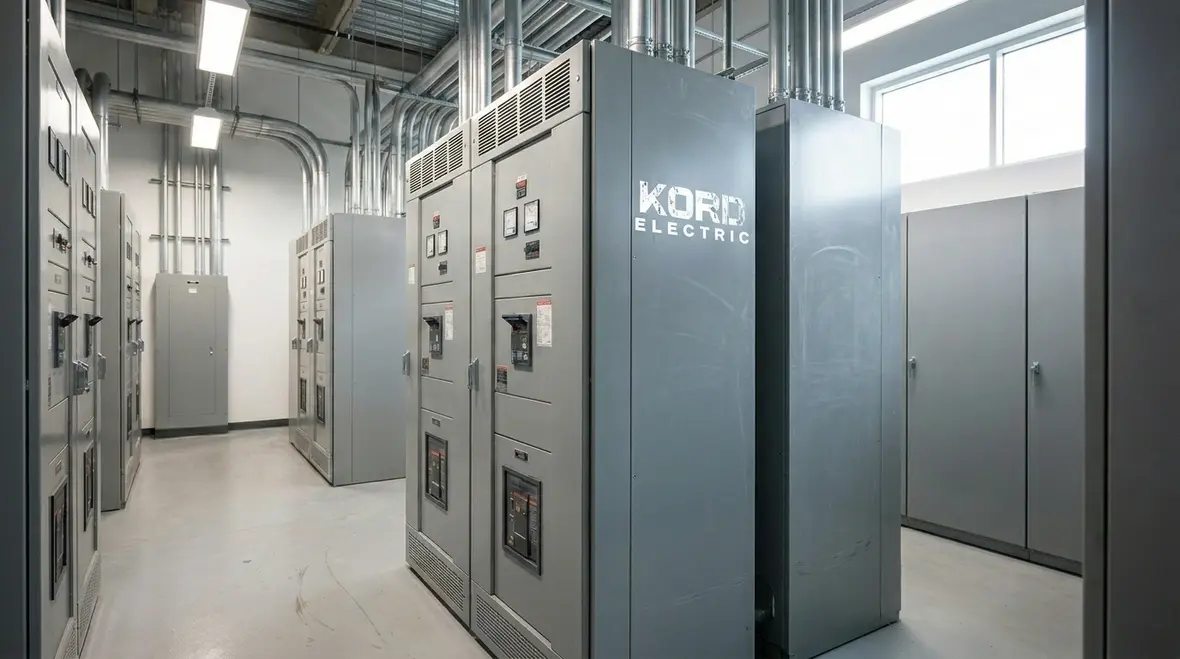
Specifically, redundancy often spans utility feeds, switchgear, transformers, UPS systems, and the transfer pathways that connect the pieces. Additionally, it includes control logic, monitoring, and maintenance planning so the redundancy stays useful over time. Eventually, the goal becomes simple: keep uptime predictable, keep risk measurable, and keep your operations team from panicking at 2:00 a.m.
Design layers that keep uptime predictable
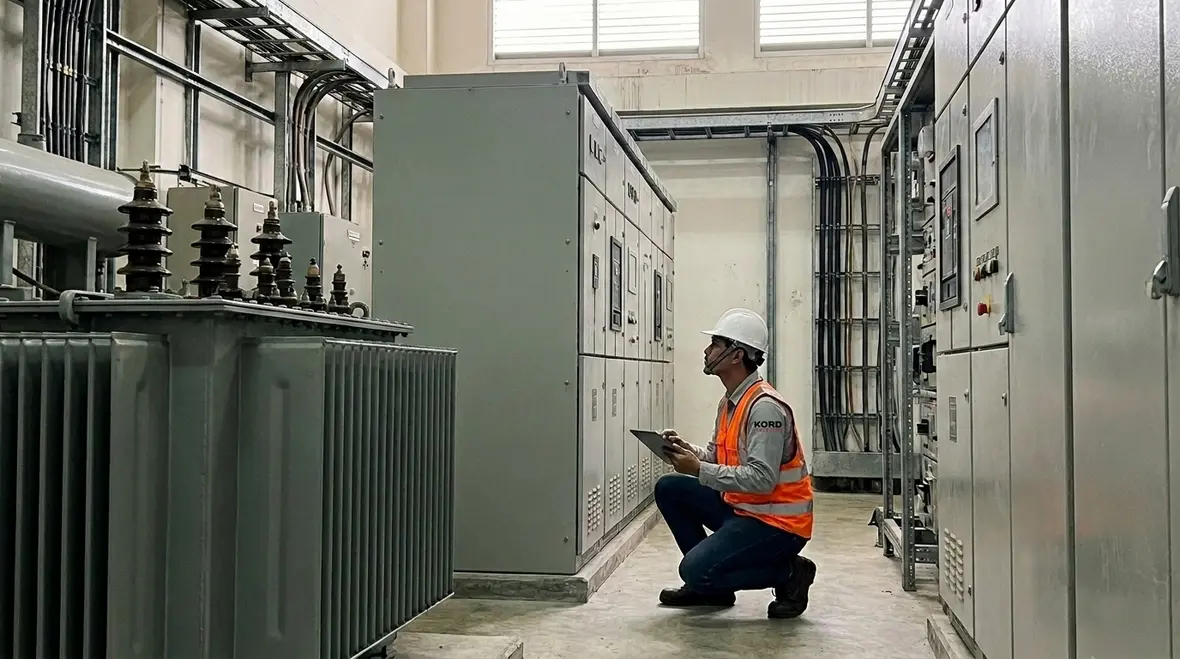
To secure a data center’s power, we typically use layered redundancy. First, we examine how power enters the building and how it routes through switchgear and transformers. Next, we evaluate how the facility holds up under common stress events such as maintenance outages, upstream utility issues, and equipment wear. Then we determine the appropriate level of duplication based on the facility’s critical loads and its tolerance for interruption.
For many commercial and industrial environments, the most effective approach uses multiple independent paths. As a result, if one path becomes unavailable, other paths carry the load with minimal disruption. Likewise, we ensure transfer switching operates safely under load, and we verify that protection settings match the real behavior of your system. Finally, we align the design with operational procedures, so your team can run it confidently during planned work.
If you are just starting to map out your redundancy layers, it can help to read them alongside your broader electrical planning. For example, Kord Electric’s overview of data center electrical infrastructure essentials walks through how utility feeds, distribution, and cooling systems fit together long before redundancy is added on top.
UPS and transfer switching that do not crumble under pressure
UPS systems are the “muscle memory” of critical loads. They handle momentary disturbances, ride through transfer events, and provide clean power for sensitive equipment. However, redundancy fails if transfers happen in ways that upset the load. Therefore, our technicians and expert service staff review transfer architecture carefully, including bypass pathways, maintenance modes, and failure modes that rarely make it into marketing brochures.

We also pay attention to how switching devices behave during abnormal conditions. If a transfer needs to occur quickly, control logic must coordinate properly. If a battery segment degrades, capacity planning must prevent unexpected runtime loss. And if a maintenance plan places personnel near energized equipment, labeling and interlocks must support safe workflows. In other words, redundancy is not just electrical. It is also procedural.
Then, to keep systems usable for years, we recommend commissioning tests and periodic functional checks. That way, the UPS redundancy stays real during operations, not just during initial acceptance testing. When these tests are paired with structured preventive maintenance, like the programs described in Kord Electric’s electrical preventive maintenance service, redundancy remains a working asset instead of a theoretical design.
Dual power paths and protection coordination that actually match real fault behavior
When electrical systems rely on multiple paths, protection coordination becomes the guardrail. If protection does not coordinate, a single fault can cascade into an outage on more than one path. Therefore, Kord Electric builds redundancy alongside a protection study, so protective devices clear faults selectively and restore service without spreading the problem.
We focus on coordination across switchgear, breakers, relays, and protective devices that respond to overcurrent and ground faults. Because device curves and settings matter, we verify that each layer trips when it should, and it stays closed when it should. Additionally, we confirm coordination during typical operating states and during maintenance configurations, when systems may run differently. That step prevents the unpleasant surprise where a “redundant” system loses its redundancy because it trips too aggressively.
As we guide teams through this process, our expert service staff explains the why behind recommendations. They also outline what to measure after installation, so others can track performance instead of guessing. In many facilities, this work intersects with resolving issues like unstable voltage or nuisance trips, similar to the challenges discussed in Kord Electric’s guide on voltage fluctuations in commercial and industrial facilities.
Monitoring, testing, and maintenance that keep redundancy from becoming theater
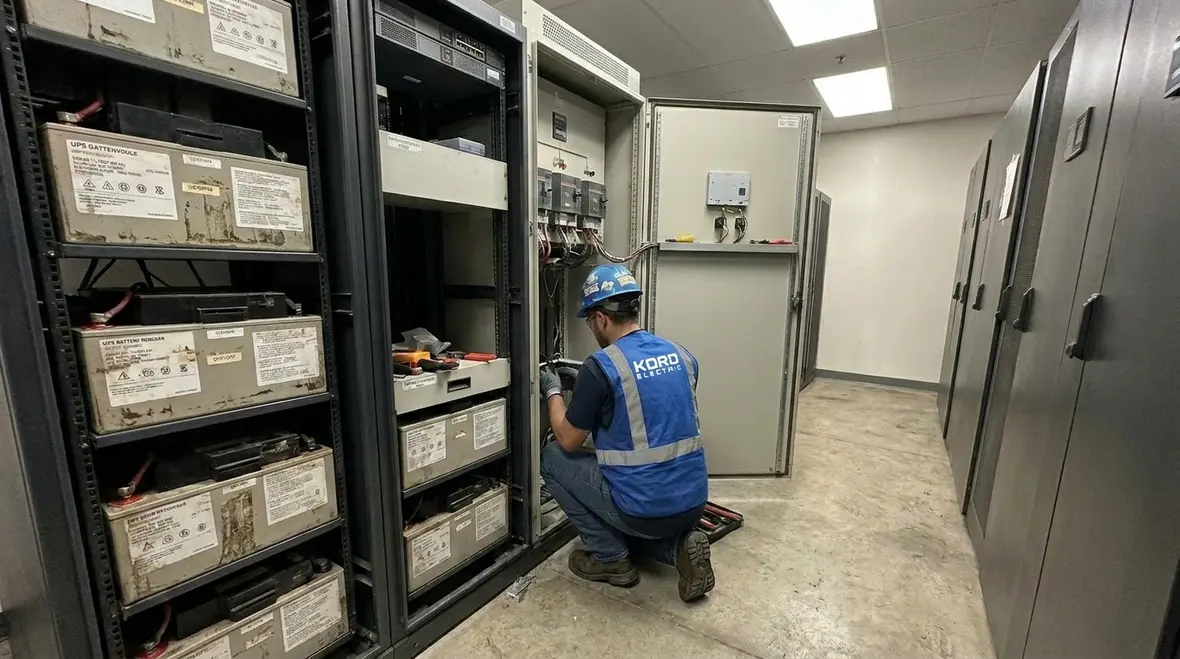
Redundancy fails quietly when people stop testing or when conditions drift. Batteries age. Heat changes battery performance. Load profiles shift. Switchgear components accumulate wear. Even firmware updates can alter behavior if controls are not reviewed. Therefore, we treat monitoring and maintenance as part of the critical power infrastructure redundancy strategies, not as an optional afterthought.
Kord Electric supports facilities with practical monitoring plans. We help define what alarms matter, which events need escalation, and how technicians should respond. Then we schedule testing that proves the system performs under realistic conditions. Functional tests verify that transfers work, bypass paths behave as expected, and protection responds correctly.
One way to keep it organized is to separate responsibilities between operations and electrical maintenance, then align them with clear runbooks. For example, operations handles load monitoring and readiness, while electrical maintenance verifies equipment health and switching reliability. That structure reduces downtime and keeps the system from turning into a “we thought it would work” situation.
| Redundancy layer | What Kord Electric verifies and supports |
| Utility entry and switching | Path independence, transfer safety, switching logic, and fault response alignment |
| UPS and battery systems | Transfer behavior, runtime expectations, maintenance modes, and commissioning checks |
| Switchgear and protection | Coordination studies, relay settings review, and selective fault clearing validation |
| Monitoring and service | Alert design, testing cadence, and operational runbook support |
Common failure points and how we prevent them
In real deployments, downtime often starts with predictable weak links. First, teams sometimes rely on redundancy that exists on paper but not in operation. For example, maintenance modes can unintentionally reduce available paths longer than planned. Next, control logic can drift from updated settings or changes in load. Then, protection settings may not match the actual cable lengths, transformer behavior, or breaker characteristics after commissioning.
Additionally, grounding and bonding receive less attention than they deserve. When grounding design is inconsistent, it can affect equipment behavior during disturbances, and it can complicate fault clearing. Also, ventilation and environmental control matter because thermal stress can shorten component life, especially for battery systems and some power electronics. Thus, electrical redundancy must connect to building reality.
To prevent these issues, our technicians follow disciplined checks. They verify labeling, interlocks, and safe access paths. They confirm that the system supports planned service without unexpected downtime. And they document what to monitor so facility staff can act quickly when a condition changes.
How to size redundancy for your critical loads
Commercial and industrial facilities vary widely. A “one size fits all” design can become either too expensive or too risky. Therefore, Kord Electric helps others size redundancy based on the load profile, uptime goals, and operational constraints. We begin by clarifying what the facility must support, how quickly it must ride through events, and what interruption window is acceptable for different loads.
Next, we consider power quality requirements, runtime needs, and growth plans. Then we account for maintenance strategies, because redundancy must support service without forcing full shutdowns. When we align these factors, the redundancy stops acting like an expensive life jacket that never gets used and starts acting like reliable equipment that performs under real conditions.
Finally, our expert service staff helps translate design assumptions into operational tasks. That means facility managers understand what to expect, what alarms matter, and which actions reduce risk during abnormal events. For facilities planning broader upgrades, resources like Kord Electric’s rewiring cost guide for commercial electrical systems can also help frame long term investment decisions alongside redundancy planning.
FAQ
Ready to secure your data center’s power with real redundancy?
If downtime threatens your operations, Kord Electric helps you build and maintain the critical power infrastructure redundancy strategies that keep electricity available when it counts. Our technicians and expert service staff explain the plan clearly, coordinate protection with real fault behavior, and support ongoing testing so redundancy stays functional, not theoretical.
For facilities that already feel the pressure of unstable power, unplanned outages, or rapidly growing loads, our team can also support urgent stabilization work through structured emergency electrical services and long term preventive maintenance programs. Together, these efforts turn today’s vulnerabilities into a more resilient, predictable electrical backbone for your data center or industrial site.
Contact Kord Electric today for a site assessment and a practical roadmap built for commercial and industrial facilities. Whether you are planning a new data center, upgrading an aging plant, or finally taming that “mystery outage” log, our team is ready to help you design redundancy that behaves well under real world conditions.


