Commercial EV Charging Station Installation Costs Explained
Commercial EV charger installation costs start with one big truth: the price shifts based on the site, the power available, and the level of hardware you choose. In general, commercial ev charging station installation costs can range from a few thousand dollars to higher amounts once electrical upgrades and permitting enter the picture. We at Kord Electric build these projects every day for offices, warehouses, campuses, multifamily buildings with structured parking, and other commercial and industrial facilities where reliability matters.
Now, let’s slow it down and make it clear. Others might treat chargers like a gadget store item. We treat them like a piece of critical infrastructure. And yes, we still hear the joke that “the charger is the easy part,” right before we discuss electrical design, load calculations, and the realities of trenching. We smile. Then we get to work.
Commercial EV Charger Installation Costs: What Facility Managers Can Expect
When facility leaders first start digging into commercial ev charging station installation costs, the wide range of possible numbers can feel a little unreal. One property hears a quote in the low thousands and another hears a figure that sounds like a capital project. The difference almost never comes down to “someone padded the estimate.” It comes down to the realities of power availability, distance to infrastructure, and how intensively those chargers are expected to work day after day.
Just like a major lighting upgrade or a commercial rewiring project, EV charging is an electrical system decision, not a gadget purchase. When Kord Electric plans installations for offices, industrial sites, campuses, or multi-building portfolios, we treat each project like a long-term asset that has to live comfortably inside your existing electrical system—without stressing it into failure a few busy Mondays from now.
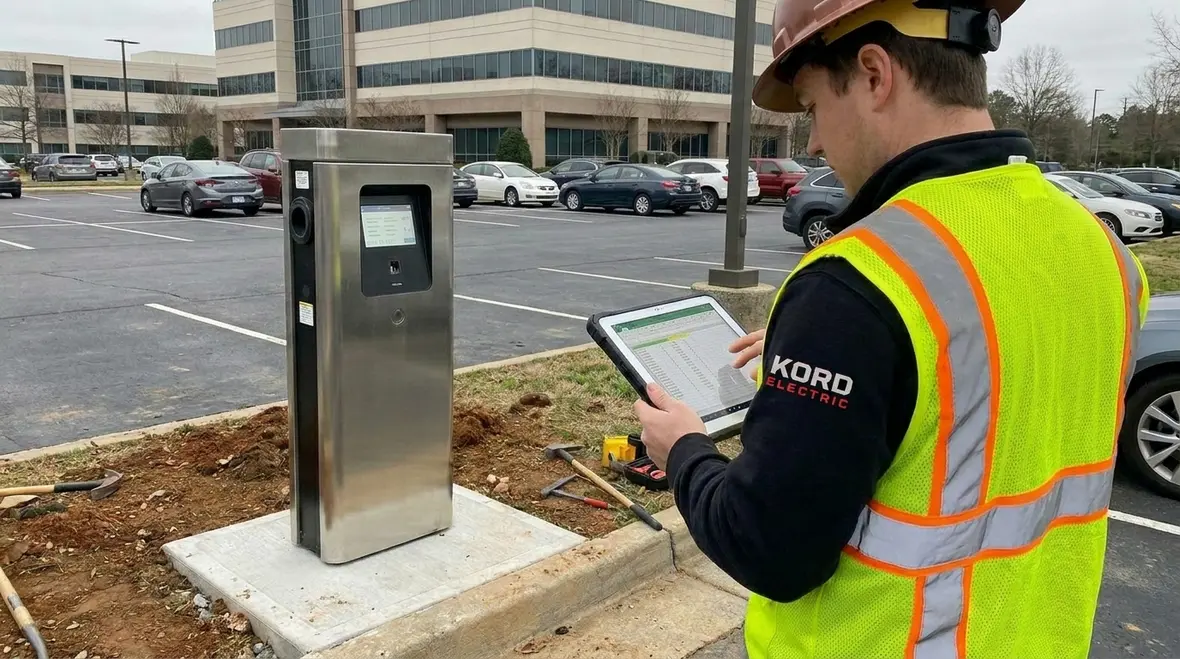
The good news: when you understand the main cost drivers, the numbers stop feeling random. You can see exactly why one location is simpler and another needs more thoughtful investment, the same way you can compare a basic panel replacement to a full commercial electrical system overhaul.
How Kord Electric Builds a Cost Picture From Day One
In the field, we know the budget gets thrown off when teams plan around guesswork. Therefore, our approach starts with a clean site assessment and a load study. Our technicians and expert service staff explain what they find in plain terms, not confusing jargon. And because facility managers usually manage many moving parts, we organize information so decisions stay simple.
First, we confirm your electrical capacity. Then we verify charger count, power levels, and the charging style you want. After that, we map the routing path for conduits and wiring, and we review practical constraints like parking layout, existing panels, and access to equipment rooms.
At this stage, our team also asks the questions that prevent costly surprises later. For example, what is the likely demand profile? How many vehicles will charge during peak hours? Will you need load management to keep the electrical system stable? These answers guide the line item details behind your cost.
That same structured thinking is how we approach other complex projects, from commercial rewiring cost planning to long-term preventive maintenance programs. When the stakes are high for uptime and safety, the process has to be calm, predictable, and grounded in real electrical data.
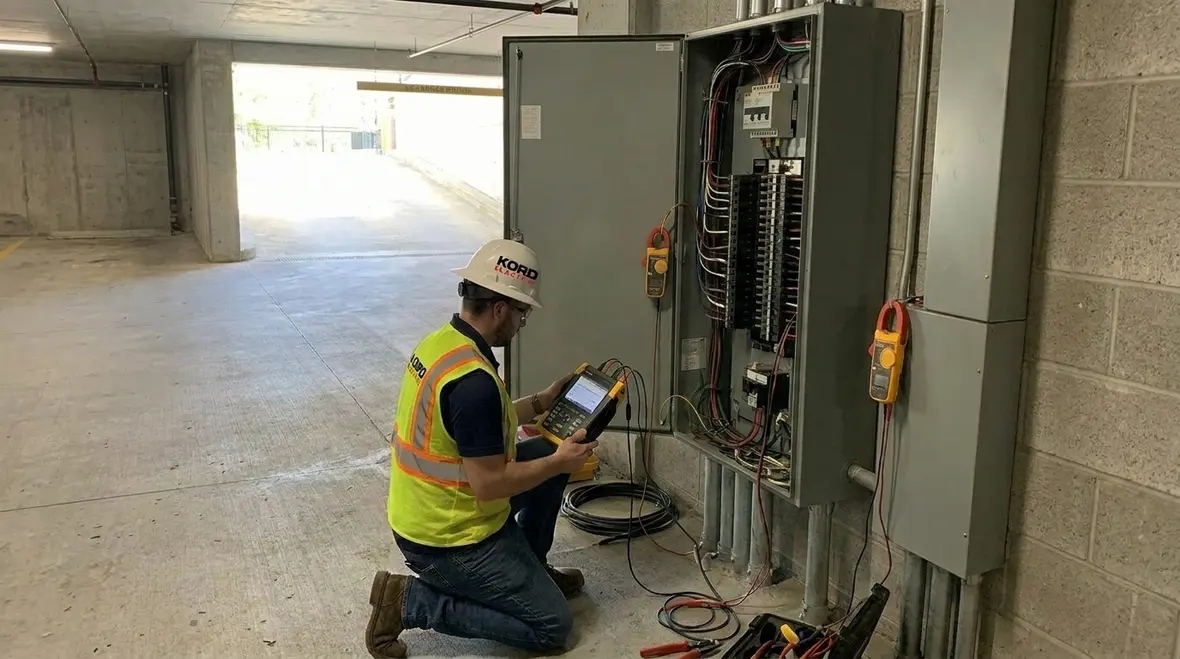
Once the assessment is complete, we tie everything back into a preliminary cost picture you can actually use. Instead of a vague “it depends,” you see a clear breakdown of what is driving the budget: existing capacity, required upgrades, site geometry, trenching or surface runs, and the charger configuration itself.
What Drives the Price: Hardware, Electrical Work, and the “Invisible” Costs
When facility managers hear “installation,” they sometimes imagine bolting a unit to a wall. Yet, in a commercial environment, pricing usually comes from three buckets: equipment, electrical scope, and compliance work. To keep it calm, we break it down like this.
1) Hardware costs
Charger equipment varies by output and features. Higher power can reduce charging time, but it also increases electrical requirements. If you plan to serve fleets or high turnover parking, we recommend configurations that match real usage, not wishful thinking.
On the commercial side, that usually means starting with the right mix of Level 2 chargers and, where appropriate, DC fast chargers—similar to how Kord Electric designs commercial EV charger installation on the service side. The more realistic your picture of daily demand, the more accurately you can size the hardware and avoid overspending on capacity you never use.
2) Electrical upgrades and electrical labor
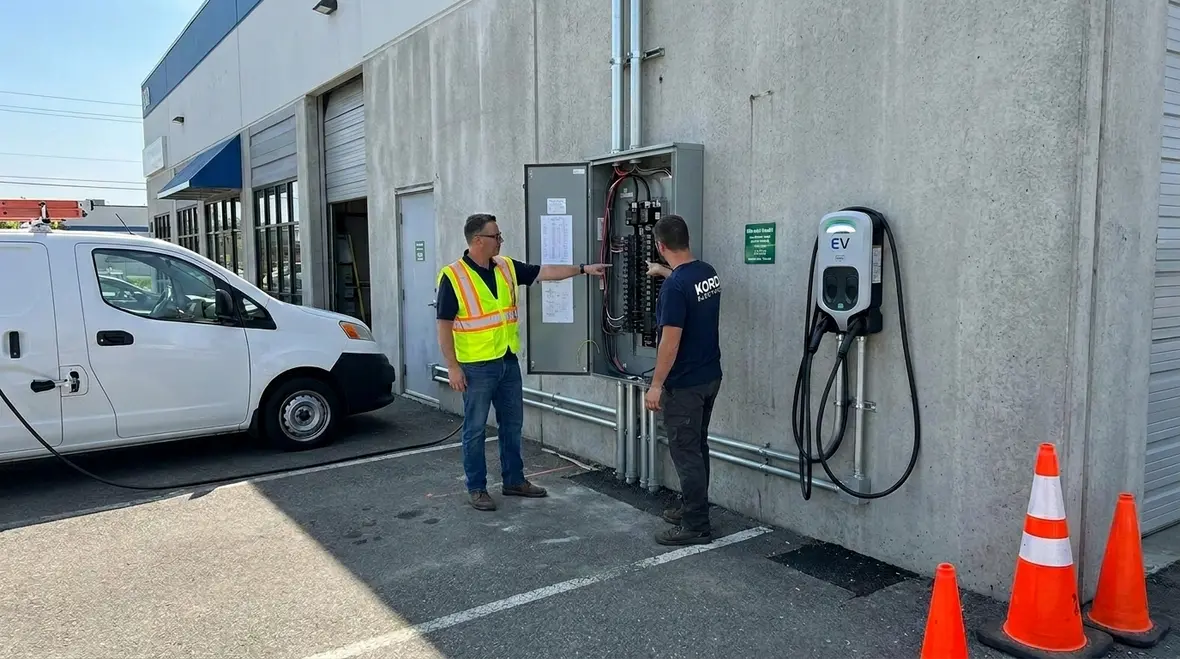
This is where budgets rise or fall. If your site already has spare capacity, installation stays straightforward. However, if load calculations show the panel cannot support the chargers, you may need a service upgrade, transformer work, new switchgear, or additional circuits.
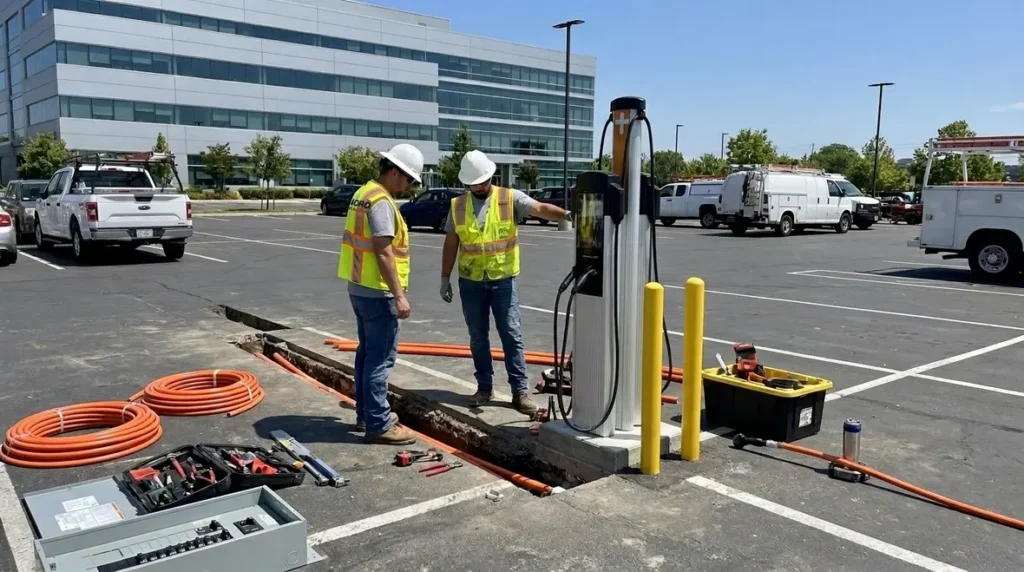
Even the wiring route matters. Trenching, conduit runs, and conduit length can change the labor and material needs. If the charger locations sit far from the electrical source, the install costs grow. It is not dramatic, it is math and materials. Still, the math can make someone stare at the quote like it just asked for their firstborn. We help prevent that.
For facilities familiar with large lighting or power projects, this will sound familiar. The same kind of thinking that shapes a large lighting installation—panel capacity, circuit layout, and how far the conductors have to travel—also shows up in commercial ev charging station installation costs. The equipment is visible. The infrastructure that feeds it is not, but it is where the bulk of the work lives.
3) Permitting, inspections, and compliance
Commercial and industrial sites typically require permits and inspections. Those steps cost time and money, and they vary by jurisdiction. We plan this early so your schedule stays on track. We also align with code requirements for wiring methods, labeling, grounding, and safe installation practices.
Because EV charging ties directly into your broader electrical system, we also pay close attention to interaction with existing infrastructure—panels, transformers, and key distribution equipment. The goal is not just “pass inspection once,” but “operate safely and predictably under real-world loads” year after year.
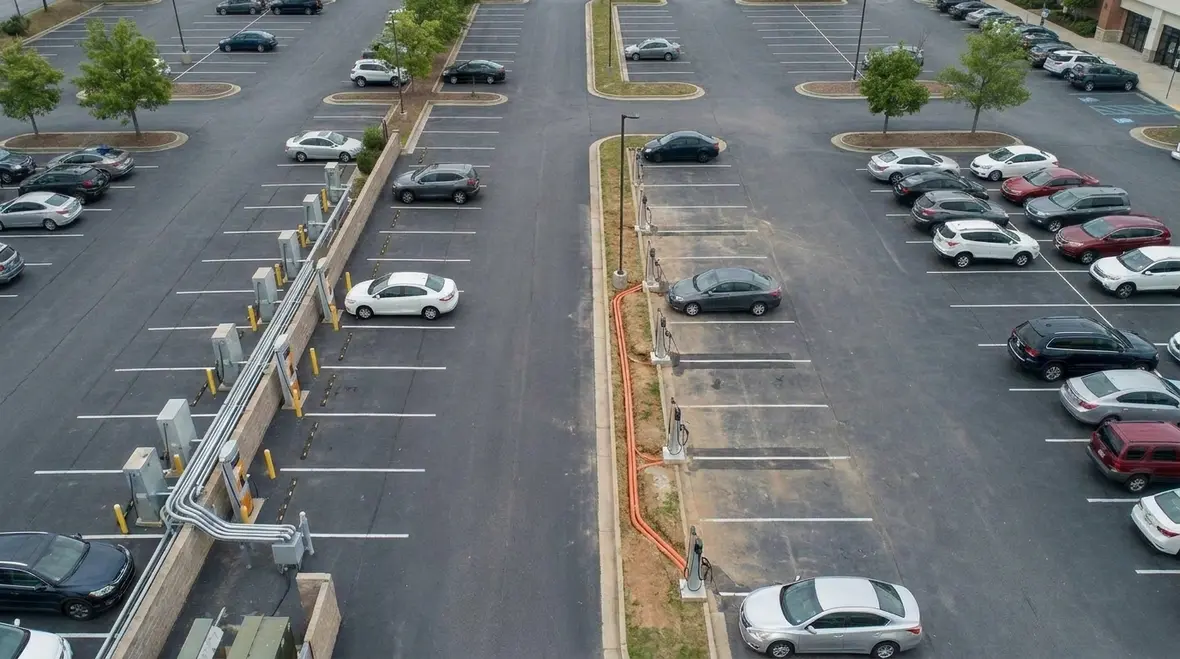
In short, the complete cost picture includes the parts you can see, the copper and steel you usually do not, and the permitting path that makes everything legal, safe, and insurable.
Single Site vs. Multi Lot: Why Scale Changes the Numbers
A lot of property teams begin with one building. Later, they realize they have more than one parking footprint, multiple tenants, and a future rollout plan. Then, they wonder why costs look different from one property to the next. Here is the real reason: scale changes the design and procurement approach.
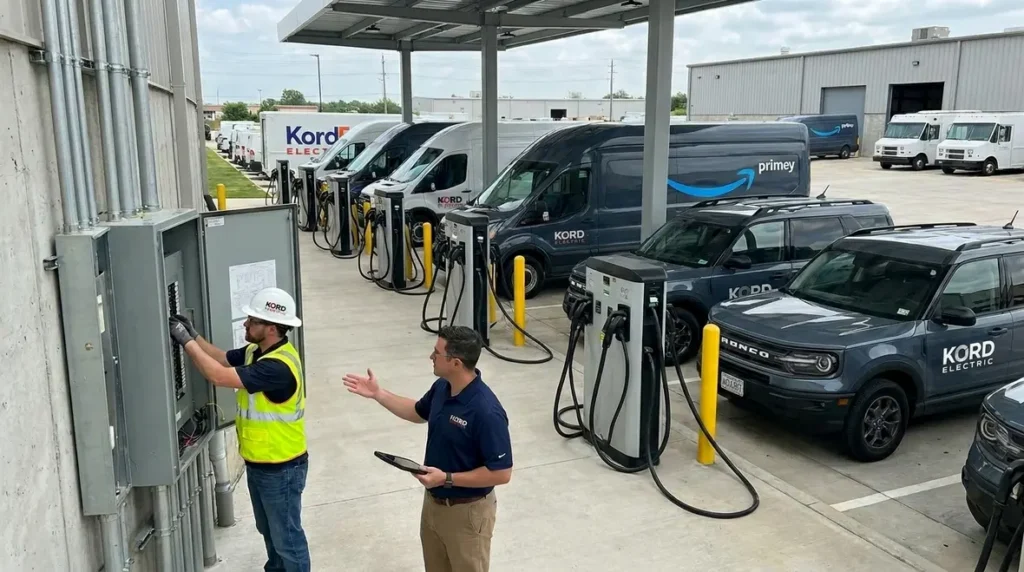
If Kord Electric installs at one location, we focus on that site’s electrical capacity, physical layout, and permitting path. When you expand across multiple buildings, we can standardize equipment where it makes sense. That can reduce design time and improve planning efficiency. Meanwhile, the electrical scope can still vary by building, so we never assume the same quote holds for every address.
Additionally, large facilities benefit from coordinated wiring plans, consistent conduit routes where possible, and a clear strategy for load distribution. This is where load management may become part of the solution. As demand rises, you protect the electrical system and keep chargers available without forcing repeated upgrades.
Think of it like any other campus-wide electrical initiative. A single upgrade in one mechanical room looks one way on paper. A multi-building plan that accounts for present demand, future expansion, and shared infrastructure becomes a strategic project that touches panels, transformers, and distribution gear across the property.

With a portfolio mindset, the question stops being, “What does this one install cost?” and turns into, “How do we stage commercial ev charging station installation costs over several phases while protecting uptime and budget?” That is where careful sequencing and standardized hardware really pay off.
Why Site Conditions and Power Availability Often Decide the Final Total
Many facility managers know their parking layouts. Yet, the electrical picture tends to surprise people. For instance, older buildings might have limited panel space, outdated components, or unclear load histories. Even when the building “feels” ready, the electrical data can say otherwise.
Next, site constraints shape the labor plan. If work must avoid business hours, coordinate with other contractors, or protect landscaped areas, installation can take more planning. If trenching is required near utilities or within restricted zones, we adjust routing and timing.
We also consider how chargers will operate day to day. Fleet charging, employee charging, visitor charging, and overnight charging each pull different demand patterns. Therefore, we design the system to match your expected behavior, not a generic case study.
And yes, sometimes the “charger cost” is the least expensive line item. That feels backwards until someone shows you the conductor sizes, the load study results, and the panel upgrade path. Our technicians explain all of it, so the final cost makes sense, even when it is not small.
For facilities already dealing with issues like voltage fluctuations, harmonics, or uneven loading, a new bank of EV chargers is not something to bolt on casually. It should be woven into a stable, code-compliant system that has been evaluated for the extra demand—similar to how Kord Electric tackles voltage fluctuation corrections or other heavy-duty upgrades in commercial and industrial buildings.
A Simple Cost Estimate Framework Facility Teams Can Use
To keep the process practical, we guide teams through a framework that turns vague budget goals into an installable plan. While every site differs, this model helps you understand where commercial ev charging station installation costs typically come from and how decisions affect them.
Step 1: Define your charging goals
Estimate the number of ports, typical vehicle dwell time, and who will use them. This step affects power levels and the charger mix.
Step 2: Confirm electrical capacity and connection method
We evaluate the service size, panel availability, and feasible circuit paths. This step determines whether upgrades are needed.
Step 3: Build the electrical and infrastructure scope
We include trenching or surface conduit needs, conduit length, wiring type, breaker requirements, and any switchgear or transformer work.
Step 4: Plan for permits and inspections
We line up compliance steps so work does not stall. Then we schedule installation around facility operations.
Step 5: Review the final design with your team
We explain the “why” behind each line item. That way, facility managers can defend decisions to leadership without sounding like they are reciting a fortune cookie.
By the time this framework is complete, your EV charging project no longer lives in a folder labeled “someday.” It becomes a defined scope you can compare against other priorities like panel upgrades, lighting retrofits, or broader preventive maintenance plans for your electrical system.
FAQ: Commercial EV Charger Installation Costs for Business Sites
Choosing Kord Electric for Cost Clarity and Real-World Delivery
Facility managers do not just want a price. They want confidence that the system will work, stay safe, and serve the site as demand grows. Our team at Kord Electric delivers that clarity through assessment, careful design, and expert installation for commercial and industrial facilities and major property buildings.
Because we use a structured approach, you avoid random surprises. And because our technicians and expert service staff explain decisions in a calm, direct way, you can brief leadership with facts, not guesswork. If you have been waiting for the “charger project” to feel manageable, this is the moment to make it real.
If your property is also considering other upgrades—lighting, voltage stabilization, or broader service improvements—those pieces can be aligned with your EV charging strategy. Many of the same principles that shape high-value projects like emergency electrical services readiness or campus-wide lighting upgrades apply here: clear scope, stable infrastructure, and a realistic roadmap that respects operations.
Ready to get your plan and a realistic cost breakdown? Contact Kord Electric to schedule a site review. We will map your electrical capacity, confirm your best charger setup, and outline a practical path forward that fits your facility goals.
To take the next step, you can explore our dedicated service page for EV charger installation, or talk with our team about integrating your EV project with other commercial electrical services so your system grows in a steady, coordinated way.
Start Your Commercial EV Charging Project With Confidence
Commercial ev charging station installation costs do not have to be a mystery or a moving target. With a clear assessment, a structured design process, and a partner who understands commercial and industrial infrastructure, you can turn “someday” into a well-planned project that supports your operations, your tenants, and your long-term sustainability goals.
When you are ready, Kord Electric can help you coordinate EV charging with other strategic upgrades like campus-wide lighting improvements or targeted power quality corrections. The result is not just a row of chargers in a parking lot, but an integrated, future-ready electrical system that supports how your facility really works.