
Critical Power Infrastructure Reliability Plans
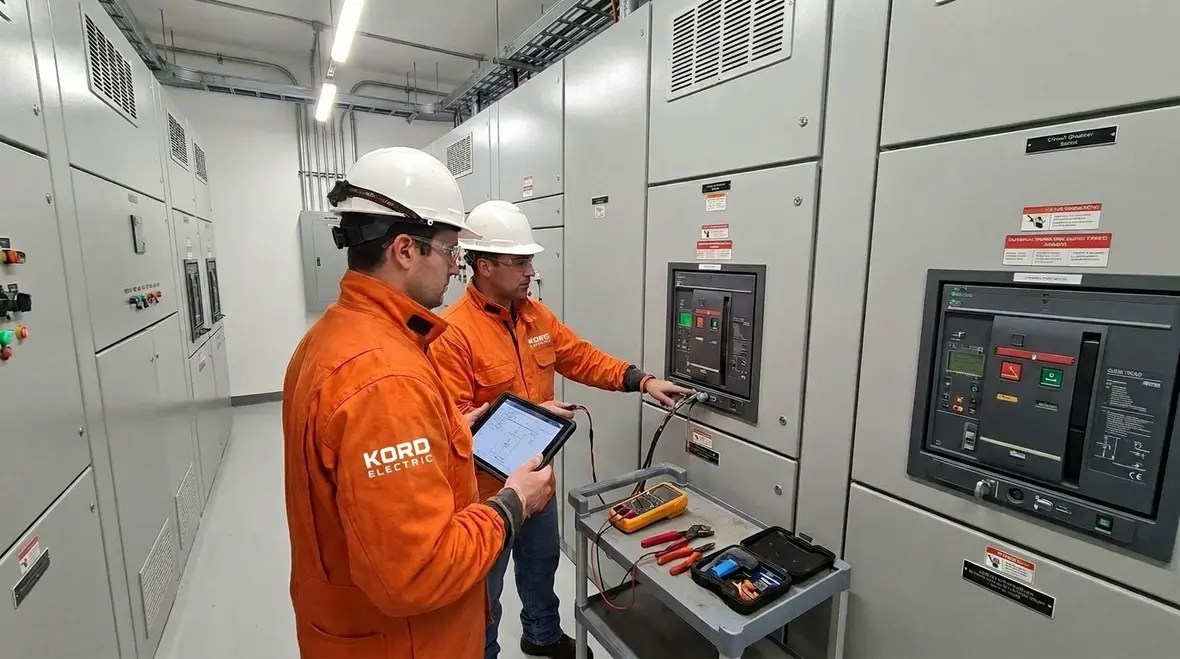
When a commercial or industrial facility depends on steady power, the margin for error shrinks fast. At Kord Electric, we focus on ensuring critical power infrastructure reliability for assets that cannot simply “wait until tomorrow.” Others may treat downtime like an inconvenience, but we treat it like a risk that must be engineered out, piece by piece, before it shows up in your operations, your production schedule, or your data center. To do that, we build plans around load, protection, controls, and long lived maintenance, not wishful thinking. After all, electrical systems do not care about our optimism any more than a transformer cares about a bad Wi Fi signal. We make sure your power infrastructure behaves like it was designed for the real world, because it was.
How we keep critical power on track during real world events
We start with the simple truth that failures rarely announce themselves politely. Instead, they build quietly through heat, vibration, contamination, loose connections, and aging parts. Then one day a fault occurs, and suddenly everyone is searching for answers while equipment waits in silence. At Kord Electric, our process begins by mapping what matters most, then we design defenses around it. We consider the critical paths in your electrical distribution, the likely fault points, and the consequences of losing specific buses, feeders, or protection zones.
Next, we confirm your system behavior with practical checks. Our technicians review one line diagrams, coordination data, breaker and relay settings, and the actual operating patterns of your facility. Then we validate that protection clears faults fast and safely, without over tripping. In other words, we do not just “install equipment.” We verify that it works as a system. Because when it comes to critical power infrastructure reliability, the system matters more than the slogan.
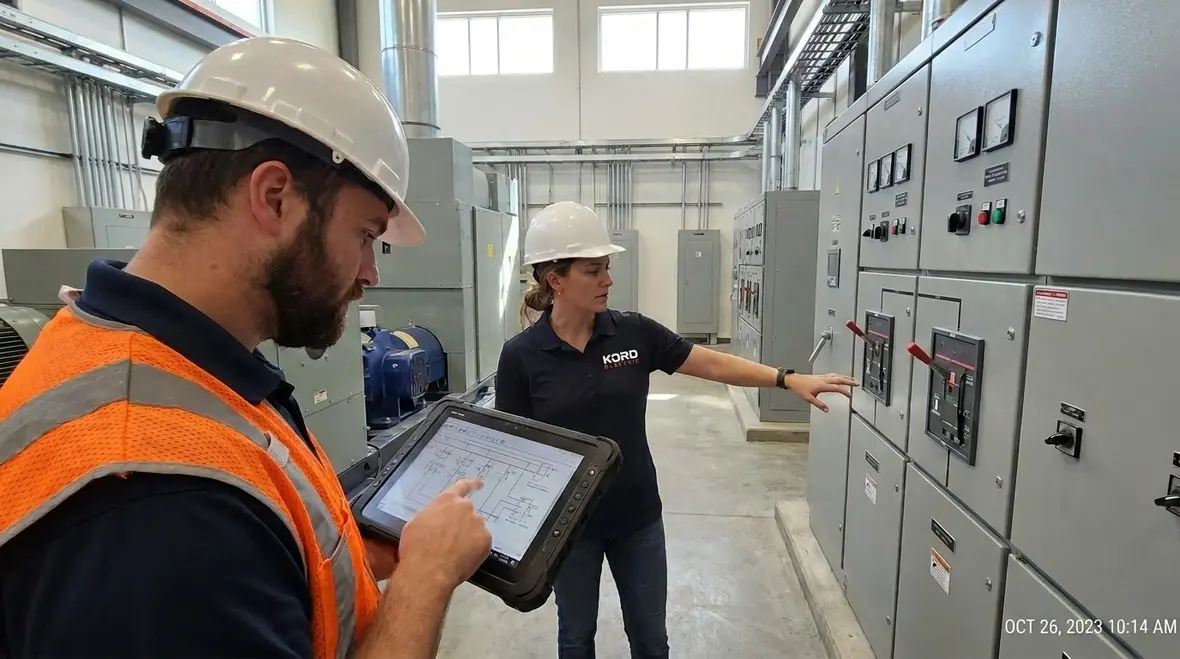
For facilities that run around the clock, the goal is not just surviving the next disturbance. It is building a structure where power quality, protection behavior, and asset health all line up with how you actually operate. That is how critical power infrastructure reliability moves from a headline on a slide to something you can feel in lower incident counts, fewer emergency calls, and calmer operations teams.
Protection coordination that clears faults without shutting you down
We build reliability by preventing the wrong interruptions. That means choosing protective devices and settings that coordinate properly across levels, from incoming protection down to feeders, panels, and motor circuits. If coordination is sloppy, a small fault turns into a larger outage. If it is too tight, protection trips before it needs to. If it is too loose, a fault grows before it clears. Either way, your facility pays the price.
Our expert service staff walks clients through the logic in plain language. For example, we explain how time current curves and relay settings create a “selective trip” path so the nearest device clears the event first. Then we verify settings against real loads and expected fault conditions. During commissioning or periodic reviews, we also check that sensors, CT ratios, wiring, and test links stay correct. After that, we document everything clearly so your team can trust the data during audits and emergencies.
And yes, we explain it slowly on purpose. Electrical protection logic is not a pop quiz. It is more like a slow dance. When it goes wrong, it is not graceful, and nobody wants to be the person stepping on the wrong foot. We keep that from happening.
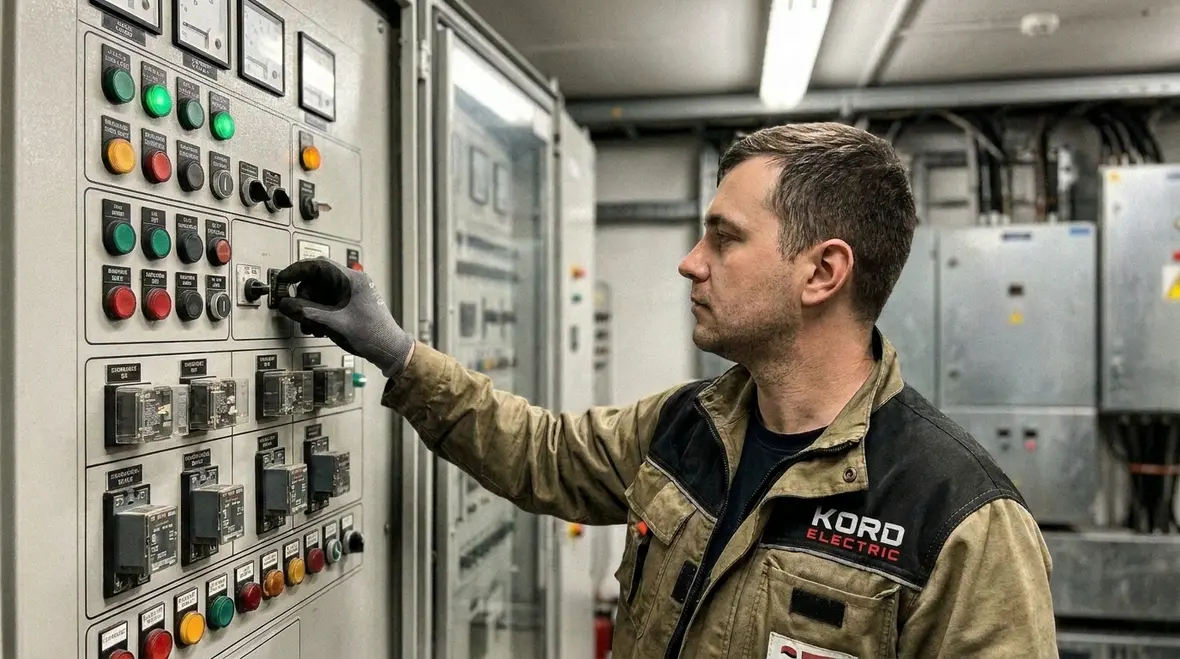
When we review protection settings, we also look at how they interact with upstream and downstream equipment that may have been added years apart. That means checking existing schemes against updates like new transformers, additional EV chargers, or expanded data rooms. If changes have outpaced protection logic, we help you close that gap before it shows up as the “mystery trip” that stops production in the middle of a critical run.
For data center and technology clients, we often pair coordination reviews with distribution design strategies similar to those used in modern server environments. That alignment improves both uptime and clarity when your team reviews logs after an event. If you are planning or upgrading a technical space, exploring best practices for distribution design and coordination can help set a stronger foundation for the rest of your reliability program.
Maintenance plans that extend life and reduce surprise failures
Reliability does not arrive by accident. It comes from disciplined maintenance that targets the failure modes we can actually measure. At Kord Electric, our team aligns maintenance with how your assets age in your specific environment. For commercial and industrial sites, factors like dust, humidity, vibration, load cycling, and heat loads matter. That is why our plans include inspections and testing designed around the risks we find on site.
We focus on core activities that keep performance steady. That includes breaker inspections, thermography reviews, torque verification on critical terminations, and periodic testing of relays and auxiliary circuits. We also look for symptoms that indicate hidden issues, such as contact wear or insulation stress. Then we translate results into actionable work orders with priority levels.
We often hear, “We maintain it, so we should be fine.” And sometimes that is true. However, many facilities maintain on a schedule without adjusting for real conditions. Our technicians help others move from generic checklists to site specific reliability programs. That shift reduces guesswork and keeps the next failure from becoming the next headline in your maintenance log.

Our preventive maintenance approach also supports compliance and long term planning. By pairing on site findings with structured reporting, we help facility managers budget for replacements before failure, not afterward. That keeps your capital planning and your critical power infrastructure reliability program moving in the same direction instead of fighting for attention every budget season.
For large campuses or industrial portfolios, a preventive maintenance program can extend across multiple sites with coordinated standards. That way, whether you are looking at a panel in a distribution warehouse or a feeder in a production plant, the documentation, testing cadence, and scoring system look familiar. Familiarity saves time, and in critical power environments, time is often the difference between a controlled intervention and a forced shutdown.
Monitoring and testing strategies for early detection
Even strong systems need eyes that see early warning signs. Therefore, we help clients implement monitoring and test strategies that catch problems before they trigger outages. We review the data you already have, such as breaker operations, load profiles, and event logs. Then we recommend test intervals and diagnostic methods that fit your risk level and critical operations.
For many sites, thermography provides a practical look at hot spots on terminations and bus connections. We also support measurement of insulation health and protection behavior through targeted testing. In switchgear and medium voltage environments, we verify performance using methods that align with industry best practice, not guesswork. As a result, our clients can respond to degradation during planned windows instead of during emergencies.
Additionally, we emphasize the “paper to field” connection. A relay setting that looks correct on a spreadsheet must match wiring, firmware behavior, and actual operational conditions. Our experts verify that details match reality. That is where critical power infrastructure reliability becomes real, because it lives in the connection between design and operation.
In many commercial and industrial environments, monitoring does not have to mean building a full scale control center. Sometimes the most effective early warning system is a combination of thermal scans, targeted metering, and clear alarm thresholds tied to equipment that actually matters. We help you decide where to invest in visibility so that the first sign of trouble shows up in your maintenance workflow, not in a dark production line.
For properties adding new loads like EV charging infrastructure or high density IT equipment, we connect monitoring and testing plans to your expansion roadmap. As systems grow more complex, the ability to see loading patterns and fault history in context becomes a core part of critical power infrastructure reliability, not a luxury.
Project readiness: engineering, upgrades, and commissioning that hold up
Upgrades and new installations often create opportunities for reliability improvements, but they also introduce risk if commissioning is treated like paperwork. We take commissioning seriously because your power system must perform under actual operating conditions, not just during factory checks. Our team coordinates engineering reviews, construction observations, and commissioning steps so the final system matches the intent from day one.
We confirm labeling, schematics, interlocks, and control logic. Then we test the protection system under safe, planned scenarios, verifying that the correct device clears and that alarms and indications behave as intended. We also pay attention to what teams will rely on later, such as correct documentation, accessible test points, and clear operating procedures.
To make this easy, our technicians explain what they find and what they fix. We do not bury critical notes in a file nobody opens. Instead, we share the findings in a business friendly way so your maintenance leadership can act quickly. When someone asks, “What changed and why,” we answer with specifics, not fog. That approach keeps your facility ready for the next phase, not just the next inspection.
For complex projects across Los Angeles County, our commissioning and upgrade support connects closely with larger service strategies. Whether you are modernizing panels, adding new distribution, or preparing for future expansion, we help align engineering decisions with how your operations team will actually live with the system every day.
Reliability you can defend: documentation, training, and emergency readiness
In the real world, reliability becomes credibility during audits, claims, and incident reviews. Therefore, we build documentation that supports your operational needs and your internal decision makers. We maintain records of test results, settings, inspections, and corrective actions. Then we provide guidance your team can use immediately.
We also help clients train the people who manage the system day to day. When your staff understands why a breaker or relay behaves a certain way, response times improve. That means fewer delays during troubleshooting and fewer “trial and error” moments that stress equipment. Our expert service staff often runs through emergency and abnormal operation procedures so your team knows what to check first and what not to touch without verification.
And because we are human, we sometimes add a small joke to keep everyone awake during the serious parts. But we keep it light. The goal is calm focus, not chaos. Reliability is the steady beat behind your facility’s operations, and we help you keep it.
When an unplanned event does occur, clear documentation and trained responders turn a stressful moment into a controlled process. Instead of hunting for old drawings or guessing at settings, your team can move down a known path. That is the kind of reliability story that stands up to internal reviews, insurance questions, and regulatory audits.
FAQ
Call Kord Electric for a reliability plan built for your assets
If you want fewer surprises, faster fault clearing, and power systems you can trust, we are ready to help. Kord Electric brings practical testing, protection coordination support, and maintenance planning for commercial and industrial facilities and major property buildings. Our technicians and expert service staff explain what we find and what we fix, so your team stays confident. Contact us to review your electrical infrastructure and build a reliability program that protects uptime. Let’s make your power behave like it has common sense.
For facility managers and property teams across Los Angeles County, partnering with a service provider that understands both day to day operations and long term planning makes a measurable difference. Explore how our Los Angeles County electrical services support critical facilities with structured maintenance, responsive troubleshooting, and upgrades that are built around reliability from the start.
Whether you are addressing recurring nuisance trips, planning a major power upgrade, or building out new capacity for emerging loads, a clear reliability plan keeps your team ahead of the next outage. Our work connects testing, coordination, maintenance, and training into a single, defensible approach so you can look at your critical power infrastructure and say, with evidence, that it is ready.


