Warehouse Lighting Efficiency Upgrades Guide
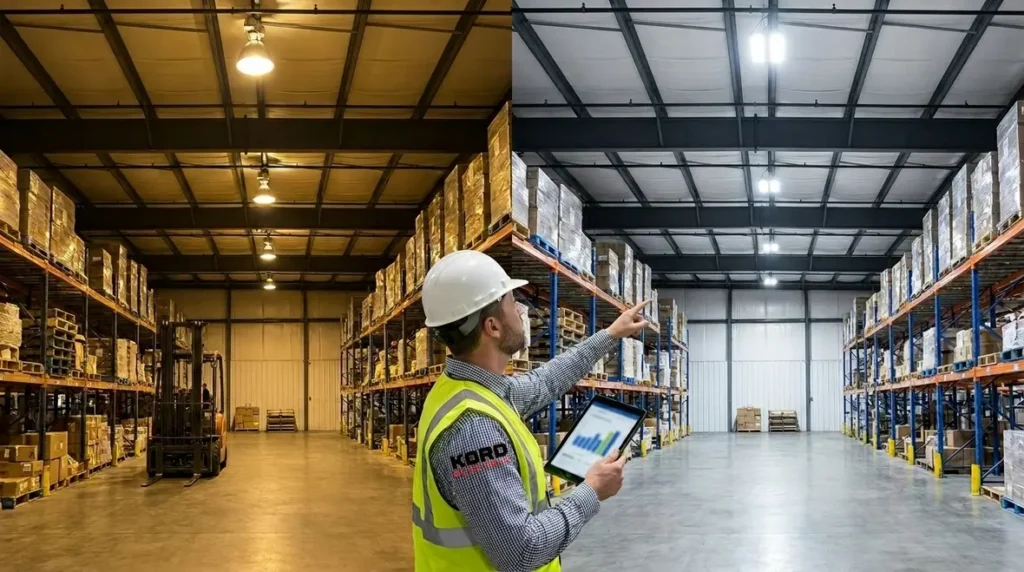
Kord Electric helps commercial and industrial facilities squeeze more work out of every lighted square foot with warehouse lighting efficiency upgrades that reduce waste and improve safety. When the lighting in a warehouse falls behind, the building pays twice: first in wasted electricity, and again in slow operations caused by dull areas, shadows, and eye strain. So we focus on upgrades that make the space brighter where it matters and steadier where it counts, while our team installs with a practical, site first mindset.
Now, let’s slow down and talk about how this works in the real world. Because no one wants a warehouse that looks like it was lit by a single, tired firefly. And besides, productivity should not depend on vibes.
Why warehouse work slows down when lighting gets old
In commercial and industrial spaces, lighting does more than help people see. It changes how quickly workers locate items, how safely they move around racks, and how accurately cameras and sensors perform. When lights age or wiring weakens, output drops, color shifts, and glare increases. As a result, operators spend extra seconds adjusting their vision, and forklifts navigate with reduced depth perception.
Moreover, many warehouses run under tight schedules, so even small delays compound. Lighting that flickers or dims can also frustrate supervisors and create maintenance calls that feel endless. Meanwhile, high traffic areas and loading zones take the hit first, because those areas get used the most and cleaned the most. Transitioning to efficient lighting early prevents these problems from turning into a full blown “why is everything like this” meeting.
What high efficiency upgrades improve in day to day operations
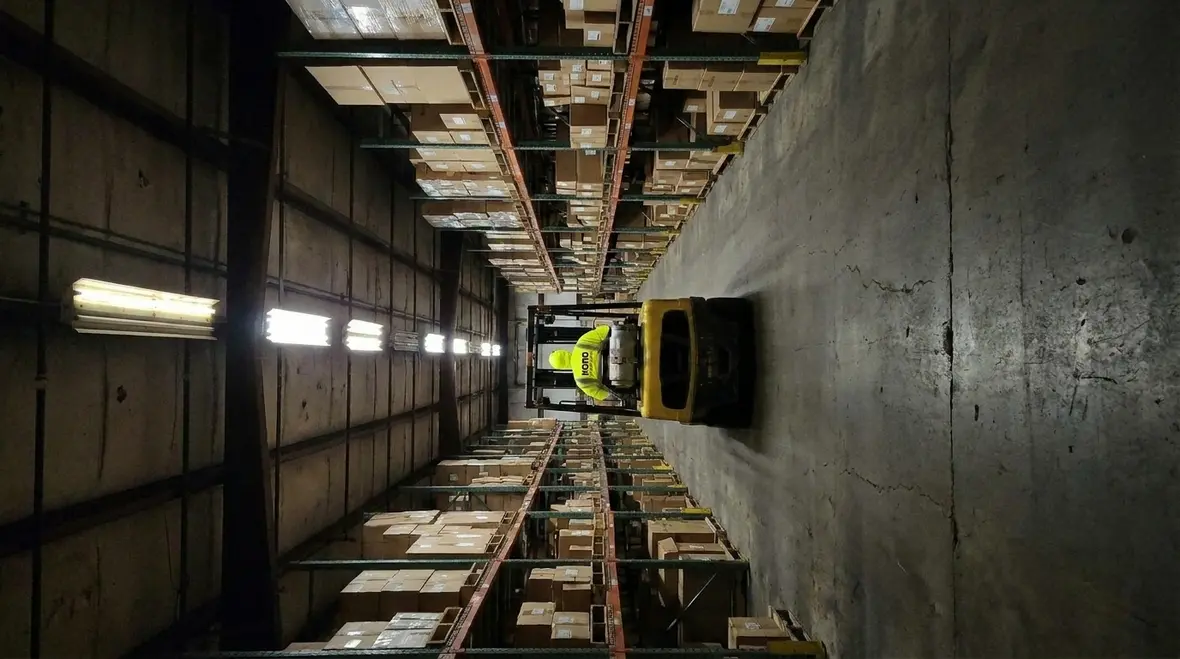
When we plan warehouse lighting efficiency upgrades, we look beyond lumens on a spec sheet and toward how the building performs. First, improved fixtures and lenses can spread light more evenly across aisles and rack bays. Then, better controls reduce over lighting during downtime, shift changes, and weekend operations.
In practice, these upgrades help teams do the following:
- Locate inventory faster in deep shelving zones, especially when picking is time sensitive.
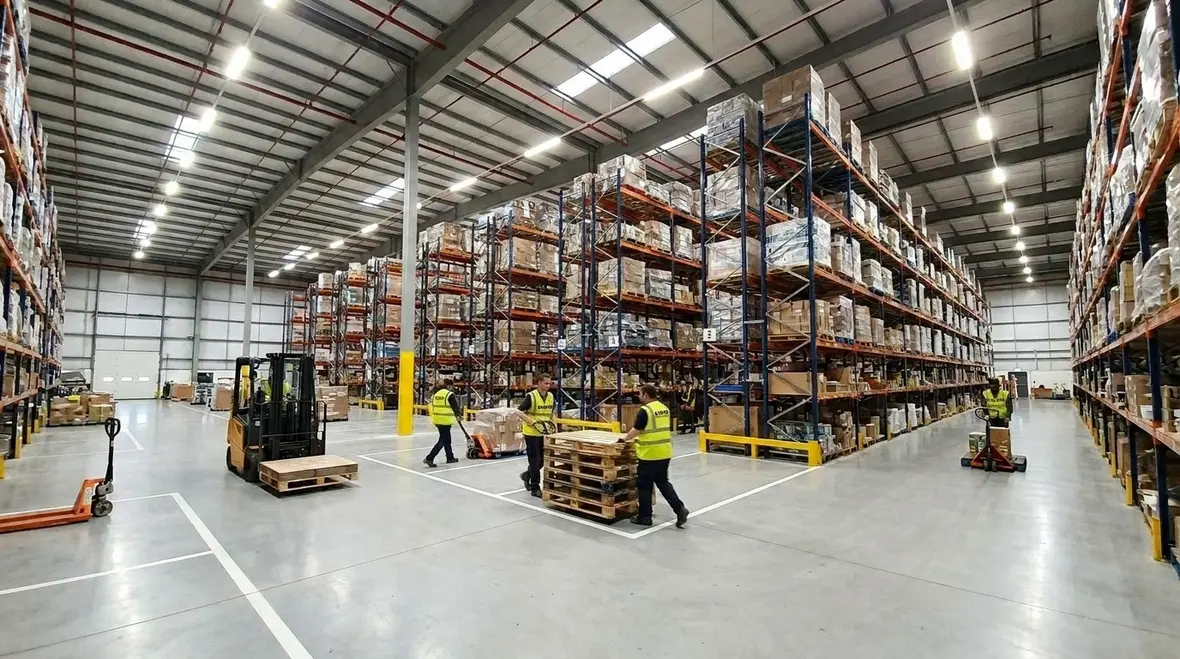
- Reduce shadows around pallets, dock doors, and staging areas, where small missteps become big problems.
- Improve visibility for safety walks and inspections, including around moving equipment.
- Support camera based systems by keeping illumination stable and consistent.
- Lower maintenance costs by using longer life components where it makes sense.
Also, we coordinate installation timing so operations keep moving. Our technicians handle real scheduling concerns such as dock windows and production lines. And yes, we make sure the lighting is on when workers show up, not “sometime after lunch.”
Lighting performance depends on more than fixtures
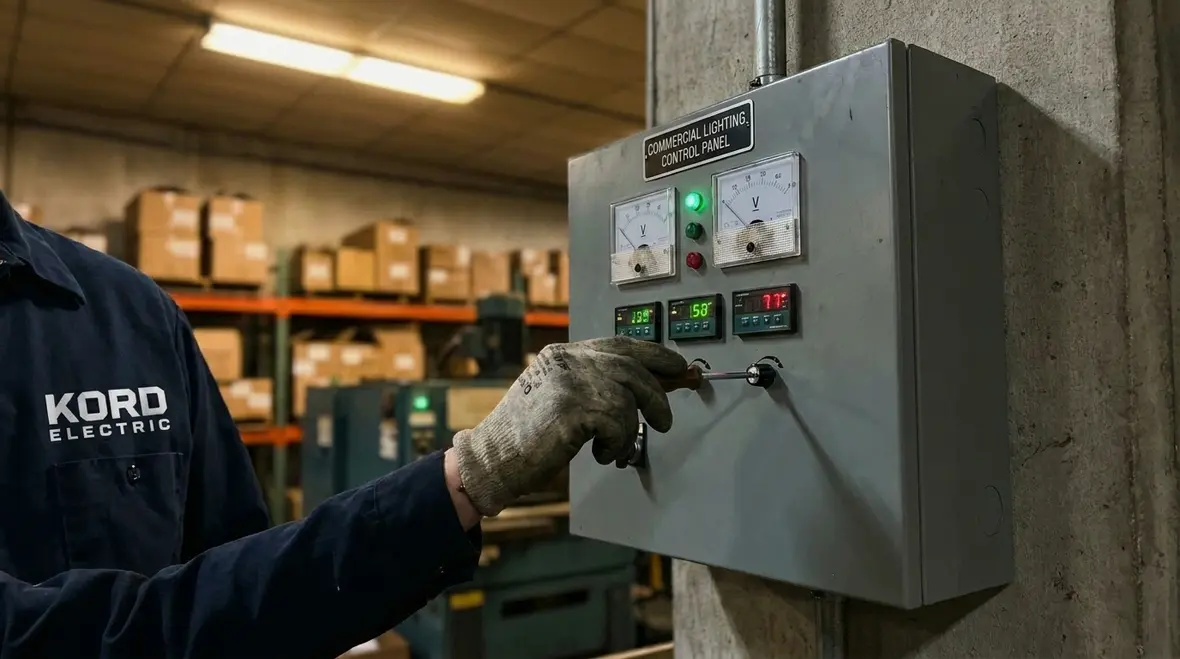
Even the best luminaire can underperform when voltage quality slips. Therefore, Kord Electric also considers electrical conditions that affect lights and drivers, especially in larger commercial and industrial facilities with motor loads, HVAC systems, and dock equipment. If voltage fluctuates, drivers can reduce output, create flicker, and shorten the life of parts.
Our team references the kind of voltage issues described in our guide on voltage fluctuations in commercial and industrial settings. We see the same patterns: sudden dips during motor starts, uneven service across panels, and harmonics that push sensitive electronics to behave unpredictably. As the building cycles through shifts, the lighting can look fine some days and then act “moody” on others. That is not a ghost story. That is power quality.
So we do more than swap fixtures. We evaluate how the electrical system supports the upgrade, and we recommend steps that keep performance steady. Then, the lighting stays consistent through the busy part of the day, not just the calm part.
How expert technicians assess the site before they upgrade
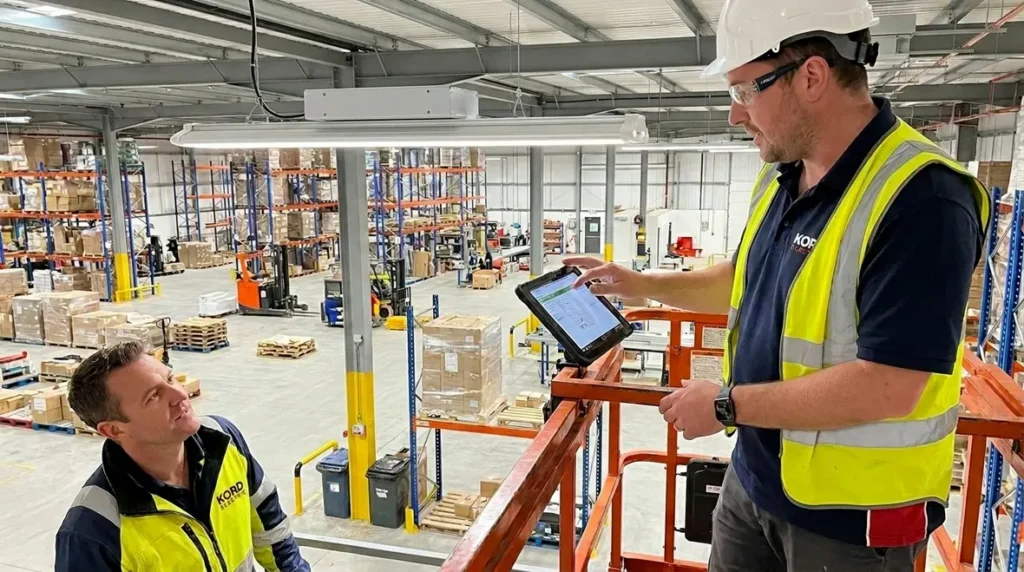
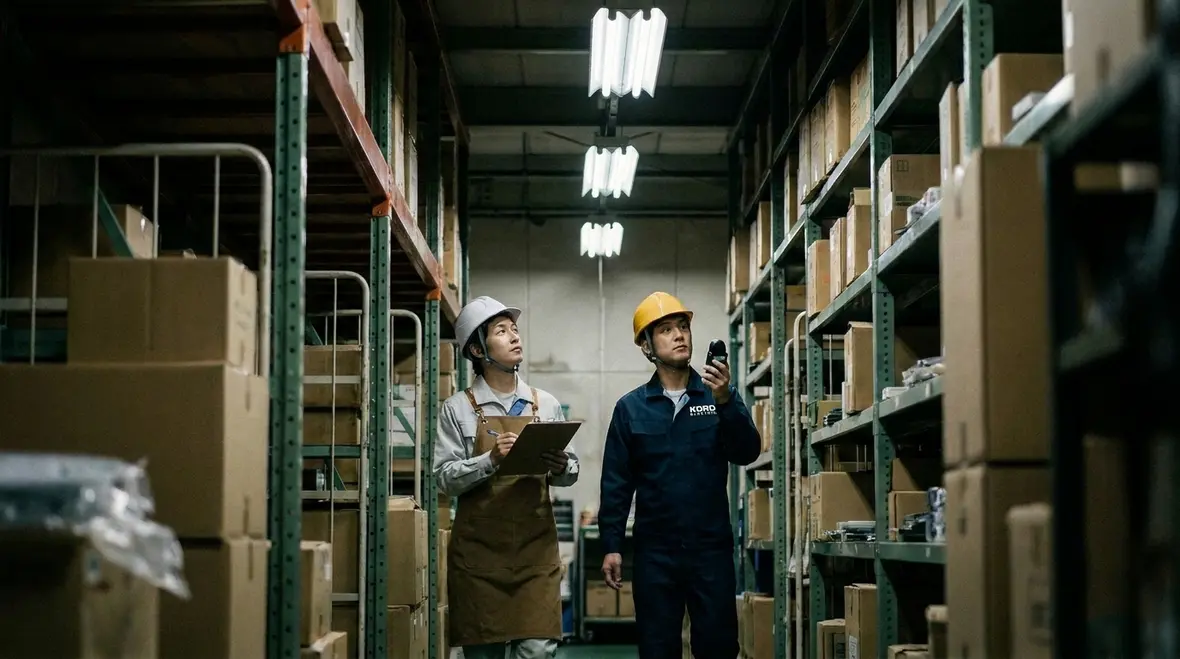
Some companies rush straight to the big shiny fixtures. We do it differently. Our expert service staff starts by walking the warehouse and mapping where light actually falls. We inspect mounting heights, aisle widths, rack materials, and reflective surfaces. Then we review control needs based on how the space operates across shifts.
After that, we check electrical realities. We look for panel loading concerns, feeder condition, and any evidence of flicker or uneven illumination. When needed, we coordinate a power quality approach so the upgraded lighting efficiency upgrades deliver their expected results. This includes understanding how voltage fluctuations influence driver behavior and how controls react during load changes.
Finally, we build an approach that fits the facility. For major property buildings and industrial sites, we plan installation in phases. That way we protect safety, keep access open, and avoid turning a warehouse into a construction zone. And because we are professionals, we clean up after ourselves like adults, not like a crew that just discovered manners.
Designing controls that match how a warehouse really runs
Efficient lighting is not only about the fixture. It is also about how we control it. We often recommend occupancy sensors for offices, restrooms, and low traffic storage rooms. For warehouse floors, we focus on strategies that reduce light when areas are empty while maintaining safe visibility when traffic increases.
We also address dimming where it makes sense. Dimming can reduce energy without sacrificing performance when drivers and controls handle the load consistently. However, we avoid one size fits all settings. Instead, we tune the system based on aisle usage, dock schedules, and shifts. As a result, the warehouse does not waste energy at night while still supporting safe operations early in the morning.
In addition, we consider the behavior of the electrical system. When voltage quality swings, some controls can act strangely. That is why we align the upgrade plan with the electrical environment, so the lighting stays steady and predictable. In a place where time matters, predictability is the real efficiency.
Reducing energy use without creating safety issues
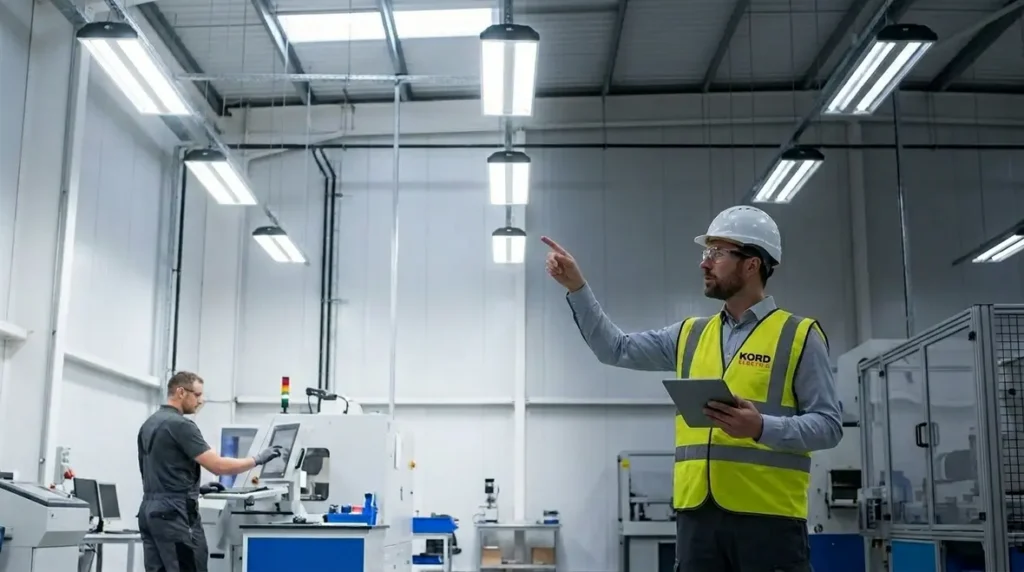
Warehouse managers often worry that reducing lighting levels will reduce safety. That fear is reasonable, and we handle it directly. We ensure improved distribution and correct aiming so bright areas sit where workers need them. Then we keep safety critical zones like docks, cross aisles, and pedestrian routes properly lit.
We also pay attention to glare. High glare can cause fatigue and reduce visual comfort, which can become a safety issue of its own. Therefore we choose optics and placement carefully. Then we test the layout to confirm visibility across the most used tasks.
Finally, we make sure the upgrade does not create a new maintenance headache. Commercial and industrial facilities need reliable systems. Our technicians consider long life components, access for future service, and how controls and drivers will hold up in the real environment.
So yes, we can cut energy use while improving the space. It is not magic. It is engineering, careful planning, and a healthy respect for how warehouses operate. Like a good joke, it works because the timing is right.
Featured example of a phased upgrade approach for industrial sites
For major property buildings, we frequently use a staged plan. For example, a facility may prioritize dock areas and primary picking aisles first, because those zones influence safety and speed immediately. Next, we upgrade secondary aisles and staging. Then we handle office, breakrooms, and support spaces last, when it is easiest to schedule shut downs.
This method improves visibility right away while reducing downtime. Additionally, it gives the team time to observe performance under actual loads and shift patterns. If anything behaves differently than expected, our expert service staff adjusts settings or recommends follow up electrical considerations.
And if someone asks, “Why are you doing it in parts?” we explain like we are speaking to adults. Because a warehouse can keep running while the upgrade improves it, and that saves money and stress.
How lighting upgrades connect to broader electrical reliability
Lighting upgrades do their best work when the rest of the electrical system behaves. That is why many facility teams pair projects like warehouse lighting efficiency upgrades with structured electrical maintenance and power quality checks. A stable system keeps new fixtures, drivers, and controls performing the way the spec sheet promised, even when production ramps up or seasonal loads change.
For portfolios managing multiple commercial and industrial properties, aligning upgrades with a broader preventive maintenance program helps catch issues such as overloaded panels, aging gear, and developing hot spots before they turn into surprise outages. That way, the same investment that brightens aisles can also improve uptime and protect sensitive equipment tied into the same distribution.
Kord Electric’s team works across lighting projects, voltage fluctuation assessments, and preventive maintenance, so recommendations stay consistent whether you are planning a targeted retrofit for one warehouse or a multi site program for several major properties.
Planning upgrades with minimal disruption to warehouse operations
Every warehouse has its own rhythm. Dock windows open and close. Production lines run hot at specific hours. Inventory peaks before certain seasons. When we schedule warehouse lighting efficiency upgrades, we match that rhythm instead of fighting it. That means phased work, clear communication, and an installation plan built around how your facility actually moves.
In many cases, this looks like tackling high priority zones first and sequencing the rest of the work around shift changes or planned downtime. For 24/7 operations, we coordinate tighter windows, staggered crews, and temporary lighting where needed so safety stays intact. The goal is simple: when your teams look back at the project, they remember better visibility, not weeks of disruption.
Because Kord Electric focuses on commercial and industrial environments, our technicians and expert service staff are used to working in live facilities. They flag access requirements early, keep pathways clear, and communicate with supervisors so no one discovers a surprise shutdown in the middle of a rush order.
Connecting upgrades to long term lighting strategies
A single upgrade cycle can do a lot, but the best results arrive when lighting is treated as part of a long term plan. That includes documenting fixture types, mounting heights, controls, circuiting, and panel capacity so future changes slot in cleanly instead of starting from scratch. It also means paying attention to how new systems age so the next round of improvements becomes faster and more predictable.
Teams that want to keep pushing efficiency often revisit controls after the first few months of operation. Once real world data shows how aisles, docks, and mezzanines are actually used, settings can be tuned further to trim excess run time without sacrificing safety or comfort. Those targeted adjustments compound savings over the life of the system, especially in high ceiling warehouses where access costs make every fixture visit count.
Where broader electrical reliability is a concern, pairing lighting projects with structured electrical preventive maintenance keeps distribution equipment, breakers, and feeders aligned with the new load patterns created by upgraded lighting and controls.
Where warehouse lighting efficiency upgrades fit into overall services
For facilities teams looking at the bigger picture, lighting is one part of a larger reliability and safety strategy. Targeted projects in warehouses often sit alongside work on panels, feeders, and other building systems that keep operations moving. Because our crews handle commercial and industrial projects every day, we can coordinate lighting scopes with related work so the same access, lifts, and shutdown windows support multiple improvements.
Whether you are refreshing a single distribution center or planning upgrades across a regional portfolio, Kord Electric’s Los Angeles County electrical services support warehouses, industrial plants, and major property buildings with designs built for real world conditions instead of idealized drawings.
If lighting is already on your list, it can be the starting point for a broader conversation about how your electrical system supports growth, uptime, and safety over the next several years—not just the next utility bill.
FAQ
Conclusion
Kord Electric delivers lighting plans built for commercial and industrial facilities where safety and productivity matter. Our expert service staff evaluates the site, considers power quality realities, and then installs warehouse lighting efficiency upgrades that improve visibility without disrupting operations. If your warehouse feels dim in the wrong places, wastes energy, or shows flicker that nobody can explain, it is time to upgrade with intention. Contact us to schedule a site assessment and get a practical plan that works for your facility.
If you are planning a broader project that touches panels, feeders, or other systems in addition to lighting, Kord Electric’s dedicated lighting installation services keep design, installation, and commissioning aligned so every upgrade supports long term reliability.