Commercial EV Fleet Charging Infrastructure Plan
Commercial EV Fleet Charging: planning the infrastructure that won’t quit
When a site plans commercial ev fleet charging for delivery vans, field crews, or shuttle routes, the goal is simple: reliable power, safe installs, and a network that keeps running even when demand spikes. At Kord Electric, we help commercial and industrial facilities, and major property buildings, build charging infrastructure that fits the electrical reality on the ground. We do not treat chargers like a plug and pray project. Instead, we plan for load, space, heat, controls, and future growth, so your operation stays moving.
And yes, we have heard the jokes. Someone always says, “It is just a charger.” Then the breaker trips, the parking lot gets warm, and suddenly everyone becomes an electrician for about five minutes. Let’s prevent that moment with real planning.
Site load planning that matches how fleets actually operate
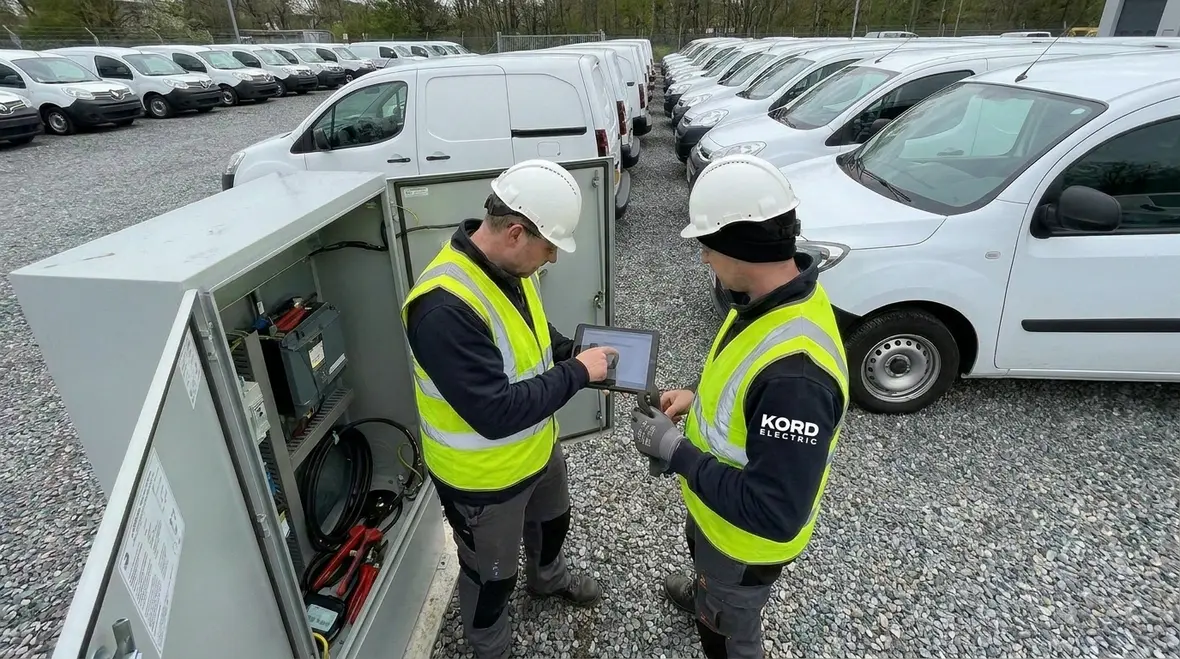
Planning starts with load. However, we do not just look at the charger nameplate and call it a day. We start by asking what your fleet does through the day and how charging happens on your schedule. For example, do your vehicles return in waves after shifts? Do you run fast charges during peak demand? Do you want chargers to ramp up together, or spread out like a well organized lunch line?
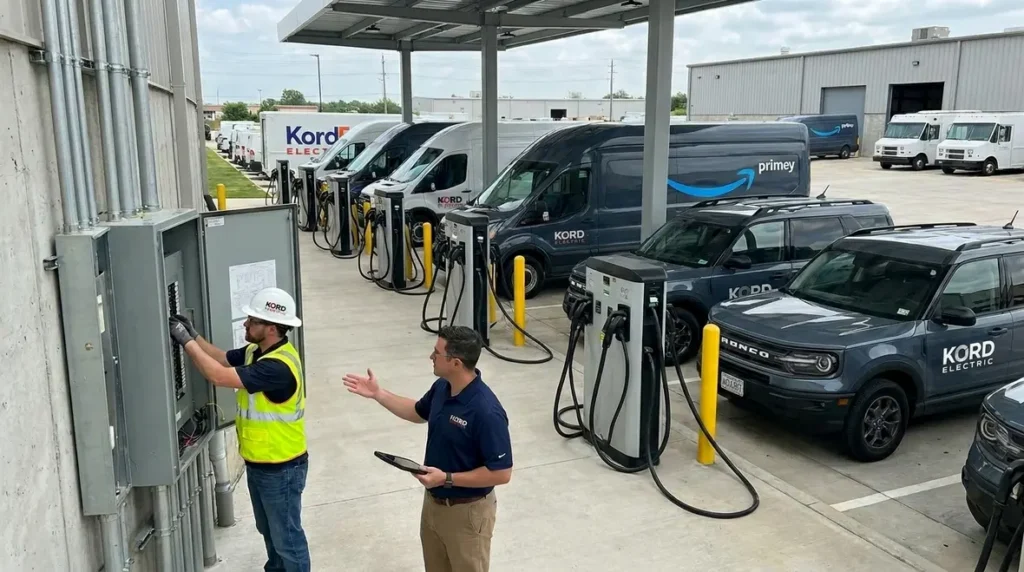
Next, our technicians and expert service staff map the electrical load profile for the facility. Then we compare it to available capacity in the panel, switchgear, transformers, and utility service. If the building cannot provide the needed power, we plan the upgrades early, instead of turning commissioning into a surprise party.
When planning load for commercial ev fleet charging, we also consider connected equipment that may run at the same time. HVAC, lighting upgrades, kitchen loads, conveyors, elevators, and process equipment often collide with charging demand. Therefore, we look for practical ways to coordinate power and reduce peak stress.
We also look at how charging interacts with broader property goals. For some sites, commercial EV charging supports tenants and public drivers. For others, it supports mission critical routes and logistics. In both cases, we use the same disciplined approach we apply in our data center electrical distribution design for reliability work, translating that mindset into fleet operations.
To keep budgets and schedules realistic, we also align load planning with incentives, tariff structures, and phasing. That way, when equipment arrives, the electrical backbone is prepared, instead of scrambling to catch up while vehicles wait for a free circuit.
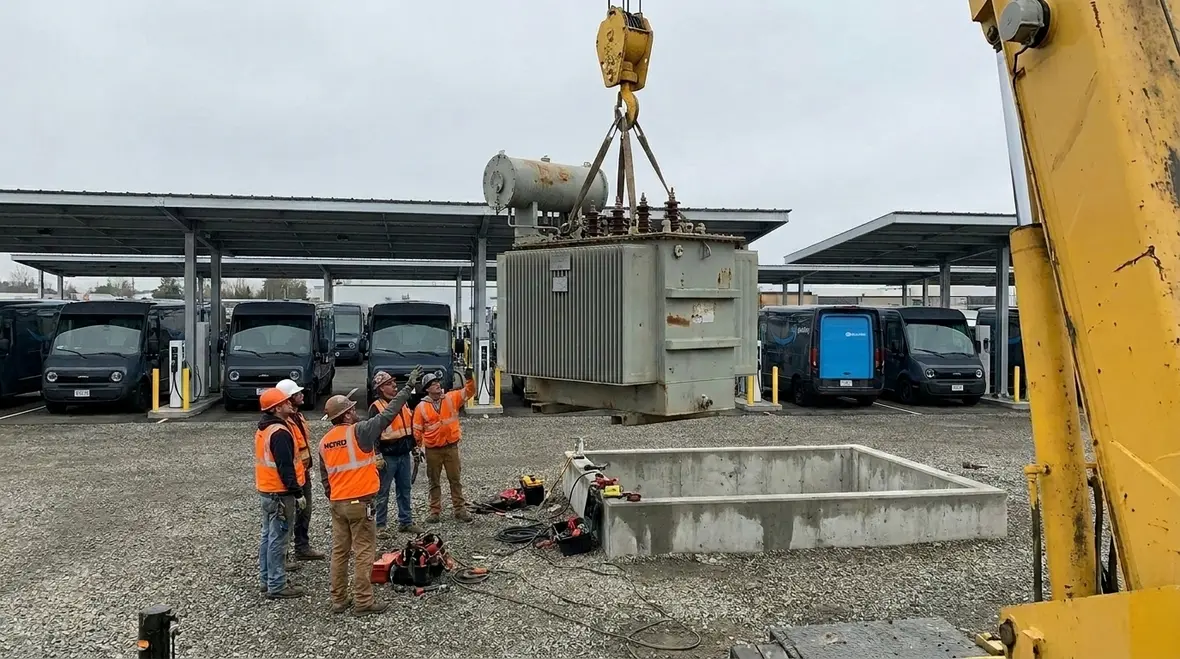
Electrical distribution design for reliability
If you want reliability, you build it into the distribution system. In our work, we lean on the same principles we explain in our data center electrical distribution design for reliability resource, because the thinking transfers well to fleets. That resource focuses on having the right protection, proper routing, and a design that handles normal load and fault conditions without drama. In our world, chargers add another variable, but the discipline stays the same.
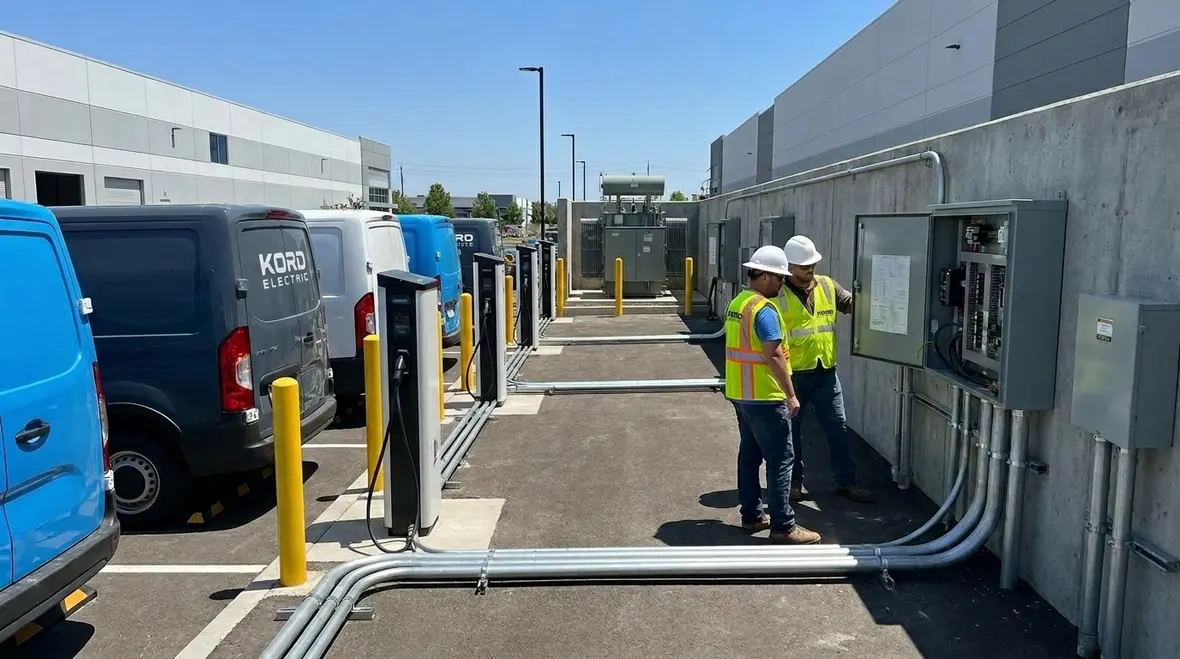
So, we structure the electrical distribution with clear paths and sound protection. We select conductors and bus interfaces for real current, not optimistic assumptions. We also plan for grounding and bonding that meet code and support safe operation. Then we choose overcurrent protection and coordination so that a fault in one charging station does not take down the whole site.
In many commercial properties, we also plan for redundancy where it matters. For example, we may separate critical panels, add protected feeder routes, or build zoning so the charging system keeps running during maintenance. Moreover, we design for heat and voltage drop, because outdoor circuits and long runs can degrade performance over time.
We also coordinate fleet charging strategy with broader EV planning efforts, such as the approaches outlined in Kord Electric’s work on EV charging infrastructure planning for commercial sites. When distribution design and charging strategy line up, your system behaves predictably, instead of feeling like a patchwork of “good ideas” added on different weekends.
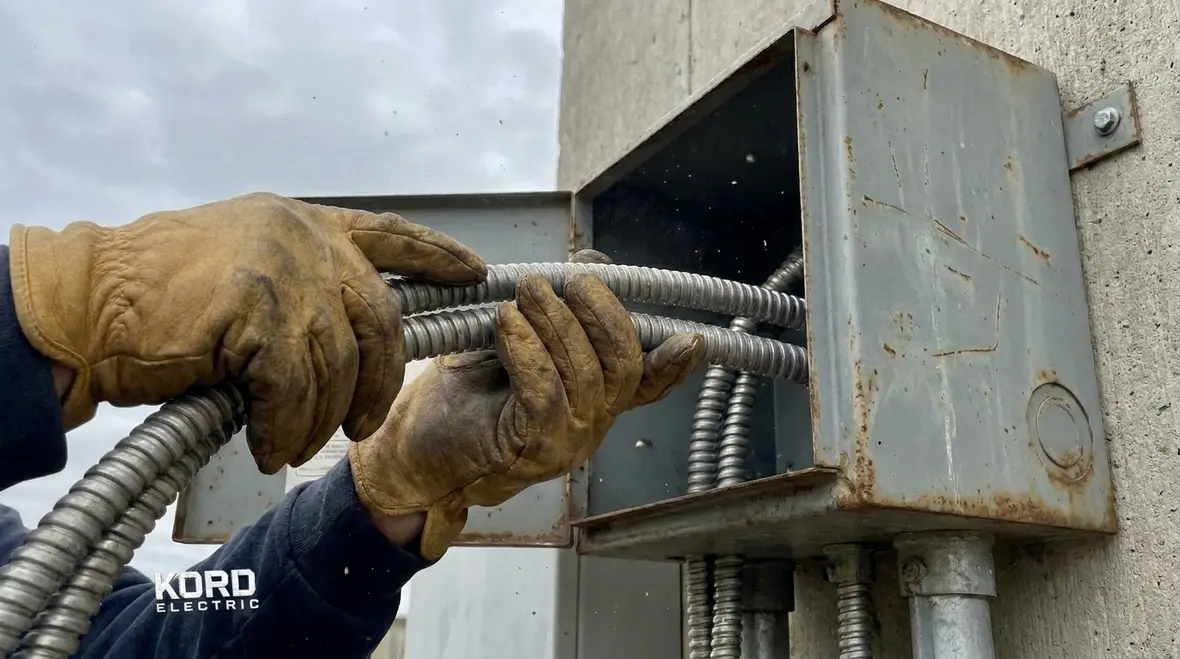
Panel, transformer, and switchgear upgrades that make sense
Many teams want charging now. They are busy, budgets are tight, and the vans are already late. Yet, we still advise doing the math first, because installing chargers without matching the panel and transformer capacity is like putting racing tires on a bike. It looks fast until the physics checks you at the curb.
Our electricians evaluate the main service size, transformer ratings, and switchgear configuration. Then we determine what upgrades provide the best value. Sometimes the answer is additional distribution sections. Other times it is transformer capacity, utility service upgrades, or new feeders that relieve existing loads. We also plan for spare capacity and future expansion, because fleets rarely stay the same shape for long.
When upgrades happen, we coordinate schedules to reduce downtime for facility operations. After that, we verify with commissioning tests and documentation. That way, the system is not only installed, it is understood. And if someone asks, “Why does this feeder exist?” our team can explain it clearly. We would rather educate than guess.
For facilities in and around Los Angeles, these upgrade decisions often connect with regional support and service availability. That is why many sites pair fleet charging projects with Los Angeles County electrical services that already understand local grid conditions, permitting expectations, and how industrial loads behave across different shifts.
DC fast charging and AC charging: planning for power flow and safety
Not all chargers behave the same. AC charging tends to be simpler in design, with predictable loads that match your equipment’s charging schedule. DC fast charging, on the other hand, pulls much higher power and can create sharp demand peaks. Because of that, we plan the electrical system differently, and we treat safety as non negotiable.
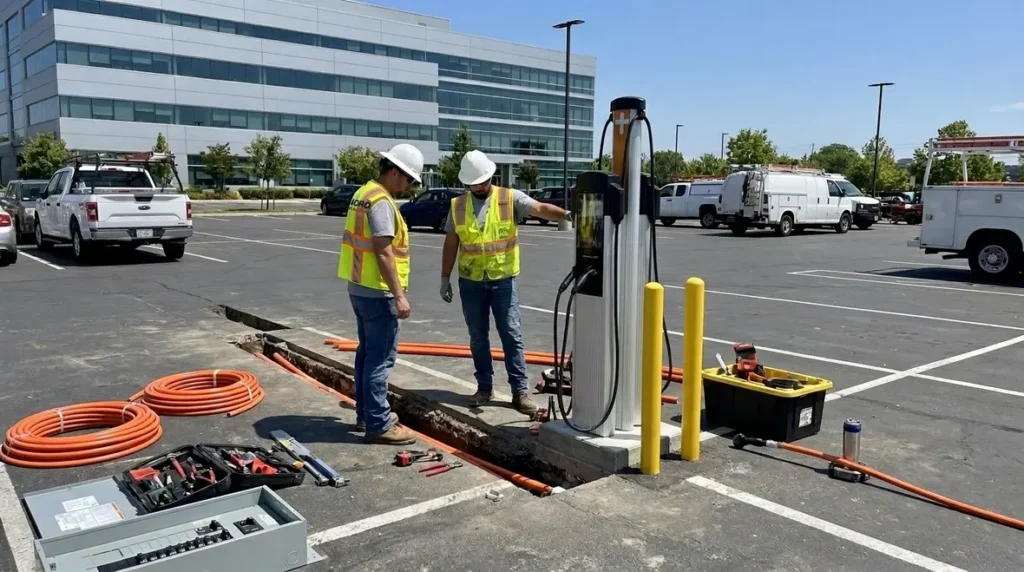
Our technicians consider power flow, protection settings, cable routing, and enclosure ratings. We also plan equipment placement to manage heat and keep the site safe for vehicles and people. In commercial and industrial properties, that means clear walk paths, safe access, and the right mounting and grounding details.
In addition, we design the controls and network features so the system can manage charging sessions safely. That can include load sharing, smart scheduling, and operational limits that prevent the facility from exceeding designed demand. In other words, we help the charger behave like a team player, not like a diva who needs the whole stage.
One more thing. When folks hear “fast,” they often think “always max.” That is not how reliable charging works. Therefore, we build logic into the system so charging remains stable even when vehicles arrive at the same time. You get performance without the electrical system acting like it just saw a plot twist on a Saturday night streaming binge.
Where it makes sense, we also connect charging behavior with monitoring and trending tools so fleet managers can see how fast charging events stack up over weeks and months. That visibility helps refine shift planning and supports smarter choices about when to favor DC fast charging versus overnight AC charging.
Permitting, code compliance, and site documentation that support real operations
Planning does not end at the single line diagram. We help commercial and industrial facilities and major property buildings navigate the permitting path, code compliance, and job documentation. This matters because inspections and long term maintenance depend on clarity.
During design, we follow the applicable electrical codes and standards, including requirements for conductors, overcurrent protection, grounding, and outdoor environments. Then we prepare layouts and documentation that match how installers and inspectors review systems. After installation, we also verify labeling, test results, and system records so your facility team can maintain the chargers with confidence.
Here is where our expert service staff earns their keep. We explain the system in plain language. We show what gets monitored, what gets tested, and what to do if a station has a fault. We do not just hand over a binder and vanish like a magician after the show. We stay available for facility staff who want to understand the system, not just operate buttons.
Because charging often lives alongside other critical systems like data centers, life safety equipment, and industrial processes, we also coordinate documentation so electrical work for fleets does not create confusion elsewhere. Clean drawings, updated one lines, and clear notes keep future projects from tripping over today’s upgrades.
Phased rollout strategy for future growth
Most fleets evolve. Routes change. Trucks get replaced. Maybe you start with a few bays and later add more, or you add charging for a new tenant space. That is why we recommend a phased approach for commercial ev fleet charging, especially at larger sites.
We plan for growth by reserving capacity in distribution sections, adding conduit routes early, and designing feeder capacity so later phases do not force major rework. Also, we pick components that support expansion, such as switchgear layouts that can grow without redesigning everything from scratch.
When we phase a project, we align the electrical plan with operational needs. We often start with the most valuable charging use case, then expand once we confirm demand patterns after a realistic period of use. Therefore, you get data, not just guesses.
And yes, phased rollout also prevents the classic mistake of overbuilding too early. That is how budgets end up crying in the corner, quietly, like a sitcom character who “is fine” until the final commercial break.
We also design phasing so it plays nicely with long term infrastructure scalability. When fleet charging grows alongside public charging, tenant amenities, or mixed use parking, we draw on lessons from our EV charging infrastructure scalability projects to keep everything aligned instead of building parallel, competing systems.
FAQ
What our team needs from you
If you want us to plan the right system, share the details that drive the design. Provide the number of vehicles, charger types, expected charging times, and whether you aim for AC charging, DC fast charging, or both. Also share any known equipment loads like HVAC schedules, process loads, or large recurring operations. Then, we review your electrical one line drawings and existing equipment information.
Once we have that, our technicians and expert service staff translate electrical requirements into a practical plan. We walk through risks, options, and what changes if you want faster charging later. Because the goal is not only installation. The goal is a charging system your team can operate and trust.
And when someone inevitably asks, “Can this handle more chargers next year?” we answer with real capacity notes, not hand waving.
Ready to build a charging system that stays dependable
Let Kord Electric plan your commercial EV fleet charging infrastructure for a real world facility, not an optimistic spreadsheet. We evaluate load, design distribution for reliability, coordinate upgrades, and document the system so your staff can maintain it confidently. If you run a commercial or industrial site or manage a major property building, we will help you phase the rollout and prepare for growth. Reach out to us today for an on site assessment and a clear plan you can act on.
When you are ready to move from ideas to implementation, our team aligns fleet charging with your existing electrical infrastructure, regional service needs, and long term operational goals. From first feasibility conversations through final commissioning, we focus on building a charging system that stays dependable, not just impressive on opening day.