Industrial Electrical Safety Testing Services
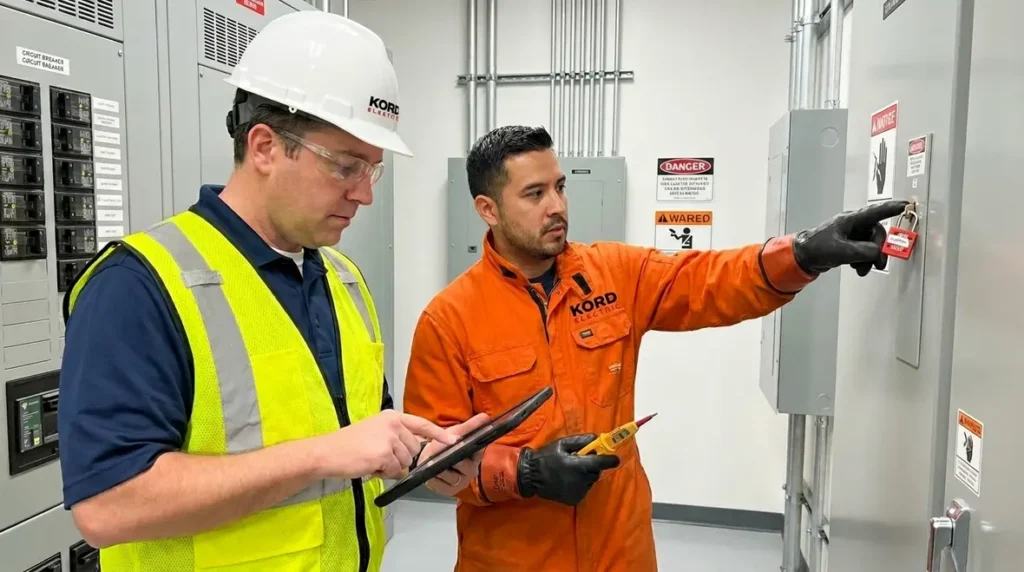
In industrial electrical safety testing, we at Kord Electric help commercial and industrial facilities catch hazards before they turn into downtime, injuries, or costly repairs. We treat every test like it matters, because it does. In fact, our technicians and expert service staff walk the floor with a calm, methodical mindset, the same way you would handle a live wire in a dark room. Also, unlike a horror movie, we prefer prevention over screaming. From switchgear to panelboards and grounding systems, we run essential inspections and measurements that support safe operation and reliable power.
What is industrial electrical safety testing and why it matters
Industrial electrical safety testing is a set of practical checks and measurements that confirm electrical systems perform as designed and stay safe under real operating conditions. Rather than guessing, we measure. Then we document. That simple approach helps others in your organization make confident decisions about maintenance, upgrades, and compliance.
In most facilities, electrical risk does not show up as one big event. Instead, it creeps in through loose terminations, worn insulation, water intrusion, corrosion, or equipment aging. As components cycle through heat and load, microscopic problems can grow into faults. Over time, a “still working” condition can become a “don’t touch that” condition. Therefore, scheduled testing helps reduce the chance of shock, arcing, fire, and unexpected shutdowns.
When we explain the results, our service staff uses plain language and clear next steps. They do not talk like they are reading a manual at 2 a.m. They walk through what they saw, what it means, and what to do next. That communication matters just as much as the test itself.

Key electrical safety tests we perform for industrial sites
To support safe operation in commercial and industrial buildings, we typically plan electrical tests around the parts that fail most often or create the highest risk. Each site varies, so we match the scope to the system type, environment, and operating schedule. Still, the core set stays consistent because safety does not change just because the building got a new coat of paint.
Below are common categories of essential electrical safety testing we run through our work:
- Insulation resistance testing to assess insulation condition and detect weak points that may lead to leakage or ground faults
- Continuity checks for conductors and bonding paths to confirm low resistance where faults must not happen
- Protective bonding and grounding verification to ensure fault current can travel safely to the grounding system
- Polarity and phase sequence checks to confirm correct wiring that supports safe operation and proper control behavior
- Ground fault and protective device verification so protective systems interrupt faults quickly and correctly
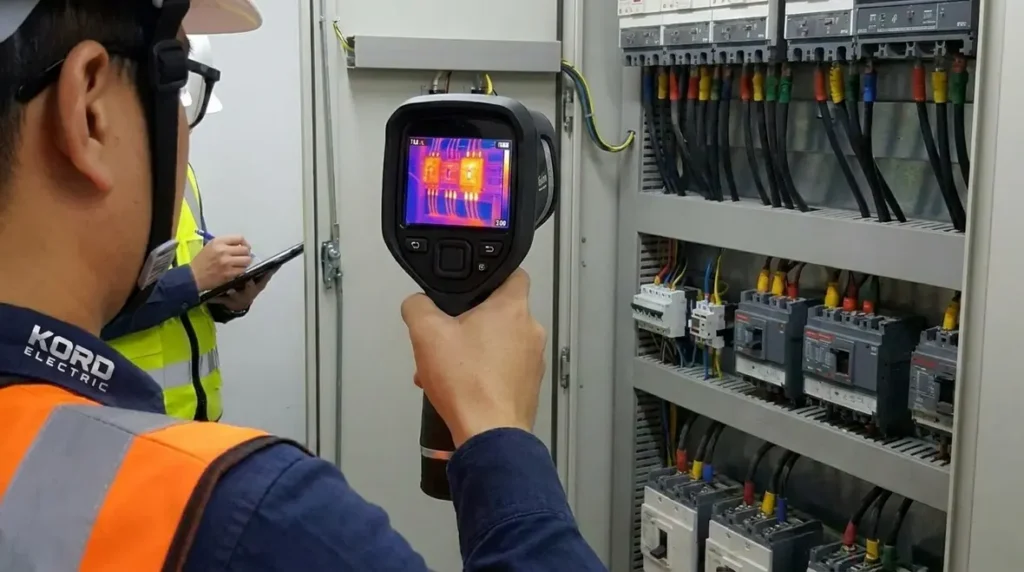
- Inspection of terminations and hardware to spot looseness, heat damage, and corrosion before they grow
Next, we also look for practical issues that tools cannot fully capture. For example, a perfectly measured connection can still hide a loose connection that will fail under vibration. So, we combine measurement with physical inspection. In other words, we treat testing like a full audit, not a quick scan.
How we reduce risk in switchgear, panels, and distribution
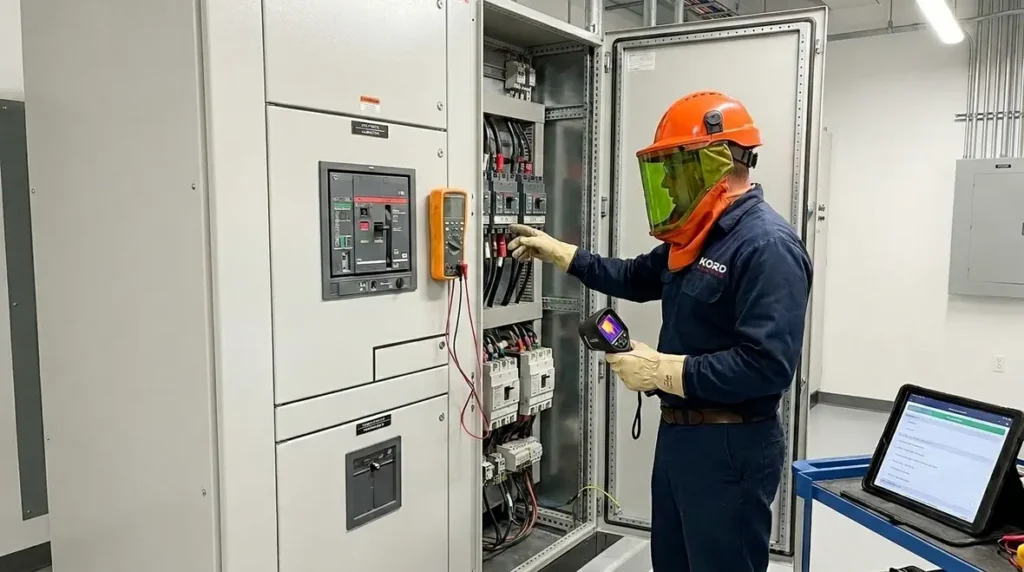
Switchgear and distribution equipment form the power backbone in many commercial and industrial facilities. When something goes wrong here, it can spread fast: a fault in one circuit can affect upstream components, operations, and production schedules. Therefore, we focus on both safety and stability.
Our technicians follow a careful sequence. First, we verify system configuration and take note of operating conditions. Then we apply the right test method for each component. After that, we compare results against expected values and manufacturer guidance. Because industrial electrical safety testing is only useful when it is interpreted correctly, we do not stop at “pass or fail.” We explain the “why,” including what may have caused the current condition.
During work, we also keep downtime in mind. Whenever possible, we plan testing around shift schedules and power availability. We coordinate with facility staff so others can continue operations safely. And yes, we know what it means when someone says, “We need this back online yesterday.” We respond with structured planning and steady execution.
For facilities that want to connect testing with broader reliability work, we often align our findings with structured programs like electrical preventive maintenance for commercial and industrial buildings. That way, repairs, upgrades, and inspections move in the same direction instead of living as isolated projects.
Grounding and bonding: the quiet heroes of safety
If electrical safety had a team roster, grounding and bonding would be the players who do not get mentioned in highlight reels. They rarely “look cool,” but when they work, everyone stays safe. When they fail, problems show up in the worst moments.
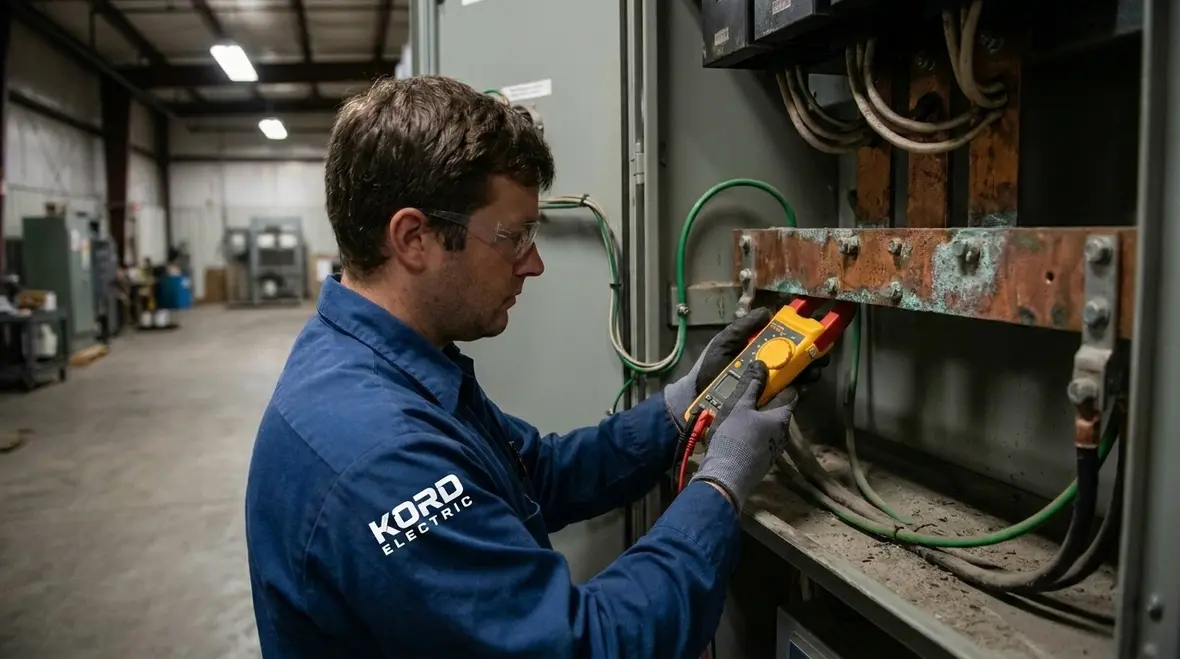
We verify that grounding conductors and bonding points create a continuous path for fault current. In addition, we check system interfaces where corrosion often hides. Many industrial buildings experience moisture exposure, chemical atmosphere, or cycles of temperature and vibration. Over time, those conditions can degrade metal surfaces and compromise connections.
When our team identifies issues, we help others understand the practical impact. For example, weak grounding can raise touch voltage and increase the risk of shock during a fault. It can also slow protective operation or cause nuisance trips that frustrate operations teams. Therefore, our testing approach aims to reduce both safety risk and operational noise.
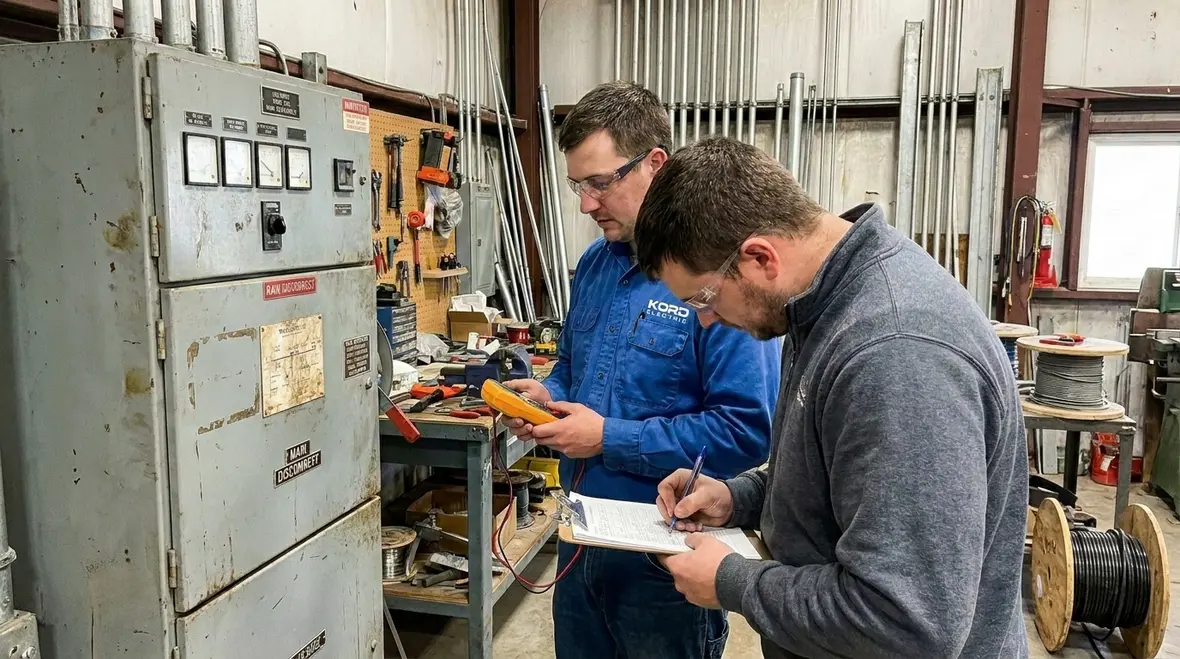
To keep the process clear, our technicians explain findings while they work. They show what they measured and why it matters. That way, your team does not need to reverse engineer the report at the end of the day like it is a mystery novel.

Choosing the right test schedule for commercial and industrial facilities
There is no single “perfect” schedule. Instead, we build a plan based on equipment age, duty cycle, environmental exposure, and risk profile. For example, a manufacturing area with dust and vibration may need more frequent checks than a controlled office support facility. Likewise, a facility that experiences water intrusion or chemical exposure benefits from tighter monitoring.
Our service staff helps others align testing with practical business reality. We consider operational windows, staffing, and the impact of shutting down equipment. Then we propose a schedule that supports safe operation without disrupting production more than necessary.
As a baseline, many facilities adopt periodic testing and inspection, then increase frequency when conditions change. If you add new loads, expand the building, or replace major equipment, we update the scope. Likewise, after repairs or failures, we run targeted checks to confirm the fix actually solved the problem.
To make reporting easier, we provide documentation that your internal team can use for maintenance planning. We also explain any recommendations in plain language. That means your leaders can approve improvements with confidence, rather than relying on vague summaries.
Reporting, documentation, and what facility teams do next
Industrial electrical safety testing only helps if others can act on the results. That is why we deliver reports that focus on clarity and usefulness. We include measured values, conditions observed, and the reasoning behind our recommendations.
We also help turn test findings into an action plan. Sometimes the next step is a simple re torque of a termination. Other times it involves deeper troubleshooting or component replacement. Either way, our technicians explain the path forward so teams can plan labor and materials.
When multiple systems share a power path, our documentation helps others see relationships. For example, a grounding issue at one interface can influence upstream behavior. Thus, we present findings in a way that supports coordinated maintenance rather than isolated fixes.
Typical documentation includes:
- Measured results by equipment location
- Visual inspection notes and observed conditions
- Test method and settings where relevant
- Risk interpretation and safety impact
- Recommended corrective actions
- Suggested re test intervals
How industrial electrical safety testing supports broader compliance
Effective industrial electrical safety testing does more than check a box. It supports the same safety and reliability goals that drive code compliance, preventive maintenance, and long-term planning. When test data feeds into structured programs, facility teams can align day-to-day work with requirements from standards and local authorities.
For example, when we document conditions and results, that information can help support inspections, insurance reviews, and internal audits. Many facilities pair their testing schedule with broader efforts such as ongoing electrical preventive maintenance and commercial code compliance planning. The goal is simple: fewer surprises, fewer last-minute corrections, and a safer environment for everyone who works in and around your equipment.
Testing also builds a more accurate picture of system behavior under real conditions. That matters when you make upgrades or add new loads, because your planning starts from measured reality instead of assumptions. When industrial electrical safety testing, maintenance, and upgrade work share the same documentation trail, your power system becomes a better-understood asset instead of a constant unknown.
FAQ: industrial electrical safety testing
Industrial electrical safety testing for Los Angeles County facilities
Industrial electrical safety testing becomes even more valuable when it is paired with local knowledge. Facilities across Los Angeles County balance busy production schedules, tenant demands, and evolving code requirements, often across multiple buildings or campuses. When testing, maintenance, and project work all flow through a team that already understands local inspection paths and utility expectations, implementation feels smoother and less disruptive.
That is why many organizations connect their testing program with dedicated regional support such as Los Angeles County electrical services for commercial and industrial facilities. When testing discovers an issue that requires corrective work or upgrades, you already have a service partner familiar with your equipment, your schedule, and your risk tolerance.
Whether you manage a single industrial plant or a portfolio of properties, combining industrial electrical safety testing with a broader service strategy helps keep your power infrastructure reliable, documented, and ready for inspection. Over time, that combination reduces emergency calls, shortens outages, and supports safer working conditions for everyone who depends on your electrical system.
Conclusion and call to action
Industrial electrical safety testing is not something we treat like a checkbox. It is the foundation of safe operations for commercial and industrial facilities, and we plan it with your reality in mind. If your team needs a clear testing schedule, reliable documentation, or expert guidance from our technicians and service staff, Kord Electric is ready. Contact us today to discuss your equipment, environment, and priorities, and we will build a safe, practical plan to keep power running without surprises.
If you are coordinating testing with upcoming projects or upgrades, you can also explore how our team supports regional facilities through structured Los Angeles County electrical services designed around long-term performance, not one-time fixes. The same calm, methodical approach we bring to testing carries into design, installation, and maintenance, so your electrical system works as a single, reliable whole.