Preventive Electrical Maintenance Schedule Guide
At Kord Electric, we build preventive electrical maintenance schedules for commercial and industrial facilities and major property buildings with one goal: fewer surprises that cost real money. To get there, we start with a preventive electrical maintenance checklist inside our planning. Then we match it to how your site actually runs, who operates it, and what you cannot afford to shut down. In other words, we do not maintain equipment by vibes. We maintain it by evidence, history, and a smart rhythm that keeps safety in check and uptime steady. Think of it like a well paced playlist for your facility, not the chaos of pressing shuffle during peak production.
What should a preventive electrical maintenance schedule include?
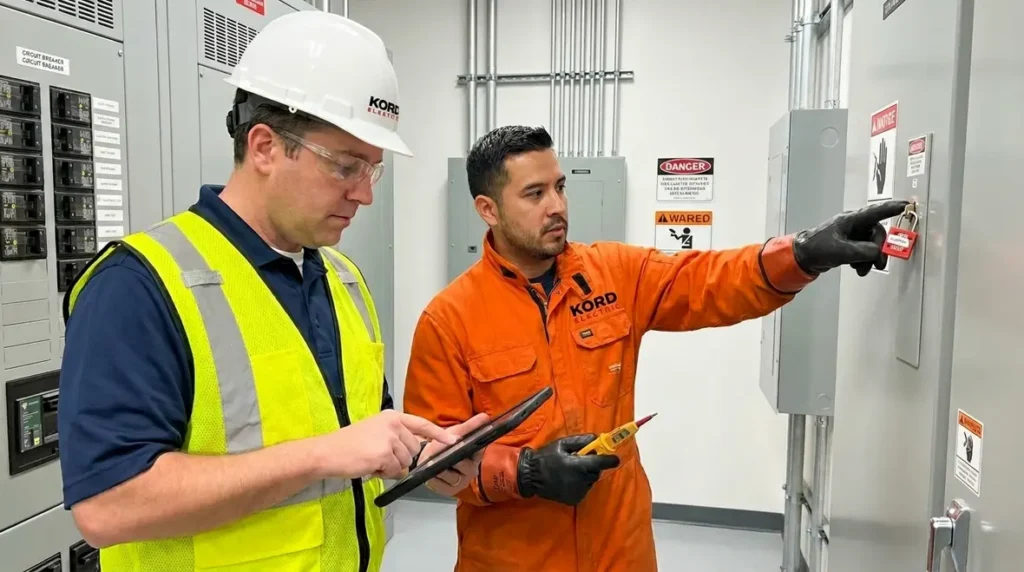
A strong facility plan does more than “look and test.” Our technicians and expert service staff guide the work with step by step structure, so maintenance tasks connect to risk. Typically, we include the basics first, then we build depth around them.
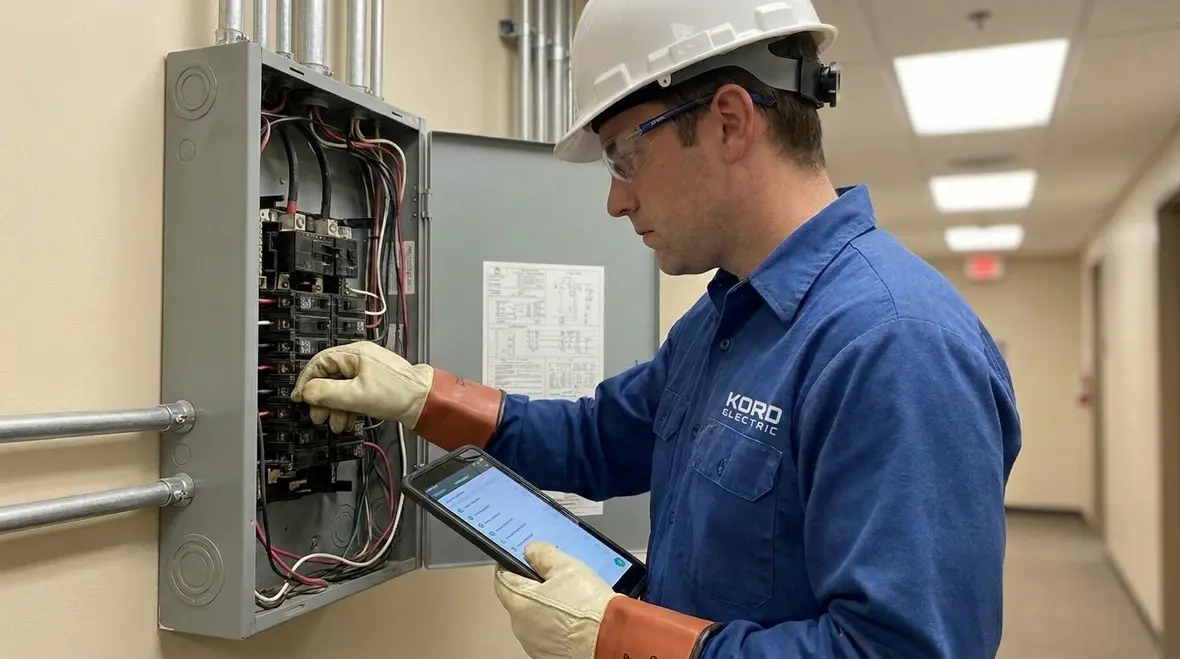
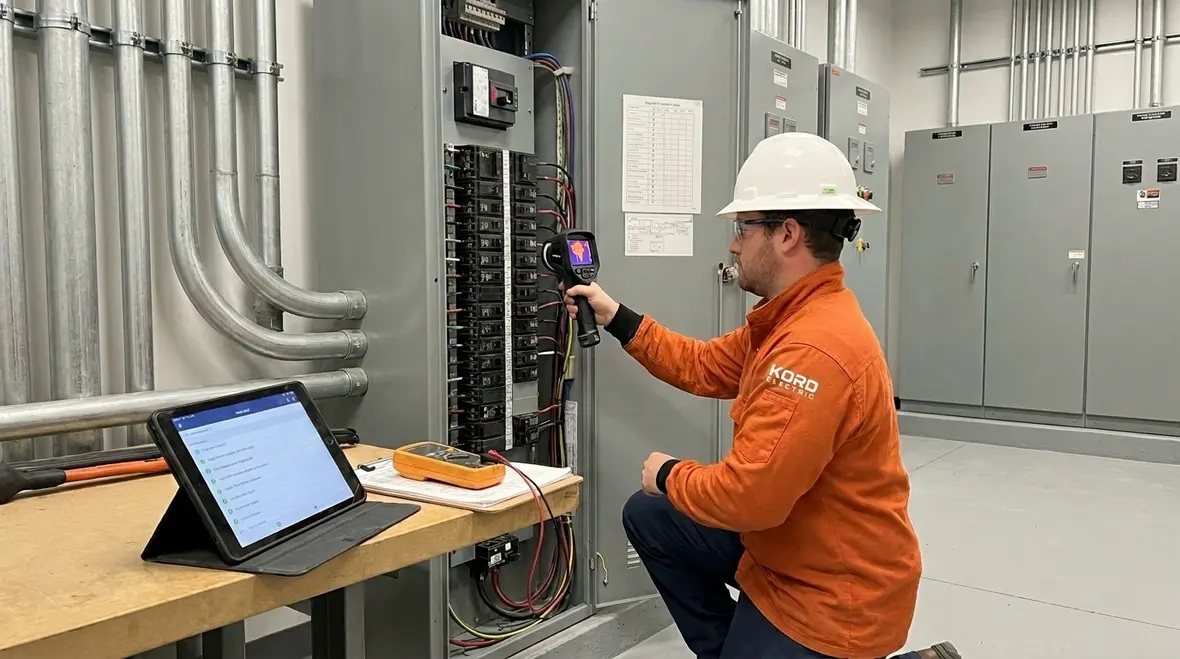
- Baseline inspections for panels, breakers, switchgear, transformers, and motor control centers
- Load and condition review using available data from your site, utility bills, and prior work orders
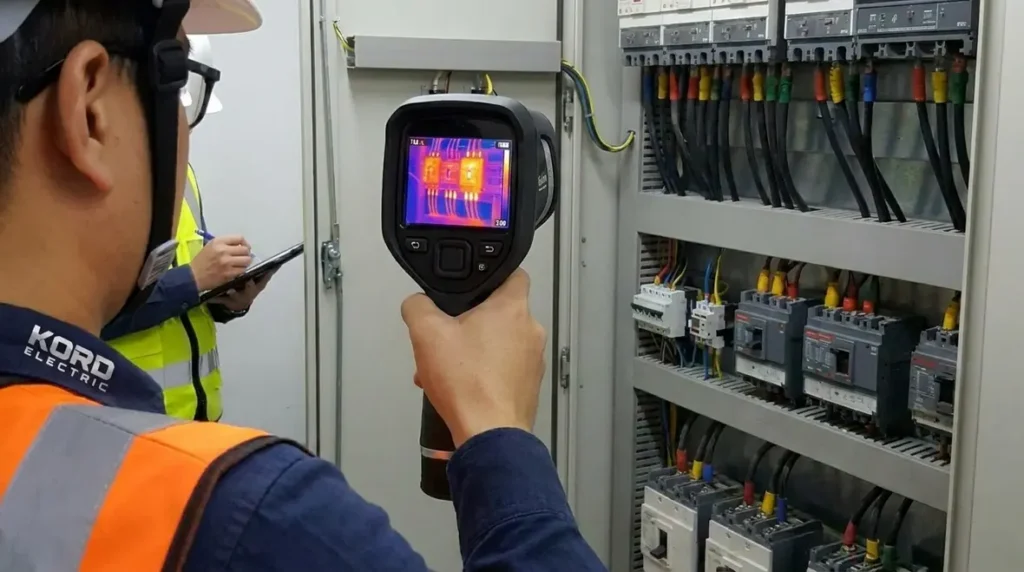
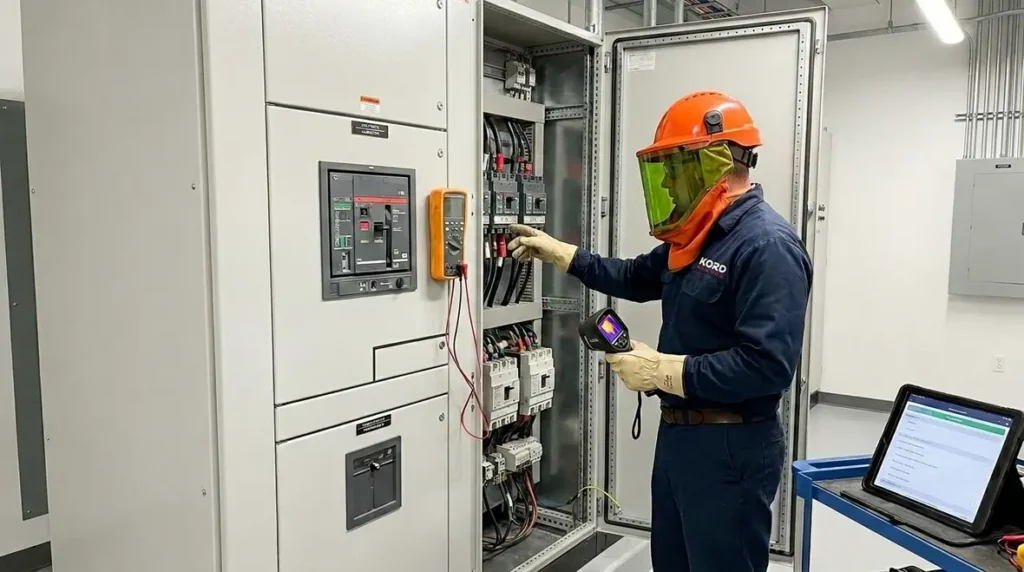
- Targeted testing such as insulation checks, torque verification, and thermal scanning where appropriate
- Safety verification including labeling, grounding checks, and documentation updates
- Corrective recommendations ranked by impact and urgency, so others can act fast
Next, we time tasks based on use, environment, and failure history. For example, a loading dock facility that handles frequent vibration does not need the exact same cadence as a quiet office wing. Therefore, we tune the schedule so it stays realistic, not just printed on paper.
For facilities that want even more structure behind their preventive electrical maintenance checklist, Kord Electric’s dedicated electrical preventive maintenance programs give you a long-term roadmap instead of one-time inspections.
How we map facility risk to maintenance tasks
In our process, we treat “risk” like a practical tool, not a buzzword. First, our team identifies critical systems that affect life safety, production, and critical operations. Then, we connect each system to likely failure modes.
Our technicians explain this plainly during site walks, because confusion breeds delays. And delays become costly. We also consider the environment. Heat, dust, moisture, and corrosive atmospheres change how electrical components age. Likewise, operational patterns matter. A facility that cycles equipment many times per day experiences wear that steady nighttime operation rarely creates.

From there, we categorize work as routine, seasonal, and event driven. So instead of treating all tasks as equal, we assign the right effort to the right need. That is how preventive plans stay effective instead of becoming expensive “maintenance theater.”
We also connect risk mapping with broader strategies like commercial and industrial electrical maintenance plans, so your inspections, upgrades, and emergency response move in the same direction.
How often should commercial sites schedule electrical work?
There is no one size fits all answer, and we do not pretend there is. However, we can still set clear frequencies that match real operating conditions. We recommend intervals based on criticality, manufacturer guidance, and what we observe during inspections.
For many major property buildings and industrial locations, a typical approach looks like this in practice:
- Monthly or quarterly checks for visible components, labeling, panel access, and basic condition observations
- Quarterly to semi annual tasks for deeper inspection items, torque verification, and targeted cleaning where dust accumulates
- Annual testing and review for key distribution equipment, safety confirmation, and documentation updates
- Seasonal work aligned to weather stress, such as moisture related checks after high humidity periods
Then we adjust. If your thermal images show hot spots or your inspections uncover loose connections, we tighten the schedule for those circuits. Conversely, if systems consistently test within normal ranges, we avoid unnecessary work. That approach keeps cost controlled while improving reliability.
Over time, this turns your preventive electrical maintenance checklist into a living record. Patterns emerge, weak points stand out, and the schedule stops being a guess. If you operate in or around Los Angeles, pairing this rhythm with dedicated Los Angeles County electrical services ensures the work respects your local code landscape and real-world operating windows.
Where facilities lose time and money in maintenance planning
Even when teams want to do preventive electrical maintenance, scheduling often goes sideways. Why? Because the plan does not match the real constraints of the building. Kord Electric builds the schedule around how your facility operates, not how a calendar wishes it operated.
- Work without shutdown clarity, so tasks get postponed and pile up
- No coordination with operations, so technicians wait longer than they work
- Unclear access routes, which slows down panel work and testing
- Missing historical notes, so technicians repeat the same checks without learning
- Documentation that no one updates, which makes future scheduling guessy
To fix this, our expert service staff coordinates before the first visit. We confirm access needs, schedule windows, and required safety steps. Then we share what we find in a way your team can act on quickly. As a result, your facility gets answers, not just a report that sits in a folder.
This is also where structured services like ongoing hidden electrical risk assessments and preventive programs support your schedule. When inspections, troubleshooting, and documentation share the same playbook, you spend less time chasing paperwork and more time closing out real issues.
How we build the checklist into a working schedule
We treat the preventive electrical maintenance checklist like a living system. First, we convert it into actionable tasks tied to equipment, location, and risk level. Next, we create a schedule that fits your site staffing and operational cycles.
Then we add two practical layers that many plans ignore.
- Quality checks to confirm tasks get completed and recorded correctly
- Feedback loops where findings reshape future frequency and scope
During each service visit, our technicians complete the appropriate steps and document results. Afterward, we review patterns. If a specific feeder shows repeated issues, we do not shrug. We recommend targeted corrective action and adjust the schedule accordingly. That is how preventive work becomes smarter over time.
Also, we keep communication steady. We explain what we did, why we did it, and what we recommend next. That reduces internal back and forth, and it prevents “mystery equipment” from haunting your maintenance meetings. Nobody enjoys that ghost story, unless it is on Halloween.
For many facilities, the real win comes when this schedule is paired with services like voltage fluctuation diagnostics, NFPA 70B-focused inspections, and broader commercial service coverage. That way, your preventive electrical maintenance checklist does not live in isolation; it connects directly to the teams and tools that keep power stable across the site.
FAQ
Conclusion
Kord Electric helps commercial and industrial facilities build preventive electrical maintenance schedules that stay practical, safe, and cost controlled. We take the preventive electrical maintenance checklist, map it to site risk, and deliver a plan your team can actually run. If you want fewer emergencies and clearer priorities, we will help you set the schedule and keep it updated as conditions change. Contact Kord Electric today to schedule an assessment and start tightening your reliability, one calm, well planned step at a time.
If you are ready to turn planning into action, you can also explore Kord Electric’s broader commercial support, including regional offerings like Los Angeles County electrical services, emergency response, and structured maintenance programs designed to keep complex facilities running on a predictable, well-paced schedule.