Smart Building Lighting Controls for Productivity
At Kord Electric, we help commercial and industrial facilities move from “lights on, hope for the best” to smart building lighting controls that support modern office productivity. In the first days of a new system rollout, we often hear the same thing from building managers: the office feels more comfortable, but the real win is how consistent it stays across the workday. After all, productivity is hard enough without fighting glare, hot spots, and random lighting schedules like it is a sitcom where the punchline is flicker.
In this guide, we describe how integrated lighting control improves focus, reduces waste, and makes staff life easier. We also explain it in plain language, because our technicians do not just install equipment. They teach your team how the system behaves, so you can run it with confidence. And yes, we even crack jokes when the breaker labels are…creative.
Why office teams feel the difference with smart lighting automation
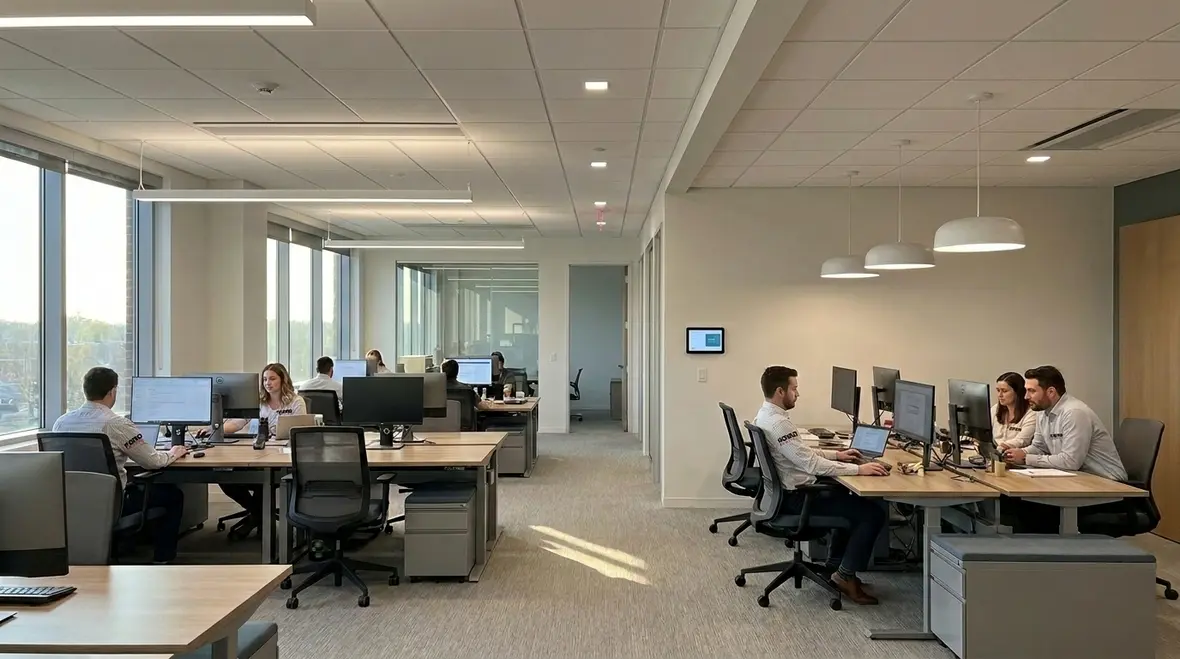
In a modern office, productivity depends on comfort, mood, and consistency. When lighting stays stable, people spend less time adjusting tasks to the environment and more time doing real work. Therefore, integrating controls does not only change brightness. It shapes the way the space responds to daylight, occupancy, and the needs of each zone.
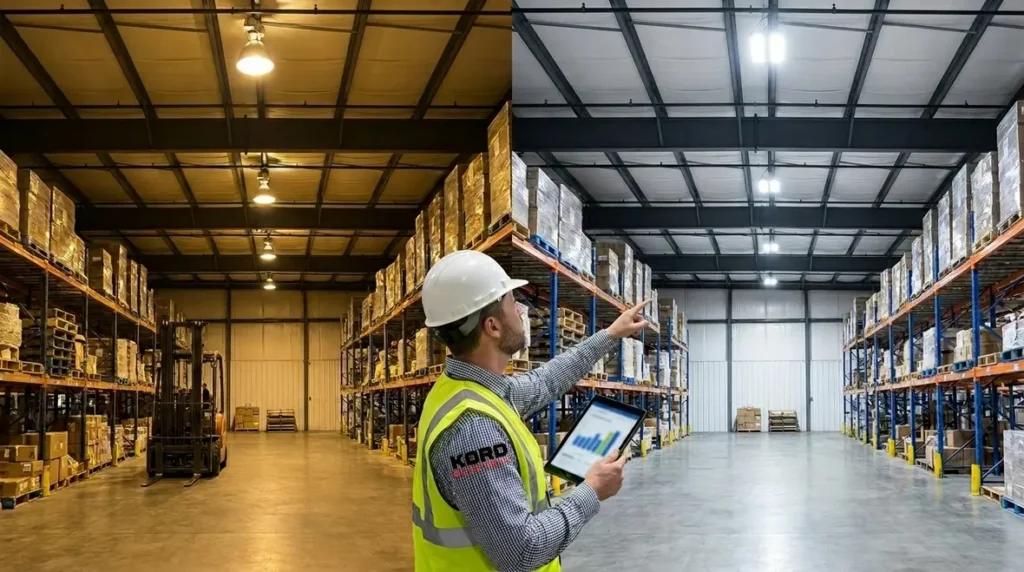
For example, open-plan areas often suffer from uneven daylight. One side becomes bright while the other side feels dim, so employees compensate with desk lamps or screen settings. However, with our smart building lighting controls, the system balances the response across zones. As daylight enters, lights dim smoothly. When clouds roll in, brightness returns without drama.
Because we work with commercial and industrial facilities, we design systems for real operations, not showrooms. We plan for after-hours settings, clean schedules for shared areas, and predictable behavior for maintenance staff. Ultimately, that reduces complaints and supports focused work. And if anyone asks, our technicians explain the logic in a way that makes sense, not like a manual written by robots with coffee problems.
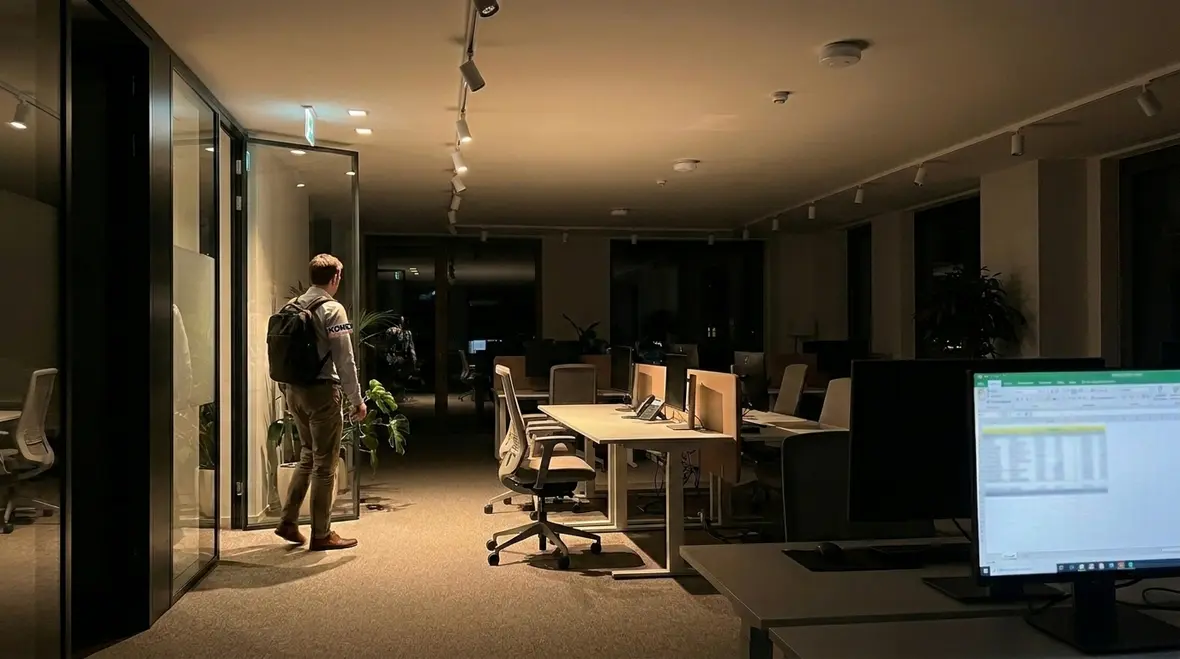
How integrated controls improve focus, comfort, and workflow
Teams do not just need “more light.” They need the right light at the right time. Integrated controls let a building coordinate lighting with typical office workflow patterns, while staying flexible for special events, training days, or seasonal changes.
First, occupancy sensing reduces unnecessary lighting in spaces that are empty. Instead of lighting every room all day, the system responds when people enter, then transitions down when the space clears. Second, daylight harvesting uses sensors to match artificial light levels to natural light. As a result, the work surface stays readable, and glare drops.
Third, scheduling keeps routine tasks smooth. If your facility has shift changes, meetings in certain rooms, or consistent work blocks, we configure lighting scenes to align. For instance, meeting rooms can use a “presentation” profile that reduces contrast spikes, while general office areas use a balanced level for long sessions.
Moreover, color temperature options can support human comfort through the day. While we avoid overcomplicating things, we can adjust levels to feel more natural during morning hours and more neutral later. That is not a gimmick. It is a practical approach for maintaining a steady visual environment across long workdays.
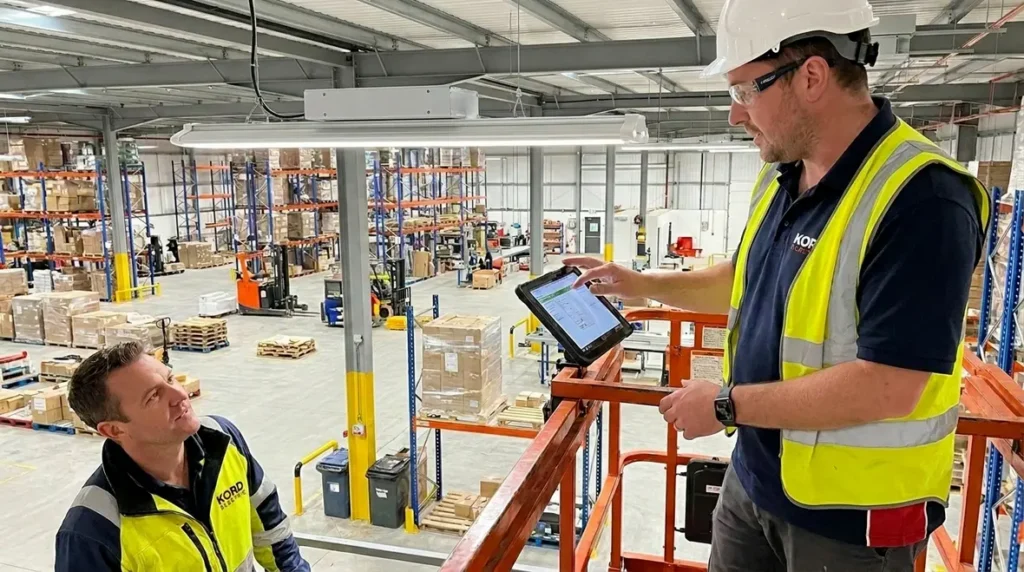
Now, our expert service staff do not leave you guessing. They walk your team through the scene behavior, the sensor coverage, and the override options, so staff members can correct a room without breaking the whole system.
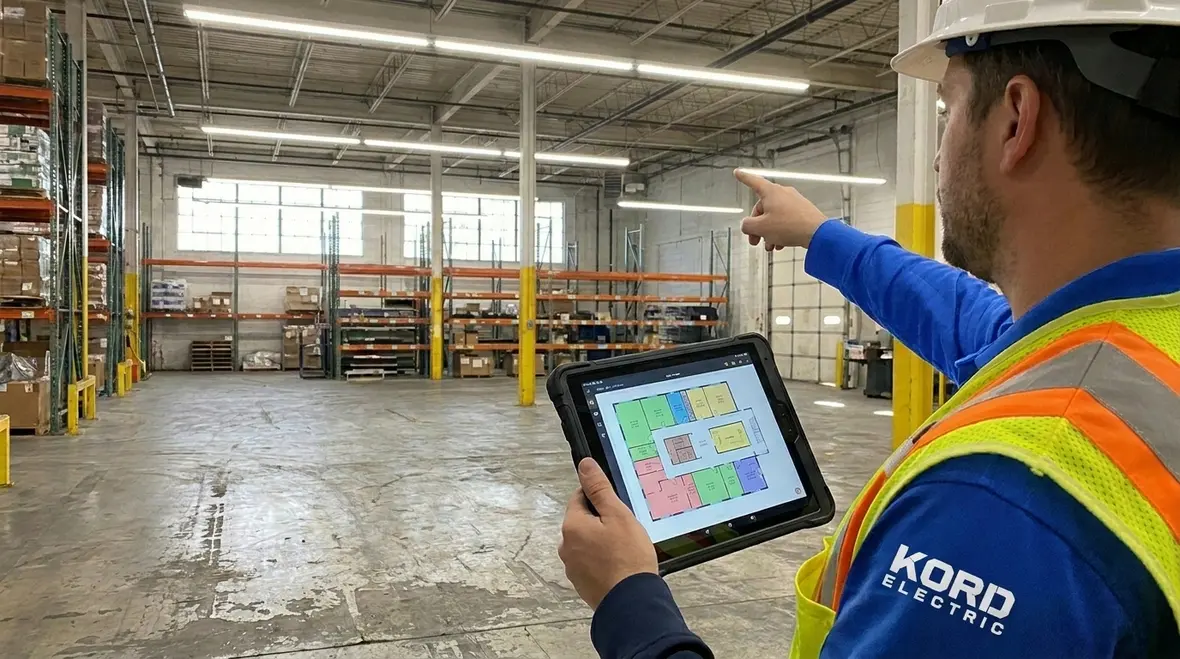
Designing a control strategy for commercial and industrial buildings
Every facility has different circulation patterns, room types, and operational rules. Therefore, smart control planning must start with how the building actually runs. For commercial and industrial sites, we map zones by function, not by guesswork. We examine where daylight enters, where people move, and how long rooms typically stay occupied.
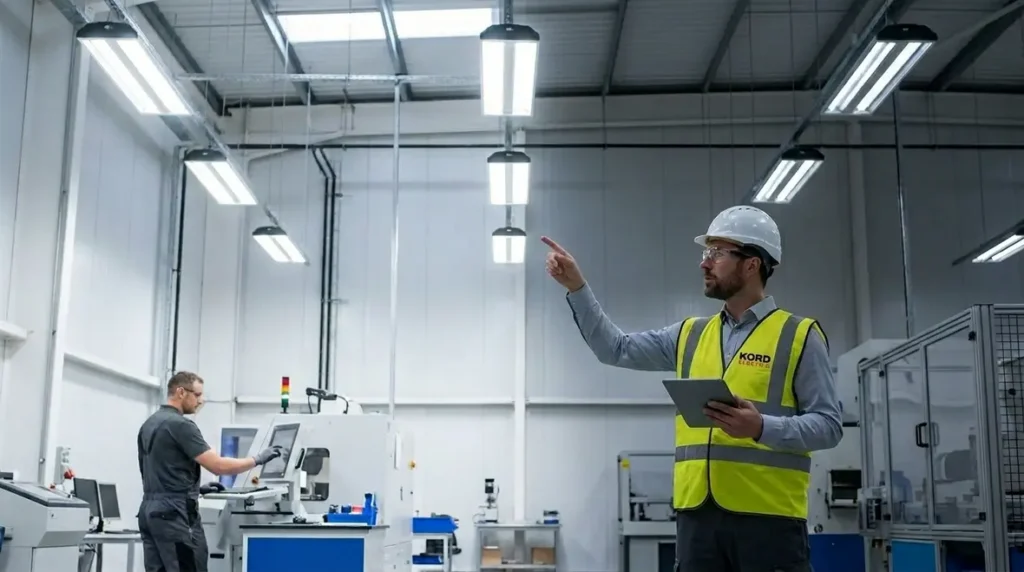
Because lighting is tied to both energy use and comfort, we design for two goals at once. We want consistent illumination in active areas, and we want to reduce output when spaces are idle. To do that, we coordinate control devices by zone and by task type. Offices get stable scenes; corridors get safe, predictable levels; warehouses and industrial support areas get practical response behavior that supports visibility without waste.
Next, we consider how controls interact with building procedures. Many major properties and larger facilities require clear building-wide policies. We help you set those rules through scheduling and priority controls, so the system follows your operational rhythm.
Then we test. Our technicians verify sensor placement, confirm that dimming curves feel smooth, and validate that override behavior matches how your team works. Think of it as dress rehearsal for your lights. Lights that act like a professional will not make your staff feel like they are starring in a low-budget horror film titled “Why is the hallway so bright again?”
Integrating controls with existing systems and reducing operational burden
Most buildings already have electrical infrastructure, control panels, and sometimes older lighting schedules. We handle integration with care, because you do not want new technology to create extra management tasks. Instead, smart lighting should simplify daily operations.
To begin, our team reviews your current setup, including panel capabilities, wiring routes, and any existing control logic. Then we determine the cleanest path to add or update functionality. In many cases, we can expand control zones without forcing a complete rebuild. That keeps disruption low for commercial tenants and facility staff.
In addition, we help standardize how rooms behave across floors and wings. Without standardization, teams feel like they are navigating different “light personalities” in each area. With unified scenes and policies, people learn the space faster and stop second guessing brightness.
Next, we support practical reporting and serviceability. When systems include clear status and device health information, maintenance becomes more predictable. As a result, your team spends less time hunting for faults and more time keeping the building running.
Our expert service staff also ensure that your operators can handle day-to-day changes. They explain the control logic, confirm how overrides work, and show how to adjust scenes when schedules shift.
What our technicians do during installation and commissioning
Installation is where most projects succeed or fail. Therefore, we treat it as a process, not an afterthought. Our technicians follow a deliberate plan that protects both performance and safety for commercial and industrial facilities.
First, we confirm layouts and sensor coverage before mounting final devices. This includes verifying locations where daylight changes most, where glare tends to occur, and where occupancy patterns require reliable detection.
Second, we coordinate wiring and control connections with the site schedule. Because many facilities run around the clock, we aim to reduce downtime and protect critical operations. Then we set up device addresses and group zones so the system responds correctly.
Third, we commission and tune. We check dimming response, calibrate daylight harvesting behavior, and validate that scenes transition smoothly. If any area overcompensates or reacts too quickly, we adjust the logic. We do not ship systems that “sort of work.” We build systems that behave.
Finally, we train your staff. During handoff, our expert service staff explain how the system behaves during typical days, how it reacts to occupancy, and how your operators can change settings without unintended results. And yes, we include practical examples, because people remember what they can picture.
Keeping lighting controls reliable over the long run
Smart lighting only performs when the system stays healthy. Therefore, reliability matters as much as the initial design. We help facilities plan for long-term care through structured maintenance practices and service support.
As sensors age and environments change, we recommend periodic checks. For example, changes in window coverings, new office layouts, or additional partitions can shift the way daylight enters. When that happens, the system may need minor tuning to keep output balanced.
We also prioritize device management and keep your control zones organized. When building teams can clearly identify device types and locations, troubleshooting becomes faster. That matters in commercial and industrial contexts, where time is always tight.
Moreover, we encourage operators to understand the system’s normal behavior. When staff recognize the difference between a normal transition and a fault, they avoid unnecessary calls. Our expert service staff helps you build that understanding through clear explanations and documentation.
And, like a good playlist, once it is set up properly, it keeps delivering. It does not require constant tinkering, and it does not act like it is auditioning for chaos.
FAQ
Next steps with Kord Electric
If you manage a commercial or industrial facility and you want lighting that supports real productivity, we are ready. Kord Electric can assess your current setup, recommend a smart plan, and deliver installation with commissioning and staff training. We focus on stable comfort, reduced waste, and dependable operation. For facilities planning broader upgrades, our lighting installation services connect design, controls, and code compliance into a single, practical plan instead of a patchwork of gadgets.
If your building sits in Southern California, our Los Angeles County electrical services team can also coordinate lighting control upgrades with panel work, maintenance, and other electrical projects so everything fits together cleanly. That way, smart building lighting controls become part of a stronger electrical backbone, not an isolated add-on.
Contact us to schedule an on site review and get a control strategy that fits how your building actually runs. Let’s replace guesswork with lighting that behaves like it has a job.