
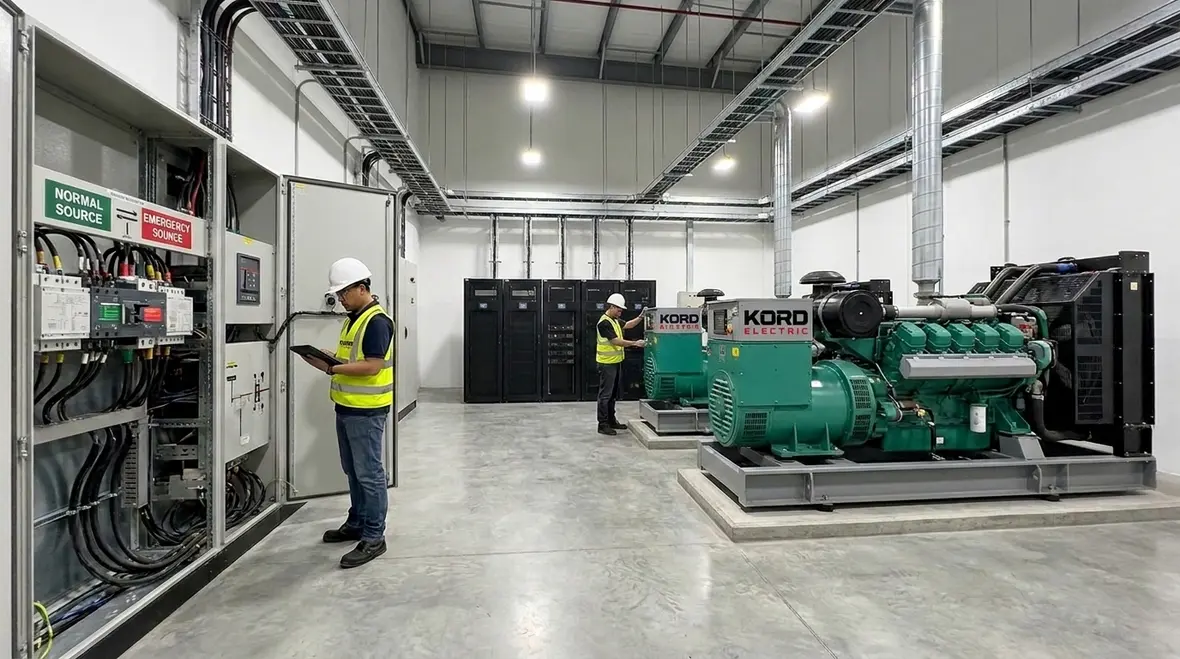
Critical Power System Design: Reliability & Redundancy for Critical Facilities
Introduction: Reliability Starts With Critical Power System Design: Reliability & Redundancy for Critical Facilities
In commercial and industrial facilities, the power does not get to “take a day off.” When we plan Critical Power System Design: Reliability & Redundancy for Critical Facilities, we build for the moments when the grid stumbles and the business cannot. Our approach focuses on dependable backup power, clean transfer, and fast restoration so operations keep running while others are still looking for a flashlight. In fact, we often tell our clients that a critical load is like a bad guest: it always shows up on time, and it never excuses the outage.
At Kord Electric, we design systems where reliability and redundancy work together, not against each other. And because we believe clarity matters, our technicians and expert service staff explain every step in plain language, so decisions feel confident, not chaotic.
How we map your critical loads and set the right design goals
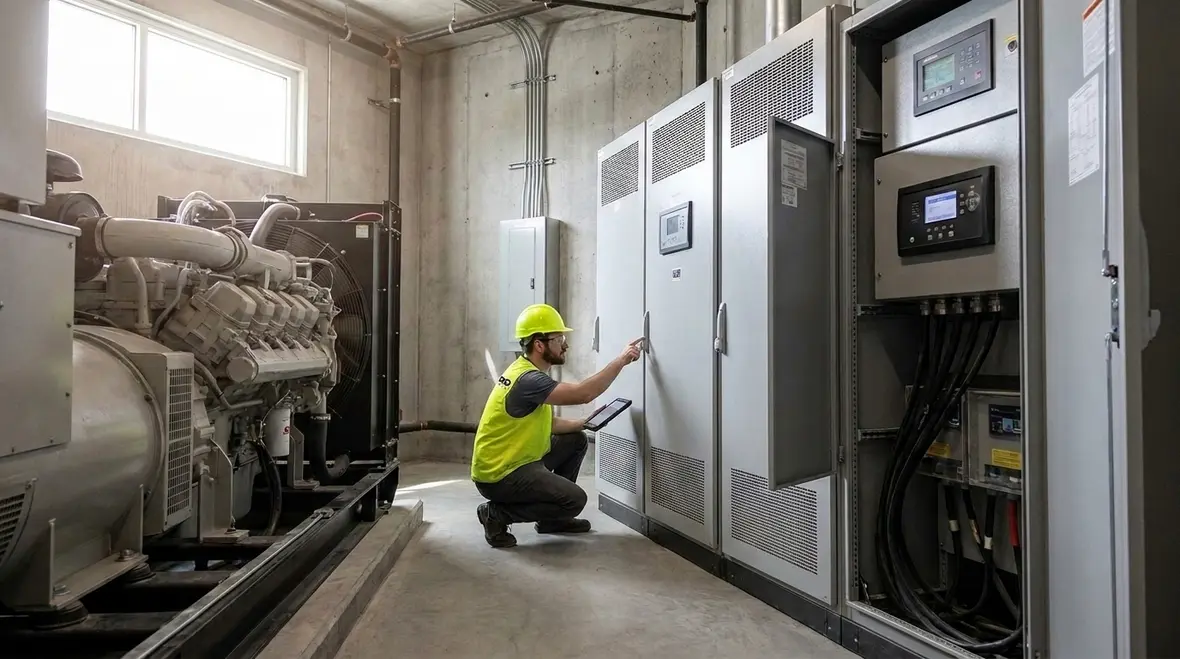
First, we start with the people and processes that can’t pause. Next, we identify critical loads by function, not by guesswork. We categorize equipment such as process controls, HVAC for server areas, life safety interfaces, industrial motors, and building automation. Then we define design goals that match reality, including time tolerance, restart behavior, and acceptable voltage or frequency limits.
From there, we build a load strategy that prevents one common mistake: treating every circuit the same. For example, servers and controls often demand a tighter power quality range than a non-critical warehouse fan. So we segment the system and decide which loads sit on which path: normal power, alternate power, or battery-backed support.
At this stage, our team also looks at how the facility behaves during transition. Therefore, we review generator starting sequence, UPS hold time, and any engineered restart logic. In other words, we plan for how power loss actually unfolds, not how it looks on a diagram. And yes, we’ve seen more than one control system behave like it just heard a scary movie soundtrack, restarting at the worst possible moment. Our job is to stop that.
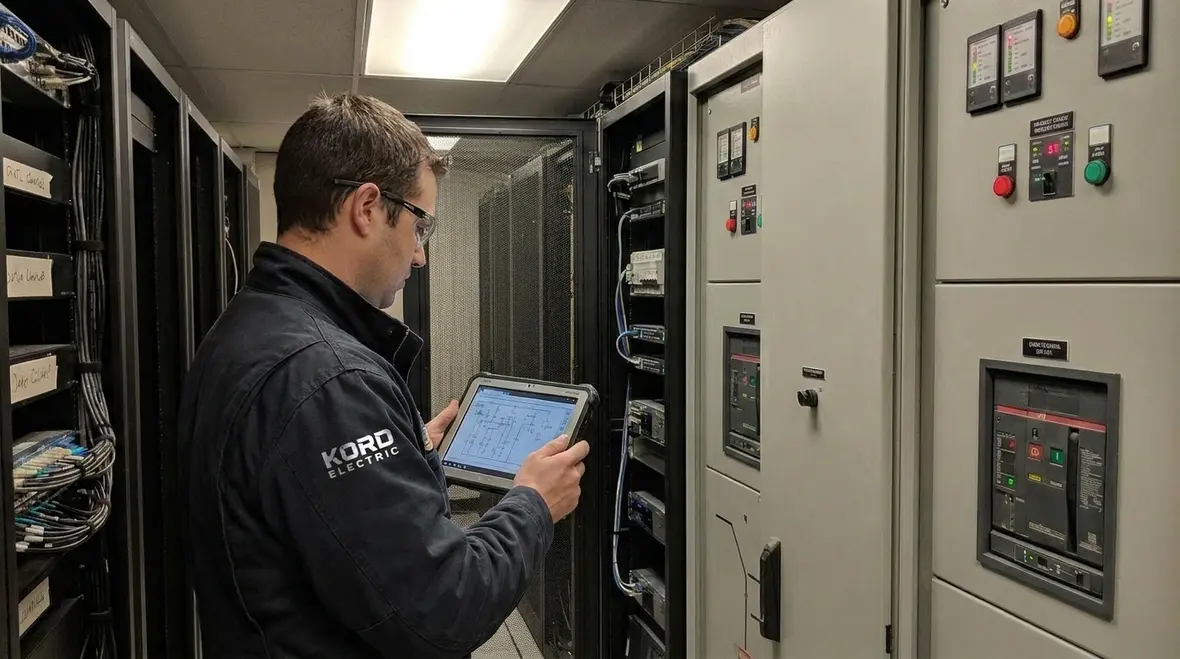
For facility leaders who want to go even deeper into how redundancy and architecture come together, we often pair this planning with the guidance shared in our critical power redundancy architecture guide, so design choices, maintenance, and testing stay aligned over the life of the system.
Why redundancy matters, and how we avoid the “single point of failure” problem
Redundancy sounds simple, but it gets messy fast when details hide in the wiring. We design so no one component can take down the entire critical power path. Instead of relying on a single generator, we use architecture that keeps capacity and reliability aligned with your critical loads.
Depending on the facility, we may implement multiple generators, parallel UPS modules, redundant transfer paths, or layered backups. We also think about distribution. In many projects, the most vulnerable point is not the generator. It is the transfer and distribution equipment that connects everything together.
So we build redundancy into transfer switching, bus arrangements, and monitoring. Additionally, we design for maintenance without downtime. That means scheduled service on certain components does not equal an unexpected outage. Our expert service staff walks through maintenance plans and explains what stays online, what gets isolated, and how we reduce risk. They speak like engineers, but with the calm confidence of someone who has already solved the problem in the field.

UPS versus generator: we choose the right backup layer for uptime
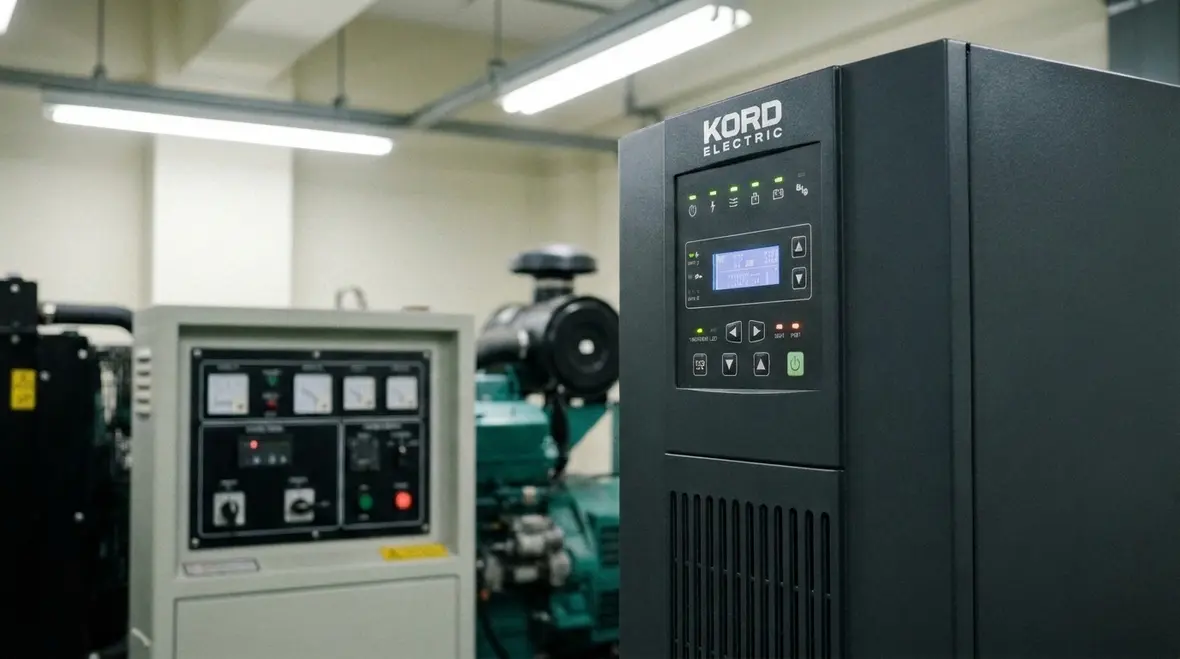
Most facilities need more than one type of backup. Therefore, we treat UPS systems and generators as complementary layers. The UPS typically bridges short events, such as utility sags, brief dropouts, and transfer delays. Meanwhile, generators support longer outages when the grid fails for real.
When we select UPS configuration, we consider runtime needs, load types, and power quality requirements. We also check how sensitive electronics, drives, and control systems respond to the transition. Then we align the generator capacity and startup sequence with the expected load profile.
As a result, your facility gets smoother transitions and fewer “start-stop surprises.” And if anyone tells you that one backup method covers every scenario, we smile gently, because that person has clearly never sat through a real outage. A generator does not fix a microsecond problem, and a UPS does not fuel itself for hours. The blend is what works.
Transfer switching and distribution design for clean, fast transitions
Transfer switching decides how your facility experiences the change from utility to backup. So we design it with clear timing, safe coordination, and reliability under real operating conditions. We focus on transfer schemes that prevent interruption beyond your acceptable limits and reduce the chance of overlapping sources.
Additionally, we coordinate protective devices so fault handling works during normal operations and during backup conditions. In other words, if a fault occurs on a downstream circuit, the system should isolate that part without shutting down the entire critical load bus.
We also design distribution paths with thoughtful engineering. Critical circuits often need dedicated feeders, proper separation, and monitoring points that support fast troubleshooting. That way, when something trips, others do not have to “hunt the problem like a lost remote.” Our technicians can read the system status and act quickly.
In the systems we build, monitoring is not an afterthought. Therefore, we include alarms and status signals that help operations staff and our service team detect issues early.
Generator support systems: fuel, cooling, and start performance that you can trust
A generator can look perfect on paper, yet still fail when fuel supply, cooling, or startup performance falls short. So we design generator support systems that keep the set ready when it matters.
We review fuel storage options and runtime goals, then we plan for supply reliability and safe handling. We also consider engine startup behavior, including cold start conditions, and we coordinate with transfer sequences so the load picks up at the right moment.
Cooling and ventilation matter too. Facilities often underestimate how heat affects performance during extended runs. Therefore, we design cooling airflow paths and ensure safe exhaust handling and compliance requirements. And because we work with commercial and industrial clients, we think in terms of uptime and operational constraints, not generic residential rules.
Our technicians and expert service staff then explain how to verify readiness. That includes walkthroughs on alarms, periodic checks, and what maintenance records should show. When we educate the teams that will live with the system, we reduce surprise calls later. Nobody wants surprise calls, unless it is pizza delivery.
Testing, commissioning, and ongoing service for real-world reliability
Design without testing is a promise without proof. So we implement commissioning steps that validate operation under both normal and backup conditions. We verify transfer timing, load pickup behavior, protective coordination, and power quality results. Then we review system responses to simulated events.
After commissioning, we help clients with an ongoing service plan. This is where reliability becomes practical. Regular checks support fuel readiness, battery health, UPS function, generator run performance, and switchgear condition. Moreover, we include clear documentation so facility teams know how the system is supposed to behave.
In many projects, our expert service staff also trains the site team on what to watch. They explain alarms and event logs in a way that supports quick action. As a result, when problems show up, your team responds with knowledge instead of panic.
We also discuss how to test without disrupting production. Since commercial and industrial facilities run on schedules, we plan service windows and coordination steps that reduce operational risk. And yes, we plan around shift changes because timing matters. Power does not care about your lunch break, but we do.
For facilities in Southern California that need help with complex testing and maintenance around live operations, our team often coordinates these efforts as part of our broader Los Angeles County commercial and industrial electrical services, so upgrades and service work stay aligned with critical power goals.
FAQ: Critical power system design for commercial and industrial facilities
Conclusion: Ready for power that behaves when the grid does not?
If your commercial or industrial facility depends on uptime, we help you build a critical power system that stays reliable under pressure. Kord Electric designs for Critical Power System Design: Reliability & Redundancy for Critical Facilities using layered backup strategies, clean transfers, and service plans that keep the system ready. Our technicians and expert service staff explain the details clearly, so you can make decisions with confidence. Contact us today to discuss your critical loads, timelines, and the level of redundancy your operation truly needs.
For facility teams planning larger upgrades, we can also align critical power work with broader infrastructure improvements like critical power infrastructure and backup system projects, so reliability, redundancy, and future expansion plans move forward together instead of fighting for the same budget.


